






Vitorazská stezka Trail
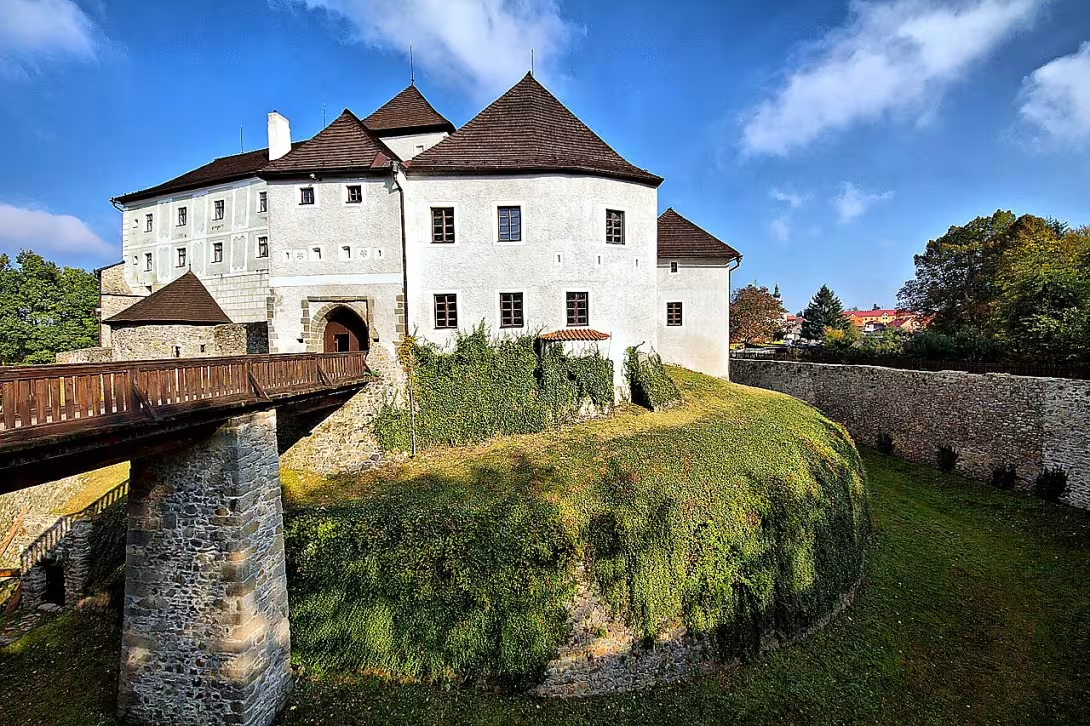
Vitorazská stezka, also known as Weitraer Weg in German, is a historically significant trade route connecting various regions of Bohemia with external territories like Linz and České Budějovice. Originating from the Slavic settlement Vitoraz (modern-day Weitra), this path played a crucial role in facilitating commerce throughout different historical periods. The stezka was notably important for transporting salt from Linz through southern Bohemia to Vitoraz. It primarily refers to two main routes: one leading to Doudleby and another towards central Bohemia, intersecting with other significant paths like the Linecká stezka.
The origins of Vitorazská stezka trace back to prehistoric times, with evidence suggesting its use during the Paleolithic and Mesolithic periods. More concrete indications of commerce along this route emerged in the younger Bronze Age. By the late 7th century, Slavic settlement in the Novohradska region had established a network of trade communications that included Vitorazská stezka. The foundation of the Cistercian monastery Světlá Kuenringy in 1137 significantly boosted the route's importance. In 1186, Duke Frederick donated land along the stezka to the Světelský monastery following a decision by Emperor Friedrich II Barbarossa.
Architecturally, Vitorazská stezka evolved from a prehistoric path into a well-established medieval trade route with significant infrastructure developments. One notable construction was the Žárský rybník (pond), built in the 12th century by Cistercians to manage water resources and support local agriculture. The strategic importance of this route is further highlighted by its connection to historical figures such as Vítek z Klokot and the Pottendorf family.
Ownership and administration of Vitorazská stezka saw significant changes over time. In 1260, the existence of a hrad in Svinice (later Trhové Sviny) was first documented, and by 1279, the construction of another hrad in Nových Hradech was recorded. Around 1270, due to legal disputes with Euphemia von Pottendorf, the Světelský monastery sold its properties on Czech territory to Vítkovcům brothers Ojíř and Pelhřim. These transactions underscored the route's economic significance.
Key events along Vitorazská stezka include its adaptation to political changes and territorial divisions. The strategic relocation of the route to pass through Nové Hrady in the 13th century exemplifies its evolving importance. Additionally, the construction of infrastructure like the Žárský rybník by Cistercians highlights the route's role in regional development.
Today, Vitorazská stezka traverses a diverse landscape that includes historical sites such as Nové Hrady and Doudleby. The route is surrounded by natural features like rivers and hills, contributing to its strategic importance throughout history. Its rich historical context during Bohemia's political and cultural developments under both Slavic and German influences makes it an intriguing site for visitors.
Vitorazská stezka offers a unique glimpse into the past, showcasing the evolution of trade routes and their impact on regional development. Visitors can explore this historically significant path to understand its role in connecting diverse regions and facilitating commerce across centuries. Its rich history and strategic importance make it a worthwhile destination for those interested in exploring the cultural heritage of Bohemia.
Historical milestones
- Paleolithic and Mesolithic periods
- Initial use of the route for prehistoric travel.
- Younger Bronze Age
- Emergence of trade along the route.
- 1137
- Foundation of Cistercian monastery Světlá Kuenringy, boosting route's importance.
- 1186
- Duke Frederick donates land along the stezka to Světelský monastery.
- 1260
- First documentation of a hrad in Svinice (later Trhové Sviny).
- 1279
- Construction of another hrad in Nových Hradech.
Architectural development
The development of Vitorazská stezka was influenced by its natural geography and strategic importance for trade. Over time, it evolved from a prehistoric path to a well-established medieval route with significant infrastructure like the Žárský rybník (pond) constructed in the 12th century. The route's significance grew as it facilitated commerce between key regions, adapting to political changes and territorial divisions.
Historical events
The trade route along what would become Vitorazská stezka existed since the Paleolithic and Mesolithic periods, with more concrete evidence of commerce emerging in the younger Bronze Age.
In the late 7th century, Slavic settlement in the Novohradska region established a network of trade communications that included this route.
The foundation of the Cistercian monastery Světlá Kuenringy in 1137 significantly boosted the importance of Vitorazská stezka.
Points of interest
- The Vitorazská stezka's origins can be traced back to prehistoric times, with evidence of its use during the Paleolithic and Mesolithic periods. This highlights its longstanding importance as a trade route long before it became significant in medieval commerce.
- In 1186, Duke Frederick donated land along the stezka to the Světelský monastery following a decision by Emperor Friedrich II Barbarossa. This act underscores the strategic political alliances and influences that shaped the development of this trade route during the Middle Ages.
- The construction of Žárský rybník (pond) in the 12th century was not only an architectural feat but also a vital infrastructure project by the Cistercians to manage water resources. This demonstrates how medieval communities ingeniously used natural landscapes to support agriculture and sustain local economies along the stezka.
- Legal disputes led to significant changes in ownership of Vitorazská stezka properties, such as when the Světelský monastery sold its lands to the Vítkovcům brothers Ojíř and Pelhřim around 1270. This transaction illustrates how economic interests often dictated territorial control along this historically significant route.
- The strategic relocation of the stezka in the 13th century to pass through Nové Hrady reflects its adaptive nature, aligning with political changes and ensuring continued relevance as a trade artery during shifting power dynamics in Bohemia.
Guide
This guide is narrated by a synthetic voice generated by artificial intelligence.
Show guide text
This text was created by artificial intelligence and has not been editorially reviewed. It may contain inaccuracies.
Welcome to the Vitorazská stezka, a path steeped in history and mystery. As you stand here, imagine yourself transported back through time on this ancient trade route that once connected České Budějovice to the monastery of Světlá via Vitoraz, now known as Weitra.
The origins of this storied pathway date back to the Paleolithic and Mesolithic periods, marking it as one of the earliest conduits for prehistoric travel. As you walk along its remnants today, envision early humans traversing these lands, laying down a path that would become pivotal in medieval commerce.
By the Younger Bronze Age, trade began flourishing along this route, establishing it as an artery of economic exchange. Its significance was further cemented in 1137 with the foundation of the Cistercian monastery Světlá Kuenringy, which drew more travelers and traders to its path. The stezka's importance grew when Duke Frederick donated land along this route to the Světelský monastery in 1186, enhancing its role as a vital commercial link.
As you continue your journey, consider the architectural legacy left by those who traveled these paths. While specific structures may no longer stand, the influence of medieval architecture is etched into the landscape's memory. The route itself was once flanked by fortifications, like the hrad in Svinice documented in 1260 and another constructed in Nových Hradech by 1279.
While many architects and historical figures remain unnamed, their contributions to this path are undeniable. They shaped a route that not only facilitated trade but also connected cultures and communities across time.
One of the most intriguing aspects of Vitorazská stezka is its enduring legacy from prehistoric times. This ancient pathway highlights how routes can transcend centuries, evolving in purpose yet remaining vital through ages.
As you conclude your exploration, I invite you to delve deeper into this fascinating history. Imagine the countless stories and journeys that have unfolded along these paths. Thank you for joining me on this journey through time, and may your curiosity lead you to discover more hidden treasures of our shared past.
Businesses nearby
Do you run a restaurant, accommodation, shop, museum, rental, wellness or other visitor service near this monument? Show yourself directly to the people heading to it — this is how they will see you in the app and on the web:
Nearby
Vitorazská stezka traverses a diverse landscape that includes historical sites such as Nové Hrady and Doudleby. The route is surrounded by natural features like rivers and hills, contributing to its strategic importance throughout history.
Accommodation nearby
Themed route
Thematic Walking Tour: The Vitorazská Stezka
1. Nové Hrady *Type:* Historical Site This medieval castle offers a glimpse into the past with its well-preserved architecture and rich history. Visitors can explore the castle grounds, enjoy panoramic views of the surrounding landscape, and learn about the strategic importance of this location throughout history.
2. Vitorazská Stezka *Type:* Historic Trail As the main attraction, Vitorazská Stezka traverses a diverse landscape that has been significant for centuries. The trail offers scenic views along rivers and hills, providing an immersive experience of nature intertwined with historical narratives.
3. Doudleby *Type:* Historical Site Known for its charming castle and picturesque surroundings, Doudleby is perfect for those interested in exploring medieval architecture and local history. The site provides a peaceful retreat with opportunities to learn about the region's past while enjoying beautiful natural scenery.
This thematic tour highlights the historical significance and natural beauty of Vitorazská Stezka and its surrounding areas, offering an enriching experience that combines culture and nature.
Seasonal recommendations
Spring: Spring on the Vitorazská stezka is a rejuvenating experience, as nature awakens with vibrant colors and fresh scents. The blooming wildflowers create picturesque scenes along the trail, while the soft morning light enhances their beauty. This season offers a tranquil atmosphere, ideal for those seeking solitude amidst nature's renewal. Visitors are advised to wear comfortable layers, as temperatures can vary throughout the day. Early mornings or late afternoons are optimal times to explore, avoiding any lingering spring showers and enjoying the path with fewer crowds.
Summer: Summer brings the Vitorazská stezka alive with lush greenery and extended daylight hours, making it perfect for longer hikes and picnics along the trail. The warm weather invites a variety of outdoor activities, from bird watching to photography, capturing the vibrant ecosystem in full bloom. However, this is also peak tourist season, so arriving early can help avoid larger crowds. Sun protection, including hats and sunscreen, is essential, as well as plenty of water to stay hydrated during your visit.
Autumn: Autumn transforms the Vitorazská stezka into a tapestry of warm hues, with leaves changing from green to shades of red, orange, and gold. The crisp air and mellow sunlight create an enchanting atmosphere, ideal for leisurely walks and enjoying nature's final display before winter sets in. This season sees fewer visitors, offering a more peaceful experience. Layered clothing is recommended to adapt to the cooler temperatures, and sturdy walking shoes are advisable due to potentially slippery paths from fallen leaves.
Winter: Winter on the Vitorazská stezka offers a serene and magical setting, as snow blankets the landscape in quiet beauty. The path becomes a tranquil escape for those who enjoy the peacefulness of a winter wonderland. While some sections may be less accessible due to snow coverage or shorter opening hours, it's an excellent time for cross-country skiing or snowshoeing if conditions permit. Visitors should dress warmly in layers and wear appropriate footwear with good traction. Checking trail accessibility before your visit is wise, as weather conditions can change rapidly during this season.
Visualizations and artistic views


The visualisations are generated by artificial intelligence and serve as inspiration.
Atmosphere of the place
This atmospheric visualisation of the place and period was generated by artificial intelligence. It is not real footage of the location.
Tips from visitors
No tips yet. Be the first!
Log in and add your tip.
Sources and literature
Fotografie: Jiří Strašek / CC BY-SA 4.0 — Wikimedia Commons. The author and licence also appear when you hover over the image.
Faktickým podkladem tohoto textu byl článek na Wikipedii, jehož autory jsou přispěvatelé Wikipedie. Článek je dostupný pod licencí CC BY-SA 4.0.
Příběhy a pověsti
Legendy, pověsti a příběhy spjaté s touto památkou

Fotografie návštěvníků
Zatím žádné fotografie. Buďte první, kdo přidá fotografii z návštěvy!
Přihlaste se a přidejte svou fotografii nebo hodnoťte.
Za ověřenou návštěvu v aplikaci získáte víc bodů — poznáme podle GPS, že jste na místě.
Reviews and comments