



Vodní mlýn (Sychotín) Water mill
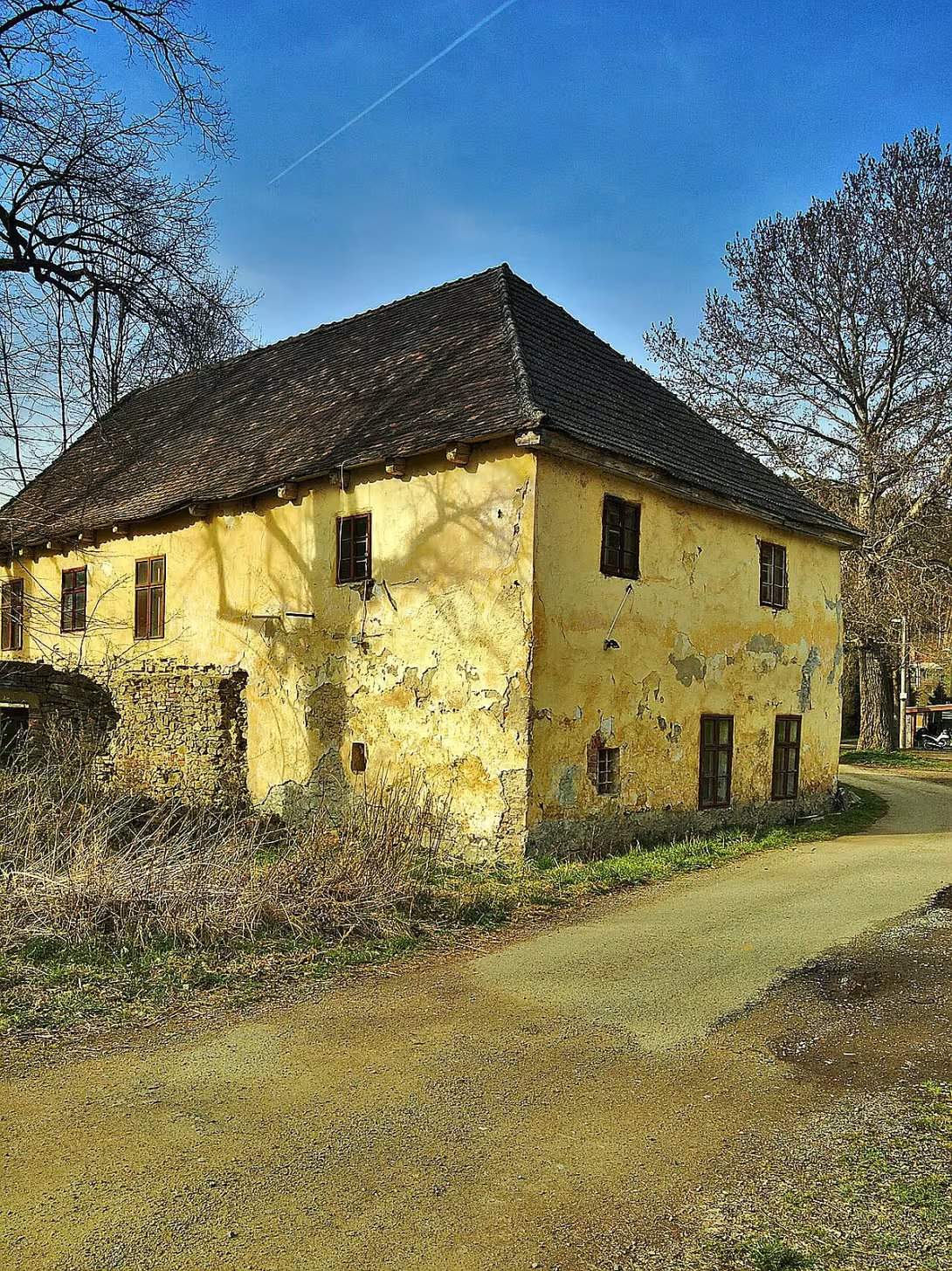
The tenor mill in Sychotín near Kunštát is situated on the river Petrůvka and is protected as a real cultural monument of the Czech Republic. This baroque building with a grafted floor has authentic building and technical elements that demonstrate its rich history and architectural importance. Already in 1761 the mill is recorded, suggesting a long tradition of grinding grain at this place.
The history of the mill dates back to the middle of the 18th century when it was owned by Tomáš Koráb. This era corresponds to the European Enlightenment, the period of reform of government and the stabilisation of rural infrastructure. The mill was displayed on the map of the Imperial Mandatory Fingerprints from 1826, which confirms its importance in the next decades. In 1939 it was owned by Vladimír Tenora, adding himself to a number of people who cared for this historical object.
It is an architectural Baroque building with a grafted floor. The construction has preserved authentic elements such as vault, beam ceiling and cross. The interior offers a view of the black kitchen and is preserved in the grinder, which increases the authenticity of the entire building. Technology equipment was supplied by renowned manufacturers such as Jos. Prokop and sons of Pardubice, Anton Besser from Vienna-Währing or Anton Veith's also from Vienna.
The mill went through several hands, with individual owners contributing to its preservation. After Thomas Korab, ownership changed to Vladimir Tenor, who was the last known owner in 1939. This history of ownership changes illustrates the lasting value and importance of the mill for the local community.
The mill represents not only an architectural monument, but also a technological proof of its time. Water for the water wheel was driven by a drive, which was typical in this period. The technology used by the renowned producers shows the quality and innovativeness of the mill at the time.
Today, Tenor's mill in Sychotín at Kunštát is accessible to interested people in history and architecture. Thanks to preservation as cultural monuments, other generations can appreciate both the rich past and technological progress of this area. The mill is worth visiting not only because of its historical importance, but also because of the opportunity to become acquainted with authentic elements of the past.
This object is proof of how cultural monuments can be preserved for future generations. The visit to the Tenor Mill in Sychotín offers a unique view of the history of milling and baroque architecture, which makes it not only a monument, but also an inspiring place for exploring.
Then and now
Drag the slider to compare how the landmark may have looked when it was built with the view today.
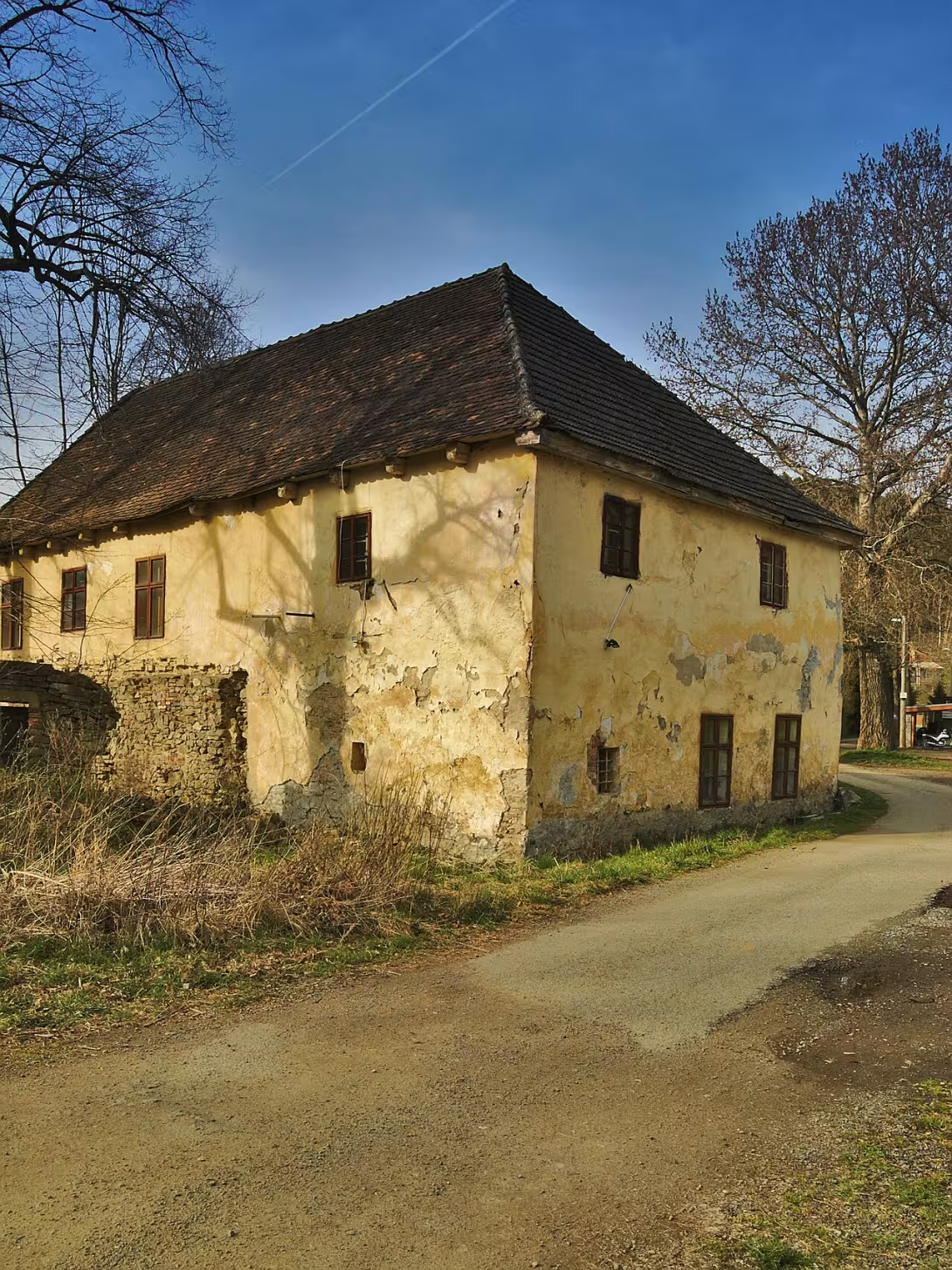
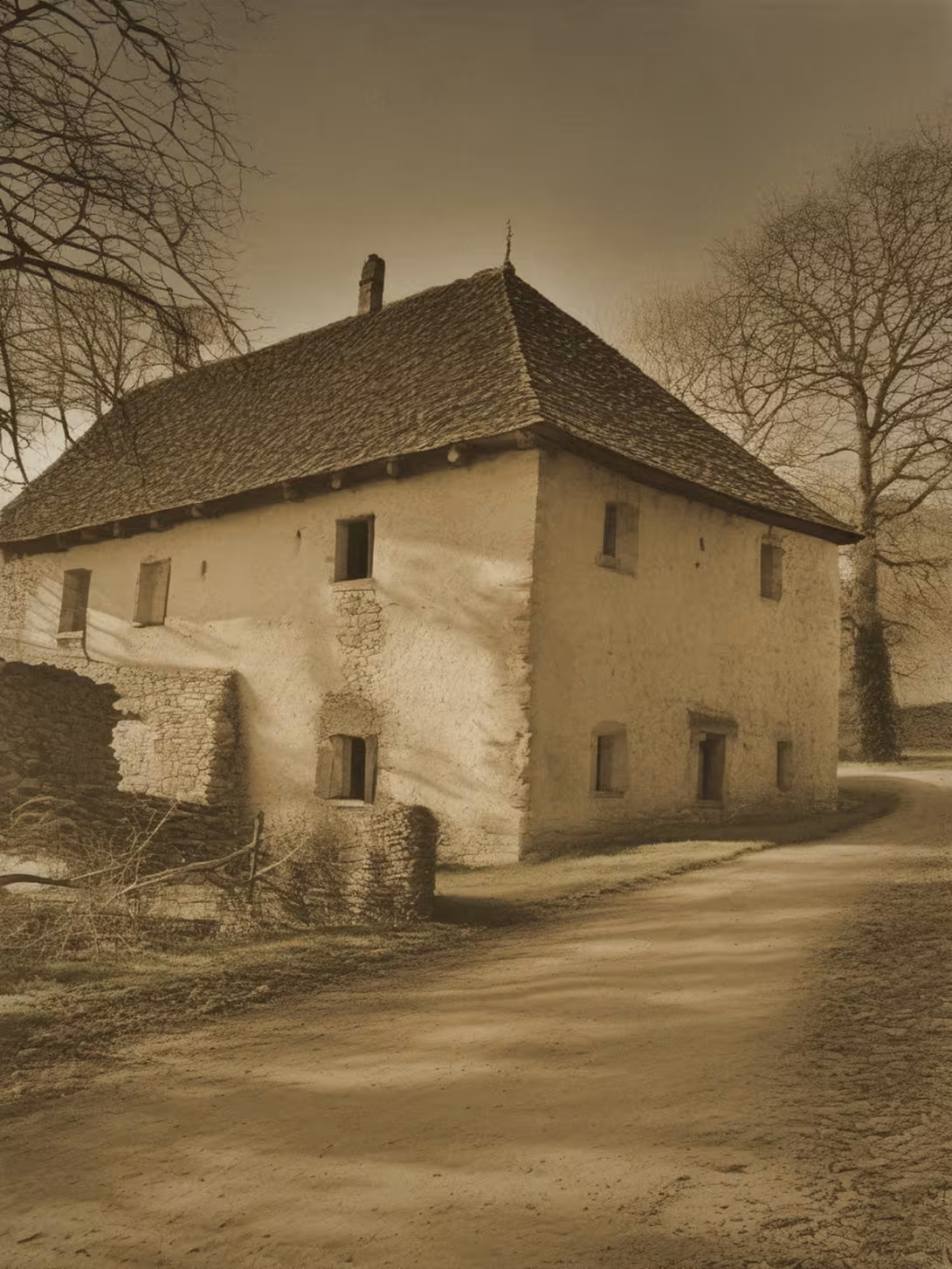
The historical appearance on the left is an AI-generated visualisation and serves as inspiration only.
Historical milestones
- 1761
- The mill is recorded as ownership of Thomas Korab
- 1826
- The mill is displayed on the map of the Imperial Mandatory Fingerprints
- 1939
- Mill owned by Vladimír Tenora
Architectural development
The mill is a Baroque building with a grafted floor. In its construction are preserved authentic elements such as vaults, crows and beam ceiling.
Historical events
1761: first historical record of the mill, 1826: display on the map of the Imperial Mandatory Fingerprints, 1939: ownership of Vladimir Tenora.
Owners
1761: Tomáš Koráb, 1939: Vladimír Tenora
Points of interest
- It's a baroque building with a grafted floor. - The mill is recorded in 1761. - There's a black kitchen in the interior and it's preserved in the mill by a grinder. - The construction has preserved the vault, beam ceiling and crov. - Water for the water wheel was driven by the drive.
Guide
Show guide text
This text was created by artificial intelligence and has not been editorially reviewed. It may contain inaccuracies.
Welcome to one of the most important historical objects in this part of the landscape. You're standing right in front of Tenor's Mill in Sycotine, a place where history meets the constant movement of water. Before you go any further, stop for a moment and observe the surroundings. Listen to the noise of the brook Petronovka, which flows through here and has been the main engine of this whole for centuries. In front of your eyes is a baroque building that looks very noble with its presence in this quiet landscape. Take a look at its appearance, especially the grafted floor, which gives the whole building its unmistakable and human character. It is a fascinating combination of solid, historical walls and a finer wooden structure, which shows a high level of construction. This building is not just an ordinary house, it is a protected real estate cultural monument of the Czech Republic, which means that every detail you see here has its weight and significance.
Now let's move forward in time and understand how this mill was formed and how long it has stood here. The history of this place is deep and well documented. If we go back to a time when the baroque style became a symbol of stability and order, we would encounter seven hundred and sixty-one. At that time, this mill was already registered as the property of Thomas Korab. This tells us that the mill had performed its function in the mid-eighteenth century and was a solid part of the local economy. Over time, the mill became an increasingly important point on the map. In the year one thousand eight hundred twenty-six, it was already so significant that it was displayed on the maps of the Imperial Mandatory Fingerprints, which were at that time the most important military and administrative records of the state. So the mill was not just a local matter, but part of the wider rule of governance. Another important era for this place was the year one thousand nine hundred thirty-nine, when the mill owned Vladimír Tenora. It is his name that has become part of the identity of this place, and to this day, people know him just like Tenor's Mill.
Now pay attention to architecture and what you can see right in front of you. The whole building is an example of a baroque concept that sought harmony and functionality. Notice how the mill is naturally connected to the surrounding terrain. The key to his operation was water. Water for the water wheel was not just a random element, but it was guided by a special drive. Imagine the constant flow that was precisely directed to use all the power of the Petrol stream. This technical precision was at the time of its creation absolutely essential for successful grinding of grain. When you look at the design itself, you see the combination of materials that was typical of this épése - a combination of stone, wood and the work of human hands.
If you decide to enter, prepare to meet with complete authenticity. The interior of the mill is a real treasure for anyone who wants to understand life in the past. Once you cross the threshold, your eyes will have to adapt to the new light and atmosphere. Look up. Above your heads is an impressive beam ceiling, supported by massive wooden structures. The entire building is held by a crover, which is witnessed by the incredible craftsmanship of the then carpenters. In the interior you can also encounter a vault that gives the spaces a sense of stability and historical dignity. Each of these elements, from the beams to the vault, forms a whole that has survived for centuries.
Inner spaces also tell stories about everyday life. Notice details such as black cuisine. This was the most important room in the former homes, a place where it was cooked, where it was drowned and where the life of the family and workers of the mill concentrated. It's a space that carries traces of earlier smells, heat and human movement. And if you go deeper into the mill, you might encounter something really special. There's a preserved gravel. This technical element is fascinating proof of exactly how the grinding process worked. It is a physical proof of the mechanical force that was once present here in constant motion.
If you look again at the entire mill set, remember the people who left their trail. Names like Tomáš Koráb or Vladimír Tenora are not just names in historical documents. It's the names of the people who built, maintained and lived in this mill. Each of them contributed to standing before this preserved monument today. There is something mysterious about it when we realize how many generations of people have passed here, how many times there have been talk of crops, weather and work, while the water beneath them was tirelessly flowing.
One of the most interesting things you can find interesting here is the incredible continuity. Although the world has changed around the mill, new technologies, new ways of farming and new era have come, this object remains true to its essence. The fact that we have managed to preserve as authentic details as the grater or the specific construction of ceilings is now absolutely exceptional. The mill stands here as a fixed point in time, as a witness who saw the transition from the eighteenth century to today's modern era.
Now I beg you to continue your search and let the atmosphere of this place drift. Take a look at the details of the construction, feel the silence and rustling of the water and try to imagine what the everyday routine of people who worked here was like hundreds of years ago. Every corner of this mill has a story waiting to be discovered. Thank you for choosing to visit this historic space and pay your attention. We wish you a pleasant and inspiring walk in history.
Tips for visitors
For the best experience we recommend a visit during the spring blossom or in the summer months, when the surrounding nature is the most lively and the flow of water in the stream of Petrůvka is the most peaceful. The ideal time for observing architecture is in the morning or shortly before sunset, when soft light highlights the texture of the grafted floor and baroque details of the construction.
For comfortable movement in the surrounding area we recommend to bring with you comfortable shoes suitable for the terrain at the water stream and possibly even repellent.
If you plan to take pictures, the best place is to look at the mill from angles that capture the combination of wooden structure and water proximity. Follow the position of the sun to avoid hard shadows, and try to capture the glare of light on the surface of the Petrovka stream.
For families with children it is ideal to walk near the mill where children can observe the course of water in the river Petronovka. However, caution should be exercised because of the proximity of the water flow and uneven terrain.
Frequently asked questions
Can the monument be visited?
This is a technical monument. Some are open as exhibitions, others are out of use or on private land. We have not verified whether this one is accessible.
What are the opening hours and admission?
We have not verified the opening hours or admission. Current information is published by the operator.
Where is the monument?
Location: Kunštát, Jihomoravský kraj. The map on this page shows the exact spot.
Why is the monument protected?
It is listed in the Central List of Cultural Monuments of the Czech Republic as a cultural monument (register no. 1705705288).
Businesses nearby
Do you run a restaurant, accommodation, shop, museum, rental, wellness or other visitor service near this monument? Show yourself directly to the people heading to it — this is how they will see you in the app and on the web:
Events nearby

Zdroj akcí: otevřená data měst a obcí ČR (Národní katalog otevřených dat) a kalendář akcí Národního památkového ústavu.
Nearby
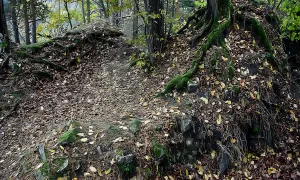
The water catchment area of the Petrovka stream.
Accommodation nearby
Themed route
Thematic cruise route: Vodní mlýn (Sychotín) and surroundings
1. Water mill Sychotin (mill) This historic water mill is not only a technical monument but also a witness to the long tradition of industry in the area. It is the perfect place for those who are interested in the history of miller and want to zoom in on technology from the past.
2. Potok Petrovka (water catchment area) Shortly from the water mill there is a stream of Petrůvka, which provides energy to mills and is an important part of local ecosystems. A walk along its shores offers a quiet time for relaxation and observation of nature.
3. Forest area around the stream (nature) In the vicinity of the creek there are forest areas that are ideal for a short walk or picnic. These green areas offer an opportunity to relax and observe wild flora and fauna.
4. Traditional cereal policies (soil) The closest to the water mill are traditionally cultivated areas which were previously used to grow cereals. These fields are witnessed by historical agricultural practices and offer insight into the past of the local economy.
5. Tree allee next to the stream (nature) Around the area there are tree alleas that provide a beautiful view and serve as popular places for cycling or walking. These are ideal roads for those looking for quiet surroundings in direct proximity to historical monuments.
This route offers a combination of cultural and natural experiences that are suitable for families and individuals with diverse interests.
Seasonal recommendations
Spring brings to the surroundings the mill awakening nature and the fresh green color of leaves. The morning sun gently illuminates the water level and creates a calm, hopeful atmosphere. We recommend wearing layered clothes because the morning cold can quickly turn into warmer air during the day. There are fewer visitors in this period than in the summer months, which makes it possible to perceive the calm of the surrounding region without much noise.
In the summer months the area of the mill is flooded with intense sun and dense vegetation, which provides a pleasant shade. The atmosphere is alive and full of the sound of running water. For the main summer season we recommend arriving as early as possible in the morning to avoid the biggest crowds. Do not forget light summer clothes, headgear and insect protection, which occurs more often in water.
Autumn season is characterized by golden and brown shades of leaves and morning fog, which are lazy above the surface. Light is soft at this time and creates a melancholic, poetic mood ideal for observing the details of architecture. It is advisable to carry with you a waterproof jacket and fixed shoes, because the moisture near the water may be higher. The best time to visit is clear afternoon hours.
Winter turns the mill into a quiet and raw space where frost can stone the surface and cover the surrounding landscape with snow. The atmosphere is very quiet and works magically thanks to the low sun and long shadows. To visit it is necessary to have very warm clothes and quality shoes in case of ice. Due to short days, plan a visit to use the maximum amount of daylight.
Visualizations and artistic views


The visualisations are generated by artificial intelligence and serve as inspiration.
Photos from the area
Real photos taken near the monument


Zdroj a licence jsou uvedeny u každého snímku.
Atmosphere of the place
This atmospheric visualisation of the place and period was generated by artificial intelligence. It is not real footage of the location.
Tips from visitors
No tips yet. Be the first!
Log in and add your tip.
Sources and literature
Photos: Jiří Komárek / CC BY-SA 4.0 — Wikimedia Commons. The author and licence also appear when you hover over the image.
Faktickým podkladem tohoto textu byl článek na Wikipedii, jehož autory jsou přispěvatelé Wikipedie. Článek je dostupný pod licencí CC BY-SA 4.0.
Location on the map


Příběhy a pověsti
Legendy, pověsti a příběhy spjaté s touto památkou
Fotografie návštěvníků
Zatím žádné fotografie. Buďte první, kdo přidá fotografii z návštěvy!
Log in a přidejte svou fotografii nebo hodnoťte.
Za ověřenou návštěvu v aplikaci získáte víc bodů — poznáme podle GPS, že jste na místě.
Reviews and comments