






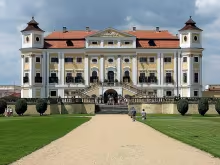
Zámek Milotice is a baroque castle located in the village of Milotice, within the Hodonín District of South Moravia. Known for its well-preserved buildings and garden architecture from the Baroque period, it stands as one of the most unique examples of this style in the Czech Republic. Originally a water fortress mentioned in the 14th century, it transformed into a single-story Renaissance castle before evolving into its current baroque form during the early 18th century.
The origins of Zámek Milotice trace back to the 14th century when it was initially a water fortress. The first known owners were the Ronov family around 1360, followed by the Moravan lords in the early 15th century, under whom the estate became a Hussite stronghold. Ownership then passed through several families including the Kravař and Ojnice families, before reaching the Zástřizlové who made Milotice their domain's center. In 1648, Gabriel Serényi acquired the devastated estate during the aftermath of the Thirty Years' War, initiating its restoration. The Serényi family owned it until 1811, followed by the Choiseul d'Aillecourt and Hardegg families until 1888. From then until 1945, the Seilern family held ownership.
Architecturally, Zámek Milotice transitioned from a Renaissance castle built between 1586-1596 to its current baroque form during two significant phases of transformation under Karl Antonín Serényi's ownership from 1719 to 1743. The original water fortress was replaced by a single-story Renaissance structure with an additional floor and corner towers added in the late 17th century. The baroque transformation, attributed to architects such as Domenico Martinelli, Johann Bernard Fischer von Erlach, Antonio Salvi, Christian Alexander Oedtl, František Benedikt Klíčník, and Martin Pahnost, resulted in its current architectural style.
Throughout its history, Zámek Milotice has seen dramatic changes in ownership and fortune. Notably, during the Thirty Years' War in the early 17th century, it experienced significant turmoil and change of ownership. One notable figure associated with the castle is Josef František Adolf Serényi, a renowned court painter born here in 1715.
Today, Zámek Milotice is under state ownership, managed by the National Heritage Institute. The castle has been accessible to the public since 1974 after extensive reconstruction of its exteriors and interiors. Its baroque gardens are among its most notable features, adding to its appeal as a historical site. Surrounded by picturesque landscapes typical of South Moravia, Zámek Milotice offers visitors a glimpse into the region's rich cultural heritage.
Zámek Milotice is not only an architectural marvel but also a testament to the dynamic history and cultural evolution of the Czech Republic during the Baroque period. Its well-preserved state makes it a valuable site for both historical study and leisurely exploration, inviting visitors to immerse themselves in its storied past and enjoy its serene surroundings.
Historical milestones
- 1648
- Gabriel Serényi purchased the estate and began restoration.
- 1715
- Birth of court painter Josef František Adolf Serényi at the castle.
Architectural development
The original water fortress was replaced by a Renaissance castle between 1586-1596. In the late 17th century, it was expanded with an additional floor and corner towers. The baroque transformation occurred in two phases under Karl Antonín Serényi's ownership from 1719 to 1743, resulting in its current architectural style.
Historical events
In 1648, Gabriel Serényi purchased the devastated estate, beginning its restoration.
During the Thirty Years' War in the early 17th century, Milotice experienced significant turmoil and change of ownership.
Owners
The first known owners were the Ronov family around 1360, followed by the Moravan lords in the early 15th century. The estate became a Hussite stronghold under their rule. Subsequent owners included the Kravař and Ojnice families, then the Zástřizlové who made Milotice the center of their domain. Gabriel Serényi acquired it in 1648, initiating its restoration. The Serényi family owned it until 1811, followed by Choiseul d'Aillecourt and Hardegg families until 1888. From then until 1945, the Seilern family held ownership.
Points of interest
- The castle's transformation from a water fortress to its current Baroque form was significantly influenced by Karl Antonín Serényi, who oversaw two major phases of architectural change between 1719 and 1743. - Josef František Adolf Serényi, born in Milotice in 1715, became a renowned court painter, adding cultural prominence to the castle's history. - The estate served as a Hussite stronghold under the Moravan lords in the early 15th century, highlighting its strategic importance during religious conflicts of that era.
Guide
Show guide text
Welcome to the enchanting Zámek Milotice, a jewel of Baroque architecture nestled in the picturesque village of Milotice, located within the Hodonín District of South Moravia. As you stand before this magnificent structure, take a moment to appreciate its grandeur and historical significance—a testament to centuries of transformation and artistic vision.
The story of Zámek Milotice begins as early as the 14th century when it was first mentioned as a water fortress. Over time, it evolved significantly under the ownership of Gabriel Serényi in 1648. His vision initiated a series of restorations that would eventually transform this medieval stronghold into the Baroque masterpiece you see today.
As you gaze upon its impressive facade, notice how the architectural elements reflect the creative genius of renowned architects like Domenico Martinelli and Johann Bernard Fischer von Erlach, among others. Their contributions have resulted in an exquisite blend of symmetry and ornate detailing characteristic of the Baroque period—a style that stands out as one of the most unique examples within the Czech Republic.
Now, let's delve into some fascinating stories tied to this historic site. One key figure is Karl Antonín Serényi, who played a pivotal role between 1719 and 1743 in overseeing two major phases of architectural transformation. His influence helped shape the castle into its current form. Another notable personality is Josef František Adolf Serényi, born here in 1715. He grew up to become a celebrated court painter, adding artistic flair to the legacy of Milotice.
As you explore further, take note of the intricate garden architecture that complements the main structure. These gardens are an integral part of the Baroque ensemble, offering a serene escape and showcasing meticulous design work from the era.
One intriguing aspect of Zámek Milotice is its rich tapestry of historical figures who have left their mark here. From Albrecht z Valdštejna to the Žerotínové family, each has contributed to the castle's storied past. These connections weave a narrative that adds depth and intrigue to your visit.
As we conclude this audio tour, I invite you to continue exploring Zámek Milotice at your own pace. Wander through its halls, absorb the atmosphere, and let history come alive around you. Thank you for joining us today, and may your journey here leave you with lasting memories and a deeper appreciation of this remarkable site.
Businesses nearby
Do you run a restaurant, accommodation, shop, museum, rental, wellness or other visitor service near this monument? Show yourself directly to the people heading to it — this is how they will see you in the app and on the web:
Nearby
Zámek Milotice is surrounded by picturesque landscapes typical of South Moravia. The area includes natural features and other historical sites within a 5 km radius.
Accommodation nearby
Themed route
Thematic Walking Tour: The Enchanting Surroundings of Zámek Milotice
1. Zámek Milotice (Castle) Begin your journey at the heart of this tour, Zámek Milotice, a stunning example of South Moravian architecture nestled in picturesque landscapes. This castle is renowned for its historical significance and architectural beauty, offering visitors a glimpse into the region's rich past through its well-preserved structures and captivating interiors.
2. Historical Gardens Just outside the main entrance of Zámek Milotice, explore the meticulously maintained gardens that surround the estate. These gardens are a testament to traditional landscape design, featuring a variety of plant species native to South Moravia. The serene atmosphere provides an ideal setting for relaxation and reflection while appreciating the harmonious blend of nature and architecture.
3. Nearby Historical Sites Within a 5 km radius from Zámek Milotice, discover additional historical sites that offer further insight into the region's cultural heritage. These locations, though not specified in detail, are integral to understanding the broader historical context of South Moravia. Each site provides unique stories and architectural styles that complement your experience at the castle.
4. Local Villages As you venture slightly beyond the immediate vicinity of Zámek Milotice, explore the charming local villages within a 5 km radius. These villages are characterized by their traditional Moravian architecture, quaint streetscapes, and welcoming communities. They offer an authentic glimpse into rural life in South Moravia, with opportunities to interact with locals and experience regional customs.
This thematic walking tour invites you to immerse yourself in the historical and cultural richness of Zámek Milotice and its surroundings, providing a comprehensive exploration of this enchanting region.
Seasonal recommendations
Jaro: In the spring season, Zámek Milotice offers breathtaking views of blooming gardens and revitalizing nature, creating a pleasantly warm atmosphere. The sun illuminates the architectural elements of the castle at angles that highlight its historical beauty. Visitors should plan their visits for late in the day when there is a mild crowd and the sunlight creates attractive shadowing. It's advisable to wear layered clothing as temperatures can vary between chilly mornings and warm afternoons.
Léto: Summer brings full sunny days that illuminate Zámek Milotice in its best light. The garden's appeal peaks with flourishing shrubs and blooming lawns, creating an ideal environment for outdoor relaxation. Despite the beautiful weather, the castle can become quite crowded during the summer months, so it is recommended to visit early in the morning or later in the afternoon. Wearing lightweight clothing and sun protection is key to ensuring comfort during your visit.
Podzim: Autumn presents Zámek Milotice in its most romantic hue as leaves transform the gardens into colorful mosaics. Sunlight filtering through tree canopies adds a mild temperature and tranquil mood, making it an ideal time for a visit without many crowds. Visitors should wear layered clothing as the weather can change quickly, and bring an umbrella as protection against unexpected rain showers. The best time to visit in this season is in the afternoon when the sun bathes the castle in warm hues.
Zima: Winter months bring a calm and quiet atmosphere around Zámek Milotice, with the possibility of viewing its historical elements covered in light snow. Sunlight shines for long periods, allowing detailed exploration of the architecture amidst less disruptive crowds. Visitors should dress warmly and wear quality footwear suitable for dry ground as the castle has shorter opening hours due to winter conditions. The best time for a visit is before noon when sunlight fills the space with warmth and light.
Visualizations and artistic views

Vizualizace jsou generovány umělou inteligencí a slouží jako inspirace.


Tips from visitors
No tips yet. Be the first!
Log in and add your tip.

Reviews and comments