



zkušební a cvičný objekt CE Other
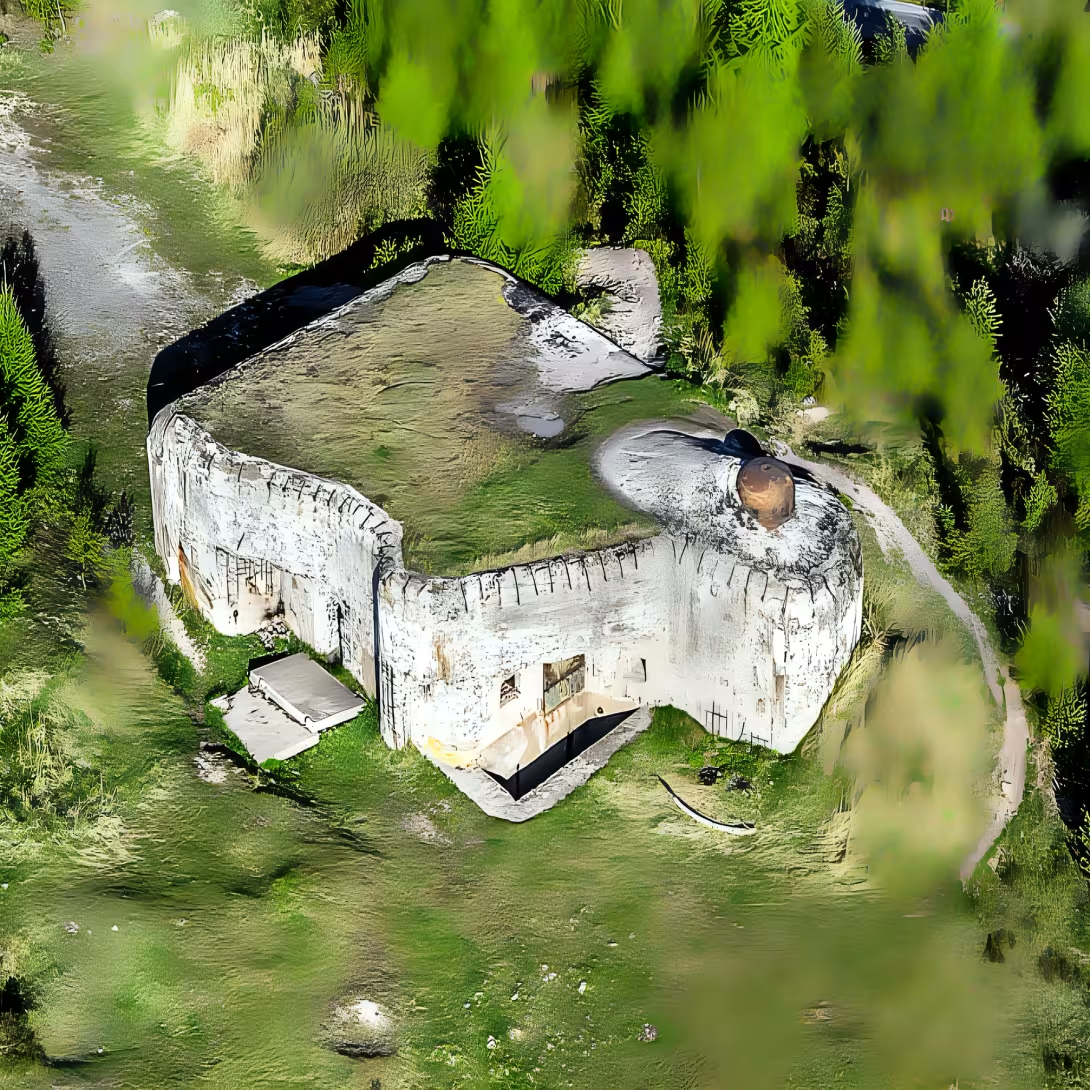
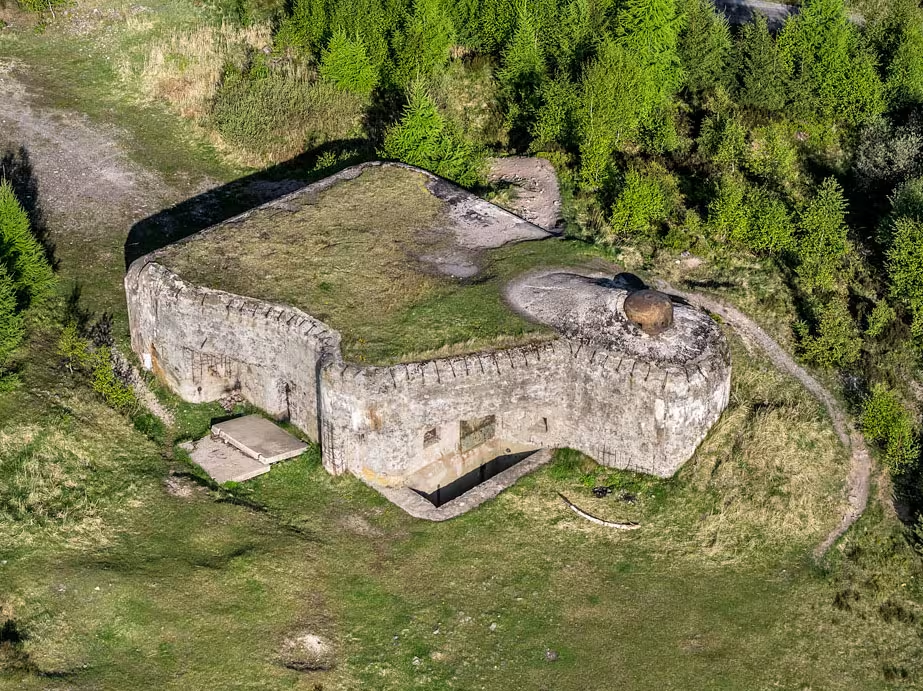
The trial and training object CE "Jordan," called "Benešák," is a infantry cabin of Czechoslovak fortification. Located in Brdy on the north slope of the Swing Hill at an altitude of 760 metres. The construction was built in 1936 for testing equipment and equipment for heavy fortification and is currently protected as a cultural monument.
On the basis of the selection procedure, the building was entrusted to the Prague company Litika a.s., which carried out a rough construction between 14 April and 27 May 1936 for an amount of 884 000 CZK. The creation of the building is linked to the construction of a heavy fortification line in the framework of the Czechoslovak defensive measures at a time of increasing tension in Europe before World War II.
Architectural is a one-sided cabin designed to fire main weapons in one direction. The building was built in the 2nd degree of resistance; Its ceiling is 200 cm thick, while the front wall covered with a rock and soil cover is 225 cm. The cabin is partially double-storey, which distinguishes it from normal infantry objects with the same size of both floors. The upper floor includes engine room and filter room, commander's station, telephone room and a large shooting room with twin machine guns and anti-tank cannon. The corridor leads to the cover wing where water tanks, toilets and entrance to the armored bell are located. The lower floor consists of quarters for 22 men, a room of ground telegraphy, a storage facility and a sink of wastewater.
Since the autumn of 1936 there have been tests of weapons developed for heavy fortification, including anti-tank cannon vz. 36 connected with heavy machine gun vz. 37, heavy machine guns vz. 35 and 37 and light machine guns vz. 26. There were also tests of various lafets, air conditioning, lighting, aggregates, strong doors and fasteners. The knowledge gained has been used since February 1937 to train border troops. The object was also subjected to a test shooting with artillery up to a calibre of 30,5 cm. After the war, part of the damage was repaired and the object was used to test new aggregates, chemical filters and PvK cannon vz. 44 / 59 calibre 85 mm, which required replacement of the original cannon shooter with a completely different design. In the 1930s, anti-tank and anti-personnel obstacles were also tested near the building.
The building intersects the cadastral border of the municipality of Úběnice (county of Příbram) and Malá Víska (county of Beroun). He was in the territory of Brda Military Departure until the end of 2015. In August 2012 it was declared a cultural monument and has been in the administration of the Military Historical Institute Prague since 2017. The cabin appeared in the films Pilots and General School; In the 1990s, there were also military history clubs.
This object represents an important technical and historical document of the time of preparations for state defence. It is an excellent example of the test operation of military equipment, so we recommend its visit to all interested in the history of Czechoslovak fortification.
Then and now
Drag the slider to compare how the landmark may have looked when it was built with the view today.

The historical appearance on the left is an AI-generated visualisation and serves as inspiration only.
Historical milestones
- 1936
- Implementation of the gross building of the building by Litika a.s.
- 2012
- The Ministry of Culture of the Czech Republic declared the object a cultural monument.
- 2017
- Transfer of administration of the building to the Military Historical Institute Prague.
Architectural development
It is a one-sided cabin built in 2nd degree of resistance with ceiling thickness 200 cm and front wall 225 cm. The building is only partially double-storey, which is different from the usual shards. After the war, some of the damage to the cabin was repaired and in later years the shooting room was modified for a new cannon.
Historical events
In 1936 there was a rough construction of the building. In August 2012, the building was declared a cultural monument. Since 2017 he has managed the Military Historical Institute Prague.
Owners
Since 2017 the cabin has been in the administration of the Military Historical Institute Prague.
Points of interest
- He's called "Benešák." - Construction was created in 1936 for testing equipment and equipment for heavy fortification. - The cabin is partially double-storey, which distinguishes it from normal infantry objects with the same size of both floors. The cabin appeared in the Pilots and General School movies. - In August 2012 it was declared a cultural monument.
Guide
Show guide text
This text was created by artificial intelligence and has not been editorially reviewed. It may contain inaccuracies.
Welcome! You stand before a unique monument to history, the infantry cabin known as Benešák. This object is part of the Brno fortification and is located in Brdy on the northern slope of the hill Swing. What interests you immediately is its robust shape and carefully maintained structure, which, although built over 80 years ago, stands as a witness to the past.
Let's dive into his history. In 1936 Benešák was built for the purpose of testing armaments and equipment for heavy fortification. This cabin was used to test anti-tank cannons, machine guns and other technical equipment. It was a test and practice object of Czechoslovak fortification, which today reminds us of the complex history of the region.
Look up at its two-story structure. This detail is strange because Benešák distinguishes from ordinary infantry objects the same areas of both floors. Its architecture reflects the function and robustness needed for testing war technology.
Although there are no known individuals involved in its creation, Benešák has his place in film history. It appeared in the films "Pilots" and "General School," which added to its cultural importance.
The interesting thing is that this object was declared a cultural monument in 2012. In 2017 he took over the administration of the Military Historical Institute Prague, which ensures his care and protection for future generations.
Now that Benešák has enjoyed our attention, I urge you to dive into the surrounding Brds. Imagine the historical scenes that took place here and let your imagination drift freely.
Thank you for your attentive listening! I hope this guide inspired you to explore this fascinating place. When we meet history again - be healthy and happy!
Tips for visitors
The best time to visit is in the spring or autumn period when nature is in its most beautiful form and the weather is usually mild. This object offers a quiet neighborhood without large crowds of tourists.
Public transport is available; verify the current connection in the search engine.
Bring your shoes suitable for walking on hilly terrain, protective sunglasses and plenty of drinking water. Given the historical nature of the site, it is also good to have a map or GPS device with you.
Photography at this place offers a beautiful view of the surrounding Brdy. The best light for pictures is in the early morning or evening, when the sun does not shine directly into the eyes while illuminating the landscape.
The surrounding area is the village of Úběnice and Malá Víska, where you can explore local markets or cultural events. These places are also suitable for families with children looking for a quiet amusement park.
Frequently asked questions
Can the monument be visited?
We have not verified whether this monument is accessible. Please ask the owner or operator, or the local municipal office.
Why is the monument protected?
It is listed in the Central List of Cultural Monuments of the Czech Republic as a cultural monument (register no. 1389562810).
Businesses nearby
Do you run a restaurant, accommodation, shop, museum, rental, wellness or other visitor service near this monument? Show yourself directly to the people heading to it — this is how they will see you in the app and on the web:
Nearby
Objekt se nachází v Brdech na severním svahu kopce Houpák v blízkosti obcí Obecnice a Malá Víska.
Accommodation nearby
Themed route
Thematic cruise route around the test and training object CE
1. Starting with Swing: This hilly slope is ideal for initial view of the surroundings of Brd. Here you can enjoy the beautiful natural landscape and explain how this place is suitable for the test subject thanks to its terrain.
2. Main objective: Testing and training object CE: This object is a key part of the route where you can learn about its purpose and history. It's a place where there are different tests and research, which is important for the technological area.
3. Municipal area: After visiting the building we will move to the nearby village of the Municipal area. This small village offers a view of traditional Czech life and you can see its architecture, which is naturally adapted to the local environment.
4. Little Viska: Continue to the Little Visa where you can explore other parts of Brd and enjoy a quiet moment in the picturesque environment. This village is famous for its natural beauty and historical backgrounds.
5. Return to Mushroom: After exploring both villages, we will return to the northern slope of the hill Mushroom to close the route by looking at the whole area and reflecting overnight in this interesting region.
This route offers a combination of technological knowledge with both natural and cultural experience, making it ideal for different types of visitors.
Seasonal recommendations
Spring
During the spring, the visit to the historical monument is celebrated by the renewed nature and mild sunlight, which creates a warm atmosphere. Flowers and young leaves colour the area around the monument, which provides a beautiful background for photographs. The special feature is also the morning dew that can add magic to the visit. It is recommended to visit the memory in the early afternoons when the temperature is most beautiful and the crowds are usually less. Due to the increased sunlight, you should use protective glasses and UV cream, but also remember warm clothes for a cooler morning.
Summer
In summer, the historical monument is full of life, when nature develops in full force and the sun illuminates every diagonal. The atmosphere is charged with warm air and bird sounds, creating a pleasant atmosphere for walks. Summer is also the time of the highest number of visitors, especially on the middle of the day when the temperature reaches its peak. It is recommended to come to a memorial in the early afternoon to avoid the deepest sunlight and crowds. Don't forget to bring your glasses, UV cream and plenty of drinking water as well as light clothes suitable for warm weather.
Autumn
In autumn, the historical monument of melancholic charm is gained due to the colouring of leaves and a quieter atmosphere. The sunlight is less intense, but still sufficient to explore the details of the monument at a mild temperature. This season offers the best conditions for photography thanks to the beautiful coloring and calm that brings fewer visitors. If you are planning to visit a monument during this period, we recommend you take with you warm clothes and goggles for morning twinkles or cooler afternoons. The special feature of autumn is also the possibility of enjoying the beautiful sunset, which gives scenes a romantic touch.
Winter
In winter, a historical monument of a mysterious and peaceful character takes place. Freezing air and maybe even snow sheets add magic to its ancient walls, while a smaller number of visitors allow more intimate exploration. Short sun days and cold temperatures require suitable clothing, including warm jackets, hats and gloves. Visit the memory in the early afternoon to enjoy maximum sunlight and avoid the coldest hours of the day.
Visualizations and artistic views


The visualisations are generated by artificial intelligence and serve as inspiration.
Photos from the area
Real photos taken near the monument


Zdroj a licence jsou uvedeny u každého snímku.
Tips from visitors
No tips yet. Be the first!
Log in and add your tip.
Sources and literature
Photos: Jirka Jiroušek / CC BY-SA 4.0, rozlišení zvýšeno umělou inteligencí — Wikimedia Commons. The author and licence also appear when you hover over the image.
Faktickým podkladem tohoto textu byl článek na Wikipedii, jehož autory jsou přispěvatelé Wikipedie. Článek je dostupný pod licencí CC BY-SA 4.0.
Location on the map
Příběhy a pověsti
Legendy, pověsti a příběhy spjaté s touto památkou
Fotografie návštěvníků
Zatím žádné fotografie. Buďte první, kdo přidá fotografii z návštěvy!
Log in a přidejte svou fotografii nebo hodnoťte.
Za ověřenou návštěvu v aplikaci získáte víc bodů — poznáme podle GPS, že jste na místě.
Reviews and comments