



Boží muka svatého Vendelína Wayside shrine
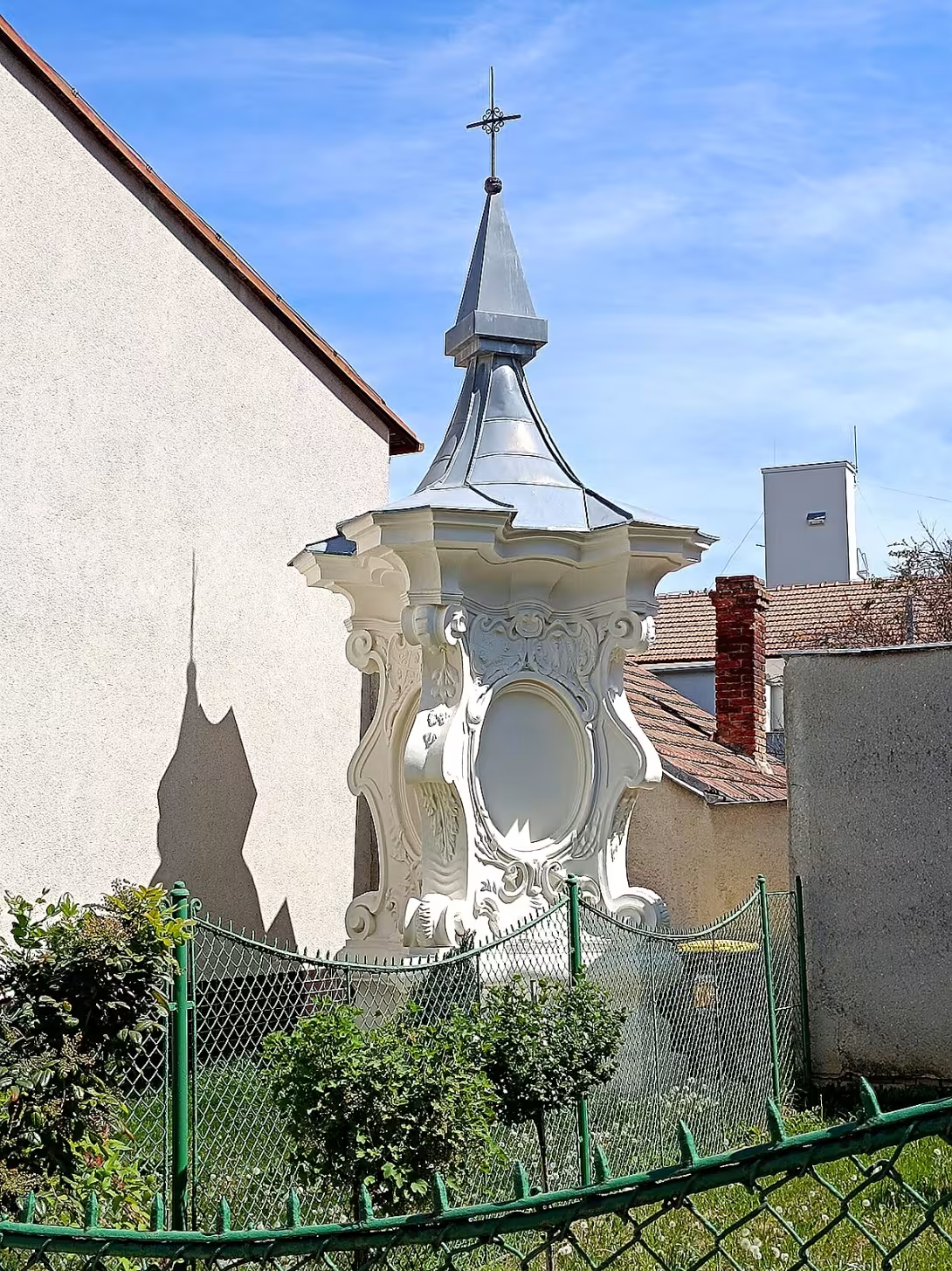
Boží muka svatého Vendelína is a small yet significant Baroque architectural monument located in Slavkov u Brna, Jihomoravský kraj. Erected around the first half of the 18th century, it stands as an iconographic and historical testament to minor sacred architecture from that era. Originally positioned near a significant cattle market on the city's outskirts, this structure was dedicated to Saint Wendelin, patron of shepherds and protector of livestock. Over time, its original frescoes were lost, replaced in the 20th century by naive artwork. Today, Boží muka is recognized as a cultural heritage site, designated in 1970 for its historical value.
The origins of Boží muka svatého Vendelína are somewhat mysterious due to the absence of archival documentation regarding its construction or authorship. However, it is generally dated around 1730 by the National Heritage Institute. The monument's establishment can be linked to a period following the repulsion of the Turkish siege of Vienna in the late 17th century when resources previously allocated for war were redirected towards civil projects. This redirection facilitated a flourishing of Baroque architecture across Moravia, with figures like Dominik Ondřej Kounice playing pivotal roles by inviting numerous artists and architects to enhance their residences.
Architecturally, Boží muka is characterized as a Baroque monument, though specific details about its construction materials or design elements are not extensively documented. The monument originally featured frescoes that have since been lost; in the 20th century, these were replaced by naive artwork. Initially erected on an open site near a cattle market, it now stands surrounded by residential buildings on Jiráskova Street between houses numbered 565 and 529.
The historical context of Boží muka is enriched by its connection to notable figures such as Dominik Ondřej Kounice, who invited artists like the Italian architect Domenico Martinelli to work in Slavkov. Although Martinelli's direct involvement with Boží muka is not confirmed, his presence and projects in the area suggest a vibrant artistic environment that may have influenced its creation. The monument’s dedication to Saint Wendelin aligns with the saint's role as protector of shepherds and livestock, reflecting local pastoral traditions.
Throughout its history, Boží muka has witnessed significant changes, particularly in its surroundings. Initially located near a cattle market, it was part of an astronomical Baroque axis that included other sacred structures like the špitální kostelík svatého Jana Křtitele and the farní věž. This alignment underscores its historical significance within the urban landscape.
Today, Boží muka svatého Vendelína stands as a testament to the rich cultural heritage of Slavkov u Brna. Its designation as a cultural heritage site in 1970 highlights its importance and ensures its preservation for future generations. Visitors are invited to explore this monument not only for its architectural beauty but also for its historical narrative, which offers insights into the Baroque period's influence on Moravian sacred architecture.
Then and now
Drag the slider to compare how the landmark may have looked when it was built with the view today.
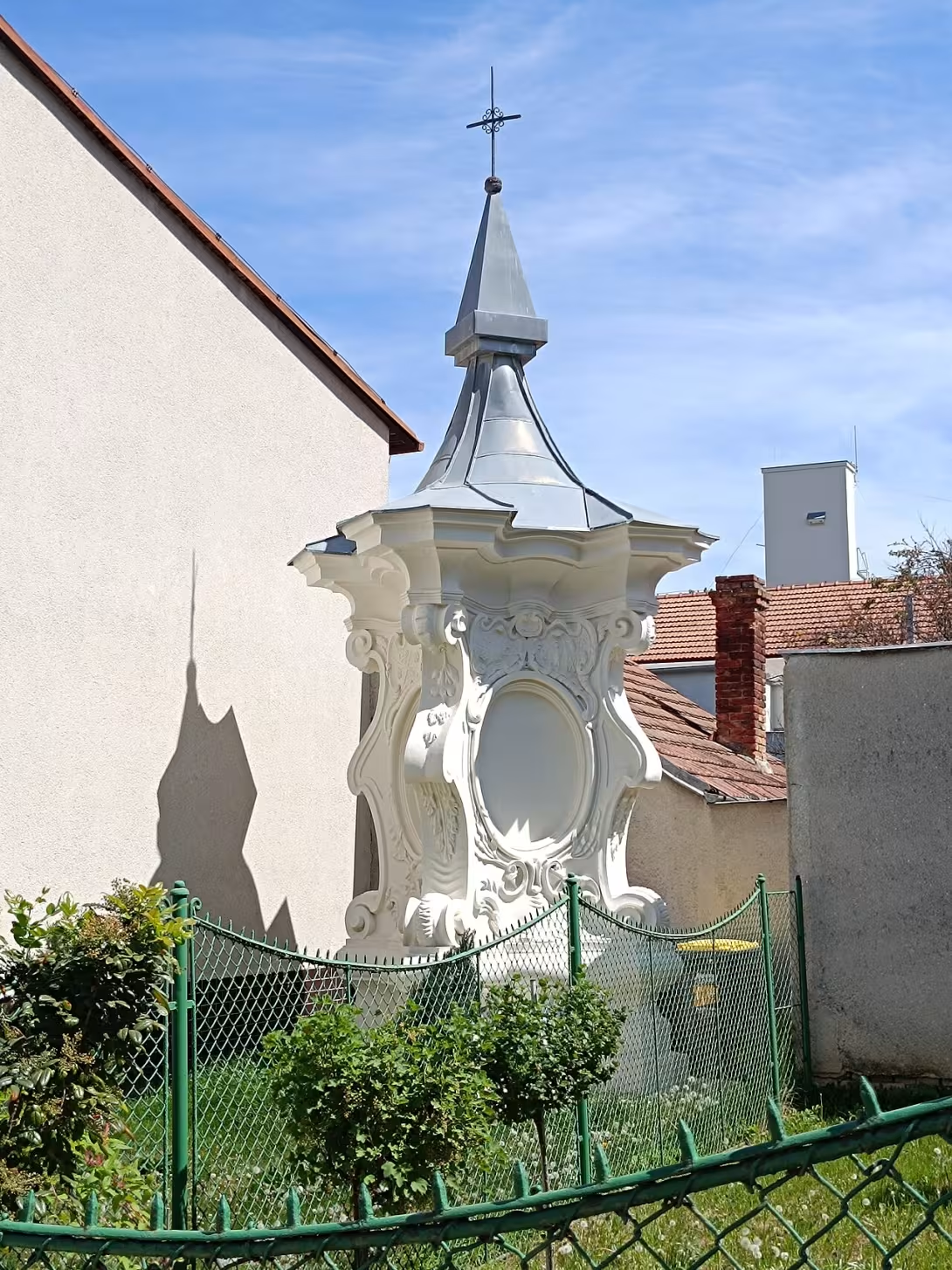
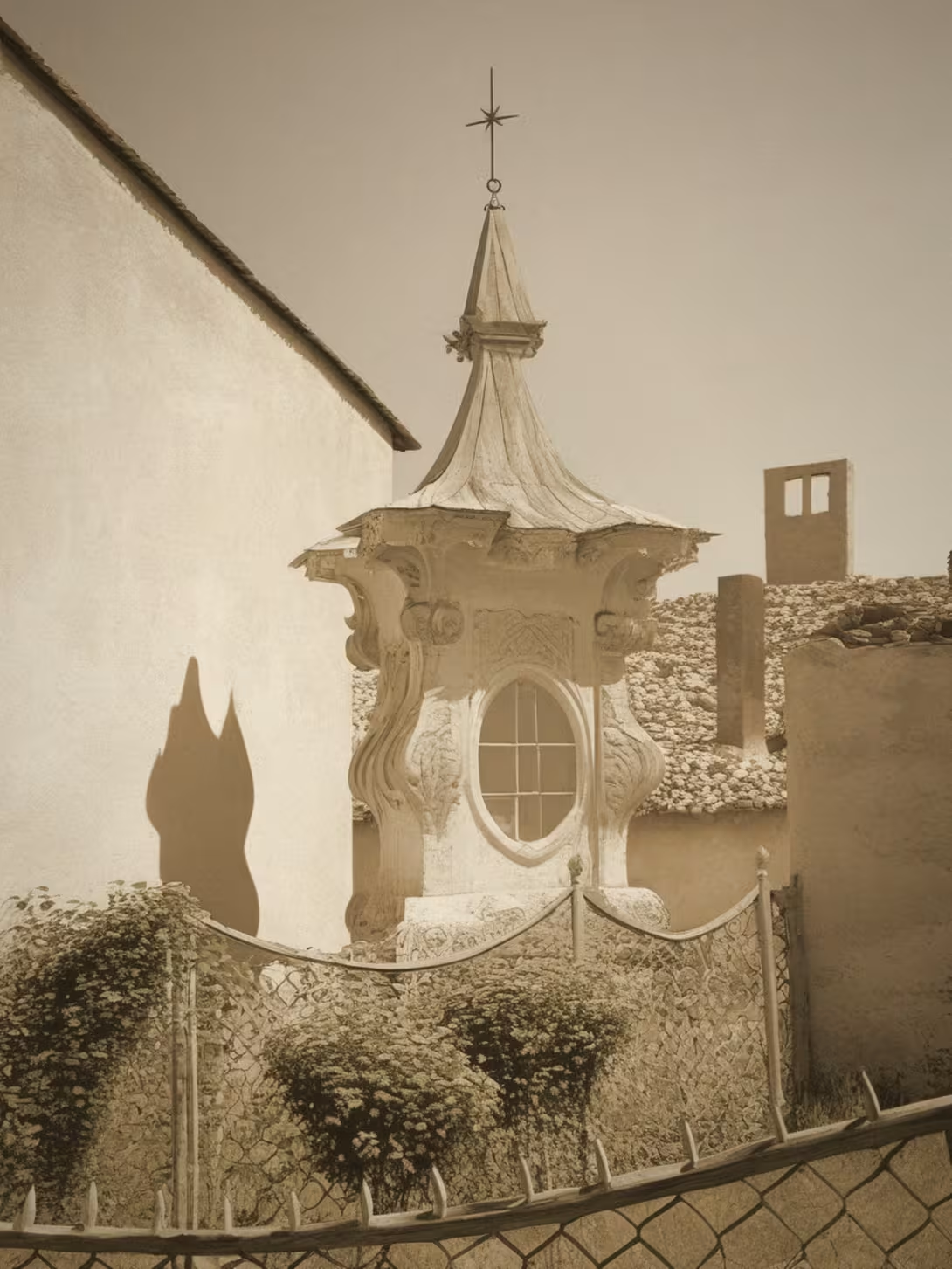
The historical appearance on the left is an AI-generated visualisation and serves as inspiration only.
Historical milestones
- 1683
- Repulse of the Turkish siege of Vienna.
- 1730s
- Construction of Boží muka svatého Vendelína, likely in this decade.
- 1740
- Boží muka svatého Vendelína erected.
- 20th century
- Replacement of original frescoes with naive artwork.
- 1970
- Designated as a cultural heritage site.
Architectural development
Initially erected in the early 18th century, Boží muka has undergone changes over time. Its original frescoes have not survived, and it now features naive artwork from the 20th century. The monument was originally located on an open site near a cattle market but is now surrounded by residential buildings.
Historical events
- 1730
- The National Heritage Institute dates the monument to around this year.
- 1970
- Boží muka was designated as a cultural heritage site.
Points of interest
- Boží muka svatého Vendelína is shrouded in mystery due to the lack of archival records about its construction or creator, making it a subject of intrigue for historians and visitors alike.
- The monument was originally part of an astronomical Baroque axis with other sacred structures such as špitální kostelík svatého Jana Křtitele and farní věž, highlighting its strategic placement in the historical urban layout.
- Although Dominik Ondřej Kounice did not directly commission Boží muka, his efforts to bring artists like Domenico Martinelli to Slavkov u Brna fostered an artistic environment that likely influenced its creation and design.
- The transition of frescoes to naive artwork in the 20th century reflects a broader trend of preserving cultural heritage through contemporary reinterpretation, adding layers of historical narrative to Boží muka.
- Despite being dedicated to Saint Wendelin, protector of shepherds and livestock, Boží muka's original location near a cattle market underscores its connection to local pastoral traditions and economic activities in the 18th century.
Guide
This guide is narrated by a synthetic voice generated by artificial intelligence.
Show guide text
This text was created by artificial intelligence and has not been editorially reviewed. It may contain inaccuracies.
The Shrine of Saint Wendelin, also referred to as the wayside shrine of Saint Wendelin, is a decorated Baroque pillar in Slavkov u Brna. It stands on Jirásek Street, nestled between residential houses. Originally, however, it stood alone by the road, on what was then the city boundary. It is among the valuable examples of small sacred architecture and has been protected as a cultural monument since nineteen seventy.
We do not know exactly when it was built or who built it. No archival record has been found so far. The National Heritage Institute dates it to around seventeen thirty.
The location was not chosen by chance. There was an undeveloped space not far from a large cattle market and a crossroads of a cart road that led north to the vineyards and to Rousínov. A large manorial farm with stables was also adjacent to the road. Scholar Jaromír Seifert moreover believes that the placement of the shrine stems from a Baroque axis of astronomical symbolism. In this axis, it connects to the small hospital chapel of Saint John the Baptist and to the tower of the parish church. Divine wayside shrines below Zlatá hora also lie on the same axis. The shrine would also connect to the sub-castle garden, which the Italian architect Domenico Martinelli intended to build south of here.
Martinelli was invited to Slavkov by Dominik Ondřej Kounic along with other artistic masters to decorate the Kounic family residential seat. His younger son Maxmilian Oldřich took over the family succession. In sixteen ninety-nine, he married Maria Arnošta from Rietberg, the heiress of the estate in the northeast of North Rhine-Westphalia. Seifert considers the presence of top-ranking creators in the city and this marriage as a possible source of inspiration. The cult of Saint Wendelin, namely, spread mainly through German lands.
Wendelin is the patron of shepherds and the protector of livestock and fields. According to legend, he came from the Scottish royal family, lived as a hermit and shepherd, and the Benedictines chose him as their abbot. In Czech lands, his depictions appear relatively rarely. Jitka Matuszková therefore believes that the cult followed the routes along which cattle were driven from Hungary or from Poland. One such route led through Slavkov from Poland further south to Hustopeče. Summer harvest devotions were also held at the pillar.
The richly shaped plastered structure once bore images of saints painted on sheet metal. These have not survived and in the twentieth century were for a time replaced by naive works.
Tips for visitors
The best time to visit Boží muka svatého Vendelína is during the late spring or early fall when the weather is mild, making it ideal for exploring the area comfortably. These seasons offer pleasant temperatures and less crowded conditions, allowing you to fully appreciate the serene atmosphere of this baroque monument. Additionally, visiting during these times provides optimal lighting conditions for photography, capturing the intricate details of the architecture in natural light.
Public transport options are available, but it's best to check the latest routes and schedules via an online search to ensure convenient access to Jiráskova Street.
When visiting Boží muka svatého Vendelína, consider bringing comfortable walking shoes as you may want to explore the surrounding area. A camera or smartphone is recommended for capturing the architectural details of this baroque monument. Additionally, carrying a light jacket can be useful in case of sudden weather changes, especially during cooler months.
For photography enthusiasts, the best spots around Boží muka svatého Vendelína are those that allow you to capture its baroque architecture against the backdrop of residential buildings on Jiráskova Street. Early morning or late afternoon light can provide a soft glow and long shadows, enhancing the monument's features. Be mindful of other visitors when taking photos to ensure everyone has space to enjoy the site.
Nearby attractions within 30 minutes include exploring the historical center of Slavkov u Brna, where you can visit other sacred structures that were part of an astronomical baroque axis with Boží muka svatého Vendelína. For families with children, consider visiting the nearby large cattle market area which offers a glimpse into local history and culture. These sites provide educational opportunities and engaging activities for all ages.
Frequently asked questions
Can the monument be visited?
This is a structure in a public space that can usually be seen from outside free of charge. We have not verified that this particular one is freely accessible.
Where is the monument?
Location: Jiráskova, Slavkov u Brna, Jihomoravský kraj. The map on this page shows the exact spot.
Why is the monument protected?
It is listed in the Central List of Cultural Monuments of the Czech Republic as a cultural monument (register no. 33305/7-3872).
Businesses nearby
Do you run a restaurant, accommodation, shop, museum, rental, wellness or other visitor service near this monument? Show yourself directly to the people heading to it — this is how they will see you in the app and on the web:
Nearby
Located on Jiráskova Street between houses numbered 565 and 529, Boží muka is surrounded by residential buildings. Historically, it was near a large cattle market and part of an astronomical baroque axis with other sacred structures in the city.
Accommodation nearby
Trips and activities nearby
Guided tours, tickets and activities nearby from GetYourGuide
Affiliate link: if you buy from the partner, we may receive a commission. The price for you does not change.
Search tours and activities →Themed route
Tematická výletní trať Boží muka svatého Vendelína
1. Boží muka svatého Vendelína - Typ: Historická památka - Proč stojí za návštěvu: Tato boží muka je klíčovým prvkem barokní astronomické osy v Slavkovu u Brna. Její umístění na Jiráskova ulici mezi domy číslo 565 a 529 z ní činí nejen duchovní, ale i historický bod zájmu. Představuje bohatou minulost oblasti spojenou s velkým dobytkářským trhem.
2. Jiráskova ulice - Typ: Historická lokalita - Proč stojí za návštěvu: Procházka po Jiráskově ulici nabídne pohled na architektonicky zajímavé obytné domy, které dodnes odrážejí historickou atmosféru místního prostředí. Tato ulice byla důležitým spojením v době, kdy se zde konal velký dobytkářský trh.
3. Památka na dobytkářský trh - Typ: Historické místo - Proč stojí za návštěvu: I když konkrétní památník není explicitně zmíněn, historie velkého dobytkářského trhu je neodmyslitelnou součástí tohoto místa. Prozkoumáním okolních budov a ulic lze získat představu o důležitosti tohoto trhu pro místní ekonomiku v minulosti.
Tato trať nabízí pohled na historické a kulturní aspekty Slavkova u Brna, zaměřené kolem Boží muky svatého Vendelína. Prozkoumejte tuto oblast a dochoďte k pochopení její důležitosti v rámci barokní astronomické osy a historie velkého dobytkářského trhu.
Seasonal recommendations
Spring: Visiting Boží Muka svatého Vendelína during spring offers a refreshing atmosphere as nature awakens with vibrant colors and blooming flowers. The soft, golden light of the season enhances the historical charm of the site, making it an ideal time for photography enthusiasts. Visitors can enjoy mild temperatures, but should be prepared for occasional rain showers by bringing a waterproof jacket or umbrella. While crowds are generally moderate in spring, arriving early allows you to experience the tranquility before more visitors arrive.
Summer: The summer months bring long days and warm weather, perfect for exploring Boží Muka svatého Vendelína at your leisure. The lush greenery and abundant sunshine create a lively atmosphere, ideal for picnics or leisurely strolls around the site. However, this is also the peak tourist season, so expect larger crowds, especially on weekends. To avoid long lines, consider visiting early in the morning or later in the afternoon. Light, breathable clothing and sunscreen are essential to stay comfortable during your visit.
Autumn: Autumn transforms Boží Muka svatého Vendelína into a picturesque setting with its rich palette of reds, oranges, and yellows. The cooler temperatures make it a pleasant time for walking around the site, while the crisp air adds to the serene atmosphere. This season sees fewer visitors compared to summer, allowing for a more peaceful experience. Layered clothing is advisable as temperatures can vary throughout the day, and carrying an umbrella might be wise due to potential autumn showers.
Winter: Winter at Boží Muka svatého Vendelína offers a magical atmosphere with snow-covered landscapes that enhance its historical beauty. Visitors should dress warmly, as temperatures can be quite low, and consider bringing gloves and hats for comfort. While the colder weather deters some tourists, those who do visit often find a quieter experience, allowing them to appreciate the site's tranquility amidst winter's charm.
Visualizations and artistic views


The visualisations are generated by artificial intelligence and serve as inspiration.
Photos from the area
Real photos taken near the monument


Zdroj a licence jsou uvedeny u každého snímku.
Tips from visitors
No tips yet. Be the first!
Log in and add your tip.
Sources and literature
Photos: Palickap / CC BY-SA 3.0 — Wikimedia Commons. The author and licence also appear when you hover over the image.
Faktickým podkladem tohoto textu byl článek na Wikipedii, jehož autory jsou přispěvatelé Wikipedie. Článek je dostupný pod licencí CC BY-SA 4.0.
Location on the map


Příběhy a pověsti
Legendy, pověsti a příběhy spjaté s touto památkou
Fotografie návštěvníků
Zatím žádné fotografie. Buďte první, kdo přidá fotografii z návštěvy!
Log in a přidejte svou fotografii nebo hodnoťte.
Za ověřenou návštěvu v aplikaci získáte víc bodů — poznáme podle GPS, že jste na místě.
Reviews and comments