



Boží muka z roku 1601 Niche chapel
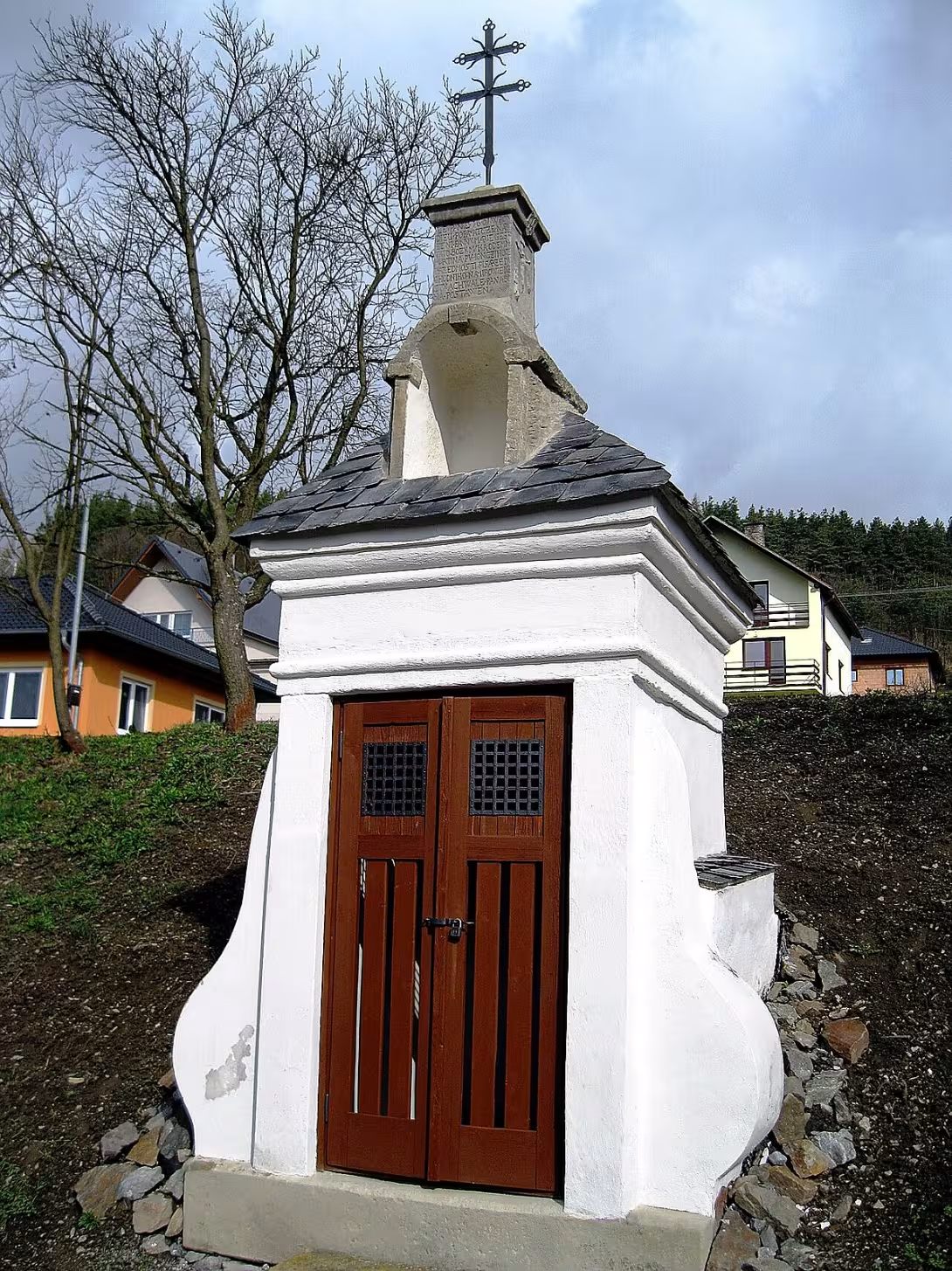
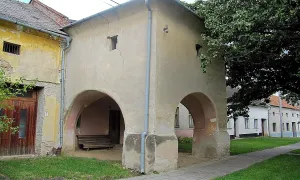
Boží muka z roku 1601 in the municipality Mírov (district Šumperk, Olomoucký kraj) are an important cultural monument of the Czech Republic. This building represents an architectural unique feature of an early Baroque. Its history and location attracts visitors who are interested in the region's rich heritage. The monument is protected as a cultural monument and its architecture includes elements of the early baroque torture of God, which makes it exceptional.
The creation of God's Torture in 1601 is attributed to Martin Pohohčí of the Premostí, a pensioner at Castle Mírov. This suggests that the construction was created as a private initiative. It probably served as a place of prayer or shelter for the locals. The architecture is typical of niche chapel. It was designed to be harmonically integrated into the environment and to offer shelter from discomfort or danger.
The architectural style is characteristic of the early Baroque period, which is reflected in formal elements and decorative solutions. Specific construction materials are not documented in detail, but the use of traditional techniques and materials available in the region can be expected. The monument boasts a inscription that mentions its fundamentalist, which increases its historical value.
Owning the chapel was probably connected to the House of Podohůch from Předmostí and their connection to castle Mírov. That suggests she may have been part of this family's larger estate. No dramatic changes in ownership or territorial status are known from historical records, suggesting its stability for centuries.
The key aspect of God's torment is the date of their creation and the connection with Martin Podohůčí of the Poverty. These facts provide valuable information on personal initiatives that have contributed to the region's cultural wealth. The chapel thus served not only as a religious space, but also as a monument to individuals and their relationship to the local community.
Today Boží muka z roku 1601 is open to the public. It is worth visiting for its historical value as a reminder of the art of an early Baroque. Its preservation and protection ensure that future generations appreciate its importance and beauty. The visit offers a unique view of the past and reminds people who left this memory.
God's torment in Mírov is not only an architectural pearl, but also a testament to the history and traditions of the region. Their visit offers an opportunity to explore the cultural heritage of the Olomouc Region and to appreciate the efforts of people who have tried to preserve their traditions even in times of change.
Historical milestones
- 1601
- The creation of architecture involving parts of early baroque torments
Points of interest
- The construction represents an architectural unique early Baroque. - The birth of 1601 is attributed to Martin Pohohčí from Předmostí, a retired typist at Castle Mírov. - She probably served as a place of prayer or shelter for the locals. - The architecture is typical of niche chapel. - A landmark with a sign showing her fundator.
Guide
Show guide text
This text was created by artificial intelligence and has not been editorially reviewed. It may contain inaccuracies.
Welcome to the village Mírov. You just stopped by one of the oldest and quietest witnesses in the history of this place. You are standing right in front of God's torment, which with its quiet presence is forced to stop immediately, to self-knowledge and to a moment of peace in today's hasty world. Look at this small but extremely important structure that stands before your eyes. Though it may seem stealthy, its existence is deeply rooted in time and in the soul of this region. Feel the atmosphere of the place where the human work meets the constantly flowing time. This chapel is not just a stone structure, it is a bond between the past and the present, which now, thanks to these headphones, allows you to experience much more intensively.
Let us now move further into time together and understand why this monument is even standing here. Imagine 1601. The world around us was completely different then, full of other questions, other fears and other hopes. This chapel was created during this fascinating period. Its history dates back to when architecture began to change, when older traditions began to intersect with new influences. The creation of architecture, which you are currently observing, carries echoes of early Baroque elements. This is very important, because we are on the threshold of one of the most striking times in the history of our art. The torment of God from the beginning of the seventeenth century is not only a religious symbol, it is a record of the spirit at that time, which tried to express its faith and its presence in the landscape through these tiny but permanent monuments. They were built as landmarks, as places of prayer for pilgrims, but also as an expression of the deep human need to leave something lasting.
Now pay attention to the very form of the object in front of you. Notice this is a niche chapel. This specific type of construction is very elegant in its simplicity. The niche form creates a space that is small but still acts as a sacred alcov, a place that is set aside from the world around it. Look at its structure and see how its shapes fit into the surrounding environment. Even if the details you see here are simple, each element has its meaning. This chapel is today protected as a cultural monument of the Czech Republic, which gives you clear proof of its immense value. It's not just an ordinary building, it's part of our national heritage that we have to preserve for future generations. Looking at its surface and how light hits it, you can feel the weight of the hundreds of years that this object has survived. Every year that has passed since 1601 has left its mark here, and yet it still stands, firm and dignified.
If we try to trace the human stories associated with this place, we'll find names that have written down in the history of this region. One such name is Martin Půhončí z Předmostí. Although his name may not immediately evoke the memory of the great heroes, for local history and for understanding the context of time is crucial. Characters like him are those who formed the tissue of society who participated in the development of the region and its spiritual life. Their existence is inseparable from these little monuments that serve them as eternal monuments. Although we do not know exactly what role he played in the very creation of this particular chapel, his name connects us to the people who lived in this area, believed and built.
But now I want to invite you to think about what is missing from these historical records, and that is where one of the greatest mysteries of this place lies. Although we know when the chapel was created and what architectural elements it carries, its true creator remains anonymous. The architects who designed this building and the craftsmen who carved it with their hands and built it remained unknown. There's something fascinating about it that such an important object that has lasted four centuries doesn't have its name written in textbooks. Who was that? Was he a local master who learned the traditions of his ancestors, or someone who came from a distance with new ideas of an early baroque? This anonymity gives the place special mysticism. The construction is thus becoming the work of the individual, but the whole period, the entire human effort, which was trying to create something beautiful and eternal. This ignorance forces us to be more humble before the craft and before the people who worked in silence, without the desire for fame, but with the intention of creating something that will last.
Look at her for a while. Feel the silent force this object carries inside of you. It's fascinating how a small object can control space and attract the attention of a man who just walks past it. These divine torments are proof that history is not only about the great battles and kings, but also about the silent moments of faith, about the hardworking hands of craftsmen and about the little chapels that stand on the edge of the road and watch the world change.
I hope this short journey over time has brought you some peace and new perspectives. This monument is just one of the many treasures this region offers. I suggest you continue your walk in the village Mírov and pay attention to other details of the surrounding environment. Every stone, every road, and every old building here can have its own story waiting to be discovered. Thank you for spending this moment with us. We wish you a beautiful rest of the day and many other interesting discoveries during your next survey. Goodbye.
Tips for visitors
The best time to visit is during the bright hours of today, when natural light best highlights the details of historical architecture of the niche chapel. For photography we recommend using morning or late afternoon light to create interesting shadows and underline the texture of the object.
You can also reach the monument by car through public transport; Please check the current connections and timetables in internet search engines.
For a comfortable experience we recommend taking drinking water and shoes suitable for walking in the village. For families with children the visit is particularly interesting as part of a quiet walk around the area where they can observe historical elements in the municipal environment.
Within a 30-minute radius of the site there are no other specific monuments in the provided documents, so it is recommended to pay attention to the chapel itself and its historical importance in the municipality of Mírov.
Frequently asked questions
Can the monument be visited?
This is a structure in a public space that can usually be seen from outside free of charge. We have not verified that this particular one is freely accessible.
Where is the monument?
Location: Mírov, Olomoucký kraj. The map on this page shows the exact spot.
Why is the monument protected?
It is listed in the Central List of Cultural Monuments of the Czech Republic as a cultural monument (register no. 22261/8-1030).
Businesses nearby
Do you run a restaurant, accommodation, shop, museum, rental, wellness or other visitor service near this monument? Show yourself directly to the people heading to it — this is how they will see you in the app and on the web:
Events nearby
Zdroj akcí: otevřená data měst a obcí ČR (Národní katalog otevřených dat) a kalendář akcí Národního památkového ústavu.
Nearby
ITEX Show interactive overview of the surroundings - restaurants, accommodation, rentals and other places within a 15 km radius.
Data: OpenStreetMap contributors, 15 km radius.
‡ Historical monuments
- Mírov (0.2 km)
- Kryštof Alois Lautner (5.1 km)
- Moral column (5.7 km)
- Radkovskaya (9.8 km)
- Monument of railway construction Olomouc - Praha (10.1 km)
- Chapel Saint Josefa (10.7 km)
- Castle Bouzov (10.8 km)
- Jewish Cemetery (11.8 km)
Restaurant and catering
- Escobar (5.5 km)
- Brus (5.5 km)
- U Cechmistra (5.7 km)
- Diesel (5.7 km)
- Na Pestí (7.2 km - 11)
- U Foxes (8.3 km - us. Peace 54 / 13)
- Restaurant on rose (8.7 km - Olomoucká 146 / 26)
- Hodka under the dam (9.0 km - 28 October 877 / 18)
Accommodation
- Vacation area Motylek (5.4 km)
- Táboríště Tydra (6.6 km)
- Vila Haj (6.8 km)
- u Coufalo (8.3 km)
- Hostel (8.5 km - Castle 107 / 21)
- Strelnice (8.8 km)
- Hotel Amco Zábřeh (9.5 km - Masaryk Square 43 / 3)
- Na Hristi (9.5 km)
› Rental and sports
- Bikesport Movelnice (5.8 km)
- Sportisimo (6.8 km)
- Boat rental Samba s.r.o. (8.1 km)
- Skatepark (8.8 km)
- SK Loštice 1923 (8.8 km)
- Swimming area Zábřih (8.9 km)
- Sportisimo (9.2 km)
- Massages and personal training Recovery centrum (9.4 km - Crozkovsky 2186 / 10)
© Tourism and nature
- Quater (3.0 km)
- Starozamecký prá (3.9 km)
- Mohelnice (us.) (5.7 km)
- Úsov (us., bus) (11.8 km)
- Řimice (13.2 km)
- Brník (substation) (14.3 km)
- NS Tremor - 6 SZ edge Tremor (14.3 km)
- NS Třesín - 6 Landscape Protection (14.4 km)
Accommodation nearby
Themed route
1. Boží muka z roku 1601 (chapel), type: sacral monument, represents the main historical destination of the tour. 2. The immediate area of the chapel, type: outdoor space, offers a quiet place to observe the building in its natural environment. 3. Architectural details of the chapel, type: artistic elements, allow a detailed view of the craft work from the beginning of the seventeenth century.
Seasonal recommendations
Spring: In spring life awakens around the chapel and surrounding vegetation begins to bloom, which gives the place freshness. The light is fine and does not shine in this period, which is ideal for observing the details of the historical building. We recommend taking layered clothes because the morning cold can still be felt. It is best to visit the memory of the morning, when the air is the purest and the visitors are few.
Summer: Summer months bring intense sunlight and warm atmosphere to Mírov. The chapel is surrounded by full green growth, which provides a pleasant shade. Due to the increased attendance in the main summer season, it is advisable to come early in the morning to enjoy the quiet before the noon heat and crowds of people. Don't forget the sun cap and plenty of fluids for a pleasant walk.
Autumn: Autumn season is characterized by golden shades of leaves and morning fog that create a melancholy and deep mood around God's torment. The low sun highlights the texture of the old stone beautifully. Quality waterproof footwear and warmer clothing are essential for a comfortable visit. The ideal time for a visit is in the afternoon, when the colors of the landscape most excel.
Winter: In winter, the chapel is very quiet and magical, especially when it is covered with snow. A short day requires planning, which is why it is best to arrive early to use the remaining light. It is necessary to prepare for frost and wear very warm clothes and shoes with good grip. The atmosphere in advent time is very calm and lonely.
Visualizations and artistic views


The visualisations are generated by artificial intelligence and serve as inspiration.
Photos from the area
Real photos taken near the monument


Zdroj a licence jsou uvedeny u každého snímku.
Tips from visitors
No tips yet. Be the first!
Log in and add your tip.
Sources and literature
Photos: Lehotsky / CC BY-SA 3.0 — Wikimedia Commons. The author and licence also appear when you hover over the image.
Location on the map
Příběhy a pověsti
Legendy, pověsti a příběhy spjaté s touto památkou
Fotografie návštěvníků
Zatím žádné fotografie. Buďte první, kdo přidá fotografii z návštěvy!
Log in a přidejte svou fotografii nebo hodnoťte.
Za ověřenou návštěvu v aplikaci získáte víc bodů — poznáme podle GPS, že jste na místě.
Reviews and comments