



Budova Piaristické koleje v Příboře Monastery
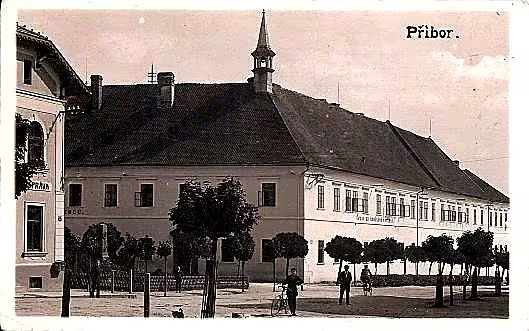
Budova Piaristické koleje v Příboře is a monastery monument with rich history and architectural significance. Located on Lidicka 50, in the village Příbor, district Nový Jičín, Moravskoslezský kraj. It was founded in 1694 by Bishop Charles II of Liechtenstein. It is protected as a cultural monument of the Czech Republic and is one of the most important elements of the local monument reserve.
The project, designed by G. P. Tencalla in 1693, was implemented as a three-wing one-story building in the style of an early Baroque. The monastery became an important urban element of the city Příbor and reflects its architectural and historical value.
The architecture is characterized by elements of an early Baroque, with simple, elegant lines and symmetrical arrangement. It was designed to meet the needs of the Piarist College as an education center.
The history of the building is linked to the order of Piarists, dedicated education. The monastery played an important role in the social and cultural life of the village. Important events include its status and development as educational institutions.
Today the building is protected as a cultural monument and accessible to visitors. It offers a unique view of the region's history and architecture, which makes it attractive for historians and tourists.
Budova Piaristické koleje v Příboře is an important part of the cultural heritage of the Czech Republic. Its rich tradition of educational institutions in Moravia makes it not only interesting but inspiring.
Then and now
Drag the slider to compare how the landmark may have looked when it was built with the view today.
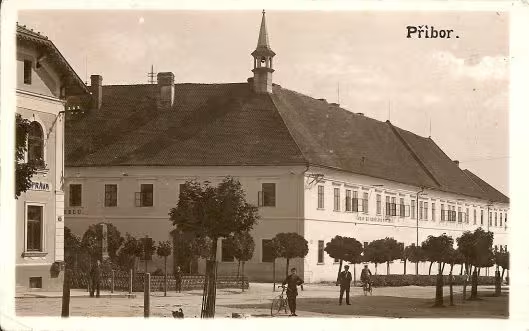

The historical appearance on the left is an AI-generated visualisation and serves as inspiration only.
Historical milestones
- 1694
- The establishment of the building by the Bishop of Olomouc Karl II of Liechtenstein.
Points of interest
- The building is a monastery monument with rich history and architectural significance. - It was founded in 1694 by Bishop Charles II of Liechtenstein. - It is protected as a cultural monument of the Czech Republic and is one of the most important elements of the local monument reserve. - The project, designed by G. P. Tencalla in 1693, was implemented as a three-wing one-story building in the style of an early Baroque. - The architecture is characterized by elements of an early Baroque, with simple, elegant lines and symmetrical arrangement.
Guide
Show guide text
This text was created by artificial intelligence and has not been editorially reviewed. It may contain inaccuracies.
Welcome to the case. Right now, listening to this voice, you are in a place that carries a deep breath of history. You're standing right in front of the Piarist Dorm Building. Feel the atmosphere around you. It is a place that, with its presence in this city, brings about a sense of stability and duration. Take a look at this vast entity that stands before you. It is a building that is not just a house, but a protected cultural monument of the Czech Republic. Her presence here is not random, it's part of the identity of this region and the entire city. Feel how this building hovers over the surrounding streets of Lidicka and becomes an important point in this urban space. It's a monastery, a place that was meant for something higher than just ordinary life.
Now let's go back to the past together to understand why this object is standing right here. Imagine a world that existed over 300 years ago. It's 1694. At that time, it was decided what the face of our cities would be and what institutions would determine their lives. The creation of this building was not a random process, but a result of the will of a powerful man. It was the Bishop of Olomouc Charles II of Liechtenstein. He's the one who created this place. Imagine the weight of the decision that would last for centuries. The Bishop of Olomouc, who had a tremendous influence at that time, placed a cornerstone in this place, on which the present form of this monastery also stands. This act of foundation was a symbol of the effort to organise spiritual and social life in this area. The building was therefore not only created as a building work, but as a manifestation of a certain order and faith which was to remain in the Moravian-Silesian region.
Now pay attention to the very form of the building you are currently observing. Even if we can't look inside, pay attention to how this object affects your senses. Notice its overall size and how it dominates its surroundings. As a monastery, this building must emit some dignity and peace. Look at her walls and see how they reflect time. It's a building that was built to withstand all the storms and changes that came with the end of the years. Feel the weight of her conservation status. Every detail you see in her appearance is proof that this was a project of great importance. Even if we do not focus on the details, pay attention to how this building is integrated into the landscape of Příbor. It's an object that requires respect and makes you stop and just be.
Speaking of the history of this place, we need to think about who was all here. Although the names of the particular people who lived here or who directly controlled the construction are not known in these records, their presence is felt in every part of this history. We don't know the names of the architects who drew the first plans or the names of the people who worked here every day. That's where the strange power of this place lies. It's a place that speaks through its existence, not through the names of famous personalities. Yet it is clear here that someone with great possibilities and clear intentions was behind the creation. Bishop Charles II of Liechtenstein was the one who started this process, but the very existence of the building is the work of many unknown hands that have cared for this place for centuries.
And that's where one of the great mysteries of this place lies. How is it that a building that was created in 1694 still stands so firm and still addresses us so strongly, even though we were losing the names of those who created it? Feel the quiet mystery floating around these walls. It's the secret of time and unknown creators. Maybe someday you'll stop and think about how many unknown stories are hidden in these walls. How many people have gone through here, how many decisions have been made here and how many views of this building have changed over the years without it ever being written in books. This ignorance of architects and personalities gives the place some depth that cannot be found in any textbooks.
Now, however, we will not keep you in one place for too long. This building is just one of many points that make up a rich map of Příbor. It's a gateway to history that you can continue to discover. The Piarist College building has just shown you its face and reminded you that history is not just about data but about a sense of duration. So continue to walk through this city, perceive its atmosphere and look around you with the same curiosity you just had. Příbor still has many things to reveal to you. Thank you for stopping by and paying attention to this memory. We wish you a pleasant continuation in exploring this beautiful place. We'll say goodbye and wish you a beautiful day.
Tips for visitors
The best time to visit the Piarist College in the Peak is autumn or spring, when it is quieter and nature offers beautiful colors. This period also offers mild weather suitable for walking around historic buildings.
For transport to Příbora is an option to use both a passenger car and public transport.
When planning a visit, take with you backup shoes and clothes suitable for outdoor conditions, because part of the building can be visited even without internal business.
Photography is very interesting here, especially during sunny afternoon hours, when the roof and facade of the building light up in the best light. Don't forget to also explore the gardens around the monastery.
In the vicinity of the Piarist College you can visit the historic square and other sights in the centre of Příbora, which are easily accessible by foot. For families with children it is advisable to plan a walk around the local park or to look for entertainment activities nearby.
Frequently asked questions
Can the monument be visited?
Religious buildings are usually open mainly during services; at other times a visit is normally arranged with the parish or the operator. We have not verified specific times.
Where is the monument?
Location: Lidická 50, Příbor, Moravskoslezský kraj. The map on this page shows the exact spot.
Why is the monument protected?
It is listed in the Central List of Cultural Monuments of the Czech Republic as a cultural monument (register no. 32345/8-1666).
Businesses nearby
Do you run a restaurant, accommodation, shop, museum, rental, wellness or other visitor service near this monument? Show yourself directly to the people heading to it — this is how they will see you in the app and on the web:
Nearby
➜ Zobrazit interaktivní přehled okolí – restaurace, ubytování, půjčovny a další místa v okruhu 15 km.
Data: OpenStreetMap contributors, okruh 15 km.
🏰 Historické památky
- Lašské muzeum (5.0 km)
- Štramberk (5.7 km)
- Liška Bystrouška (6.6 km)
- Dr. Josefa Jandy (11.4 km)
- Pomník osvobození (11.5 km)
- Jiří Raška (11.6 km)
- Jan Kalus (11.7 km)
- Pomník rudoarmějce (11.7 km)
🍽️ Restaurace a stravování
- Robinson (4.5 km)
- Bounty (4.5 km)
- Vosíme (4.7 km)
- Grand café (4.8 km)
- Kimex (4.8 km)
- Restaurace Laguna (5.4 km)
- Hans (5.7 km)
- U Mlynářky (8.9 km)
🏨 Ubytování
- Autocamp RICCO (0.8 km)
- Ubytování U Tížků (5.8 km – Horní Bašta 309)
- Josef Petráš (5.8 km – Zauličí 242)
- Hotel Štramberk (5.8 km – Náměstí 8)
- Chaloupka pod náměstím (5.9 km – Dolní Bašta 254)
- Ubytování V Podhradí (5.9 km – Dolní Bašta 366)
- Hotel Sýpka (7.6 km – 181)
- Palkovické Hůrky (9.5 km)
🚲 Půjčovny a sport
- LET'S FLY s.r.o. (6.5 km – 403)
- Fotbalový stadion (10.1 km)
- Bike Servis Beskydy (11.4 km – Dolní 431)
- Fit centrum (11.6 km)
- Frensport (11.6 km – nám. Míru 22)
- Skokanský areál Jiřího Rašky (12.0 km)
- Rybářské potřeby (12.4 km – Martinská čtvrť 1789)
- U Toma (12.5 km)
🥾 Turistika a příroda
- Turistické informační centrum (0.1 km)
- Hončova hůrka (2.3 km)
- Pískovna (6.6 km)
- Kotouč (6.7 km)
- Červený kámen (7.4 km)
- Hukvaldy (obora) (7.8 km)
- Oderská lávka (8.3 km)
- Studénka (Pasečný most) (8.7 km)
Accommodation nearby
Themed route
Thematic cruise route around the Piarist College Building in Příbor
1. Piarist College Building (monastery) Type: Historical monument Why is it worth a visit: This building is one of the most important architectural works in the Příbor. It is an example of the Baroque style and has been built as a seat of piarists who have devoted themselves to youth education. The interior of the monastery offers beautiful frescos and historical furniture.
2. Church of St. John the Baptist Type: Religious object Why is it worth visiting: This church is one of the oldest sacral buildings in the village. Its Gothic elements and history, dating back to the 14th century, make it an important cultural point. The church is located near the Piarist College, which makes it easy to visit both monuments.
3. Příbor - historical center Type: City area Why is worth a visit: Příbor has a rich history and its old streets offer a view of many chateau houses and baroque buildings. By exploring the centre you will learn more about the history of the village and its cultural heritage. It's an ideal place for a brief look at local life.
4. Square of Peace Type: Public space Why is it worth a visit: This square is the heart of Příbora, where there are many cultural and historical monuments. It is a place to relax and have fun where you can enjoy beautiful outdoor space and film screenings during the summer.
5. Příbor - local museum Type: Cultural institutions Why is it worth a visit: The local museum offers exhibits about the history and culture of the village, which provides a deeper insight into life in Příbor. It's a great way to learn more about local traditions and historical events.
This route offers a comprehensive view of the cultural and historical aspects of Příbora, with an emphasis on its most important monuments.
Seasonal recommendations
Spring: In the spring period, the college in the Příbor is revived by flower blooming, which adds colour beauty to the surrounding green. The sun's rays illuminate the stone facades and give life to the monastery environment. For a visit it is advisable to wear clothes that are easily adapted to temperature changes because spring weather can be variable. The ideal time for visiting is the afternoon when the sun lights up the building and surrounding nature in the most beautiful light.
Summer: In summer, the tracks take up life under the cloak of warm sun days. Nature is in bloom and the surrounding green meadow can be an ideal place to relax and relax. Visitors should remember that summer brings higher temperatures, so it is advisable to dress lightly and wear protective sunglasses. The best time to visit is in the morning or in the evening when it is less hot and quieter atmosphere allows you to enjoy the historic building without discomfort.
Autumn: In the autumn period of the track in the Pøeboř shines in the colour shade of the leaves. Changing the color of vegetation and warmer light give the monastery a unique atmosphere. This time of year is suitable for visiting because it usually avoids the largest number of tourists and the crowds are mild. Clothes should be warm because the weather is getting colder. The best times for visiting are a sunny afternoon, when everything is illuminated by pleasant light.
Winter: In winter the tracks have fewer visitors and offer a quiet atmosphere. Freezing weather can give the whole environment a romantic look, especially when the sun stops over the snow cover. Visitors should be well dressed, with a warm coat and protection against cold. The best time to visit is noon, when the sun's rays illuminate the building and its surroundings in the most beautiful way, bringing a sense of peace and relief from the freezing morning.
Visualizations and artistic views


The visualisations are generated by artificial intelligence and serve as inspiration.
Photos from the area
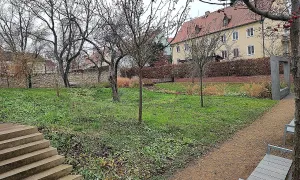
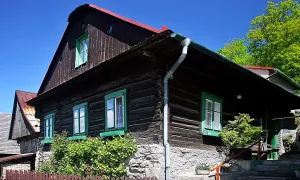
Real photos taken near the monument


Zdroj a licence jsou uvedeny u každého snímku.
Tips from visitors
No tips yet. Be the first!
Log in and add your tip.
Sources and literature
Photos: autor neuveden / Public domain — Wikimedia Commons. The author and licence also appear when you hover over the image.
Location on the map


Příběhy a pověsti
Legendy, pověsti a příběhy spjaté s touto památkou
Fotografie návštěvníků
Zatím žádné fotografie. Buďte první, kdo přidá fotografii z návštěvy!
Log in a přidejte svou fotografii nebo hodnoťte.
Za ověřenou návštěvu v aplikaci získáte víc bodů — poznáme podle GPS, že jste na místě.
Reviews and comments