

Bývalá zámecká sýpka - Jemnice Chateau
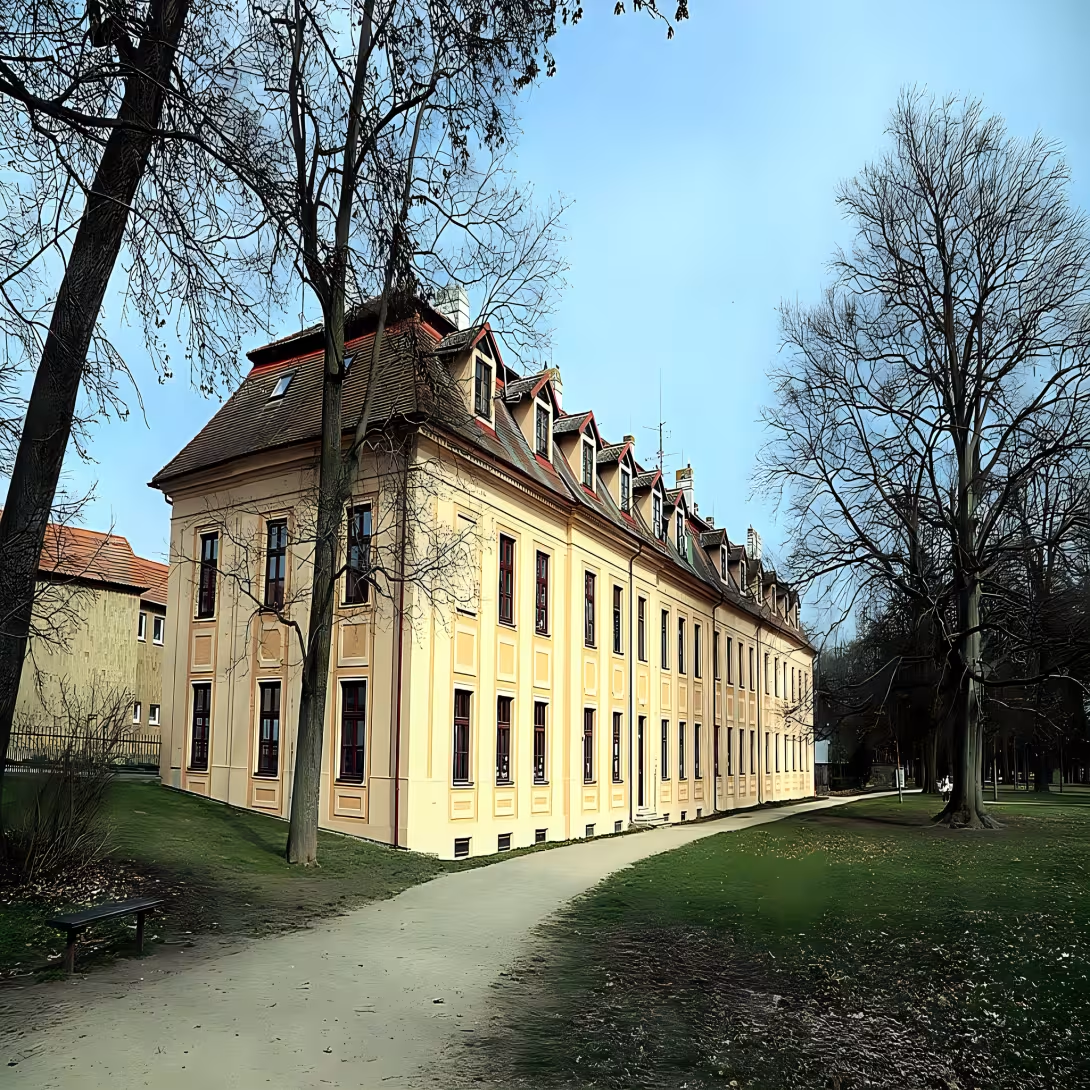
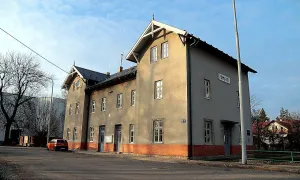
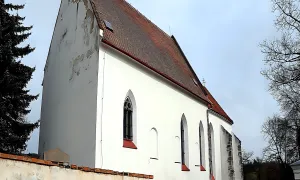
Former chateau granary in the municipality of Jemnice in the district of Třebíč in the Region Vysočina is a protected cultural monument, registered under number 1000120537 _ 0006. This Baroque building is part of a wider chateau complex.
The chateau in Jemnice was created by rebuilding a stone chateau of the type of French castel, which was originally involved in the city fortification. In the 16th century, the gentlemen of Lomnice transformed it into a four-wing Renaissance chateau.
There was a significant change of appearance in the middle of the 18th century during the Daun family, when the building underwent Baroque reconstruction. The design of the chateau was created after 1734 according to the project by Anton Erhard Martinelli. At the beginning of the 19th century, specifically after 1818, the Stadions had the interiors modified in an empirical spirit. The last owners, the Pallavicini family, bought the manor in 1842 in the person of Margrave Alfonso Pallavicini. He had the chateau rebuilt in rococo style according to plans of Viennese architects. In the second half of the 19th century, the complex was further expanded with a portico, horticulture, brewery and administrative buildings.
Throughout history, the object served various purposes. During the war, Viennese art collections were stored and the building worked as a hostel for students of the Viennese Conservatory. After 1945 the chateau was confiscated and used by the Czechoslovak People's Army to accommodate the team. The military unit died here in 1992.
Since 1994, the entire chateau area has been owned by the city of Jemnice. The chateau has been protected as a cultural monument since 1968. For visitors there is a 10-metre 3D model on the ground floor of one part of the building, which shows the historical Jemnice from before the fire of 1832.
The monument represents a valuable example of layered architecture from Renaissance to Rococo. Her visit offers insight into the history of the region and the development of noble settlements.
Then and now
Drag the slider to compare how the landmark may have looked when it was built with the view today.
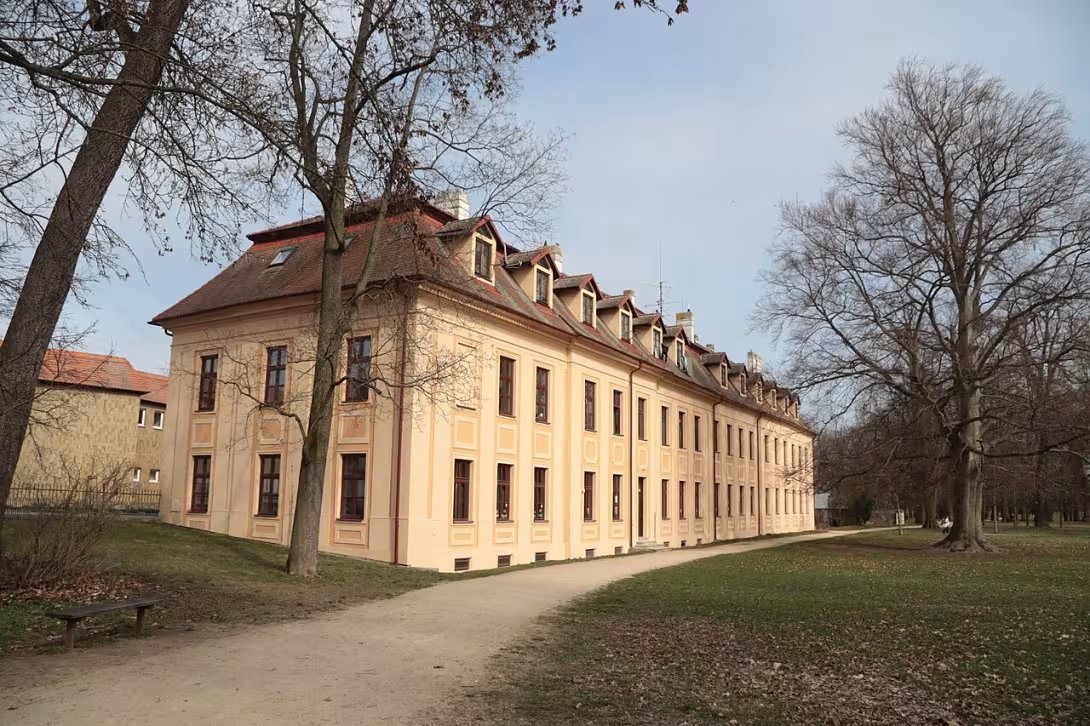
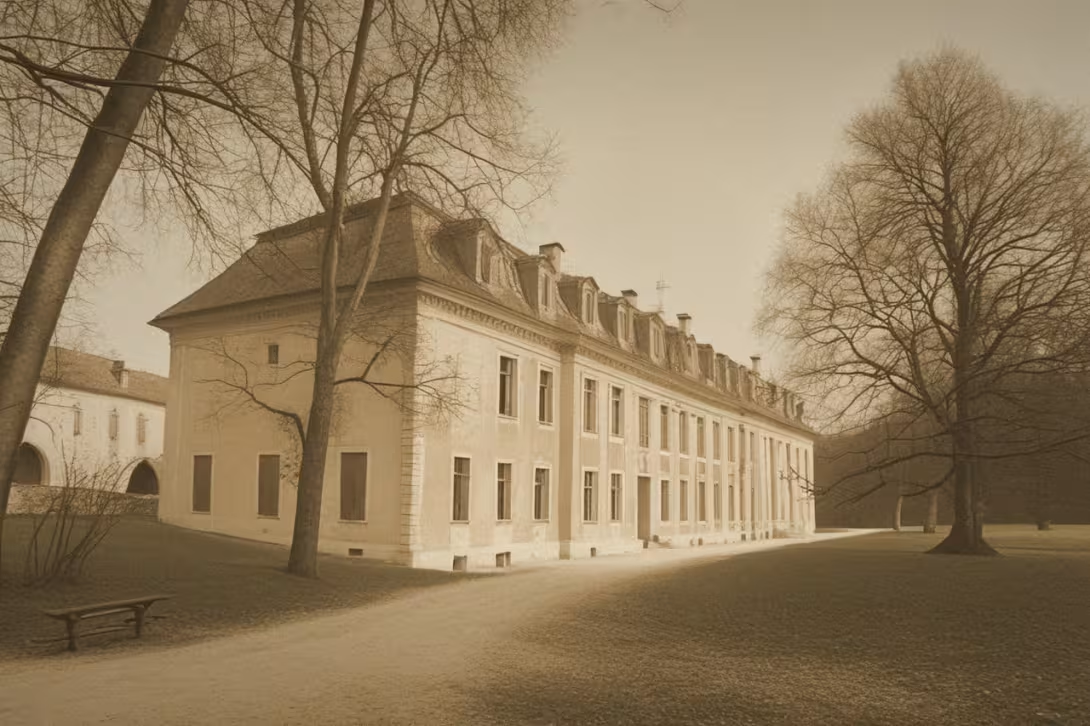
The historical appearance on the left is an AI-generated visualisation and serves as inspiration only.
Historical milestones
- around 1750
- Baroque rebuilding of granary and chateau for Daun families
- 1842
- Purchase of the estate by Margrave Alfonso Pallavicini
- 1968
- Registration of the object as a cultural monument
- 1994
- Transfer of the premises to the property of the city Jemnice
Points of interest
The building is baroque and one of the protected cultural monuments. - It's part of a wider chateau complex.
Guide
Show guide text
This text was created by artificial intelligence and has not been editorially reviewed. It may contain inaccuracies.
Welcome to Jemnice, the picturesque city of Highlands, which invites you today to discover its secrets. You are standing in front of a former chateau granary, an object that, at first glance, acts as a calm and inconspicuous member of the wider chateau grounds. Yet this place is much more than just an old building. He is a living witness to history, bearing on his shoulders the weight of history, changes in ownership and changes in architectural styles. If you look at it, feel the atmosphere of a place that has ruled for centuries. This building is not an isolated island, but an integral part of the complex surrounding the chateau in Jemnice. Its presence here is not random, but it has a specific function that has been crucial to the estate economy in the past.
To understand why this building looks what it looks like, we have to move back in time, roughly to the mid-eighteenth century. A major reconstruction of the area took place around 1750. At that time, the estate belonged to the Daun family, which took care of the development and modernisation of its property. It was during their reign that the granary received its baroque appearance today. The Baroque was very widespread in the Czech countries at the time, bringing not only aesthetic joy but also practical solutions for economic buildings. The reconstruction was not only about appearance, but also about functionality. The granary was used to store grain and other crops which were the foundation of the estate economy. It was therefore the heart of economic life, the place where the value of the crop was preserved.
Now pay attention to the architecture itself. Even if we cannot determine with certainty the names of the architects who designed this construction, their work is still visible. The Baroque style manifests itself in the overall layout and proportions of the building. Look at the facade and see how harmonically the building has been integrated into the surrounding environment. The Baroque loves symmetry and peace, and this is manifested here in shapes and lines. Although it is an economic building, its design is neither crude nor sloppy. On the contrary, there is also an effort for aesthetics, which was typical of the Baroque era. The construction is registered in the register of cultural monuments, which proves that its historical and artistic value has been officially recognised. The record number, 1000120537 _ 0006, shows that the State protects this object and ensures that it is preserved for future generations.
The history of this place is not only about stones and bricks, but also about the people who lived and worked here. After the Daun family came other owners who influenced the fate of the estate. In 1842, the estate was owned by Margrave Alfonso Pallavicini. Pallavicini were a famous and influential family in Czech countries and their acquisition of Jemnice meant a new chapter in the history of the area. Although we do not have a lot of written records on the specific personalities associated with this granary, we can imagine how everyday life has been. Servants who took care of maintenance, farmers who imported crops here and managers who monitored stocks. Each of them contributed to making the building work and serve its purpose.
We move on to interesting things that may attract the attention of a attentive visitor. One of the main attractions is that this granary is a protected cultural monument. This means that its form is protected by law and any interference in its appearance must be approved. This protection ensures that the building remains loyal to its baroque origin and is not degraded by modern interventions. It is also important to note that the granary is part of a wider chateau complex. This means that her history is inseparably linked to the history of the chateau and the entire estate. If you look around you, you'll see how the individual buildings complement and form a whole. This link is important to understand the context in which the granary exists.
Another interesting fact is the chronology of the protection of this building. Although it was built and rebuilt in the twentieth century, its official recognition as cultural monuments came only much later. In 1968 it was registered in the state register of cultural monuments. This step was important because it ensured that the budoba would be protected from extinction or inappropriate treatment. Later, in 1994, the entire area was transferred to the property of the city Jemnice. This transition meant that responsibility for the care of the memory went to the local government. The city thus became guardian of this historical value and is in charge of its maintenance and public presentation.
When you're standing in front of this building, try to imagine what it looked like at the time of its greatest bloom. Imagine how they brought in a wagon full of grain, how the doors opened and closed, how the air smelled like fresh grain. Even though the granary serves other purposes today or is perhaps empty, its soul remains in stone. The baroque style that overlaid her gives her dignity and elegance that contrasts with her original practical function. This contrast is a unique feature of many historical buildings that have changed over time and adapted to new needs.
Now let's focus on the details you might notice when you approach the building. Even if we can't describe specific statues or paintings that might be on the facade because we don't have certain information about them, we can focus on the overall impression. Note how the building interacts with the surrounding greenery and with other building areas. The light that hits her changes her appearance during the day and gives her a new dimension. The morning sun can illuminate it from one side, while the afternoon glow can highlight the texture of plaster or stone. This dynamic relationship between construction and nature is part of its magic.
The historical context Jemnice is also important. The city lies in the region of Vysočina, which is rich in forests, meadows and historical mansions. Jemnice itself has a rich history that goes back to the Middle Ages. The chateau and its accessories, including this granary, are an important part of this heritage. When you walk around the city, you can come across other sights to help you better understand how the community lived and evolved. The granary is just one of many pieces of mosaic that make up the Jemnice image.
In conclusion, I would like to recommend that you look at this building from different angles. Try to move along the side, look at it from a distance and then approach. Every look gives you a different angle of view
Tips for visitors
The best time to visit is late spring or autumn, when the colours of the Highlands highlight the appearance of the historical building and the surrounding landscape is in full bloom. The granary building offers interesting details of architecture, which is also worth watching from the outside.
You can reach Jemnice by car or public transport; Check specific routes and connections in current search engines. We recommend shoes suitable for walking through the historical center of the village.
For photo lovers I recommend morning or late afternoon light, which beautifully shades the facade of the building and emphasizes its texture. The best angles for the pictures are from nearby alleys that capture the granary in the context of the chateau complex.
Families with children can use a visit to explain how grain has been stored in the past and how economic buildings used to work in locks. Walk around the monument is safe and suitable for all age groups.
Frequently asked questions
Can the monument be visited?
Some buildings of this kind are open for guided tours, others serve another purpose or are privately owned. We have not verified whether and when this monument is open – please ask the operator.
What are the opening hours and admission?
We have not verified the opening hours or admission. Current information is published by the operator.
Where is the monument?
Location: Jemnice, Kraj Vysočina. The map on this page shows the exact spot.
Why is the monument protected?
It is listed in the Central List of Cultural Monuments of the Czech Republic as a cultural monument (register no. 1000120537_0006). It is protected as part of a larger listed ensemble.
For kids
Imagine going back to when Chateau Jemnice was in full bloom. It was like a game of chateau conquest! You'd feel like you were part of a great adventure that took place under the shadow of high walls and towers.
Who lived here then? It was a family of men from Jemnice. They lived in a beautiful chateau that was so big that it could be called a real chateau. They were brave knights who protected their manor from dangerous robbers and enemies.
Businesses nearby
Do you run a restaurant, accommodation, shop, museum, rental, wellness or other visitor service near this monument? Show yourself directly to the people heading to it — this is how they will see you in the app and on the web:
Events nearby

Zdroj akcí: otevřená data měst a obcí ČR (Národní katalog otevřených dat) a kalendář akcí Národního památkového ústavu.
Nearby
🏰 Historic sites (65)
- Jaroslav Šlezinger 0.1 km
- Židovská synagoga 0.3 km
- sv. Jan Nepomucký 0.4 km
- sv. Anna 0.5 km
- sv. Jan Nepomucký 0.7 km
- 50 let školy a památce Zdeňka Papouška 6.3 km
- sv. Jan Nepomucký 6.9 km
- sv. Jan 7.3 km
- sv. Florián 7.4 km
- sv. Jan Nepomucký 7.8 km
- Sv. Jan Nepomucký 7.9 km
- Krumvald 8.4 km
- Panna Maria Immaculata 8.9 km
- sv. Jan Nepomucký 8.9 km
- Svatá Markéta 8.9 km
- Staré Hobzí 8.9 km
- založení Sokola 9.8 km
- T. G. Masaryk 9.9 km
- sv. Josef 9.9 km
- Památník cikánské osady 10.1 km
🍽️ Restaurants and dining (40)
- Slunicko 0.2 km
- U krále Jana 0.3 km
- U Divišů 0.3 km
- Vietnamese restaurant 0.4 km
- Restaurace Grand 0.4 km
- Restaurace u Svatého Víta 0.6 km
- Hospoda U Valů 6.9 km
- Česká hospoda 7.0 km web
- Maják 7.3 km web
- Hostinec U Blahoudků 9.8 km web
- U Smrků 10.3 km
- Hospůdka U splavu 10.5 km
- Hospůdka U Samce 11.4 km Domamil 37
- U Máců 11.7 km
- Restaurace Dyje 11.9 km
- MUFin 12.2 km Palackého nám. 32
- Kavárna Kostka 12.2 km
- Na Kolářce 12.3 km Uherčice 4 +420 725904987 web
- Pod Hruškou 12.3 km
- U Malínků 12.4 km Göthova 111/I +420 384 420 175
🏨 Accommodation (27)
- Chalupa Modletice 9.7 km web
- U Kamenného stolu 9.7 km 722971951 web
- Letni Den 9.9 km web
- Mlýn u splavu 10.5 km web
- Hotel Dyje 11.9 km +420 384 420 090 web
- Hotel "U Koníčka" 12.1 km
- Penzion Na Kolářce 12.3 km Uherčice 4 +420 725 904 987 web
- Penzion Domino 12.3 km web
- HOTEL U STADIONU 12.6 km
- Motel Dačice 12.7 km +420 602 493 771 web
- Rumburak 13.1 km Bítov 106 +420 777 348 757
- Statek Vranč 13.2 km
- CampVelo 13.2 km Vratěnín 92 web
- Selský dvůr 13.5 km
- Chata Lucka 13.6 km Bítov ev.228 web
- Penzion Pod Cornštejnem 13.6 km
- Chaty U Tesařů 13.6 km
- Penzion pod hradem Cornštejn 13.7 km +420 774 742 475 web
- Camp Bítov 13.8 km web
- Hotel Bítov 13.9 km Bítov 87 +420 607 874 922 web
🚲 Rentals and sport (3)
- biotop Jemnice 1.4 km
- Cyklo-sport Petr Kunkal 12.3 km Křížovnická 70/I
- Půjčovna lodiček 14.0 km
🥾 Hiking and nature (87)
- Psychiatrická léčebna 0.4 km Budějovická 625 web
- Kamenná panna 0.5 km
- Javorní hora 1.3 km
- Javor 1.6 km
- Modrácký kopec 2.4 km
- Na Stráži 2.9 km
- Vlčí hora 3.1 km
- Inženýrský kopec 3.6 km
- Smrček 3.8 km
- Šustáčkova studánka 4.0 km
- Sochořina 4.2 km
- Vráž 4.4 km
- Špičák 4.6 km
- Holubice 4.6 km
- Doubrava 5.2 km
- Silniční vrch 5.6 km
- Sedlo 6.2 km
- Třebětický vrch 6.6 km
- Větrník 6.7 km
- Dlouhá hora 7.4 km
Accommodation nearby
Trips and activities nearby
Guided tours, tickets and activities nearby from GetYourGuide
Affiliate link: if you buy from the partner, we may receive a commission. The price for you does not change.
Search tours and activities →Themed route
Here is the route design within the area:
1. Former chateau granary - main construction. Walk a unique architecture and inner spaces that were used to store cereals. 2. Chateau area - courtyard and surrounding buildings. A tour of the historical complex and the connection of the granary to other parts of the mansion. 3. Chateau park - green area. Rest in nature in the immediate neighborhood of the monument.
Seasonal recommendations
In spring, the surrounding area of the granary wakes up in vivid colours and fresh green. The soft spring light highlights the details of the construction, while the first trees bloom in Yemnik Park. We recommend shoes suitable for wet grass and visit in the morning when the air is the cleanest.
The summer season brings sharp sun and hot air, which creates contrast with the cold thick walls. Nature is in full bloom and the shade of leaves provides relief when coming to the object. It is advisable to choose light air clothes and set off either early in the morning or in the evening to avoid the greatest heat.
Autumn covers the memory of the golden garment and the foggy atmosphere, which underlines its historical character. The colours of the leaves around the chateau create the picturesque sets for photography. It is practical to take with you a lighter jacket or raincoat and plan your way to the time when the sun paints the façade into warm tones.
Zimą causes a granary in silence and quiet, often surrounded by snow, which will dampen all sounds. Cold air and short days give the place a mysterious touch. Hot clothes, solid winter shoes with anti-slip soles and a visit around noon when the most daylight is available.
Visualizations and artistic views


The visualisations are generated by artificial intelligence and serve as inspiration.
Photos from the area
Real photos taken near the monument


Zdroj a licence jsou uvedeny u každého snímku.
Tips from visitors
No tips yet. Be the first!
Log in and add your tip.
Sources and literature
Photos: Jiří Sedláček / CC BY-SA 4.0, rozlišení zvýšeno umělou inteligencí — Wikimedia Commons. The author and licence also appear when you hover over the image.
Location on the map
Příběhy a pověsti
Legendy, pověsti a příběhy spjaté s touto památkou
Fotografie návštěvníků
Přidat fotografiiZatím žádné fotografie. Buďte první, kdo přidá fotografii z návštěvy!
Máte k místu vzpomínku nebo zajímavý příběh?
Log in a přidejte svou fotografii nebo hodnoťte.
Za ověřenou návštěvu v aplikaci získáte víc bodů — poznáme podle GPS, že jste na místě.
Reviews and comments