






Českobratrská modlitebna Chapel
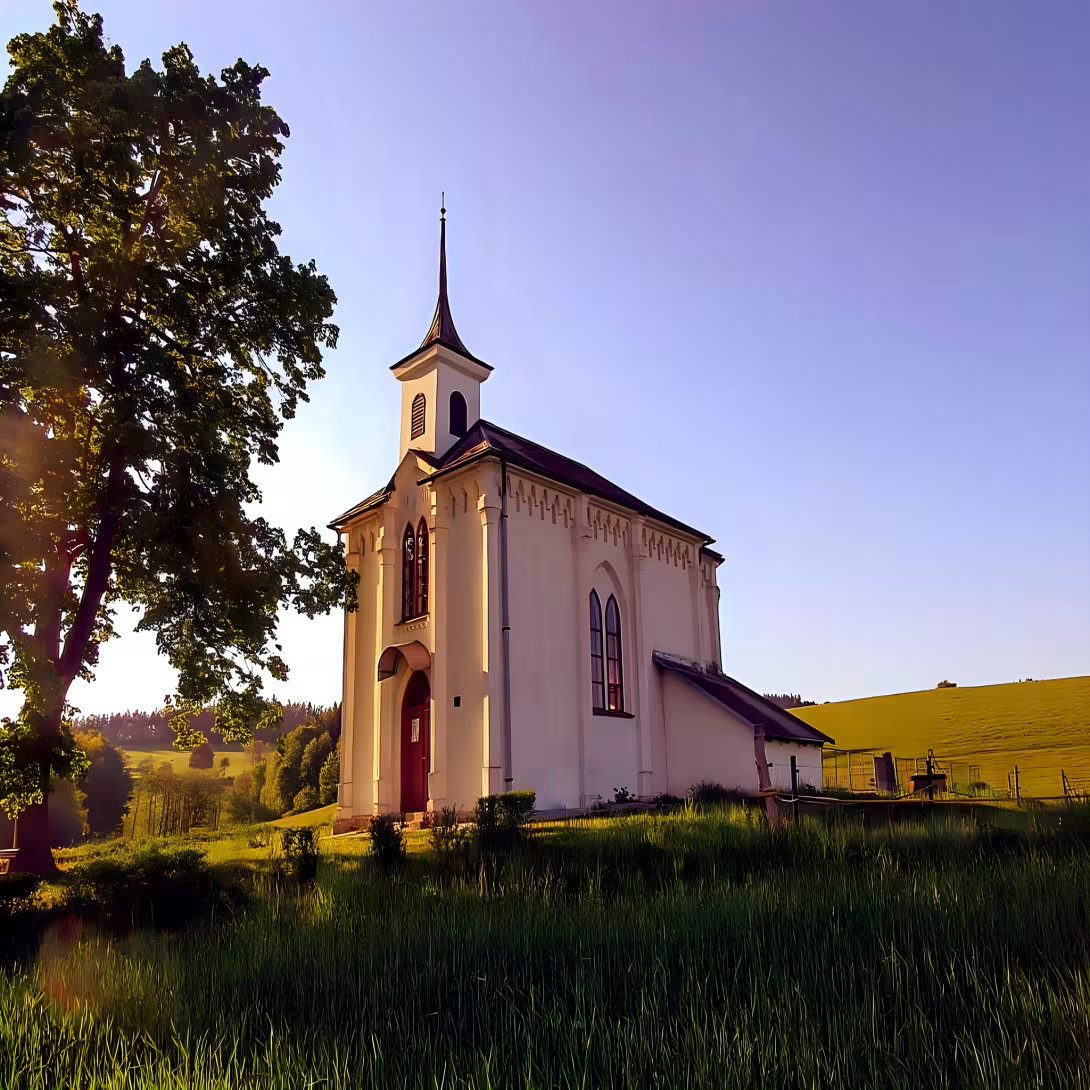
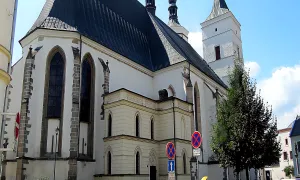
Bohemian Prayer in Svébohov is a historical chapel that reflects the religious life of the region. In 1860 neoclassical structural elements were built and since its foundation it was important for the Czech Brotherhood Church. The chapel stands above the village with significant architectural details such as pilasters, group vaulted windows and a stiff year above the main entrance. She had a major renovation in 1995 to preserve her historical integrity.
In 1860 the evangelists of the Helvetic religion were built, the chapel served as a place of worship outside the Svadov village. In 1918 it became the first place of the congregation for the Czech Brotherhood Church in the area. This period characterized Czech religious and cultural transformation with an increased interest in historical styles such as historicism, which is evident in the architecture of the chapel.
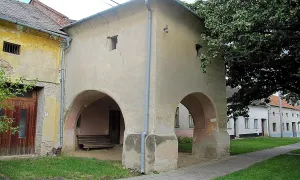
Bohemian The Prayer presents architecturally neoclassical elements typical of the historical movement. The white brick building stands above the village landscape. It has an oblong ship with a tower building on the east end and an offset square presbytery with a five-sided closure in the west. The low attachment on the north side has a roof shed, while pilasters divide the facade and other sides, framing group arches. The main entrance is decorated with a stiff year of 1860 above it, lined with a plastic cup. Under the gorge on the facade is the ornamental arcade frieze. Inside the cross vaults supported by consoles characterize the interior and wooden attic with harmonium increases its liturgical function.
Throughout its history, the chapel has changed into ownership and administration. At first it served evangelists, later it became important for the Czech Brotherhood Church. The local congregation maintains the original copy of Melanchthon Bible from 1549, which it brought to Svébohov and Florián Hetzl at the end of the 18th century, adding historical significance.
Several key events and curiosities are linked to the chapel. In 1939, the brick floor was replaced by a curb and a year later, the original benches were replaced. Around 1890 an organ attic and harmonium was added, thereby increasing its liturgical function. The chapel is listed as a cultural monument in 1964 underlines its historical importance.
Today, the Czech Brotherhood Prayer remains a place of religious importance with an active local assembly. It is accessible to visitors who want to explore rich history and architectural beauty. Resource conservation efforts ensure that it remains an important cultural monument in Svébohov.
Bohemian Prayer offers a unique view of the region's religious and cultural heritage, so it is worth it for those interested in history and architecture. His permanent presence as a place of worship and his historical artifacts call for exploration and appreciation of visitors around the world.
Then and now
Drag the slider to compare how the landmark may have looked when it was built with the view today.
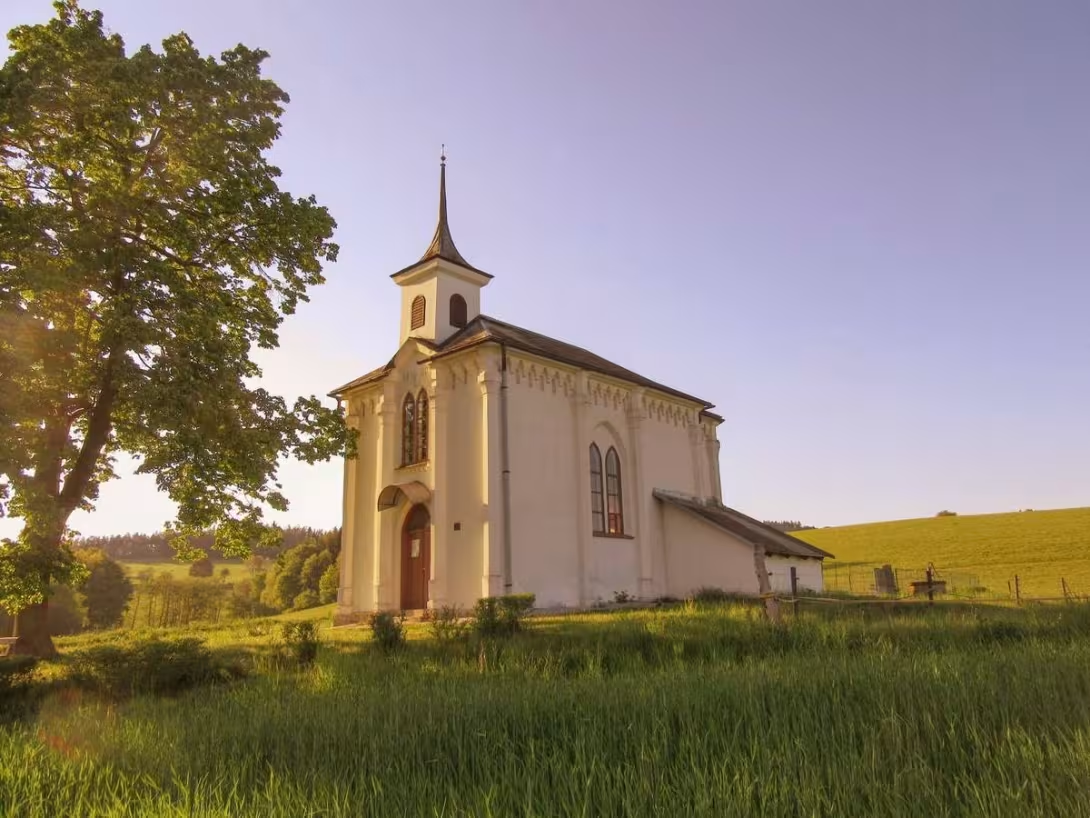
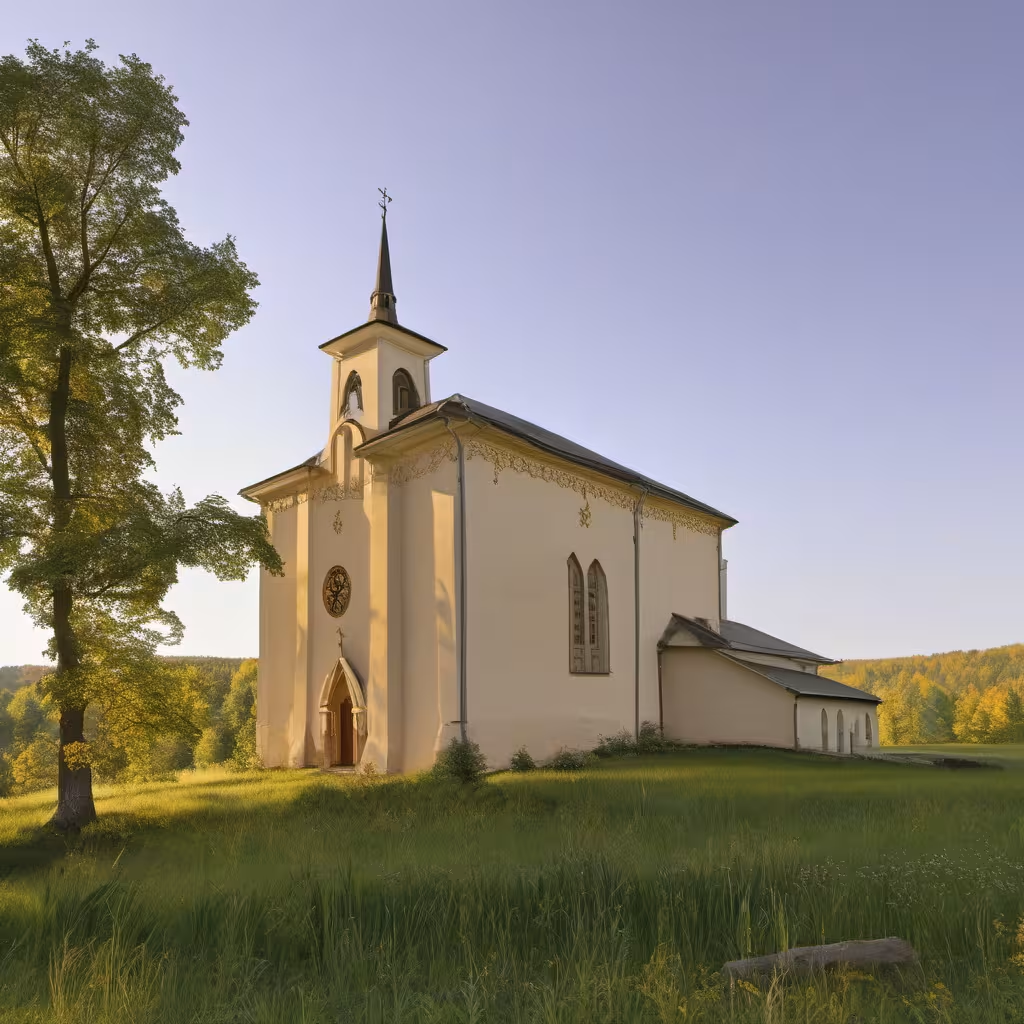
The historical appearance on the left is an AI-generated visualisation and serves as inspiration only.
Historical milestones
- 1860
- The chapel was built as a place to worship the Evangelia.
- 1964
- It was listed as a cultural monument.
Architectural development
The chapel was originally built with a brick floor which was later replaced by a tile in 1939. Around 1890 an organ attic and harmonium were added to increase the liturgical function. The interior is equipped with cross vaults supported by consoles, adding architectural charm chapel.
Historical events
In 1860 this chapel was built by a group of Gospels from the Helvetic Religion as a place of worship in front of the village of Svébohov.
In 1918 it became the first place of the congregation for the Czech Brotherhood Church in the area.
Points of interest
- Bohemian The Prayer has an original copy of the Melanchthon Bible from 1549, brought to Svébohova by the late 18th century Florián Hetzl, adding a layer of historical depth and scheming.
- In 1939 the chapel experienced significant changes to the interior when the brick floor was replaced by a tile which reflected changes in aesthetic preferences or practical needs during this time.
- Adding an organ attic and harmony around 1890 increased the liturgical function of the chapel and showed how musical elements were integrated into prayer procedures over time.
- Despite the fact that it was built by evangelists of the Helvetic creed, the chapel turned into an important place for the Czech Brotherhood Church in 1918, which highlighted its role in religious and cultural transformations in Bohemia.
- In 1964, Českosručská Prayer was officially listed as a cultural monument, underlines its architectural and historical importance and ensures efforts to preserve integrity for future generations.
Guide
This guide is narrated by a synthetic voice generated by artificial intelligence.
Show guide text
This text was created by artificial intelligence and has not been editorially reviewed. It may contain inaccuracies.
Welcome to the Czech Brotherhood Prayer in Svébohov, a remarkable chapel that stands both as a lighthouse and as proof of the rich religious tapestry of this region. As you stand here, take a moment to appreciate his prominent position overlooking the village, its architectural details will draw your attention to the background of the surrounding countryside.
This historical chapel built in 1860 was built specifically for evangelics, serving as a place of worship and social assembly. Its establishment was an important chapter in the history of the Czech Brotherhood Church, which since its inception is an integral part of spiritual life here. In 1964 it was recognised as a cultural monument which further quotes its importance.
Now we're going to immerse ourselves in the architecture that surrounds you. Note how neoclassical design elements of the chapel form harmoniously together - pilasters and group arched windows perform, offering a view of the architectural sensitivity of the time when this sacred space was conceived. These properties not only define his aesthetics, but also reflect the historical context in which he was built.
As you explore further, consider the stories and personalities associated with this place. One of these interesting elements is an original copy of Melanchthon's Bible from 1549, which is located inside these walls. This artifact brought here by Florián Hetzl at the end of the 18th century adds a layer of historical depth connecting past generations through faith and scholarship.
In 1939 the chapel changed significantly when changing the brick floor, reflecting both adaptation and continuity. This change is part of the ongoing story of the chapel because it has evolved to satisfy the needs of its community while preserving its sacred purpose.
As you continue your visit, we invite you to explore further and immerse yourself in the atmosphere of this historic place. Let the stories and details inspire the deeper recognition of the cultural heritage surrounding us here in Svébohov. Thank you for joining us on this journey of history, and may your research be both enlightening and rewarding.
Tips for visitors
The best time to visit the Czech Brotherhood Prayer in Svébohov is in the spring and autumn season when the weather is most pleasant. The sunny days particularly highlight the white walls of the chapel.
Check the best connection before visiting the search engine.
When visiting you remember warm clothes and sun protection, especially in summer. It is advisable to photograph during the day when the light is best.
For families with children, the prayer room is interesting for its historical architectural style and mild educational value. Children can also enjoy the beautiful surrounding nature.
Frequently asked questions
Can the monument be visited?
Religious buildings are usually open mainly during services; at other times a visit is normally arranged with the parish or the operator. We have not verified specific times.
Where is the monument?
Location: Svébohov, Olomoucký kraj. The map on this page shows the exact spot.
Why is the monument protected?
It is listed in the Central List of Cultural Monuments of the Czech Republic as a cultural monument (register no. 16792/8-1148).
For kids
About 166 years ago, a unique building appeared in a small village of Svébohov, which was a miracle between white houses and green trees. It was in 1860 when local people decided to build a Czech-brotherly prayer house - something completely new for the village! The construction was like a beautiful little temple with white walls and there was a large figure of 1860 in the middle, as if proudly announced to herself: "Here I am born!"
Businesses nearby
Do you run a restaurant, accommodation, shop, museum, rental, wellness or other visitor service near this monument? Show yourself directly to the people heading to it — this is how they will see you in the app and on the web:
Nearby
The surrounding landscape consists of an urban development and a park.
Accommodation nearby
Themed route
Thematic cruise route from the Czech-Kráš Prayer
1.Českobratrská modlitebna (maple) * Type: * Historical Maple * Why is it worth a visit: * This chapel is an important monument from the 16th century, which represents one of the oldest Protestant sacral buildings in Moravia. We must have our own architecture and historical excerpts for the Czech movement.
2. Church of the Assumption of the Virgin Mary * Type: * Church * Why is it worth a visit: * Located in Svébohov and is a significant baroque building that passes to a time when historical history appears and architectural beauty. It is an ideal bridge for the use of this property.
3. Memorial of the War Dead * Type: * Memorial * Why is it worth visiting: * This monument is dedicated to victims of wars and provides insight into the historical context of the region. There is a place to think about the consequences of the conflicts that shaped local society.
4. Castle Park * Type: * Park * Why is it worth a visit: * Castle Park offers a beautiful opportunity for relaxation and a walk in the green. It is an ideal bridge for use in fauna and fauna, which as for use in this process.
5. Civil Service * Type: * Historical building * Why is it worth visiting: * This building is an important system for understanding the administrative and historical state. It is part of a project in the centre of Svabohova, which means it must be installed and secured for its own resources.
This route offers complex applications to historical and cultural facilities in Svébohov, which are included in loophole locations within the surroundings.
Seasonal recommendations
Spring: Visit Českobratrská modlitebna (maple) in Svébohov during spring offers a unique experience because nature begins to awaken around this historic place. Soft, flushed light filtering through promising trees creates an ethereal atmosphere that increases the peaceful beauty of the chapel. This is also the time when the local flora begins to bloom, adding pulsating paint to the landscape. Spring often brings mild temperatures and occasional rain showers, so we advise visitors to wear layers that can be modified as necessary. The weather can be unpredictable, so carrying a light waterproof jacket or umbrella is wise. The early blow is less crowded and provides a peaceful opportunity to think.
Summer: Summer at Českobratrská modlitebna (maple) is characterized by a long time of day and fresh greenery surrounding this historic chapel in Svadohov. Warm weather supports outdoor activities, making it an ideal time to explore the natural beauty of Olomouc Region. Summer, however, also attracts more visitors thanks to its popularity as a travel season, so arriving early is recommended to avoid larger crowds and enjoy a calmer experience. Comfortable walking shoes and light clothes are suitable for comfortable sailing around. A hat or sunscreen can help protect against the strong sun, ensuring a pleasant visit.
Autumn: Autumn brings a stunning transformation to Českobratrská modlitebna (maple) in Svébohov because the surrounding landscape is painted with pulsating shades of red, orange and gold. Colder temperatures and fresh air create an atmosphere for visitors seeking peace in the midst of the beauty of nature. This season often sees fewer tourists, allowing a more intimate experience in this historic place. Laced clothing is recommended to adjust various temperatures throughout the day, along with comfortable shoes to explore the surrounding routes. As the days get shorter, planning a visit during daylight will provide as much of your time as possible.
Winter surrounds Českobratrská modlitebna (maple) in Svébohov in a quiet snow blanket that offers a charming and peaceful environment for visitors. The strong beauty of the chapel against the snowy landscape creates a unique and thoughtful atmosphere. However, winter conditions can be difficult, with shorter daily hours and possible weather closures. Visitors should dress warmly in layers, including heat wear and watertight outer clothing, and consider wearing gloves and hats. It is also wise to check opening times in advance as they may vary during colder months. Arriving soon allows a more relaxed visit than any snow will begin to restrict access.
Visualizations and artistic views


The visualisations are generated by artificial intelligence and serve as inspiration.
Photos from the area
Real photos taken near the monument


Zdroj a licence jsou uvedeny u každého snímku.
View from the area
This animation was generated by artificial intelligence from a real photograph of the surroundings. The motion and details are not real footage of the location.
Tips from visitors
No tips yet. Be the first!
Log in and add your tip.
Sources and literature
Photos: Pavlína Koncošová / CC0, rozlišení zvýšeno umělou inteligencí — Wikimedia Commons. The author and licence also appear when you hover over the image.
Faktickým podkladem tohoto textu byl článek na Wikipedii, jehož autory jsou přispěvatelé Wikipedie. Článek je dostupný pod licencí CC BY-SA 4.0.
Location on the map
Příběhy a pověsti
Legendy, pověsti a příběhy spjaté s touto památkou
Fotografie návštěvníků
Zatím žádné fotografie. Buďte první, kdo přidá fotografii z návštěvy!
Log in a přidejte svou fotografii nebo hodnoťte.
Za ověřenou návštěvu v aplikaci získáte víc bodů — poznáme podle GPS, že jste na místě.
Reviews and comments