






kostel Nanebevzetí Panny Marie (Uničov) Church
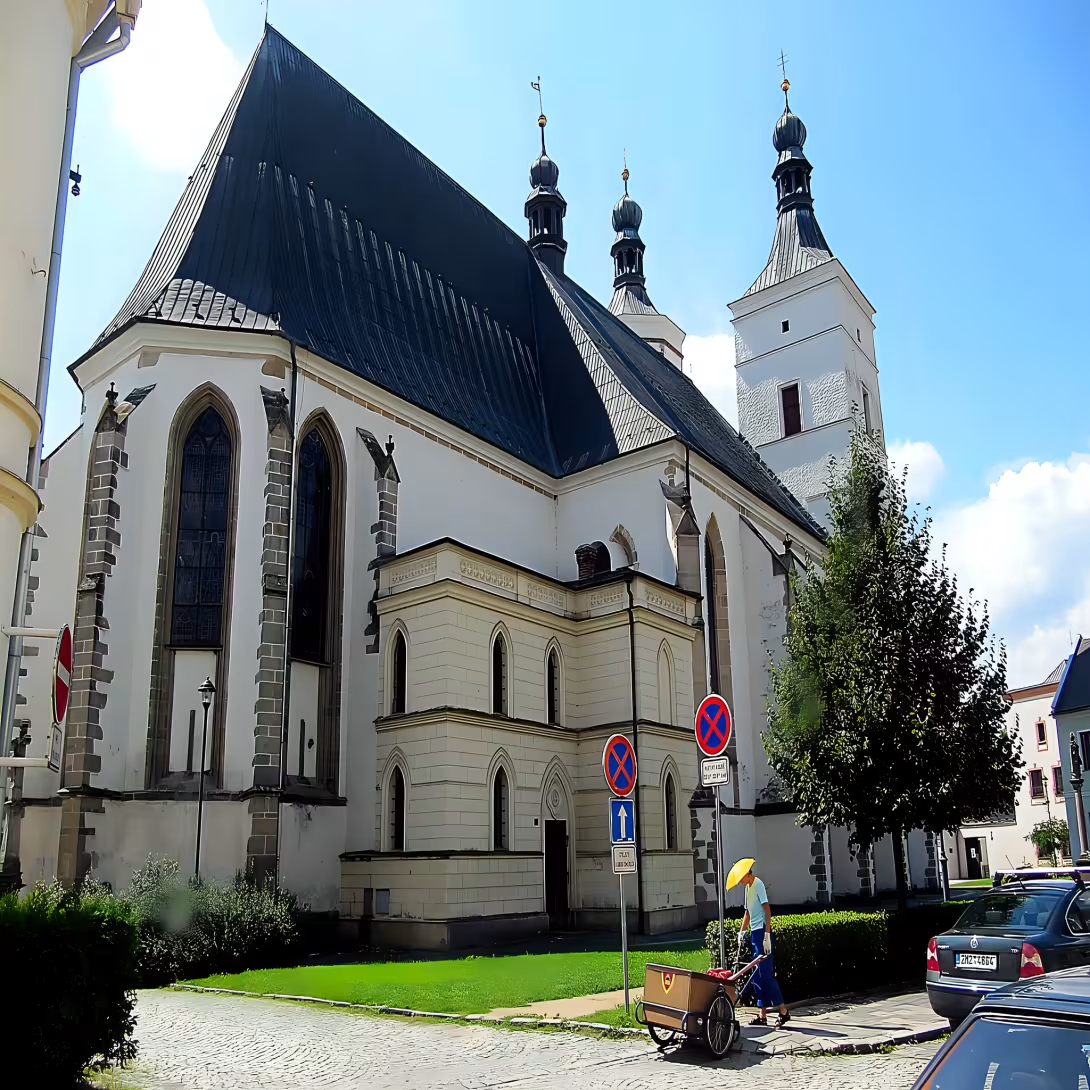
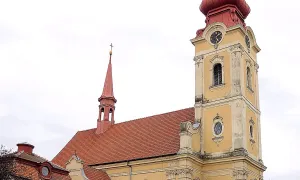
The Church of the Assumption of the Virgin Mary is located in the centre of Moravian city Uničova and is one of the important cultural monuments of the Czech Republic. It serves as a parish church Uničova in Olomouc archdiocese. The construction connects the elements of Gothic architecture, which form the basis of it, with the baroque interventions which gradually arose over the centuries.
The history of the church is closely related to Uničov itself. In 1213, Uničov was promoted to a city and with this naturally related city equipping by city churches. However, no reliable testimonies are kept about the shape and location of any church from the 13th century. It was not until the beginning of the 14th century that a church building was built, which stands here today. The year 1330 is most often given as the date of origin of the church, although the exact date is not known. Some historians believe that the construction could have started at the end of the 13th century.
The construction process took place in seven well documented stages. The first phase (approximately 1290 to 1300) included the construction of presbytery and sacristy from the east, while the lower parts of both west towers were rising. In the second stage (around 1300 to 1325) the first tower floor was created and it was created by портал with a large west window with four pieces. In the third stage (around 1325 to 1330) the construction continued on the south tower. The fourth stage (approximately 1300 to 1365) was dedicated to the construction of tripods and perimeter walls. The fifth stage at the beginning of the 15th century brought the construction of the facade between the towers, the sixth stage in the 15th century closed the southern tower with an octrobical superstructure. The last stage around 1713 is represented by a late Gothic chapel built on the south side of the presbytery.
The skeleton burned down seven times during its existence: between 1395, 1468, 1531, 1595, 1643, 1779 and 1796. The most famous is the 1643 fire related to the Swedish occupation of the city. The roof burned, the gothic vault collapsed, and both towers with four bells. After the fire in 1531, the north tower was raised and equipped with atics and the south tower was rebuilt by two floors. In the 17th century, there were baroque interventions, including partial deconstructions of Gothic cross vaults. The Gothic vaults were preserved only in the western field at the Krucht and in the sacristy. After the fire in 1779 was repaired with the support of Empress Marie Terezie. In 1783, new bells were made.
The last extensive repair of the church took place in 2007. The construction thus represents a long development from purely gothic beginnings to baroque flavors to the present day. The visitor can observe architectural transformations here for centuries, written down in stone elements as well as in the history of fires that constantly tested the Gothic building.
Then and now
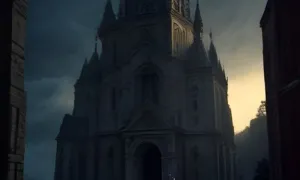
Drag the slider to compare how the landmark may have looked when it was built with the view today.
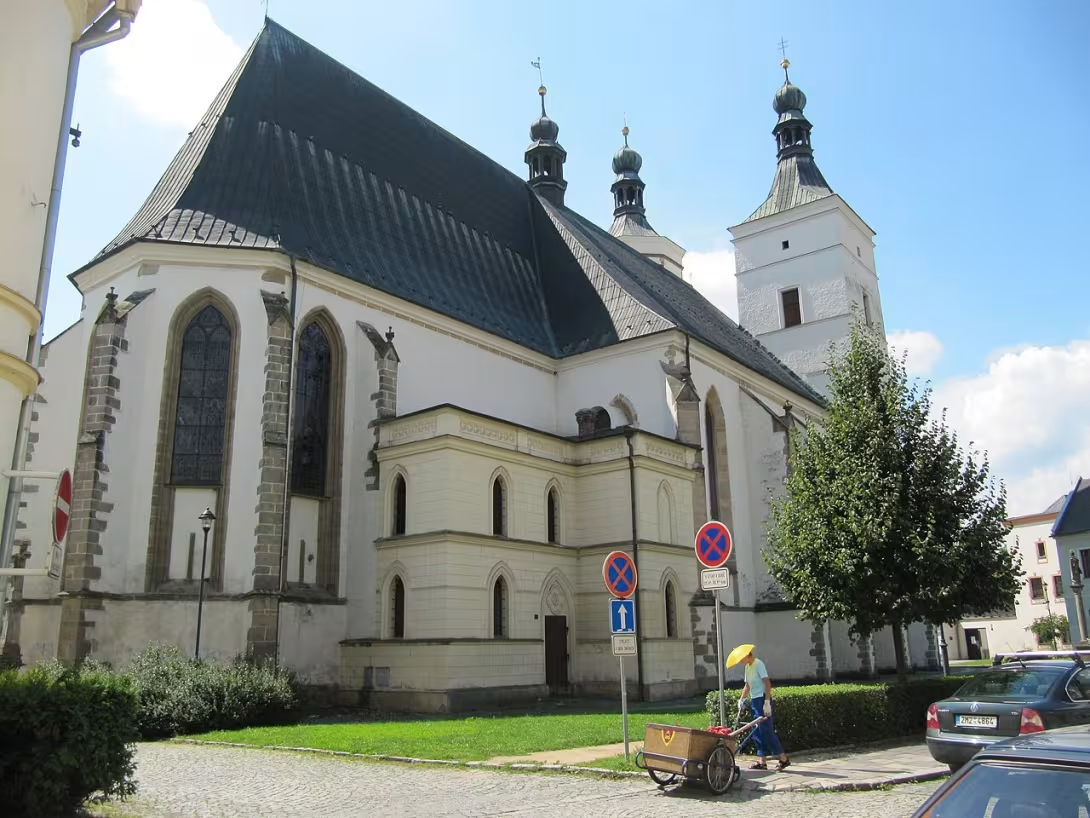
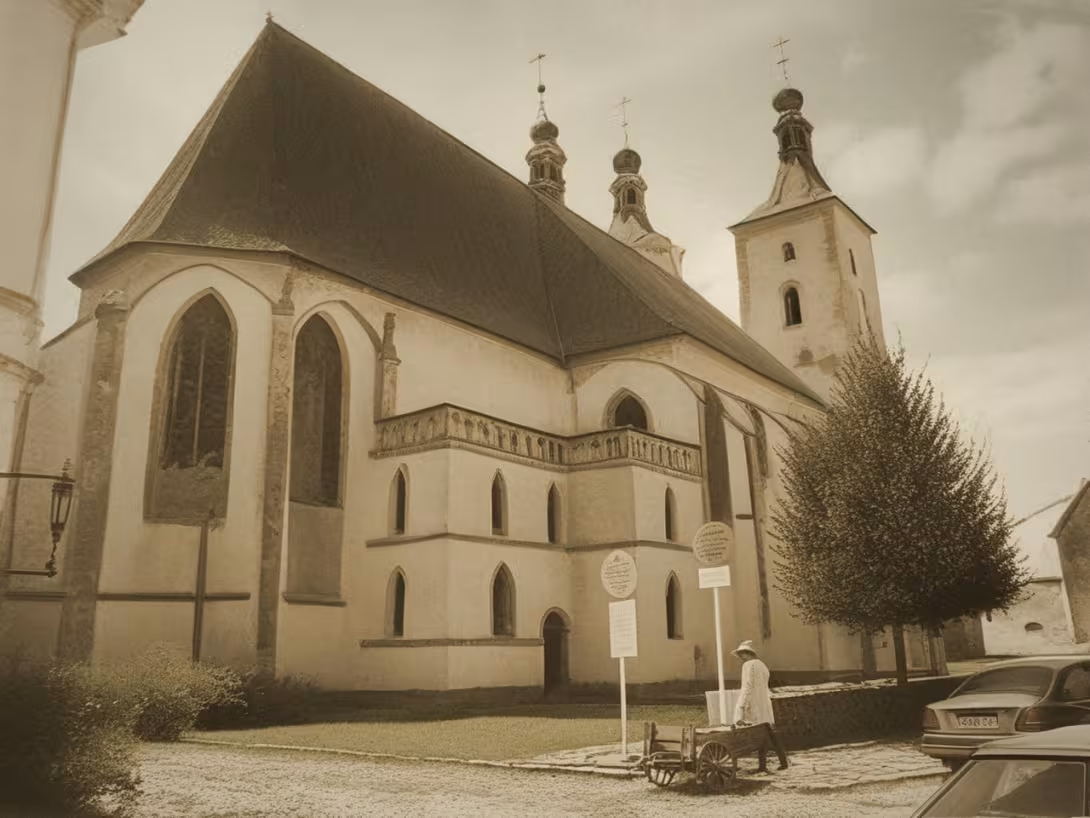
The historical appearance on the left is an AI-generated visualisation and serves as inspiration only.
Historical milestones
- 1330
- The often mentioned year of church creation.
- 1643
- Fire during the Swedish occupation, the collapse of the Gothic vaults and both towers.
- 1779
- Repair of the church after the fire with the help of Empress Marie Terezie.
- 2007
- Last repair of the church.
Architectural development
The construction took place in several stages since the end of the 13th century, beginning with a presbytery and lower towers. In the 15th century, the atrium tripod and the south tower were completed with an eight-sided superstructure. Later, Renaissance and Baroque modifications were made, especially after the fires in the 16th and 17th centuries.
Historical events
In 1643 there was a devastating fire during the Swedish occupation, in which the roof burned and the vaults collapsed. In 1779 the church was repaired after another fire with the help of Empress Marie Terezie.
Owners
parish
municipality
Points of interest
- The construction links elements of Gothic architecture with baroque intervention. The church burned down seven times during its existence. - The most famous is the fire from 1643, which was related to the Swedish occupation of the city. - After the fire in 1779 was repaired with the support of Empress Marie Terezie. - The construction process took place in seven well documented stages.
Guide
This guide is narrated by a synthetic voice generated by artificial intelligence.
Show guide text
This text was created by artificial intelligence and has not been editorially reviewed. It may contain inaccuracies.
Welcome to Uničov. You're standing in front of one of the most important and most important building units in this city. Before your eyes is the Church of the Assumption of the Virgin Mary, a building that carries the incredible power of time and constant renewal. Feel this atmosphere, feel the calm that radiates this place, even if the world can move around you. This building is not just a wall and a roof, it is a living witness to events that have shaped this whole region for centuries. Look at her overall silhouette and try to imagine how her face changed over the hundreds of years that we just started.
Now let's go back deep into the past together to understand where this story really started. If you look at the very foundations and spirit of this building, we must move on to the beginning of the 14th century. The often mentioned year of origin of this church is 1330. Imagine the world back then, the medieval landscape and the first stones that were laid there. At that time, a building was created with a clear purpose, as a spiritual centre, which was to dominate the surrounding countryside and provide shelter and hope for the people of the region. The church was the heart of the local community from the beginning and its existence was firmly linked to the fate of Uničova itself.
Now pay attention to the architecture itself, which you are now observing. It's fascinating how two completely different worlds collide in this one building. When you look at the shape and structure of the church, notice how the elements of Gothic architecture are mixed with baroque intervention. This combination is not random, but is the result of a long and often painful history. Gothic elements remind us of the original medieval core of the construction, its vertical ambitions and spiritual rise. On the other hand, there are baroque features that have brought new dynamics and a different kind of aesthetic expression into the building. This architectural dialogue between the old and the new is precisely what makes this monument so special. Even if you can't see every detail, feel the change of styles that went on gradually, layer by layer, as the construction was repaired and rebuilt.
But the history of this place is not just a story of beautiful building styles, it is a story of incredible resistance. To understand why the church looks what it looks like, we need to look at the darkest moments of its existence. The greatest test this church had to face in 1643. That was the year the city was in the arms of the Swedish occupation. During these war riots, there was a devastating fire that caused catastrophic damage. At that time, the Gothic cross vaults collapsed and the two towers that once dominated the area fell. Imagine the horror and loss when the religious symbol of the city turned into ruins. This event has fundamentally changed the face of the church and forced future generations to make huge efforts in restoring it.
And it is at this moment that important figures have entered the history of the church, which helped to rebirth this place. After years of that devastating fire, when people tried to rebuild their home and their place of prayer, aid came from the highest spheres. In 1779, after another fire, the church was repaired thanks to the support and assistance of Empress Marie Terezie herself. It is fascinating to think that the fate of this local church was at some point linked to the powerful figure of the entire monarchy. Thanks to this support, the church could recover and continue its service. This era has brought a new face to the building and helped it to gain the baroque feel that you still feel in it.
If you stop now and think about what you've heard, you may find one incredible fact that makes this building a symbol of resilience. Welcome to a history that keeps repeating itself. This church burned down seven times during its existence. Imagine the constant work, the constant effort of the people who, after each fire, retook tools and stones to restore what the fire took. Each of these seven fires left a mark in the church, each restoration added a new layer of history. It's not just construction, it's proof of human will and faith that won't be broken by a devastating flame. This ability to rise again and again from the ashes is perhaps the greatest mystery and at the same time the greatest force of this place.
Now that you've been through the major milestones of this place, I suggest you continue your search. Let yourself be carried away by the atmosphere that exists here. See the surrounding spaces, see the details that you manage to capture with your eyes, and try to find your own connection to this history. The Church of the Assumption of the Virgin Mary is more than just a cultural monument of the Czech Republic; It is a living organism that still breathes through the history of Uničova. Thank you for spending this moment with us and for choosing to know this story. We wish you a pleasant continuation in discovering the beauty of this city and other secrets that the surroundings offer. Goodbye.
Tips for visitors
The best time to visit the Church of the Assumption of the Virgin Mary in Uničov is the spring and autumn months, when the weather is pleasant and not so dense crowds of tourists. This time of year is ideal for comfortable exploring the architectural details of the church in a quiet environment.
Parking around the church can be limited, therefore we recommend using public transport. The best way to get to Uničova is by train or bus. For accurate information on current connections, we recommend using online route search engines.
When visiting the church, remember the appropriate suit, especially if you visit the church in colder months. It is also important to bring a camera or mobile phone to capture the beauty of the building. Photography within the church will only be possible if there is no service.
Photography is best on a sunny day when light illuminates the interior and highlights architectural details. The best places for photos can be found on the west side of the church where the entrance is in or in front of it in the outdoor area.
In the vicinity of Uničova there is a historic castle Uničov, which can be visited in 30 minutes by way of travel. It is an ideal place for families with children to enjoy the natural environment and visit the chateau.
Frequently asked questions
Is kostel Nanebevzetí Panny Marie (Uničov) open to the public?
Yes, the church is open to the public and offers tours during the opening hours.
How do I get to the place by car / public transport?
Parking is possible in the nearby parking lot or on the street in front of the church. The public transport is not available directly at the church, but you can get there by bus from Uničova.
How much is the entrance fee and is it paid on the spot?
Admission is free.
Is the tour suitable for children and seniors?
Yes, the tour is suitable for children and seniors. It is important to ensure that all participants are comfortable and willing to participate in the whole programme.
How long does the tour take?
The tour takes approximately 30-60 minutes, depending on the level of interest of visitors.
What are the opening times and booking is required?
The church opening hours are from 9: 00 to 5: 00. Reservation is not necessary, but we recommend prior verification of opening times to avoid possible unscheduled closing.
What's interesting in the immediate vicinity?
In the immediate vicinity of the church you will find Uničov Square with historical buildings and refreshments. The distance from Uničova to the centre of Moravia is approximately 30 minutes by car.
For kids
Imagine going back to the past to a small village Uničov in Moravia. Where there is a quiet street today with cottages, there was once a busy center of life. People lived in wooden cottages and worked in fields. They had their own economy and provided for themselves.
It was like a game of mystery - who lived here? What happened here? The Church of the Assumption of the Virgin Mary has been standing here since the 14th century, but it was only one of many churches nearby. People were meeting here for services and important events.
Businesses nearby
Do you run a restaurant, accommodation, shop, museum, rental, wellness or other visitor service near this monument? Show yourself directly to the people heading to it — this is how they will see you in the app and on the web:
Nearby
Uničov
Moravia
Accommodation nearby
Trips and activities nearby
Guided tours, tickets and activities nearby from GetYourGuide
Affiliate link: if you buy from the partner, we may receive a commission. The price for you does not change.
Search tours and activities →Themed route
1. Exterior of the Church of the Assumption of the Virgin Mary (architecture): Admire the dominant facade and historical details of this important temple. 2. Interior of the Church of the Assumption of the Virgin Mary (sacral space): Explore inner spaces, altars and valuable artistic elements. 3. Tower of the Church of the Assumption of the Virgin Mary (view): Climb to the tower from where you can observe the surroundings of the village. 4. Area of the Church of the Assumption of the Virgin Mary (outdoor area): Walk in the immediate vicinity of the building and feel the calm atmosphere of the place.
Seasonal recommendations
In spring, the church surrounds the awakening green, which creates a fresh contrast to the stone surface of the building. Soft spring light is ideal for observing facade details without sharp shadows. We recommend wearing more layers of clothing because it may still be cold in the temple while the sun is out. It is best to visit the memory in the morning when the air is the cleanest.
The summer season brings intense sun and rich colors of surrounding nature, which gives the place a joyful and clear atmosphere. Due to the high season and the higher attendance, it is advisable to come first thing in the morning to avoid the biggest crowds and noon heat. Choose light and breathable clothes, but don't forget the headgear while walking around the premises.
Autumn in Uničov paints the surroundings in golden and brown tones, which underlines the historical dignity of the temple. Often in the morning there is a fog that creates a mysterious and calm mood. For comfortable movement around the area, waterproof shoes are necessary. The ideal time for visiting is late afternoon, when the low sun lights up architecture beautifully.
In winter, the church has a very sharp and monumental appearance, especially if the landscape is covered with snow. The atmosphere is the quietest and most focused on inner calm during this period, which is particularly evident in advent time. It is necessary to choose the actual warm clothes and to verify the opening hours that are shortened during this annual period on the previous day.
Visualizations and artistic views


The visualisations are generated by artificial intelligence and serve as inspiration.
Photos from the area
Real photos taken near the monument


Zdroj a licence jsou uvedeny u každého snímku.
Atmosphere of the place
This atmospheric visualisation of the place and period was generated by artificial intelligence. It is not real footage of the location.
Tips from visitors
No tips yet. Be the first!
Log in and add your tip.
Sources and literature
Fotografie: Palickap / CC BY 3.0, rozlišení zvýšeno umělou inteligencí — Wikimedia Commons. The author and licence also appear when you hover over the image.
Faktickým podkladem tohoto textu byl článek na Wikipedii, jehož autory jsou přispěvatelé Wikipedie. Článek je dostupný pod licencí CC BY-SA 4.0.
Location on the map
Příběhy a pověsti
Legendy, pověsti a příběhy spjaté s touto památkou
Fotografie návštěvníků
Zatím žádné fotografie. Buďte první, kdo přidá fotografii z návštěvy!
Přihlaste se a přidejte svou fotografii nebo hodnoťte.
Za ověřenou návštěvu v aplikaci získáte víc bodů — poznáme podle GPS, že jste na místě.
Reviews and comments