






Cvilín (hrad) Ruin
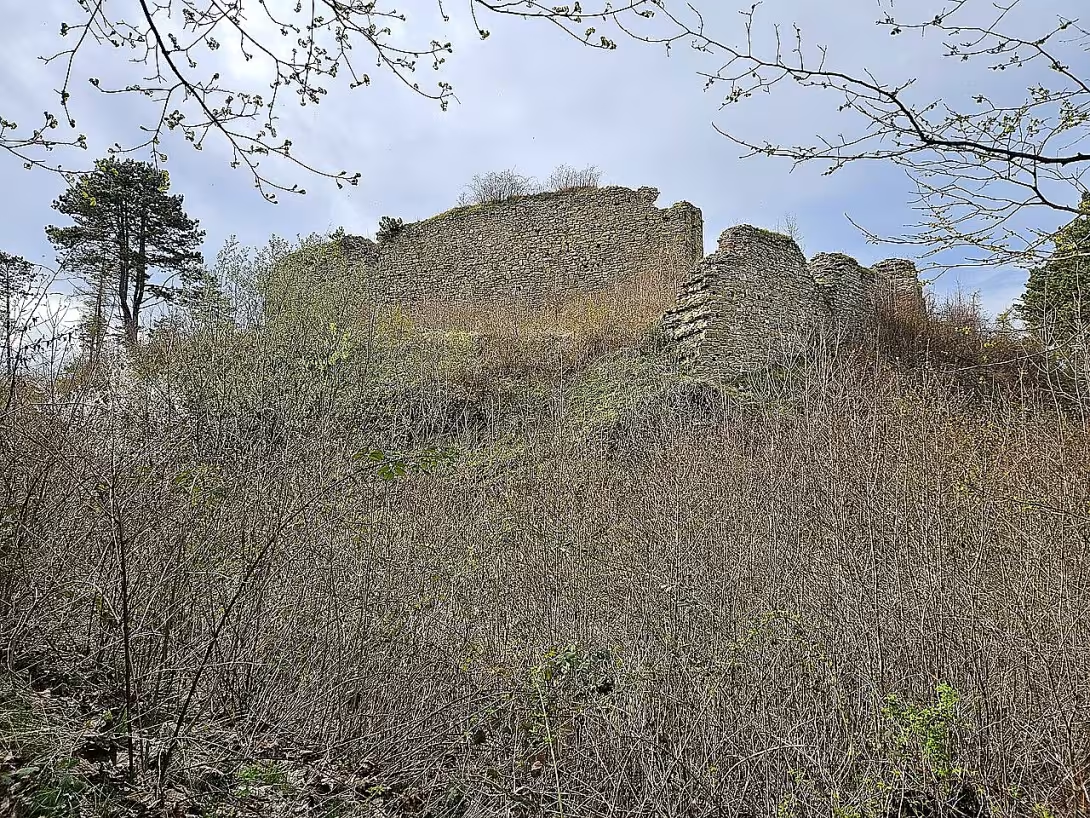
Cvilín, also known as Lobenštejn or Schellenburg, is a medieval castle ruin located southeast of Krnov on Zadní Cvilínský hill. First mentioned in 1238, it has been significant due to its strategic position and historical transformations over the centuries. Originally built upon a prehistoric fortification, it served as a defensive stronghold along an important route leading to Opava and Silesia.
The origins of Cvilín trace back to the early 13th century when Bohemia was under Přemyslid rule, marked by territorial expansion and consolidation amidst feudal conflicts. Initially constructed as a wooden fortification on this prehistoric site, it later evolved into a stone castle. The first documented mention in 1238 identifies it as Lobenštejn, reflecting its early prominence. However, the Tatar invasion of 1241 led to its destruction, necessitating subsequent reconstructions.
Architecturally, Cvilín featured a quadrangular layout with residential buildings and a cylindrical tower, surrounded by double walls and an artificial moat. The castle underwent significant reconstruction in the early 16th century under Jiří ze Šelmberka, who also added a hunting lodge function to its design.
Ownership of Cvilín changed hands multiple times throughout history. Initially, Jindřich z Lobštejna became its first known owner in 1253. The castle later came into the possession of Beneš ze Cvilína and subsequently Heřman ze Cvilína by 1280. By the late 13th century, it was under the control of an Opavský kníže. In the 1440s, it became part of the Krnov principality, serving as a residence for its rulers. The 15th century saw it in the hands of Přemyslovci z Opavy before falling to Matyáš Korvín during the Czech-Hungarian wars until 1490. Following this period, Vladislav Jagellonský acquired it, and later ownership passed to Jan II. ze Šelmberka in 1493, with his son Jiří ze Šelmberka taking over from 1508. In 1523, Jiří sold the Krnov principality to Jiří Braniborsko-Ansbašský, who continued its reconstruction for three decades.
Key events at Cvilín include its destruction by Tatars in 1241 and significant architectural changes under Jiří ze Šelmberka. The castle's strategic importance was underscored during the Czech-Hungarian wars when it changed ownership to Matyáš Korvín, only to later become part of the Czech crown.
Today, Cvilín stands as a protected cultural monument amidst a park on Zadní Cvilínský hill. Visitors can explore its remnants, including the significant cylindrical tower—the largest of its kind in Czech Silesia—and an ancient well uncovered during archaeological excavations between 1817 and 1825. The site offers scenic views and historical insights into medieval fortifications.
Cvilín's rich history and architectural significance make it a noteworthy destination for those interested in exploring the remnants of medieval Europe. Its transformation over centuries reflects broader regional dynamics, making it an intriguing visit for history enthusiasts.
Then and now
Drag the slider to compare how the landmark may have looked when it was built with the view today.
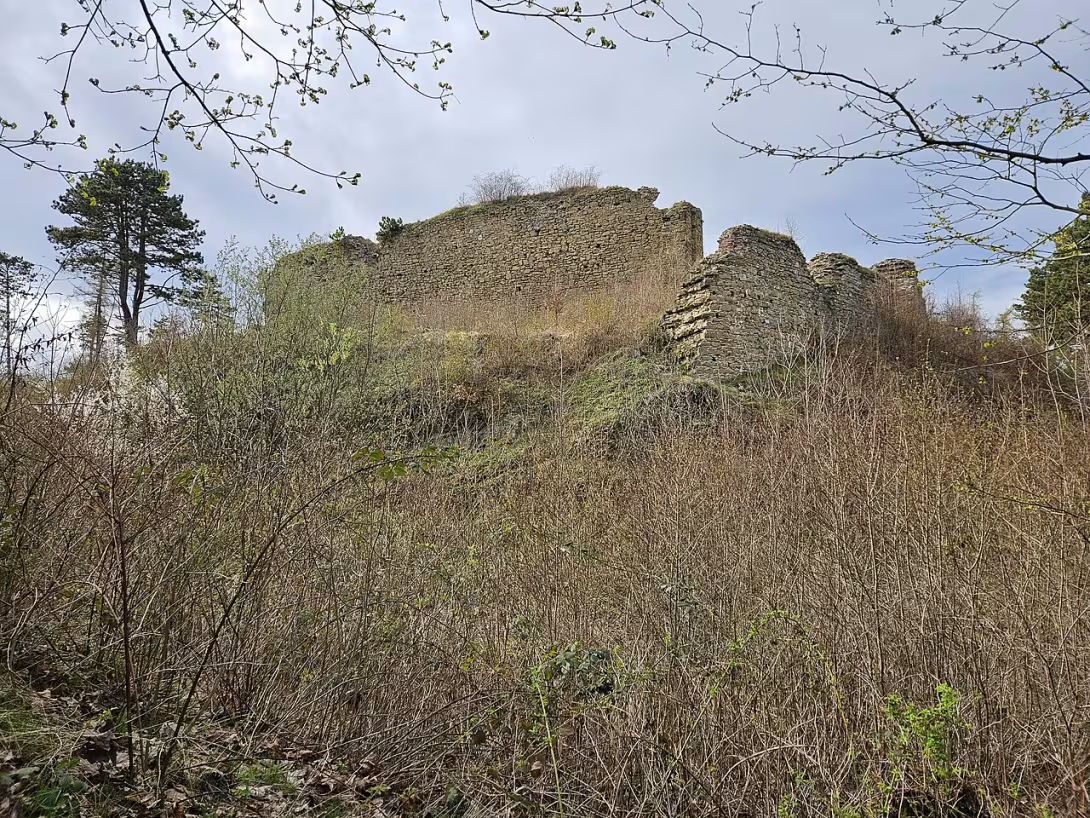

The historical appearance on the left is an AI-generated visualisation and serves as inspiration only.
Historical milestones
- 1238
- First documented mention of Cvilín as Lobenštejn.
- 1241
- Destruction by Tatar invasion.
- 1490
- Cvilín became part of the Czech crown under Vladislav Jagellonský after Matyáš Korvín's rule ended.
- 1523
- Jiří ze Šelmberka sold Krnov principality to Jiří Braniborsko-Ansbašský.
Architectural development
Cvilín was initially a wooden fortification before being rebuilt as a stone castle. It featured a quadrangular layout with residential buildings and a cylindrical tower, surrounded by double walls and an artificial moat. The castle underwent significant reconstruction in the early 16th century under Jiří ze Šelmberka, who also added a hunting lodge function.
Historical events
Destruction by Tatars in 1241.
Ownership transferred to Matyáš Korvín during the Czech-Hungarian wars, lasting until 1490.
Reconstruction and expansion under Jiří ze Šelmberka in the early 16th century.
Owners
Jindřich z Lobštejna (1253)
Beneš ze Cvilína (post-1253)
Heřman ze Cvilína (1280)
Beneš II. ze Cvilína (1281–1288)
Opavský kníže (late 13th century)
Krnovské knížata (1440s)
Přemyslovci z Opavy (15th century)
Matyáš Korvín (until 1490)
Vladislav Jagellonský (after 1490)
Jan II. ze Šelmberka (from 1493)
Jiří ze Šelmberka (from 1508)
Jiří Braniborsko-Ansbašský (1523–16th century)
Hohenzollernové (1622)
Points of interest
- Cvilín was originally built upon a prehistoric fortification, indicating that the site had strategic importance even before the medieval castle was constructed.
- The Tatar invasion of 1241 led to significant destruction at Cvilín, which necessitated multiple reconstructions over the centuries, highlighting its vulnerability and resilience through turbulent times.
- In an intriguing architectural development during the early 16th century, Jiří ze Šelmberka not only reconstructed Cvilín but also added a hunting lodge function, blending defensive and leisure purposes in its design.
- A significant archaeological discovery at Cvilín was made between 1817 and 1825 when an ancient well was uncovered during excavations, offering insights into the castle’s medieval infrastructure.
- The cylindrical tower of Cvilín is noted as the largest of its kind in Czech Silesia, making it a unique architectural feature within the region's historical landscape.
Guide
This guide is narrated by a synthetic voice generated by artificial intelligence.
Show guide text
This text was created by artificial intelligence and has not been editorially reviewed. It may contain inaccuracies.
Welcome! You are standing before the ruins of Cvilín Castle, also known as Lobenštejn or Schellenburg. It is located here on Zadní Cvilínský Hill, near the town of Krnov. Cvilín is a medieval castle ruin with a rich history and offers stunning views of the surrounding landscape.
Let's travel back in time. The first written mention of Cvilín dates to 1238 when the castle was known as Lobenštejn. At that time, there already existed on this site a prehistoric fortified area which had strategic value. In 1241, the castle suffered a devastating attack by the Tatars, leading to many reconstructions over the centuries.
Now take notice of the castle's façade, which is composed of a combination of different architectural styles. The castle was built on a rocky outcrop that offers impressive views of the surrounding landscape. Also note the remnants of the original wall and tower, which still stand as reminders of this place's history.
Over the centuries, Cvilín was in the hands of many different lords and nobles. One of them was Jindřich z Lobštejna, who played a significant role in the castle's history. Other notable figures associated with Cvilín include Beneš ze Cvilína, Heřman ze Cvilína, Beneš II. ze Cvilína, Jan II. ze Šelmberka, Jiří ze Šelmberka, Barbora Krnovská, Matyáš Korvín and Vladislav Jagellonský.
It is interesting to note that Cvilín was originally built on a prehistoric fortified site, indicating that the location had strategic value even before the construction of the medieval castle. At that time, there likely stood here a stronghold that protected access to an important trade route leading to Opava and Silesia.
Come take a closer look at the castle and explore its ruins. Experience the atmosphere of this place and imagine how it looked in the past. Cvilín is a true gem of our history and is worth visiting.
Tips for visitors
The best time to visit the Cvilín ruins is during late spring or early autumn, when the weather is mild and the park surrounding the site offers lush greenery and vibrant colors. Visiting during these seasons allows for comfortable exploration of the steep slopes around the ruins without the extreme heat of summer or cold of winter. Additionally, the lighting conditions are ideal for photography, with soft morning light providing a magical atmosphere.
The ruins' proximity to an ancient road leading to Opava makes it accessible by car, but always ensure you have the most up-to-date travel information.
When planning your visit, consider bringing comfortable walking shoes as exploring the site involves navigating uneven terrain and steep paths. A hat, sunscreen, and water are also advisable due to exposure to the sun on the open hilltop. For those interested in photography or history, a camera with a zoom lens can capture detailed shots of the ruins, while a guidebook or app about medieval castles could enrich your understanding of Cvilín's historical significance.
The best spots for photography at Cvilín are from the higher vantage points where you can capture panoramic views of the surrounding landscape and the castle's remnants. Early morning light is particularly enchanting, casting long shadows and highlighting textures in the ruins. For those interested in exploring nearby attractions within a 30-minute drive, consider visiting Krnov Castle for more medieval history or taking a scenic walk along the Opava River.
Cvilín can be an enjoyable outing for families with children. The park area offers space for picnics and leisurely walks, making it a great place to spend a day outdoors. While there are no specific attractions designed for young visitors at the ruins themselves, the surrounding natural landscape provides opportunities for exploration and play. Encourage kids to imagine life in medieval times as they explore the castle's history.
Frequently asked questions
Can the monument be visited?
This is a ruin. Such sites are often freely accessible, but some can only be visited with a guide or are closed for safety reasons. We have not verified the current situation – take care and respect any restrictions.
Where is the monument?
Location: Pod Cvilínem, Moravskoslezský kraj. The map on this page shows the exact spot.
Why is the monument protected?
It is listed in the Central List of Cultural Monuments of the Czech Republic as a cultural monument (register no. 1000150956).
Businesses nearby
Do you run a restaurant, accommodation, shop, museum, rental, wellness or other visitor service near this monument? Show yourself directly to the people heading to it — this is how they will see you in the app and on the web:
Nearby
The ruins are situated on a hill with steep slopes, near an ancient road leading to Opava. The area is now part of a park, offering scenic views and historical context.
Accommodation nearby
Themed route
Cvilín (hrad) (ruins) The main destination of this hiking trail is the ruins of Cvilín Castle, located on a hill with steep slopes near an ancient road leading to Opava.
1. Ruins of Cvilín Castle Type: historical monument Why it's worth visiting: The ruins of Cvilín Castle offer unique views into the history and architecture of medieval castles.
2. Park at Cvilín Castle Type: park Why it's worth visiting: The park offers beautiful vistas and provides a historical context for the castle and its surroundings.
3. Ancient Pathway Type: historic trail Why it's worth visiting: The ancient pathway leading to Cvilín Castle offers an interesting glimpse into history and the route once traveled by people from long ago.
Seasonal recommendations
Jaro
In the spring season, Cvilín is surrounded by blooming flowers and greenery that emerges after a long winter. The atmosphere is full of optimism and hope. We recommend visiting Cvilín in the spring to enjoy its beautiful nature and fresh air. The best time to visit Cvilín during this period is from April to May when parks and meadows are already full of blooms and greenery. We suggest visiting Cvilín in the morning hours to avoid crowds of tourists.
Léto
In summer, Cvilín is surrounded by greenery and flowers, but there is also a high risk of large tourist crowds. We recommend visiting Cvilín in the morning hours to avoid crowds. The best time to visit Cvilín during the summer is from June to August when the weather is sunny and warm. We suggest bringing an umbrella and plenty of water to avoid sunburn and dehydration.
Podzim
In autumn, Cvilín is surrounded by colorful leaves and cool air. The atmosphere is calm and quiet. We recommend visiting Cvilín in the autumn season to enjoy its beautiful nature and peaceful atmosphere. The best time to visit Cvilín during this period is from September to October when parks and meadows are already adorned with colorful leaves. We suggest bringing warm clothing to avoid the cold.
Zima
In winter, Cvilín is surrounded by snow and chilly air. The atmosphere is calm and quiet. We recommend visiting Cvilín in the winter season to enjoy its beautiful snowy landscape and peaceful atmosphere. The best time to visit Cvilín during this period is from December to February when the weather is cold and snowy. We suggest bringing warm clothing and boots to avoid the cold and frost.
Visualizations and artistic views


The visualisations are generated by artificial intelligence and serve as inspiration.
Photos from the area
Real photos taken near the monument


Zdroj a licence jsou uvedeny u každého snímku.
Tips from visitors
No tips yet. Be the first!
Log in and add your tip.
Sources and literature
Photos: MartinVeselka / CC BY-SA 4.0 — Wikimedia Commons. The author and licence also appear when you hover over the image.
Faktickým podkladem tohoto textu byl článek na Wikipedii, jehož autory jsou přispěvatelé Wikipedie. Článek je dostupný pod licencí CC BY-SA 4.0.
Location on the map


Příběhy a pověsti
Legendy, pověsti a příběhy spjaté s touto památkou

Fotografie návštěvníků
Zatím žádné fotografie. Buďte první, kdo přidá fotografii z návštěvy!
Log in a přidejte svou fotografii nebo hodnoťte.
Za ověřenou návštěvu v aplikaci získáte víc bodů — poznáme podle GPS, že jste na místě.
Reviews and comments