



Dlouhá 38 House
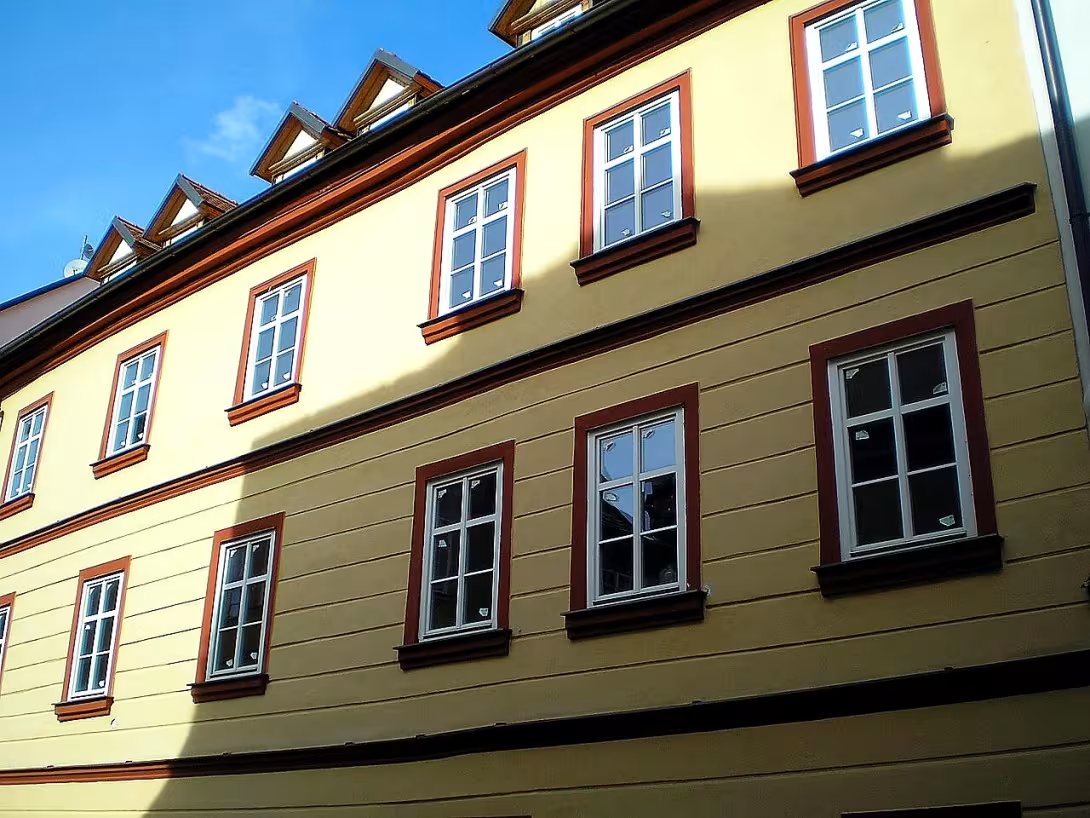
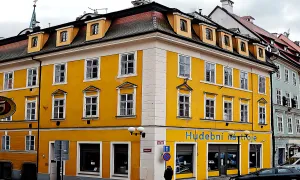
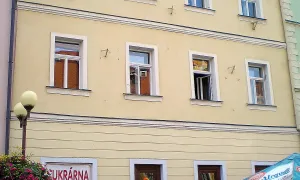
Dlouhá 38 in Cheb is a three-storey building with a saddle roof that boasts a classical architectural style and is protected as a cultural monument of the Czech Republic. It is located in the centre of the village Cheb at Dlouhá 23 / 38, which makes it significantly exposed and particularly interesting for visitors. This monument is important not only with its historical value but also with its location in an area with a rich past.
The building is distinguished between other objects in the city with its classical style. Classicism manifests itself in its symmetrical arrangement and elegant lines. The semi-circular entrance portal on the ground floor provides a structure of nobility and elegance. Between 1898 and 1945, the ground floor was partially constructed, reflecting historical changes in its use and modifications.
Although specific information about the creation of the building is not documented in detail, it is known to be among the classicist buildings of its time. Classicism as an architectural style was common in the 18th and 19th centuries, suggesting that the building may come from this period. This style is characterized by harmony, balance and reference to ancient Greek-Roman traditions.
The architecture of the Dlouhá 38 building is defined by its classical character. Symmetric arrangement and elegant lines are typical of this style, while a semi-circular entrance portal on the ground floor adds grandeur and elegance to the building. The materials used in the construction are not specified, but their choice was probably influenced by the availability and aesthetic preferences of that time.
The history of ownership and administration of the building is not fully documented. However, the reference to the construction modifications between 1898 and 1945 suggests that during this period there may have been significant changes in the ownership or use of the building. These modifications were probably a response to the needs and trends of the time, reflecting the dynamic history of many buildings in Cheb.
Key events associated with this object are its architectural modifications. Between 1898 and 1945, the ground floor of the building was partially constructed, reflecting historical changes in its use and modifications. These adjustments could be motivated by the need to adapt to new features or aesthetic trends.
Today the Dlouhá 38 building is in a state that reflects its historical value and architectural beauty. It is protected as a cultural monument of the Czech Republic, which ensures its preservation for future generations. The accessibility of this monument enables visitors to appreciate not only its historical importance, but also its classical architecture.
Visiting the Dlouhá 38 building is an opportunity to explore the rich history of Cheb and understand the impact of classicism on local architecture. This monument not only retains the past, but also serves as an inspiration for future generations who wish to make history a part of their daily lives.
Historical milestones
- 1898-1945
- partial construction treatment ground floor
Architectural development
A three-story building with a saddle roof was built in a classical style. The ground floor with a semi-circular entrance portal was partially modified between 1898 and 1945.
Points of interest
- Dlouhá 38 is a three-storey building with a saddle roof and a classical architectural style. - It is located at Dlouhá 23 / 38 in the centre of Cheb, which makes it visually exposed. - It is protected as a cultural monument of the Czech Republic because of its historical value and location. - Between 1898 and 1945, the ground floor was partially constructed, reflecting historical changes in its use. - Classicism as an architectural style is characterized by symmetry and elegant lines.
Guide
Show guide text
This text was created by artificial intelligence and has not been editorially reviewed. It may contain inaccuracies.
Welcome to the beautiful city of Cheb. You have just stopped in a place that is part of the deep and rich history of this region. You're standing right in front of the house on Dlouhá Street, specifically in front of the building under number 38. Before you go any further at your own pace, let me stop you for a moment and help you see what you're seeing. Can you feel the strange atmosphere? It feels like you're in a place where time doesn't flow as fast as anywhere else. Before your eyes, there is a building that is not just an ordinary house for people, but a living witness for the many years that this region has lived through. Feel the presence of history that manifests itself in every part of this city.
This house you are now observing has a very special meaning for all of us. It's not just another building in the city. It is a cultural monument of the Czech Republic, which means that its existence is protected as a valuable treasure of our national heritage. This tells us that this house is an important link in the mosaic from which the entire historical heart of Cheb is assembled. Although at first glance it may seem to be a common part of the street, its status as a monument reminds us that every such building carries a piece of our common past. It's part of the identity of this city and the whole country.
Let us now look together at how this house was changing in time. Although history has not given us the names of the particular architects who designed this house or shaped its face, we can read from its form the story of its growth and transformation. Pay attention now, especially to the lowest part of the house, the one that touches the ground itself and the pavement, i.e. the ground floor. It is here that fundamental changes have taken place that have affected the way in which the house meets the surrounding street. Between a thousand and eight hundred and ninety-eight and a year a thousand and nine hundred and forty-five, there were some structural modifications in this particular section. Imagine that time when the world was changing rapidly, when the city was developing and when people needed to adapt their homes to new needs. These ground floor modifications were the result of an effort to modernise and keep the building running during a period that was very dynamic for the city. Even though we don't know the exact plans, we can imagine the work, the skill of the craftsmen who were working at the time to keep this house functional and fit the times they lived in.
Now you may be asking who's been through all of this house. Who lived here, who worked here and who sought safety here? It's a fascinating question, but in this case, the answer remains hidden. Historical records didn't tell us the names of any particular personalities that would be closely linked to this house. We do not know the faces of those who experienced their greatest joy and deepest sadness in these rooms. But even if we don't know their names, their presence in this house is still felt. Every change in its structure, every repair made in the years of a thousand eight hundred ninety-eight to a thousand nine hundred forty-five was the work of particular people. It was people like us who wanted to have their home in order, who wanted to maintain the building and which was part of their daily lives. But this ignorance gives us another option - the possibility to let unknown characters think and have their faces drawn in spirit.
And it is in this ignorance that lies one of the greatest mysteries of this place. It's the silent presence of the unsub. We often look for great names, kings or famous artists in history, but this house reminds us that real history is created by these silent, unknown stories. The mystery is how these building modifications gradually connected with the overall view of the house over the course of the ten and more years. How did life change in this house when everything around it was supposed to change? This emptiness in the records of people and creators creates a special touch of mystery around the house, which can also follow you through the streets Cheb. It's like a silent narrative that doesn't go through words, but through the very existence of these walls.
But I will now return you from this deeper reflection to the present moment. In front of you is still a beautiful city that invites you to explore again. This house on Dlouhá Street is just one of the many points that make up this unique atmosphere. Every other building you see can have its own hidden story, its own secrets and its own modifications that have become part of her face. I suggest you continue along these historic roads, see the facade details, observe how the structure of urban buildings changes and just let yourself drift through this place. Thank you for taking this moment and for stopping by this monument. I wish you a beautiful and inspiring walk through the history of the city of Cheb.
Tips for visitors
The best time to visit is in the spring or autumn period when vegetation is green and light is pleasant for photography.
When visiting, remember the camera or mobile phone for shooting. The best light is at noon, but also morning and evening offer beautiful flashes on the facade of the house.
In the surrounding area you can visit the historical centre Cheb with its fortress and other monuments. For families with children this place is interesting for a short walk or shopping trip.
Frequently asked questions
Can the monument be visited?
This is a residential or farm building, not a museum with opening hours. Please view it from public space and respect the owners' privacy. We have no information about access to the interior.
Where is the monument?
Location: Dlouhá 23/38, Cheb, Karlovarský kraj. The map on this page shows the exact spot.
Why is the monument protected?
It is listed in the Central List of Cultural Monuments of the Czech Republic as a cultural monument (register no. 19304/4-3614).
Businesses nearby
Do you run a restaurant, accommodation, shop, museum, rental, wellness or other visitor service near this monument? Show yourself directly to the people heading to it — this is how they will see you in the app and on the web:
Nearby
➜ Zobrazit interaktivní přehled okolí – restaurace, ubytování, půjčovny a další místa v okruhu 15 km.
Data: OpenStreetMap contributors, okruh 15 km.
🏰 Historické památky
- Galerie 4 (0.1 km – Františkánské náměstí 30/1)
- Chebské muzeum (0.3 km – náměstí Krále Jiřího z Poděbrad 3)
- Chebský hrad (0.5 km)
- Památník obětem železné opony (4.2 km)
- Pomník Johanna Wolfganga Goetha (4.7 km)
- Městské muzeum (5.2 km)
- Künstlerhaus (10.0 km – Egerstraße 3)
- hrad Hohenberg (10.6 km)
🍽️ Restaurace a stravování
- U Kata (0.2 km – Židovská 17)
- Dejavu (0.2 km – Svobody 543/7)
- Stop Cafe (0.7 km)
- Kamenný Dvůr (6.8 km)
- Restaurace Seeberg (8.6 km – Ostroh 2)
- Bronzový dukát (10.5 km)
- Gasthaus Egertal (11.3 km)
- Pizzeria da Nunzia (12.0 km – Turmstraße 1)
🏨 Ubytování
- Modrý Věžák (1.1 km – Dyleňská 1205/24)
- Resort Stein (2.7 km – 10)
- Tršnice (4.5 km)
- Otava (4.8 km)
- Retro-Camp Tršnice (5.2 km)
- Penzion Selský dvůr (7.0 km)
- Penzion Seeberg (8.6 km – Ostroh 2)
- Hrad Vildštejn (10.3 km)
🚲 Půjčovny a sport
- Better Fitness (0.2 km – Komenského 7)
- Sport Flori (0.2 km – Valdštejnova 8)
- Hervis (0.6 km)
- plavecký bazén Chetes (0.6 km)
- Sportisimo (0.7 km)
- Jízdní kola (0.9 km)
- TJ lokomotiva (1.2 km)
- Hard Core Gym (5.6 km)
🥾 Turistika a příroda
- Komorní hůrka (3.5 km)
- Skalní útvar (3.5 km)
- Hranice / Die Grenze (5.5 km)
- Starý Hrozňatov (6.2 km)
- Císařský pramen (8.2 km)
- Kapplblick (9.4 km)
- Wanderwege um Hohenberg (10.0 km)
- Grenzwandlerweg (10.0 km)
Accommodation nearby
Themed route
Thematic cruise route from Cheb
1. Main objective: Dlouhá 38 - Type: Historical walls and bastions - Why is it worth visiting: This fortress is one of the most famous monuments in Cheb, which represents the rich history of the city. Visitors can see ancient walls and bastions, where there is also a museum with exhibitions about the history of Cheb.
2. Ambient interest: Old Town courtyard - Type: Historical Square - Why is worth a visit: This area is the center of the old town, where there is beautiful architecture and historical buildings. Visitors can enjoy a quiet moment in one of the squares and look at the details of old houses.
3. Ambient interest: Cheb Castle - Type: Historical Fortress - Why is it worth a visit: Even if it is not directly listed in the area, it is a nearby and important place to understand the history of Cheb. The castle offers views of the city and its surroundings as well as an exhibition about the history of the region.
4. Ambient interest: Old Town Street - Type: Historical streets - Why is it worth a visit: These narrow and beautiful alleys are full of history and charme. Visitors can see small shops, cafés and restaurants that provide an authentic feeling to the old-town surroundings.
5. Ambient interest: Cheb Town Hall - Type: Historical building - Why is worth a visit: This important building is a symbol of the city and offers beautiful Gothic interiors. Visitors can view the history of Cheb through the City Hall exhibitions.
This route offers visitors the opportunity to immerse themselves in the history and culture of Cheb while enjoying the beautiful architecture and peace of the Old Town streets.
Seasonal recommendations
Spring: In spring, the historical monument Dlouhá 38 in Cheb is transformed into a special place where nature begins to bloom. The sun illuminates the building with long rays that highlight its architectural details and the color of the roofs. In the gardens around you visitors can enjoy flowering shrubs and flowers, which adds a sense of renewal and hope to the atmosphere. For the tour it is advisable to equip yourself with warm clothes with the possibility of delaying layers because spring weather can be variable. The best time to visit is at noon, when the sun lights the building best and nature appears in its most beautiful brightness.
Summer: Summer brings warm, long days to Long 38 with intense sunlight. The sunset colors the building in hot color and the shadows are played between its incisions, adding to its historical character beauty. The surrounding parks offer shelter from the sun and relaxation under umbrellas of trees. Visitors should be prepared for warm weather, so it is advisable to equip yourself with light clothes and bring protective sunglasses. The best times for visiting are early morning or late evening when the temperature is more pleasant and fewer people.
Autumn: In autumn the Dlouhá 38 becomes melancholic with darker sunlight, which highlights historical roofing and architectural details. The leaves around the building turn into gold and red colors, creating a beautiful landscape. The air is clean and cold, which contributes to a sense of peace and relief from summer heat. For the visit, warm clothes should be equipped with the possibility to add layers because the weather can be cold. The best times for the tour are at noon, when the sun is at its highest and illuminates the building and surrounding green areas.
Winter: Winter brings Long 38 in Cheb into the atmosphere of snow beauties. The sun rays are projected on white sheets, highlighting the historical lines and forms of the building. The surrounding parks can offer a view of snowy trees and a quiet landscape. Visitors should be prepared for cold weather, so it is advisable to equip themselves with warm clothes, including fur coats and protective pairs. The best times for visiting are early morning or late evening when sunlight is less intense and the atmosphere calmer.
Visualizations and artistic views


The visualisations are generated by artificial intelligence and serve as inspiration.
Photos from the area
Real photos taken near the monument

Zdroj a licence jsou uvedeny u každého snímku.
Tips from visitors
No tips yet. Be the first!
Log in and add your tip.
Sources and literature
Photos: Novojaro / CC BY-SA 3.0 — Wikimedia Commons. The author and licence also appear when you hover over the image.
Location on the map
Příběhy a pověsti
Legendy, pověsti a příběhy spjaté s touto památkou
Fotografie návštěvníků
Zatím žádné fotografie. Buďte první, kdo přidá fotografii z návštěvy!
Log in a přidejte svou fotografii nebo hodnoťte.
Za ověřenou návštěvu v aplikaci získáte víc bodů — poznáme podle GPS, že jste na místě.
Reviews and comments