






Domy čp. 120 a 1128 House
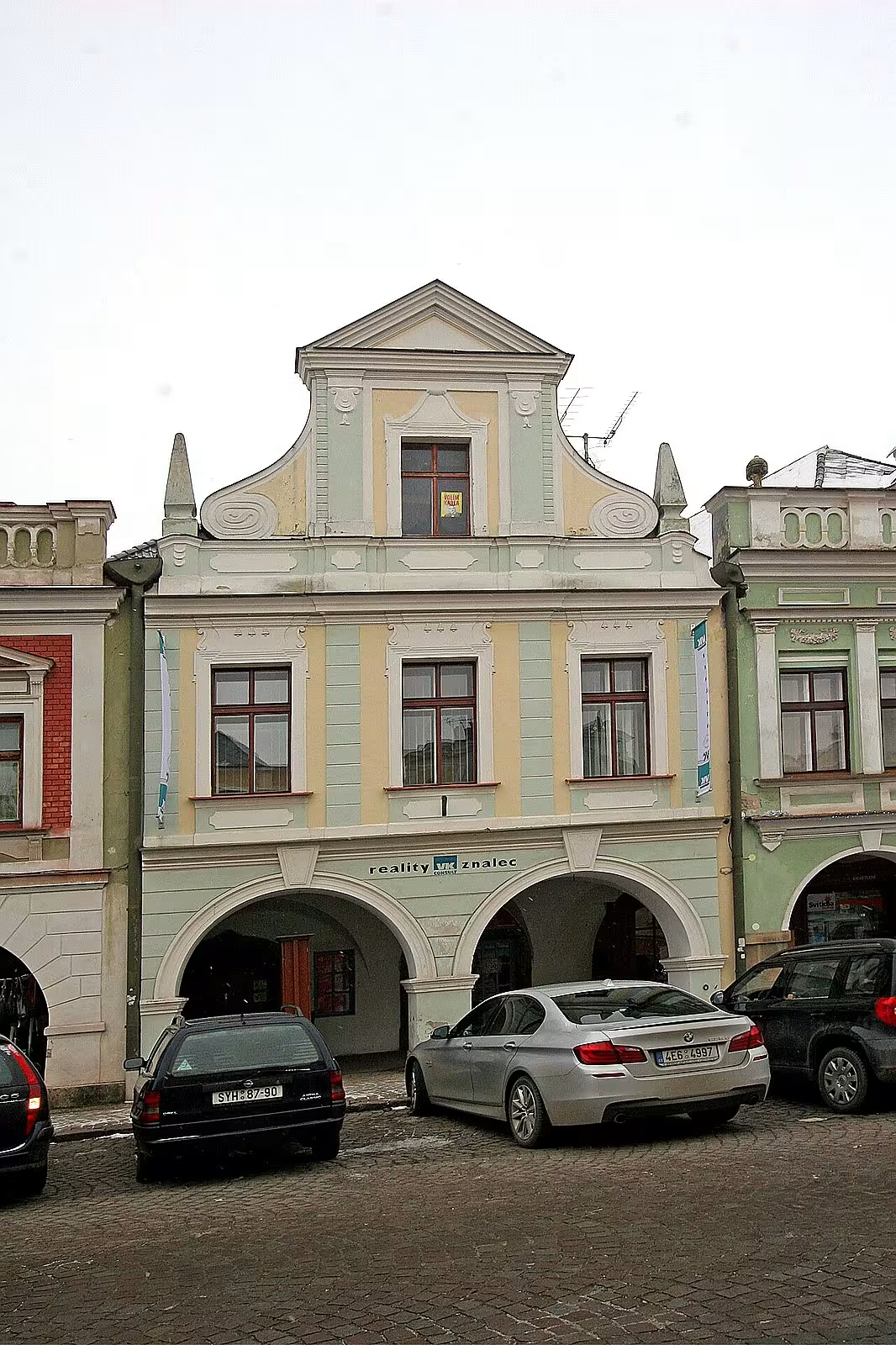
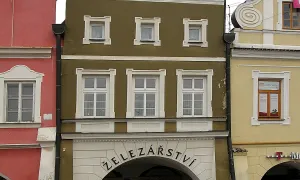
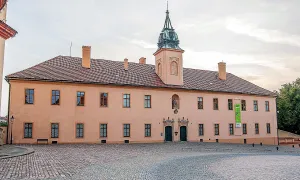
Domy čp. 120 a 1128 on Smetana Square in Litomyšl (district Svitavy, Pardubický kraj) are a unique cultural monument of the Czech Republic. This one-storey townhouse with Renaissance roots and a distinctive baroque facade from around 1760 represents typical Litomyšl architecture. Its historical and cultural importance is contributed by its preserved interior layout and rear house in the yard.
The building was originally built as a Renaissance townhouse. Around 1760 she had undergone a significant transformation in which the facade was rebuilt into a baroque style. This development reflects wider cultural and historical changes in the region, when the Baroque became a dominant building style.
Architecturally, the house is a single-storey one-storey one-storey with an archway to the square. The 1760 facade shows typical elements of local architecture, which differ from the original combination of historical styles and the preservation of internal structures.
The building is officially recognised as a cultural monument of the Czech Republic in the territory of Litomyšl. This protection underlines its value and ensures the preservation of a significant architectural heritage for future generations.
Today, the house is open to the public. It is worth visiting not only because of its historical importance, but also as a model of preserved regional architecture. Visit houses no. 120 and 1128 to better understand the rich history of Litomyšle and its cultural monuments.
This monument represents not only an architectural milestone, but also a testimony of changes in time and culture in the region. It is a mirror of the past that allows us to feel the connection to the history of Litomysle and appreciate its cultural wealth. Visit it and experience an interesting journey to ancient times where every stone talks about the past of the village.
Historical milestones
- around the 16th century
- The creation of the original Renaissance building
- around 1760
- Rebuilding the facade to the Baroque style
- 20th century
- Recognition of the object as a cultural monument
Points of interest
- It is a unique cultural monument of the Czech Republic. - The one-storey townhouse has Renaissance roots and Baroque facade from around 1760. - Its importance is contributed by its preserved internal layout and rear house in the yard. - The building has an arch facing the square. Today, the house is open to the public.
Guide
Show guide text
This text was created by artificial intelligence and has not been editorially reviewed. It may contain inaccuracies.
Welcome to the beautiful town of Litomysl. It is a great pleasure that you can be here, in the heart of this historic place, and discover with me the stories that lie hidden in every street and every stone. Right now, listening to these words, you're facing two interesting buildings that are an integral part of this city. These are the number one houses twenty and one thousand hundred twenty-eight. Before we take a deeper look, pay attention to what's right in front of you. Feel the atmosphere of the old town, feel the calm that radiates these old walls, and observe how these buildings fit into the overall appearance of the surrounding buildings. You stand before something that has survived many generations and that today serves as a witness to the past.
These houses are not just ordinary buildings. These are one-storey townspeople 'houses that are of great importance to our country and to the country. This is why they are protected today as cultural monuments of the Czech Republic. This means that their value is not only in the material from which they are made, but above all in what they represent for our common heritage. Although at first glance they may seem simple, their existence here is proof of the continuity of life in this city.
Now let's think about how these houses came into being. It is a fascinating question, but we do not have a full answer. History didn't tell us exactly what year these houses were built or who was their creator. We don't know the names of the architects who designed their faces or the names of the builders who raised their walls to heaven. This may seem like a lack of information to you, but I beg you to think differently. This ignorance carries a strange spell. These houses are just here. They're part of the fabric of the city without having to give us specific dates or names. They are the result of the work of people whose faces and voices have long since died in time, but their work remains.
Now pay attention to what you see right in front of your eyes. Look at their facade. Notice how these one-story buildings form the rhythm of the street. Even if they are low, they have their weight and their presence. Check their windows and entrances. Feel how these elements form into a general picture. Although we cannot talk about specific artistic styles that are explicitly mentioned in the documents, you can perceive their character. The townhouse has always been more than just a place to sleep. It was home, it was space for work, for business, for family meetings, and for a daily struggle for life. These houses were the life centers of ordinary people, those who formed the foundations of every city.
Imagine the people who lived here. They were not kings or great nobles, but it was these townspeople - artisans, merchants, owners of small businesses - who created this township. Even if we don't know their names, we can imagine them in their everyday activities. Imagine the footsteps of the people who walked through this door hundreds of years ago, the sound of their voices and the smell of food that may have drifted from their windows. These houses are a vessel for thousands of such unknown but important stories.
Here we come to something that fascinates me personally at these buildings. It's the mystery of the unsub. In today's world, where everything is recorded, where every step is watched and every information available at hand, there is something rare. You're standing in front of the sights that keep their biggest secrets to themselves. When exactly were the first stones laid? Who was the first resident to unpack his property here? Who laughs in these rooms, who cried in these difficult moments? This emptiness in historical records gives us room for our own imagination. This monument forces us to think deeper about time and what really remains of us.
Sometimes it may seem that monuments are just dead objects looking at us. But I believe it's the opposite. These houses look at us through their durability. They're here to remind us that life is fleeting, but what we create can take incredible power. Even these simple, single storey houses are part of something much larger - they are part of the history of Litomysl, they are part of the history of our nation.
Now that you have adopted these houses and their importance a little better, I suggest you continue your walk. Litomysl has many more surprises for you. Every other street, every other house can tell a different story, sometimes bright and documented, sometimes as mysterious as these two houses. Remember to look up, watch the details of roofs, gutters and facades that make a constant change in view.
Thank you for spending this moment with me and for paying attention to these modest but important witnesses to history. I wish you a beautiful and inspiring journey through the next city. Enjoy your discovery every moment. Goodbye.
Tips for visitors
For the best experience we recommend a visit on clear days when the details of historical facades are well visible. You can use a car or public transport to get there; Please check the current connection in the search engine. Parking in the city centre is limited, therefore we recommend looking for reserved places nearby.
Take with you drinking water and shoes suitable for walking on city tiles. For photography it is best to use natural daylight, especially in the morning when the sun illuminates buildings from the best angles. The best views of houses no. 120 and 1128 can be obtained from the opposite side of the street.
For families with children, a walk around these historic buildings in the city centre is an interesting opportunity to observe old architecture. Within the framework of the information provided, there are no other specific objectives in the area that could be visited.
When planning a visit, focus mainly on quiet times when there is not too much traffic in the streets, allowing you to observe the architecture of these two houses in peace.
Businesses nearby
Do you run a restaurant, accommodation, shop, museum, rental, wellness or other visitor service near this monument? Show yourself directly to the people heading to it — this is how they will see you in the app and on the web:
Events nearby
Zdroj akcí: otevřená data měst a obcí ČR (Národní katalog otevřených dat) a kalendář akcí Národního památkového ústavu.
Nearby
➜ Zobrazit interaktivní přehled okolí – restaurace, ubytování, půjčovny a další místa v okruhu 15 km.
Data: OpenStreetMap contributors, okruh 15 km.
🏰 Historické památky
- Regionální museum v Litomyšli (0.1 km – Jiráskova 9)
- pomník Bedřicha Smetany (0.1 km)
- busta Boženy Němcové (0.1 km)
- Zámek Litomyšl (0.2 km – Jiráskova 93)
- pomník Aloise Jiráska (0.2 km)
- Portmoneum (0.4 km – T. Novákové 75)
- Muzeum vesnice (6.8 km – 76)
- Jan Perner (10.1 km)
🍽️ Restaurace a stravování
- EL Café - Why not (0.1 km)
- Putyka Osík (3.7 km – 257)
- Avion (12.5 km)
- Uno (12.5 km)
- U Babyky (12.5 km – Jilemnického 1364)
- Hospoda Na verandě u Toulovce (12.5 km)
- U Malinů (12.6 km)
- Na skalách (12.7 km)
🏨 Ubytování
- Pension - Kraus (0.3 km – Havlíčkova 444)
- Hájenka Kozlov (7.6 km – 101)
- Restaurace a penzion Mandl (8.6 km)
- Bravo (10.3 km)
- Pivovar Faltus (10.4 km)
- Penzion u Synka (11.5 km)
- B & B (12.4 km – 63)
- Uno (12.5 km)
🚲 Půjčovny a sport
- Indoor Golf Centrum (0.1 km)
- Stratílek (0.3 km)
- Fitcentrum FILA (0.7 km – U Plovárny 1130)
- Sokolovna (0.9 km)
- Kart aréna (1.5 km – Moravská 1200)
- Cyklo sport (6.3 km)
- Cykloservis Dostál (10.3 km – Dr. E. Beneše 1000)
- zimní stadion (10.5 km)
🥾 Turistika a příroda
- Litomyšl (nám.) (0.2 km)
- Nedošínský háj NS (3.4 km)
- Vlčkov (rozc., BUS) (4.7 km)
- Vlčkov (obec) (4.8 km)
- pramen Javorka (9.4 km)
- Stříbrná krasavice (10.8 km)
- Okruh Ústí nad Orlicí (12.4 km)
- Ústí nad Orlicí - město (ŽST) (12.4 km)
Accommodation nearby
Themed route
1. House No. 120 Type: Historical construction This object is one of the main objectives of your tour. You can follow the details of the old architecture here.
2. House No. 1128 Type: Historical construction This building is the second part of your main target. It offers a view of the neighbouring building in this part of town.
3. The immediate space at the houses Type: Open Place This part of the route will guide you directly to the objects themselves. It is ideal for observing the details and relationship between the two structures.
Seasonal recommendations
In spring, the surroundings of the houses awaken to life, and the young green gives the place freshness. The atmosphere is full of hope and the light is fine, which is ideal for observing facade details. We recommend wearing more layers of clothing because the weather is variable. It is best to visit the memory in the morning, when the traffic is quieter.
The summer season brings sharp sun and rich colors that highlight the historical character of the buildings. However, there are many more visitors in the main season, so it is advisable to come first thing in the morning to avoid the biggest crowds. Choose light and breathable clothes and don't forget enough fluids to refresh during the walk.
In autumn, the city shrouds into golden tones and soft evening light creates a melancholy mood. Nature gradually dies around the monuments, which brings a calmer environment for contemplation. It's practical to carry a waterproof coat or umbrella and plan a visit until the afternoon before it starts to get dark.
In winter, houses in silence and frost are very mysterious, especially when the landscape is covered with snow. The atmosphere is withdrawn and calm, typical of the end of the year. It is necessary to wear very warm clothes and solid shoes. Pay attention to opening times which are often shorter at this time than in other months.
Visualizations and artistic views


The visualisations are generated by artificial intelligence and serve as inspiration.
Photos from the area
Real photos taken near the monument


Zdroj a licence jsou uvedeny u každého snímku.
Tips from visitors
No tips yet. Be the first!
Log in and add your tip.
Sources and literature
Photos: Petr1888 / CC BY-SA 3.0 — Wikimedia Commons. The author and licence also appear when you hover over the image.
Location on the map

Příběhy a pověsti
Legendy, pověsti a příběhy spjaté s touto památkou
Fotografie návštěvníků
Zatím žádné fotografie. Buďte první, kdo přidá fotografii z návštěvy!
Log in a přidejte svou fotografii nebo hodnoťte.
Za ověřenou návštěvu v aplikaci získáte víc bodů — poznáme podle GPS, že jste na místě.
Reviews and comments