






Drachenburg Ruin
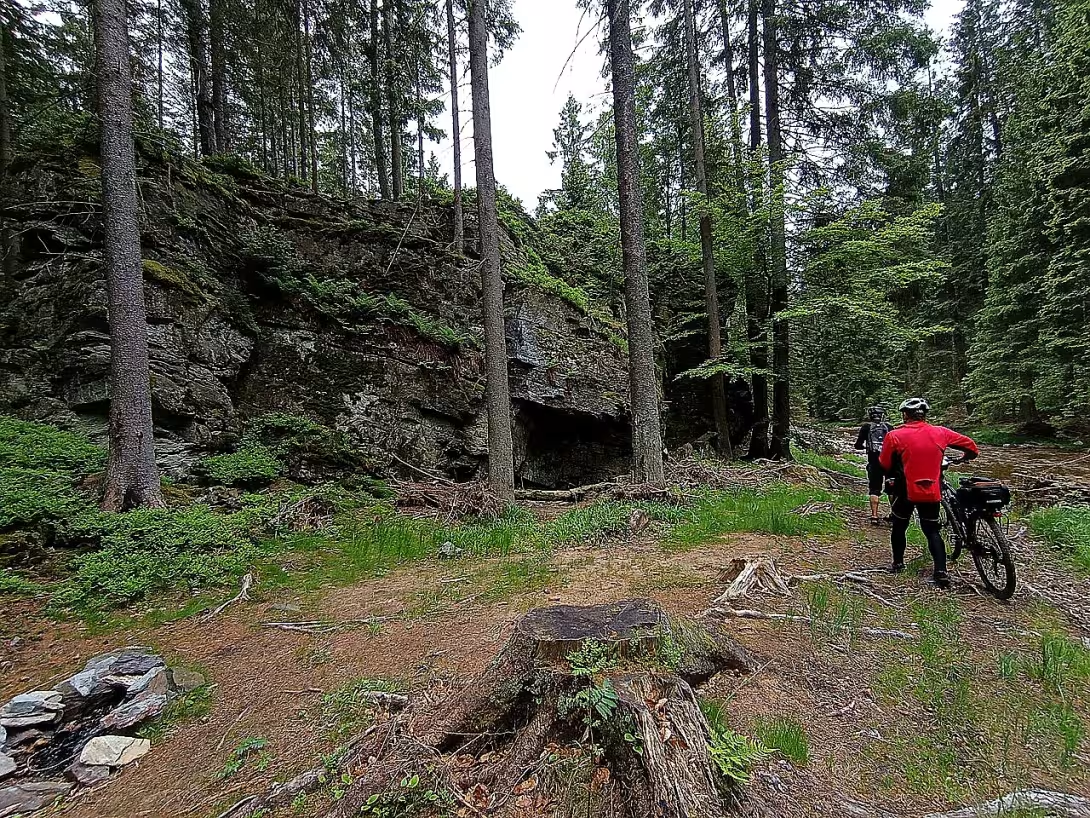
Drachenburg is a medieval chateau ruin near Drakov, near Hermanovice in Moravia. Since the first half of the 14th century it served as an extension of Kynžvart and played a key role in regional defense by guarding the northern entrance to Moravia along the Black Opava Valley. Despite its importance, Drachenburg remains relatively unclear due to limited written records and archaeological findings.
The chateau was built on an elongated rock of approximately 23 to 9 metres in length with access from the north and had a defensive moat about 10-12 metres wide, supplemented by a wall. While a large part of the building probably consisted of wood, the stone remains are found on its north and south side, suggesting some use of masonry. This architectural choice reflects typical medieval construction techniques aimed at maximizing defence capabilities.
The historical context of Drachenburg is rooted in the 14th century when Bohemia was part of the Holy Roman Empire under the Luxembourg dynasty. During this period, there has been significant political consolidation and territorial expansion in Central Europe, underlining the strategic importance of fortifications such as Drachenburg. Unfortunately, the chateau burned down in the 15th century and has never been rebuilt, which means the end of its active role in regional defence.
Today, Drachenburg is accessible through the red tourist trail from Rejviz along the Black Opava Valley towards Munich, as well as through the NS Valley of Lapels starting in Drakov. Visitors can explore the remains of medieval communication between the rock and the river, which offers knowledge of the historical importance of the site. Despite limited documentation, Drachenburg remains a remarkable monument for interested in medieval history and architecture.
Often overlooked in scientific literature despite its historical significance as part of the chain of fortifications to protect Moravia, the strategic location and construction of Drachenburg reflects the defensive priorities of that time. Today, it stands as evidence of the region's medieval past and invites visitors to explore its ruins and imagine their stories.
Then and now
Drag the slider to compare how the landmark may have looked when it was built with the view today.
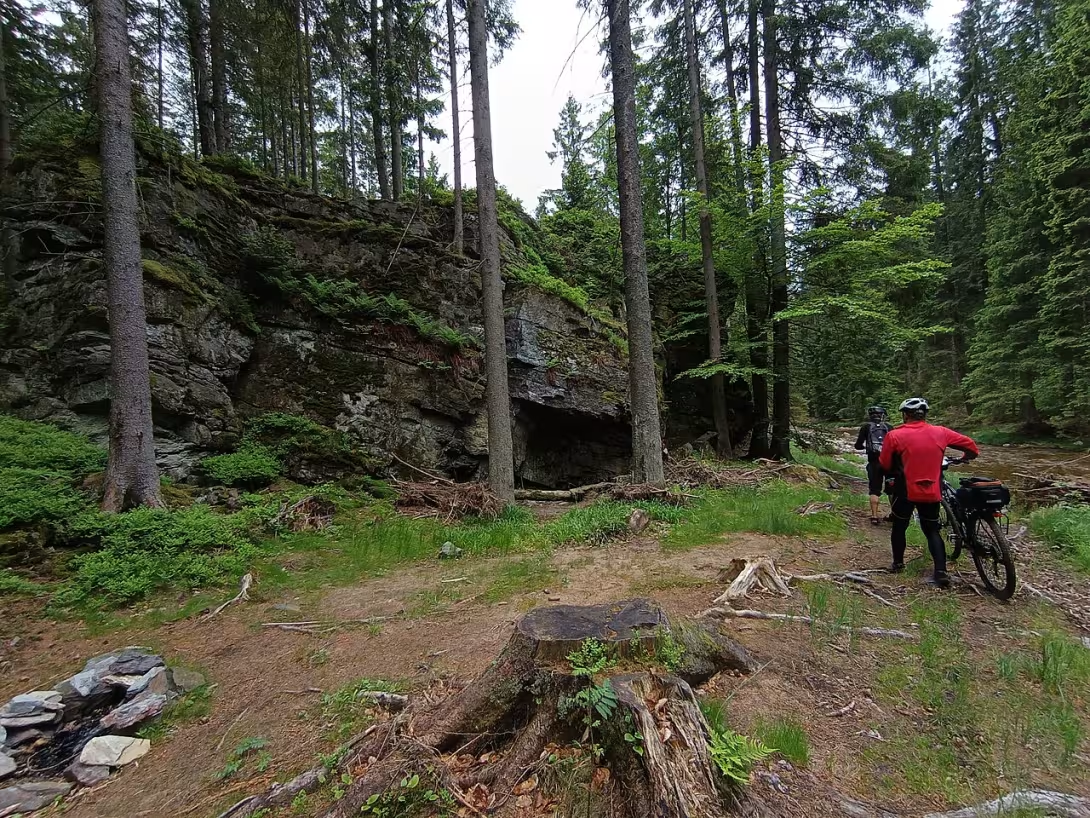
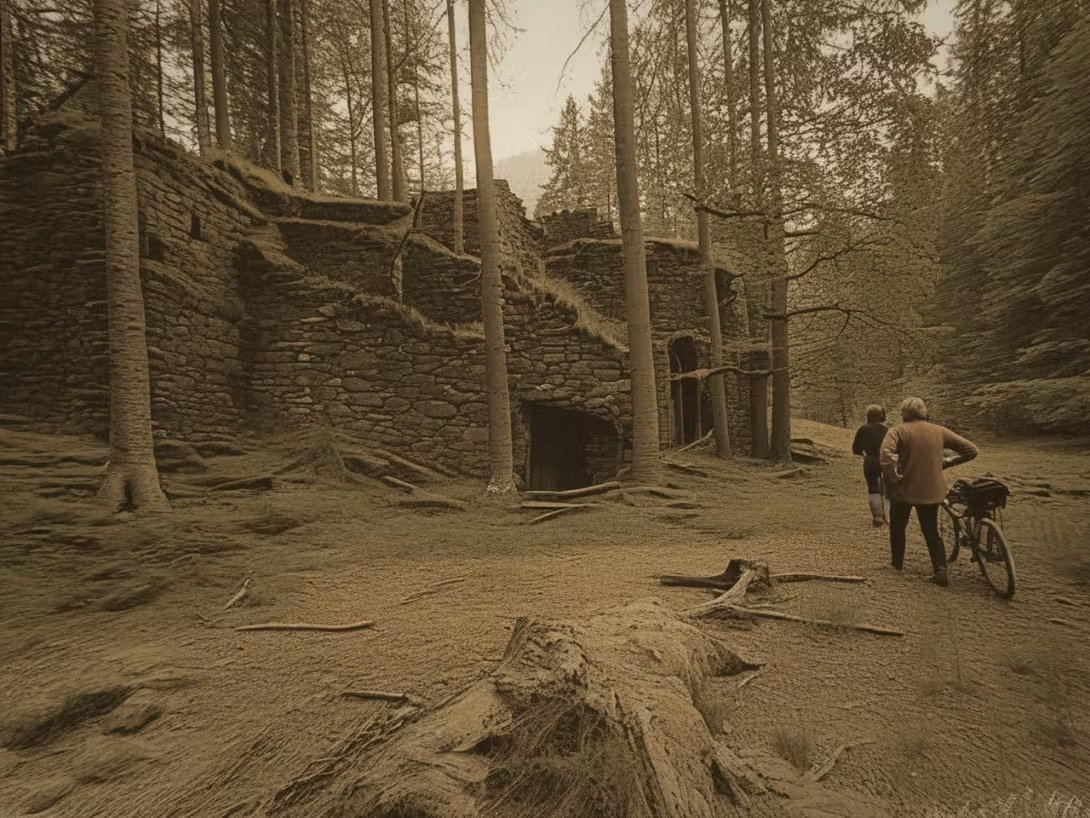
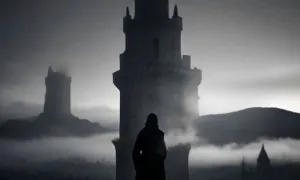
The historical appearance on the left is an AI-generated visualisation and serves as inspiration only.
Historical milestones
- Around 1350
- The creation of the chateau Drachenburg as a defensive pass to Quinburka.
- 15th Century
- Chateau Drachenburg burned down and was not seated.
Architectural development
Drachenburg was built on an elongated rock measuring approximately 23 times 9 meters, with access from the north. There was a defensive moat about 10-12 meters wide, supplemented by a wall. While a large part of the chateau probably consisted of wooden structures, stone remains are found on its north and south side, suggesting some use of masonry.
Historical events
- 15th Century
- The chateau burned down in the 15th century and was never rebuilt.
Points of interest
- Despite its historical significance, Drachenburg remains relatively unclear thanks to limited written records and archaeological findings, making it a hidden jewel for those interested in medieval history.
- The building of the chateau used both wooden and stone masonry, which reflected typical medieval practices aimed at maximizing defence capabilities; However, the predominance of wood means that most of its original structure did not survive.
- Drachenburg was part of the strategic chain of fortifications protecting Moravia during the 14th century, when the Czechs were under the Luxembourg Holy Roman Dynasty, and highlighted their role in regional defence and political consolidation.
- The chateau burned down in the 15th century and was never rebuilt, which means the end of its active role in regional defense; This event underlines the temporary nature of medieval fortifications in frequent conflicts.
- Today visitors can explore the remnants of medieval communication between the Drachenburg rock and the river through the red tourist trail from the Rejviz or the trail of the Paddle Valley starting in Drakov, which offers knowledge of its historical significance despite limited documentation.
Guide
This guide is narrated by a synthetic voice generated by artificial intelligence.
Show guide text
This text was created by artificial intelligence and has not been editorially reviewed. It may contain inaccuracies.
Welcome to the historic site Drachenburg, also known as Drakov - the captivating medieval chateau ruin nestled on a rocky edge near the picturesque castle Drakov near Heřmanovice in the Moravian-Silesian Region. As you stand here, dive into a quiet environment for a while and imagine a living history that once appeared in this place.
Drachenburg was established around 1350 as the extension of Kynžvart, which serves a vital role in regional defence by guarding the northern entrance to Moravia along the Black Opava Valley. This strategic location underlines its importance at a time when fortification was necessary for protection and control.
As you look around, notice how the ruins suggest a once significant structure. The remains of buildings using both wood and stone masonry reflect typical medieval building techniques. Although many were lost in time, the stones still speak volumes about the architectural ingenuity of its builders. Imagine walls that stood tall, serving as silent guardians against anyone who dared to come without an invitation.
The history of the chateau is shrouded in mystery thanks to limited written records and archaeological findings. This lack of extensive documentation adds air intrigue, making Drachenburg a hidden jewel for those fascinated by medieval history. While particular architects or historical figures associated with the chateau remain unknown, stories within these stones await discovery.
In the 15th century Drachenburg met its fiery demise and was never rebuilt and left behind this evocative destruction, which invites to explore and contemplate. As you roam the place, let your imagination wander freely - imagine the busy life that was once present here, the strategic meetings that took place inside these walls, and countless stories untold.
We invite you to continue to explore Drachenburg at your own pace. Every stone has a story, every corner has a flash in the past. As you dare further, let your curiosity guide you through this remarkable history.
Thank you for joining us on this journey through time. We hope that your visit here gives you deeper recognition for the rich tapestries of our common heritage. Safe roads as you continue to explore and discover more hidden treasures around the world.
Businesses nearby
Do you run a restaurant, accommodation, shop, museum, rental, wellness or other visitor service near this monument? Show yourself directly to the people heading to it — this is how they will see you in the app and on the web:
Nearby
The site is accessible via the red tourist trail from Reyviz along the Black Opava Valley towards Munich and also via the NS Valley of the lapels starting in Drakov. The area contains the remains of medieval communication between the rock and the river.
Accommodation nearby
Themed route
Thematic tour of Itinerary: Drachenburg and Surgeons
1. Start in Rejviz - Type: starting point - Why Visit: Start your journey in the charming village of Rejviz, nestled along the picturesque Black Opava Valley. This picturesque starting point sets the tone for adventure through history and nature.
2. Follow the red tourist trail to Drachenburg - Type: Scenic Route - Why Visit: Traverse charming Red Tourist Trail, which is coming from Rejviz towards Munich, offers a stunning view of the Black Opava Valley. This trail is rich in historical remains and medieval communication paths between rock formations and rivers.
3. Explore Drachenburg - Type: Historical pages - Why Visit: Arrive in Drachenburg, a captivating chateau ruin set on a rocky edge. The site offers a view of his told past, with remnants of medieval architecture that whispers stories about past times.
4. Continue in NS Valley of Routes - Type: Scenic path - Why Visit: Take the Trail of the Paddle Valley from Drakov, which passes through fresh landscapes and historical sites. This journey provides a deeper connection with the natural beauty of the region and medieval history.
5. Return through Munich - Type: Scenic Route - Why Visit: Close your way by redirecting the part of Red Tourist Trail back to Munich, enjoying a quiet environment and reflecting the historical findings gained during the survey of Drachenburg and its surroundings.
This itinerary offers a harmonious combination of history, nature and picturesque beauty, so it is an enrichment experience for every traveler.
Seasonal recommendations
Spring: The Drachenburg Tower offers one experience in the spring period, where the event intertwined with the historical majesty of rendition. Green meadows and goods supplied with single-colour fuels, which are produced by the company and hope. Sun rays penetrate outside the tree leaves, illuminating the structure of the depiction of the light that aims to the historical character. This solution is ideal for quiet production, as the crowds are mentioned in the report. Intellectual bodies should be considered as necessary to comply with the conditions laid down in this Regulation. The best things for determination is the circumstance of the day on which these services are provided and the solar world is not meant to set prices.
Summer: Summer Drachenburg offers live energy from flowing sunlight, while increasing the state of stars. High temperatures and possible summer storms may affect the infestation; this is your own joke to the relevant market or may be evening to avoid heat and davom. This time of year is popular between families and tourists, so the sailing difficulty outside the main summer season can shift the silent journey. The viscous organs should be considered as reclining round, forbidden sunny and plenty of water. The transfer of parasite or platform to rainy conditions is also transport to ensure the use of the law.
Autumn: Autumn recalculating calm and small atmosphere to Drachenburg, where tree leaves are in full September. The colours of autumn add dramatic contrast to star architectures, which welcomes the attention that may appear as images from romantic paintings. This solution is ideal for quiet walks without large crowds that may think it is possible to use liquid and reflective superstructure. The animals should be handed over to veal which could be used with a constant cold, rain or cold day. The best Article for determining the extent is set out in the list set out in the Annex to this Regulation.
Winter: Winter national value Drachenburg offers convenient and quiet experiences where nature is covered with snow or freezing leaves. The atmosphere is calm and mystical, with a cool air that has a stellar grain structure. They should be adapted to shorter openings for the operation and operation of ships not included in the list in which they are listed. Transferring prohibited shoes is what it is for use on possibly lubricating products. The best identification data are given in the report on the day on which the solar report was based on available information for new structured and provided information.
Visualizations and artistic views


The visualisations are generated by artificial intelligence and serve as inspiration.
Photos from the area
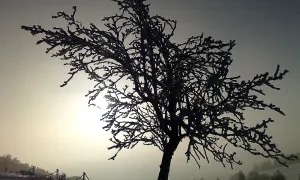
Real photos taken near the monument

Zdroj a licence jsou uvedeny u každého snímku.
Tips from visitors
No tips yet. Be the first!
Log in and add your tip.
Sources and literature
Photos: Fry72 / CC BY-SA 4.0 — Wikimedia Commons. The author and licence also appear when you hover over the image.
Faktickým podkladem tohoto textu byl článek na Wikipedii, jehož autory jsou přispěvatelé Wikipedie. Článek je dostupný pod licencí CC BY-SA 4.0.
Location on the map
Příběhy a pověsti
Legendy, pověsti a příběhy spjaté s touto památkou
Fotografie návštěvníků
Zatím žádné fotografie. Buďte první, kdo přidá fotografii z návštěvy!
Log in a přidejte svou fotografii nebo hodnoťte.
Za ověřenou návštěvu v aplikaci získáte víc bodů — poznáme podle GPS, že jste na místě.
Reviews and comments