






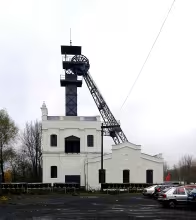
Důl Alexander is a former deep coal mine located in Kunčičkách near Ostrava, Moravskoslezský kraj. It is recognized as a cultural monument for its historical significance and preserved structures. Constructed in 1896 by Severní dráha Ferdinandovy (SDF), it was named after Count Alexander Palavicini, president of SDF. The site features preserved mining towers and operational structures that reflect its industrial heritage.
The origins of Důl Alexander date back to the late 19th century when rapid industrialization swept across Europe, including Bohemia. Construction began in 1896 under Severní dráha Ferdinandovy, named in honor of Count Alexander Palavicini. The mine was strategically built on the eastern side of the railway track known as Frýdlantské dráhy, approximately 2 km south of Důl Vilém. By 1897, the main shaft reached a depth of 249.5 meters, marking significant progress in its development.
Architecturally, Důl Alexander underwent several phases of technological advancement and modernization. Initially equipped with a steam-powered double-cylinder mining engine by Breitfeld-Daněk from Blansko, it featured advanced technology for its time. The mine's ventilation system included both steam and electrically powered ventilators, reflecting evolving standards in mining operations. In 1926, significant upgrades were made when an electric mining engine was installed by Škoda Plzeň, accompanied by a new main shaft tower designed to accommodate deeper excavation.
Ownership of Důl Alexander transitioned from Severní dráha Ferdinandovy until 1926, after which it became integrated with the neighboring důl Zárubek. This integration marked a shift in its operational dynamics and further development under different administrative oversight.
Key events at Důl Alexander include the commencement of mining operations in 1898, during which approximately 5.9 million tons of coal were extracted by 1926. The mine continued to evolve, with significant changes occurring in 1976 when it became a subsidiary operation for důl Louis/Jeremenko. This period saw further deepening and reconfiguration of the shafts, enhancing its operational capacity until mining activities ceased on December 31, 1992.
Today, Důl Alexander stands as a testament to the industrial past of the region, with its preserved structures offering insights into historical mining practices. Visitors can explore the remnants of this once-thriving coal mine, appreciating its architectural and technological heritage. The site's significance lies not only in its contribution to the local economy but also in its embodiment of broader industrial advancements of the era.
Důl Alexander invites those interested in history and industry to visit and experience a unique piece of cultural heritage that continues to resonate with the legacy of 19th-century industrialization.
Historical milestones
- 1897
- The main shaft reached a depth of 249.5 meters.
- 1898
- Mining operations began with an extraction of approximately 5.9 million tons of coal by 1926.
Architectural development
Důl Alexander underwent significant development from its inception in 1896. Initially equipped with a steam-powered mining engine and ventilation systems, it later saw modernization efforts including an electric mining engine installed by Škoda Plzeň in 1926. The mine's infrastructure was adapted over the years to meet evolving technological standards.
Historical events
Construction began in 1896 and was completed by Severní dráha Ferdinandovy, named after Count Alexander Palavicini.
Mining operations ceased on December 31, 1992, marking the end of its active use.
Owners
Severní dráha Ferdinandovy (1896-1926); integrated with důl Zárubek (1926 onwards)
Points of interest
- The mine's ventilation system was one of the first in Europe to use electrically powered ventilators alongside steam-powered ones, showcasing early adoption of electrical technology in mining operations. - Despite its industrial nature, Důl Alexander has an intriguing connection to Count Alexander Palavicini, whose name it bears; he was not only a key figure in railway development but also had interests in the arts and culture, highlighting his diverse influence.
Guide
Show guide text
Welcome to Důl Alexander, a remarkable testament to the industrial past nestled in Kunčičkách near Ostrava. As you stand here, imagine yourself transported back to 1896 when this site first began its journey into history. Before you are the imposing mining towers and operational structures that have withstood the test of time, now standing as silent witnesses to a bygone era.
The story of Důl Alexander begins in 1897, when the main shaft reached an impressive depth of 249.5 meters. By 1898, mining operations were underway, marking the start of an industrious period that would see approximately 5.9 million tons of coal extracted by 1926. This mine was constructed under the auspices of Severní dráha Ferdinandovy (SDF) and named in honor of Count Alexander Palavicini, who served as its president.
As you take a moment to observe, notice the robust design of these preserved structures. The mining towers, with their sturdy frames, speak volumes about the engineering prowess of the time. These elements are not just remnants but integral parts of the cultural heritage that Důl Alexander represents today.
Central to this site's history is Count Alexander Palavicini, whose leadership and vision were pivotal in its establishment. His influence extended beyond mere administration; it was he who championed the integration of cutting-edge technology into mining operations. This brings us to one of the most fascinating aspects of Důl Alexander: its pioneering ventilation system.
In an era when steam power dominated, this mine stood out by incorporating electrically powered ventilators alongside traditional ones. It was a bold step forward in adopting electrical technology within the industry, showcasing innovation and foresight that were quite ahead of their time.
As you continue your exploration, allow yourself to be intrigued by these historical advancements. Imagine the bustling activity that once filled this space, the hum of machinery, and the determined spirit of those who worked here. There's an undeniable connection between the industrial might of Důl Alexander and its intriguing past figures like Count Palavicini.
We invite you to delve deeper into this site's rich tapestry of stories and innovations. As you wander through these grounds, let your curiosity guide you, discovering more about the lives that intersected here and the technological strides made within these walls.
Thank you for joining us on this journey through time at Důl Alexander. We hope you leave with a greater appreciation for its historical significance and an eagerness to explore further. Safe travels as you continue your adventure into history!
Businesses nearby
Do you run a restaurant, accommodation, shop, museum, rental, wellness or other visitor service near this monument? Show yourself directly to the people heading to it — this is how they will see you in the app and on the web:
Nearby
Located in Kunčičkách near Ostrava, the site is surrounded by industrial landscapes typical of the region. The area includes remnants of railway infrastructure from its operational days.
Accommodation nearby
Themed route
Thematic Walking Tour: The Alexander Mine and its Industrial Heritage
1. Alexander Mine Entrance - *Type:* Historical Industrial Site - *Why Visit:* Begin your journey at the entrance of the former Alexander Mine, a testament to the rich mining history in the Ostrava region. Explore the preserved structures that offer insights into the life and work of miners during its operational years.
2. Railway Infrastructure Remnants - *Type:* Historical Industrial Relics - *Why Visit:* A short walk from the mine entrance, discover remnants of the railway infrastructure that once supported coal transportation. These relics highlight the logistical ingenuity required to sustain mining operations and connect with the broader industrial landscape.
3. Kunčičky Village Viewpoint - *Type:* Scenic Industrial Landscape - *Why Visit:* Ascend to a viewpoint overlooking Kunčičky, where you can appreciate the unique blend of natural beauty and industrial architecture that characterizes this area. This vantage point offers panoramic views of the surrounding landscapes shaped by centuries of mining activity.
4. Former Mine Office Building - *Type:* Historical Architecture - *Why Visit:* Conclude your tour at the former office building, a well-preserved example of early 20th-century industrial architecture. Inside, you may find exhibits or information panels detailing the mine's history and its impact on local communities.
This thematic route offers a comprehensive exploration of the Alexander Mine and its surrounding industrial heritage, providing both historical insights and scenic views unique to this part of Moravskoslezský kraj.
Seasonal recommendations
Spring: The arrival of spring at Důl Alexander brings a refreshing transformation to the landscape, with nature awakening after winter's rest. The surrounding area bursts into vibrant colors as wildflowers begin to bloom, creating picturesque views that enhance the historical ambiance of the site. This season offers a peaceful atmosphere, perfect for those looking to explore without large crowds. Visitors are advised to wear comfortable walking shoes and layered clothing, as temperatures can vary throughout the day. Early morning visits might be ideal to enjoy the serene beauty and cooler weather before the area becomes busier.
Summer: Summer at Důl Alexander is characterized by its lush greenery and longer daylight hours, providing ample opportunity for exploration. The warm weather encourages visitors to spend more time outdoors, enjoying guided tours or self-guided walks through the site's historical features. This season often sees an increase in visitor numbers, especially during weekends and holidays, so arriving early can help avoid larger crowds. It is recommended to wear light clothing, a hat, and sunscreen to protect against the sun, as well as to stay hydrated throughout your visit.
Autumn: Autumn at Důl Alexander offers a stunning display of fall foliage, with vibrant hues of red, orange, and yellow transforming the landscape into a breathtaking spectacle. The cooler temperatures make it an ideal time for leisurely strolls through the site's pathways, capturing the essence of its historical charm against the backdrop of seasonal colors. This period is generally less crowded than summer, providing a more tranquil experience. Visitors should dress in layers to accommodate fluctuating temperatures and consider bringing a light jacket or sweater as evenings can be cooler.
Winter: Winter transforms Důl Alexander into a quiet and serene destination, with snow blanketing the landscape and adding a magical touch to its historical structures. While some areas may have limited access due to weather conditions, the site still offers unique opportunities for exploration in this peaceful setting. The shorter daylight hours mean visits should be planned earlier in the day, and it is essential to dress warmly in layers, including thermal wear and waterproof outer garments. Visitors are advised to check ahead for any specific opening times or closures during the colder months.
Visualizations and artistic views


Vizualizace jsou generovány umělou inteligencí a slouží jako inspirace.

Tips from visitors
No tips yet. Be the first!
Log in and add your tip.




Reviews and comments