






kaple svaté Anny (Studénka) Chapel
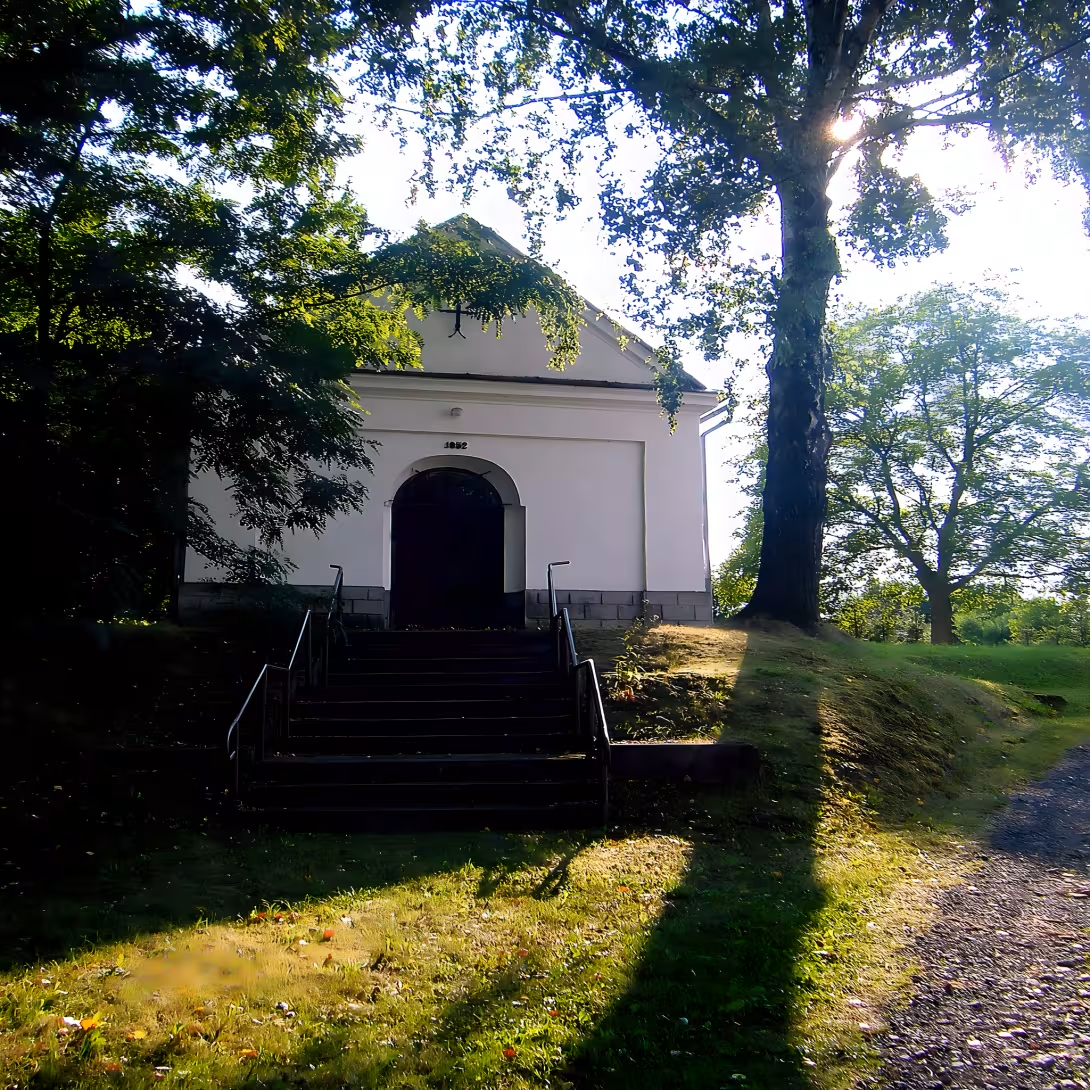
The Chapel of St. Anne in Studénka is a modest brick structure built in 1852, standing as a testament to local devotion and resilience amid Moravskoslezský kraj's rolling hills. Situated on a gentle hill opposite the parish church of All Saints, this chapel was restored after 1990, reviving its historical significance and pilgrimage tradition dating back to the Baroque period.
The origins trace back to 1540 when Jiří Butovský (Georg Budowsky) constructed a wooden chapel for his daughter Anna, married to Ondřej Řepa z Greifendorfu. This original structure expanded after the Thirty Years' War, incorporating a chancel and later featuring a brick tower completed in 1673. Despite its historical significance, safety concerns following a fire in 1843 led to its demolition in 1844 against local wishes. In 1852, with permission from the consistory and community initiative led by Andreas Mettner, a new brick chapel was constructed on the site.
Architecturally, the current Chapel of St. Anne is an oblong building with a semi-circular apse and gabled roof, characterized by its simple design without distinct stylistic features. The structure is white-washed, with a smooth façade featuring a lisen framed recess and triangular pediment. Its entrance doors and side windows are arched, adorned with modern decorative ironwork and a new iron let date (1852) above the entrance.
Throughout its history, the chapel has seen various owners and administrators. Initially built by Jiří Butovský in 1540, it was later expanded and maintained through the centuries. In the mid-19th century, Andreas Mettner played a crucial role in its reconstruction following its demolition. Post-World War II, the chapel served as a funeral hall for non-Catholic deceased until ceasing this function in 1978.
Key events include the legend of a local priest discovering an image of St. Anne among magpies, which mysteriously returned to its original spot each night, prompting the construction of the chapel. The chapel was also adorned with an altarpiece featuring St. Anne, St. Joachim, and John the Baptist, originally donated by Augustin Pfab in 1755.
Today, the Chapel of St. Anne is maintained by the city of Studénka since 2012. It serves as a serene place for reflection and hosts annual masses on St. Anne's Day (26th July), organized by local Charita members. The chapel remains an important site for traditional pilgrimages in Butovice, preserving its historical and cultural significance.
Visitors to the Chapel of St. Anne can appreciate its rich history and architectural simplicity while reflecting on the enduring traditions it represents. Its serene setting amidst the rolling hills makes it a worthwhile destination for those interested in exploring the spiritual heritage of Studénka.
Then and now
Drag the slider to compare how the landmark may have looked when it was built with the view today.
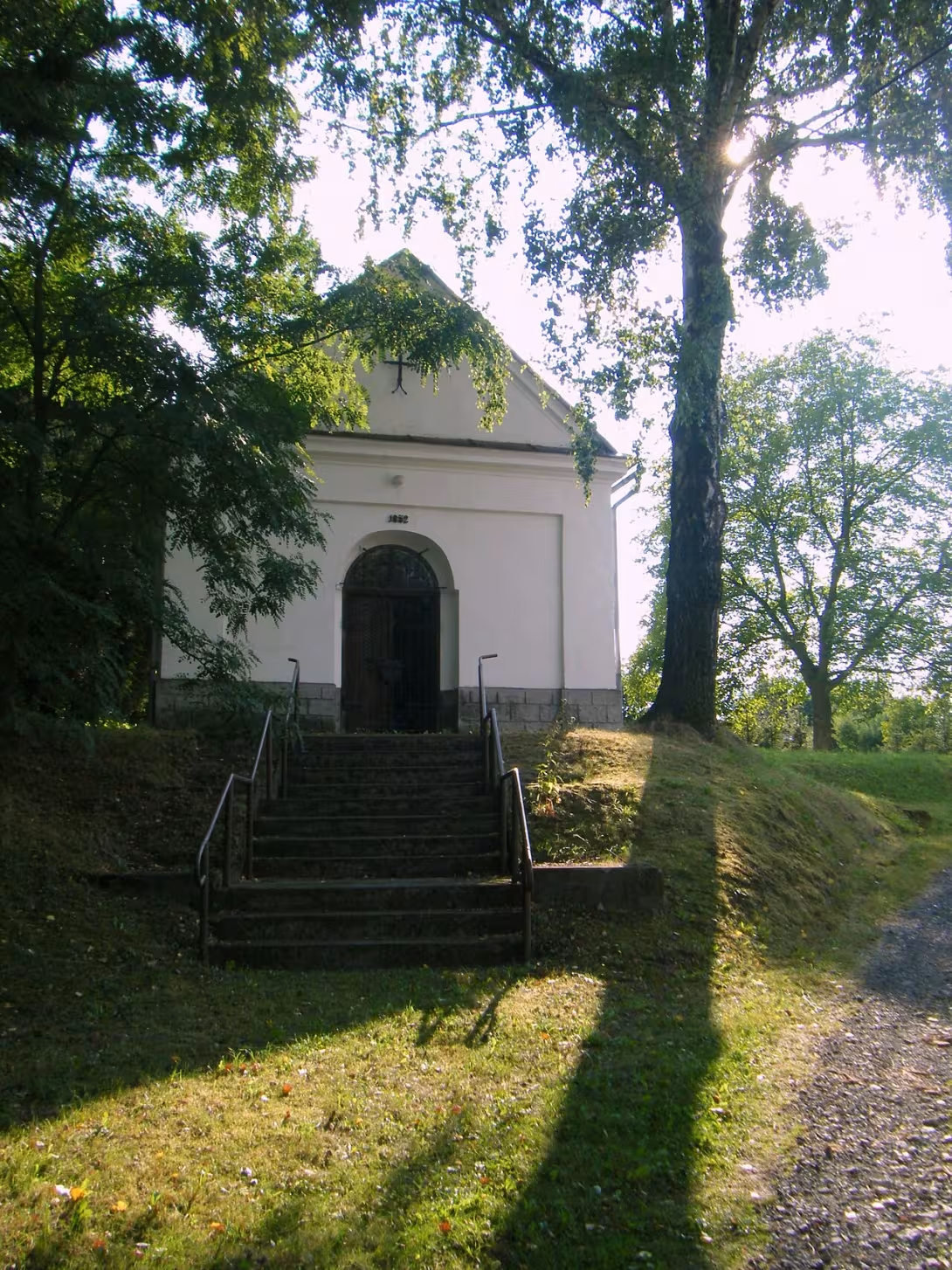

The historical appearance on the left is an AI-generated visualisation and serves as inspiration only.
Historical milestones
- 1540
- The original wooden chapel was built by Jiří Butovský.
- 1673
- A brick tower was completed for the chapel.
- 1844
- The original chapel was demolished due to safety concerns.
- 1852
- A new brick chapel was constructed on the site of the old one.
Architectural development
The original wooden chapel, oriented and built around 1540, was expanded after the Thirty Years' War to include a chancel. By 1673, it featured a brick tower. The current structure, erected in 1852, is an oblong building with a semi-circular apse and gabled roof, characterized by its simple design without distinct stylistic features.
Historical events
In 1844, due to safety concerns following a fire in 1843 and against local wishes, the original wooden chapel was demolished by the estate owner. In 1852, with permission from the consistory and community initiative led by Andreas Mettner, a new brick chapel was constructed.
Post-World War II, the chapel served as a funeral hall for non-Catholic deceased until it ceased this function in 1978. It underwent reconstruction between 1990 and 1992, initiated by descendants of displaced Butovice residents.
Points of interest
- The legend of the Chapel of St. Anne involves a local priest who reportedly found an image of St. Anne among magpies. This mysterious image returned to its original spot each night, inspiring the chapel's construction.
- After being demolished in 1844 due to safety concerns following a fire, the chapel was reconstructed in 1852 with community initiative and permission from the consistory, led by Andreas Mettner.
- The chapel served an unusual role post-World War II as a funeral hall for non-Catholic deceased until this function ceased in 1978, reflecting its adaptability to local needs over time.
- An altarpiece featuring St. Anne, St. Joachim, and John the Baptist was originally donated by Augustin Pfab in 1755, highlighting the chapel's historical connection with prominent local figures of that era.
- Since 2012, the city of Studénka has maintained the Chapel of St. Anne, ensuring its preservation as a site for annual masses on St. Anne's Day and traditional pilgrimages, underscoring its ongoing cultural significance in Butovice.
Guide
This guide is narrated by a synthetic voice generated by artificial intelligence.
Show guide text
This text was created by artificial intelligence and has not been editorially reviewed. It may contain inaccuracies.
Welcome to the Chapel of St. Anne in Studénka, a serene and modest brick structure nestled amidst the gentle rolling hills of this picturesque region. As you stand here, take a moment to absorb the tranquil atmosphere that surrounds this historic site. Built in 1852 on the foundation of an older building, this chapel is steeped in tradition and local devotion.
The story of this sacred place begins with a wooden chapel constructed by Jiří Butovský around 1540. Over time, it became a focal point for pilgrims during the Baroque period, drawing visitors from far and wide. In 1673, a brick tower was added to enhance its presence. However, safety concerns following a fire led to the demolition of the original chapel in 1844. The current structure you see today rose from these ashes in 1852, continuing the legacy of faith and resilience.
As you look around, notice the simplicity yet elegance of this modest brick edifice. Its unassuming façade belies the rich history it embodies. While specific architectural details might not be immediately visible, the chapel's overall presence speaks volumes about its historical significance and the community's dedication to preserving their spiritual heritage. After being restored post-1990, the Chapel of St. Anne stands as a testament to both resilience and devotion.
Several key figures are intertwined with this site's history. Josef Nittmann and Jiří Butovský played pivotal roles in its early development. The chapel is also linked to Anna, who was married to Ondřej Řepa z Greifendorfu, further embedding it within the local lore.
One of the most captivating stories associated with this place involves a mysterious image of St. Anne. Legend has it that a local priest discovered an image among magpies, which returned to its original spot each night, inspiring the chapel's construction. This enchanting tale adds a layer of mystique and wonder to your visit.
As you conclude your time here at the Chapel of St. Anne, we invite you to reflect on the stories and history that have unfolded in this serene setting. Feel free to explore further into Studénka, where more tales await discovery. Thank you for joining us on this journey through time, and may your visit be both enlightening and inspiring.
Frequently asked questions
Can the monument be visited?
Religious buildings are usually open mainly during services; at other times a visit is normally arranged with the parish or the operator. We have not verified specific times.
Where is the monument?
Location: Studénka, Moravskoslezský kraj. The map on this page shows the exact spot.
Why is the monument protected?
It is listed in the Central List of Cultural Monuments of the Czech Republic as a cultural monument (register no. 37447/8-2107).
Businesses nearby
Do you run a restaurant, accommodation, shop, museum, rental, wellness or other visitor service near this monument? Show yourself directly to the people heading to it — this is how they will see you in the app and on the web:
Events nearby

Zdroj akcí: otevřená data měst a obcí ČR (Národní katalog otevřených dat) a kalendář akcí Národního památkového ústavu.
Nearby
Located on a gentle hill opposite the parish church of All Saints, the chapel is surrounded by rolling hills typical of the Studénka region.
Accommodation nearby
Themed route
Thematic Walking Tour: Kaple svaté Anny (Studénka)
1. Kaple svaté Anny (Chapel of St. Anne) - Type: Chapel - Why Visit: Situated on a gentle hill opposite the parish church of All Saints, this charming chapel offers a serene setting typical of the Studénka region's rolling hills. Its historical and architectural significance makes it an ideal starting point for exploring local religious heritage.
2. Parish Church of All Saints (Church of All Saints) - Type: Parish Church - Why Visit: Located just across from Kaple svaté Anny, the parish church is a prominent landmark in Studénka. Its proximity to the chapel provides an opportunity to appreciate the architectural harmony between these two religious sites and understand their historical context within the community.
3. Surrounding Hills (Rolling Hills) - Type: Natural Landscape - Why Visit: The gentle hills surrounding Kaple svaté Anny offer picturesque views of Studénka, inviting visitors to enjoy a leisurely walk through nature. These rolling landscapes are emblematic of the region and provide a tranquil backdrop for reflection or photography.
This tour encapsulates the essence of Studénka's religious and natural beauty, offering insights into its cultural heritage while enjoying the scenic environment.
Seasonal recommendations
Spring: The chapel of Saint Anne in Studénka offers a unique spring experience as the surrounding nature begins to awaken from its winter slumber. The blooming flowers and fresh greenery create a picturesque setting, enhancing the serene atmosphere around this historical site. Visitors can enjoy the gentle warmth of the sun illuminating the chapel's architecture, casting soft shadows that add to its mystical charm. It is advisable to dress in layers during this transitional season, as temperatures can vary throughout the day. Early morning visits are recommended to avoid larger crowds and fully appreciate the tranquility of the site.
Summer: Summer at the Chapel of Saint Anne is marked by vibrant greenery and longer daylight hours, providing ample time for exploration. The lush landscape surrounding the chapel offers a refreshing backdrop, while the warm sunlight enhances the natural beauty of the area. This season sees an increase in visitors, making it ideal to arrive early to secure a peaceful experience before the crowds gather. Comfortable walking shoes and light clothing are recommended due to the warmer temperatures, ensuring a comfortable visit as you explore this historical gem.
Autumn: Autumn transforms the Chapel of Saint Anne into a stunning spectacle with its vibrant foliage. The changing leaves create a rich tapestry of colors that beautifully complement the chapel's historic architecture. This season offers a more subdued atmosphere, perfect for those seeking a quieter experience amidst nature’s grandeur. Cooler temperatures make it necessary to wear warm layers and perhaps bring along a light jacket or sweater. Visiting in mid-week can help avoid larger weekend crowds, allowing you to fully immerse yourself in the autumnal beauty.
Winter: The winter season envelops the Chapel of Saint Anne in a serene blanket of snow, creating a magical and tranquil atmosphere that is both peaceful and enchanting. The snow-covered landscape adds an ethereal quality to this historic site, making it particularly appealing for those who appreciate its quiet charm during the colder months. Visitors should dress warmly with layers, including hats and gloves, as temperatures can be quite low. An early visit is recommended to enjoy the site before any potential snowfall increases later in the day.
Visualizations and artistic views


The visualisations are generated by artificial intelligence and serve as inspiration.
Photos from the area
Real photos taken near the monument


Zdroj a licence jsou uvedeny u každého snímku.
Tips from visitors
No tips yet. Be the first!
Log in and add your tip.
Sources and literature
Photos: RPekař / CC BY-SA 3.0, rozlišení zvýšeno umělou inteligencí — Wikimedia Commons. The author and licence also appear when you hover over the image.
Faktickým podkladem tohoto textu byl článek na Wikipedii, jehož autory jsou přispěvatelé Wikipedie. Článek je dostupný pod licencí CC BY-SA 4.0.
Location on the map


Příběhy a pověsti
Legendy, pověsti a příběhy spjaté s touto památkou
Fotografie návštěvníků
Zatím žádné fotografie. Buďte první, kdo přidá fotografii z návštěvy!
Log in a přidejte svou fotografii nebo hodnoťte.
Za ověřenou návštěvu v aplikaci získáte víc bodů — poznáme podle GPS, že jste na místě.
Reviews and comments