



Zámecká brána Gate
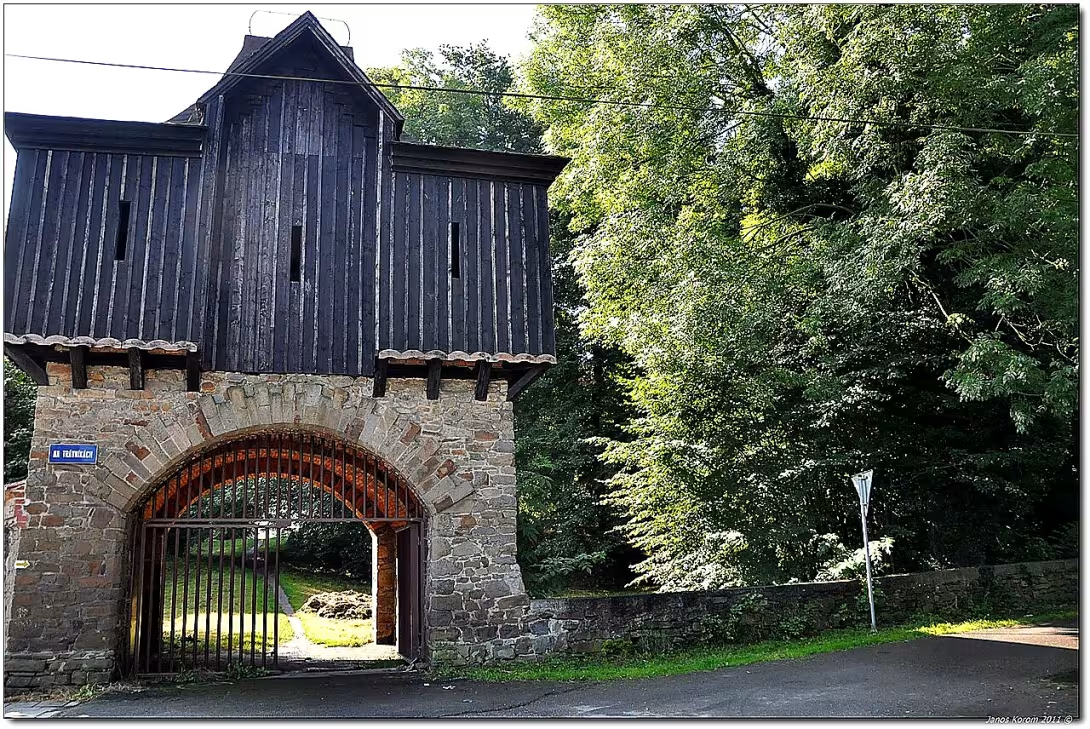
Zámecká brána is a neo-gothic tower building that serves as an entrance to the castle park. The building is located in the district of Nová Jicin in the Moravian-Silesian Region and has been protected since 1999 as a cultural monument of the Czech Republic.
The construction was probably created in 1866 as part of the neo-gothic adaptation of the complex to which the Old and New Castle belongs. At a time when the influence of romanticism was growing in Czech countries and the intensive development of industry and the railway network took place, Blücher's noble family had the gate built. As an architectural design, the owners chose a 14th century gateway from the Polish Krobielowice. Since 1814, this village has been the main headquarters of the Blucher family, which also owned locks in Studenka.
The architectural solution combines stone masonry with wooden floor and floor roof. In the past, the construction was decorated with decorative elements, but they were not preserved. Today's form of the object is complemented by a steel grid door. The monument protection applies not only to the tower itself, but also to the adjacent wall wall of the fence.
The object has undergone many changes over the years. A major milestone in modern history was the entry between cultural monuments of the Czech Republic on 4 October 1999. In 2021, a complete reconstruction was carried out to ensure the preservation of the monument for the next generation.
The gate is at the intersection of the streets on May 2 and Na Grávíky, close to the local bike path. The building is open to the public all year round. Visiting this place offers the opportunity to explore historical architecture which links the Blucher heritage to the castle park environment in the Oder Gate geographical area.
Historical milestones
- 1866
- Likely building a gate as a neo-gothic modification of the castle grounds.
- 1999
- The entry of the gate and the wall into the list of cultural monuments of the Czech Republic.
- 2021
- Total reconstruction of the construction was carried out.
Architectural development
The construction was realized as a neo-gothic modification of the complex. It consists of a stone gate, a wooden floor and a chisel roof. In the past, it has been decorated with decorative elements that have not been preserved, and today it is part of a steel grid door.
Historical events
1866: Probable gate construction. 1999: Registration between cultural monuments of the Czech Republic. 2021: Complete reconstruction of the building.
Owners
Noble rod Blücherů.
Points of interest
- Zámecká brána is a neo-gothic tower building that serves as an entrance to the castle park. - As an architectural design for the construction, the owners chose a 14th-century gate from the Polish village of Krobielowice. - The architectural solution of the building combines stone masonry with wooden floor and floor roof. - Memorial protection applies not only to the tower itself, but also to the adjacent wall wall of the fence. - In the year two thousand twenty-one a complete reconstruction was carried out, which ensured the preservation of the monument for the next generation.
Guide
Show guide text
This text was created by artificial intelligence and has not been editorially reviewed. It may contain inaccuracies.
Welcome. Right now, at this moment, when you listen to these words, you stand on the threshold between two worlds. In front of your eyes is an impressive gate, which is not just an ordinary passage, but a dignified entrance to the vast castle park. You are standing right in front of the historic tower building, which, with its presence, determines this entire space and prepares you for what awaits you behind it. Feel the atmosphere. Feel the feeling that you are just crossing a line that separates the daily rush from the calm and the green that spreads just behind this stone and wooden body. This gate is like a time guard who will now invite you into the past.
Now let's go back in time together to understand why this building looks like this. Imagine the second half of the nineteenth century. It's 1866. At that time, there was a great desire throughout Europe for past times, heroism and the beauty of old castles. This desire, this romantic spirit, led to this gate being built in a neo-gothic style. This style is not just trying to copy old shapes, but trying to create a sense of grandeur and historical continuity. The gate was built as part of the entire castle complex to give a place of importance and to immediately signal to guests that they are entering the area with a rich history. It is not just an object, it is an expression of then's taste and effort to create a beautiful and harmonious whole.
Now pay attention to the architecture itself, which is right in front of you. Look at how this building is thought out in detail. Notice how two completely different worlds of materials come together here. At the bottom, where the gate is firmly in the ground, the stone wall dominates. This stone gives the whole construction a sense of firmness, strength and stability. It is a foundation that must withstand a solid flight, and it is this stone that creates the sense of dignity that radiates from the gate. But then your view can rise higher. Where the stone ends, the wooden floor begins. This contrast between a heavy, stationary stone and warmer, lighter wood is absolutely crucial for this type of construction. It's like the union of earth and heaven. And if you look up there, you'll see a roof that's covered in gouge. These little wooden pieces create the right, historical texture that you hardly see these days. The whole tower form creates a strong visual impression and makes the gate a real landmark.
But to fully understand the soul of this place, we need to look at where this architecture comes from. The owners of this complex didn't just want a regular gate, they wanted something that would have a deeper meaning and beauty. That's why their leaders decided to inspire abroad. Their view turned to the Polish village of Krobielowice. That is where the 14th-century gateway was located, which served as a model for this neo-gothic project in Studenka. This link to Polish architecture and historical patterns from other countries shows how much the world was connected at the time and how much the nobility sought to reflect the best European patterns.
And this is where we get to the people who formed this space. You should mention rod Blücherů. This important noble family was connected to the inspirational gate in Krobielowice. Although the gate was built later in Studenka, its spirit and its nobility are directly derived from the tradition and lifestyle that this family represented. When you look at this tower, you look at the reflection of aristocratic taste and the effort to make every place that rod Blücherů or its similar people owned is connected to beauty and history.
Perhaps you are now interested in how this monument has been preserved until today. History isn't always about building, it's about protecting what we've created. This gate has come a long way. In 1999 it became an official part of the list of cultural monuments of the Czech Republic. That was the moment when its value was recognized as something irreplaceable that we must preserve for future generations. And even in the near past, she took care of her. Total reconstruction was carried out in 2021. Thanks to these works, thanks to the care of every stone and every wooden floor, you can now perceive the gate in such good condition. It is fascinating how, thanks to modern technologies and people's efforts, history can return to its best form and how this historical tower can be so bright and functional again.
Now you have enough information to see this gate not only as a building, but as a living story that takes place right before your eyes. It's a story about the desire for beauty, the connection of materials, the nobility of generations and the respect of the past. The gate is now open to you. It is the gateway to the world of peace, the world of green and the world of the castle park that awaits you. I'll leave you now with your thoughts and the beautiful view you have in front of you. Keep going, go through this passage and let yourself drift through the atmosphere of this place. I wish you a nice walk and enjoy every moment in this beautiful park. Goodbye.
Tips for visitors
The best time to visit is in the morning during the working week, when the area is quiet and light ideally illuminates the neo-gothic details of the gate. Weekends get busier because of local walks.
You can easily reach the monument by car and public transport.
For photography we recommend using the morning clock when the sun highlights the plastic elements of the building. The best pictures are taken directly from the path leading to the park, from where the gate stands out in all its glory.
When visiting with children you will appreciate the immediate proximity of the castle park, which offers space for running and rest. We recommend taking a blanket with you for a picnic and a snack, because there may not always be snacks in the immediate vicinity of the gate.
In the vicinity of the gate you can visit the Old Castle, New Castle, a large castle park or head towards the Oder Gate. All these places are within walking distance and form a complex historical complex.
Frequently asked questions
Can the monument be visited?
This is a structure in a public space that can usually be seen from outside free of charge. We have not verified that this particular one is freely accessible.
Where is the monument?
Location: Studénka, Moravskoslezský kraj. The map on this page shows the exact spot.
Why is the monument protected?
It is listed in the Central List of Cultural Monuments of the Czech Republic as a cultural monument (register no. 1000163247_0005). It is protected as part of a larger listed ensemble.
Businesses nearby
Do you run a restaurant, accommodation, shop, museum, rental, wellness or other visitor service near this monument? Show yourself directly to the people heading to it — this is how they will see you in the app and on the web:
Events nearby
Zdroj akcí: otevřená data měst a obcí ČR (Národní katalog otevřených dat) a kalendář akcí Národního památkového ústavu.
Nearby
Starý zámek, Nový zámek, Zámecký park, Oderská brána.
Accommodation nearby
Themed route
Thematic cruise route in Studenka
1.Zámecká brána
Type: Historical monument
Zámecká brána is a fascinating element of history, which serves as a symbolic entrance door to the theme complex. Its architectural beauty and historical importance offer visitors a view of the history of the village Studénka.
2. Old Castle
Type: Historical building
The Old Castle, located near the Castle Gate, is a key part of the region's history. Its ancient building and architectural elements attract visitors who want to explore the heritage of past generations.
3. Castle Park
Type: Garden
The castle park is an ideal place to relax and walk on a plan full of green. Its beautiful vegetation, historical paths and quiet spaces offer visitors an opportunity to rest in an idyllic environment.
4. New lock
Type: Historical building
The new castle, built as an addition to the Old Castle complex, is an important part of the overall historical complex. Its more modern architecture in contrast to the ancient castle offers visitors a view of the evolution of building styles.
5. Oder Gate
Type: Historical monument
The Oder Gate is another historical element that adds to the overall impression of the plot. Its architecture and location within the castle provide visitors with another view of the historical structure of the village.
This route offers visitors a comprehensive view of the historical and cultural importance of the castle in Studenka, each point having its unique attractions.
Seasonal recommendations
Spring: In the spring season Zámecká brána is transformed into a magnificent flower paradise where nature offers the most beautiful colors and smells. The sun rays illuminate the castle roofs and decorated elements of architecture so that they appear to be still colorful. So when you visit, don't forget the camera to capture this beautiful image. Due to the warm days and colder evenings, it is advisable to wear clothes with temperature control capacity.
Summer: In the summer period Zámecká brána offers ideal conditions for long walks in quiet nature. The sunlight is on top and illuminates architectural details so that they appear to be quite different from in other seasons. At this time the attendance may be very high, especially on the middle of the day when the temperature is at its peak. We recommend that you come early in the morning or later in the afternoon to avoid the pressure and enjoy a peaceful walk. Don't forget the protective sunglasses and plenty of drinking water.
Autumn: In autumn Zámecká brána offers a melancholy atmosphere when leaves of falling trees form a golden yellow and red carpet in front of the gate. Sunlight is less intense, giving visitors the opportunity to enjoy a quiet view of castle buildings and parks without overheated sun. Because of the colder weather, it is advisable to wear a warm fur coat or a plaid to help keep you warm during walks. The best times for visiting are usually early in the afternoon, when the crowd starts to decrease and you can enjoy a quiet view of the castle monument.
Winter: In winter, Zámecká brána offers unique views where roofs and decorated elements are covered with snow, creating a romantic atmosphere. The sunlight is less intense and illuminates the lock with fine colours. The opening time may decrease at this time, so watch out for current information about the opening time. To visit it is necessary to have warm clothes, including fur and hat, so that you can enjoy walking without winter discomfort. The best time to visit is early afternoon, when the temperature is slightly higher and you can enjoy a quiet walk before closing the sights.
Visualizations and artistic views


The visualisations are generated by artificial intelligence and serve as inspiration.
Photos from the area
Real photos taken near the monument


Zdroj a licence jsou uvedeny u každého snímku.
Tips from visitors
No tips yet. Be the first!
Log in and add your tip.
Sources and literature
Photos: János Korom Dr. from Wien, Austria / CC BY-SA 2.0 — Wikimedia Commons. The author and licence also appear when you hover over the image.
Faktickým podkladem tohoto textu byl článek na Wikipedii, jehož autory jsou přispěvatelé Wikipedie. Článek je dostupný pod licencí CC BY-SA 4.0.
Location on the map
Příběhy a pověsti
Legendy, pověsti a příběhy spjaté s touto památkou
Fotografie návštěvníků
Zatím žádné fotografie. Buďte první, kdo přidá fotografii z návštěvy!
Log in a přidejte svou fotografii nebo hodnoťte.
Za ověřenou návštěvu v aplikaci získáte víc bodů — poznáme podle GPS, že jste na místě.
Reviews and comments