



Dům čp. 143 House
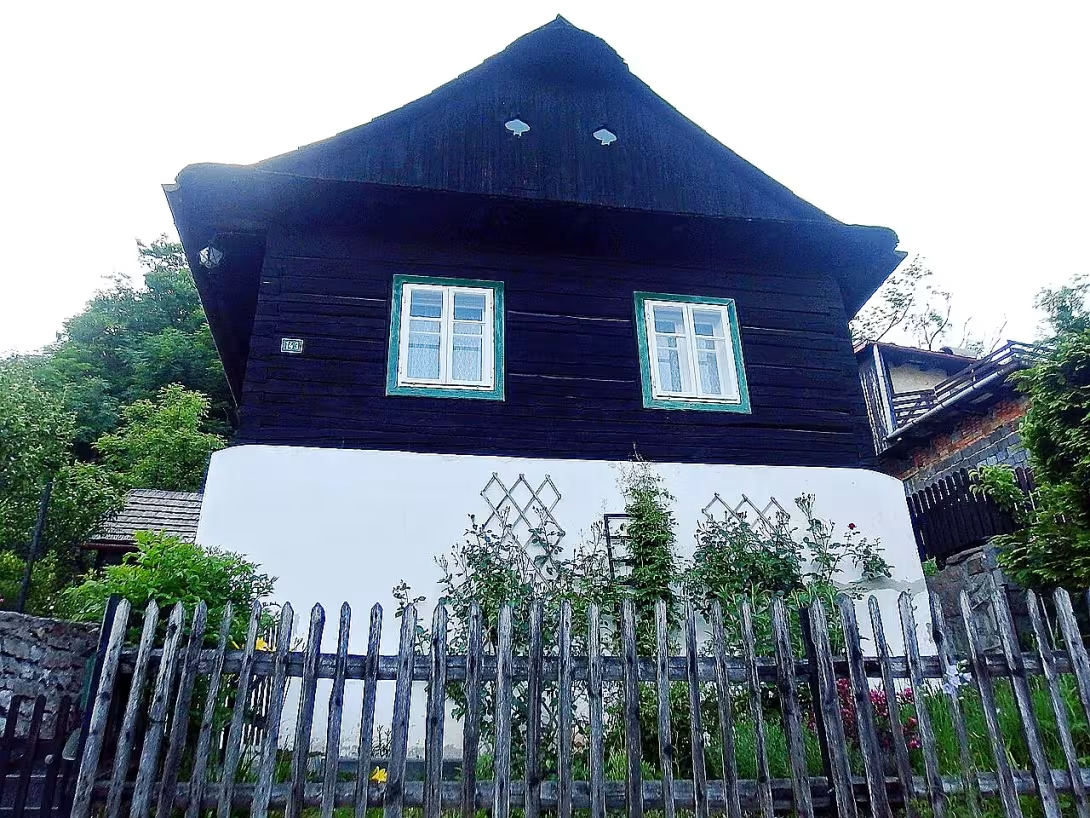
Dům čp. 143 is a grafted building from the end of the 18th century in the street Zaulicí in the village Štramberk in the district of Nový Jicin. The building is listed in the Central List of Cultural Monuments of the Czech Republic and is part of the town conservation. It serves as an example of folk architecture in the original building in the suburbs.
The construction was created at a time when Štramberk was mainly wooden. Historical records show that in 1558, there were 22 houses in the square with an arch and seven houses in the suburbs. In 1656, for the reign of Jesuits, there were already 53 in the village. The first brick house was built in 1799. Later, in 1855, the city was hit by a fire that destroyed approximately 40 houses and two barns.
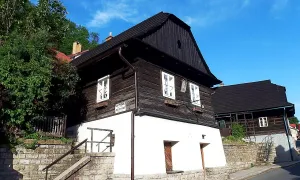
Architecturally, it is a ground-floor grafted object of a rectangular plan, oriented by the shield side into the valley. The house shows a three-paralleled supply of the chamber-sty type. It stands on a high plastered stone suspect that equalizes the inequality of the slope and contains cellar spaces with entrance left. The roof is saddled, covered with shingles. The back of the building is walled and serves as an entrance.
The shield facade is two-axis with wall-to-wall windows. The shield is vertically formatted and supplemented with leaf-shaped ornaments, top-mounted cabana and a break at the heel. The left gutter side is also two axes. In the 1950s, the house was reconstructed.
The monument is important mainly because of the personality of Vojtěv Petráš, who was born here. Petráš was a teacher, painter and promoter of Štramberka.
Dům čp. 143 represents an authentic fragment of historical suburban development and a demonstration of traditional grafting. The interest in folk architecture and local history offers a view of the typical building elements of the 18th century. It is recommended to visit it as part of a tour of the city conservation Štramberka.
Historical milestones
- around 1780
- the creation of a grafted building in the suburbs
- 1855
- great fire in the village that destroyed many houses
- around 1950
- repair and restoration of the house
Architectural development
It is a ground-floor grafted construction of a rectangular floor plan with a tripartite layout of the chamber type. The house stands on a tall stone plastered by a suspect and has a saddle roof covered with shingles. The house was renovated in the 1950s.
Points of interest
- It's a grafted structure from the late 18th century, which serves as an example of folk architecture. - The house is listed in the Central List of Cultural Monuments of the Czech Republic and is part of the town monument reservation. - The building has a saddle roof covered with shingles and a shield with leaf-shaped ornaments. - Vojtěch Petráš was born in the building, which was a painter, teacher and promoter of Štramberka. - The construction stands on a tall stone suspect that balances the inequality of the slope.
Guide
Show guide text
This text was created by artificial intelligence and has not been editorially reviewed. It may contain inaccuracies.
Welcome to the heart of Štramberk. Right now, you're standing in front of a house with a number hundred and forty-three on the street of Zahulí. If you look at it, you'll notice right away that it's not just a building, it's a beautiful, plastered house that immediately transmits you to another time. It's a place where time stops and where you can feel the real atmosphere of the old suburb. Feel the peace and sight of wooden walls that tell stories from centuries.
Now let's stop at how this house came into being and what its historical context is. This grafted building dates back to the late eighteenth century, approximately seven hundred and eighty. At that time, such architecture was a complete natural addition to the building around the city. Imagine what this suburb looked like over 200 years ago, when there were people who were firmly connected to their country and craft. The house thus serves as living proof of folk architecture that flourished in our areas. But the history of this place has not always been calm. If you look at the surrounding area, you may feel traces of ancient tragedy. In the year one thousand eight hundred and fifty-five, the people were making a big fire. It was a devastating heat that destroyed many houses at the time and changed the face of the entire Štramberk. However, this house survived or was subsequently restored to serve other generations. Later, around the year a thousand and nine hundred and fifty, he went through the construction of another repair and renewal, which allows us to admire him in such a condition today.
Now pay attention to the architecture itself and to what you see right in front of you. Please look up. Note the roof, which has a typical saddle shape. It is covered with shingles, which are small wooden plates which form the traditional protective mantle of the house. It is a detail that we rarely see anymore and which gives construction its unmistakable character. But the most attention deserves the shield of the house. If you look closely at his details, you'll see the experts. They are small holes or decorative elements that have a very specific shape of the lime leaf. Lipa is our national tree and its presence in the details of the house shows the taste and sensitivity of builders who wanted to bring a bit of nature and symbolism into their home. Thanks to these elements, the entire building is listed in the Central List of Cultural Monuments of the Czech Republic and is a proud member of the town conservation. This means that the state recognises its unique value and protects it for future generations.
If you admire wooden walls and shingles roof like this, think about who lived in these areas. This house has a very important name, which is Vojtěch Petráš. He was born in this very house. Vojtěch Petráš was not just an ordinary citizen, he was a man with immense talent and broad overview. He acted as a teacher, which means he had a desire to pass on knowledge to others. At the same time, he was also a painter who was able to capture the beauty of the world on canvas. What is most important, however, was the great promoter of Štramberka. He devoted his life to raising the beauty of this city and showing it to others. Imagine young Vojtěch growing up in this garbled house, watching people in Zahulice Street, and how this environment inspired him to create and love his hometown later. It is fascinating to think that the walls of this house witnessed the birth and early years of a man who became the face of his region.
And now I'm going to lead you to one interesting thing that might surprise you. We often look for great cities and monumental palaces, but the real secrets are hidden in such folk buildings. Mystery and fascination at the same time is how these grafted houses managed to survive centuries, even if they were exposed to fire, humidity and tooth time. Look at the details of the leaves on the shield again. They are silent witnesses of a time when craftsmen did not have to rely on plans from computers, but only on their skill, eye and love for detail. It's a reminder of a time when the house was more than just walls and roofs, it was a symbol of the family commitment and identity of the entire Štramberka. The fact that this house is still standing today is a small miracle of history and proof of the care of the people who decided to repair and preserve it in the year one thousand nine hundred and fifty.
So you're standing in front of a building that's much more than just an old house with a number hundred forty-three. It is a monument to the folk craft, instead of the birth of an important painter and teacher and a symbol of the resilience of the whole city against natural disasters. Feel this harmony of wood, shingles and history that surrounds you.
I hope you enjoyed this short trip to the past. Now I invite you to look around in peace, maybe revisit those beautiful leaf-shaped ornaments and then continue to explore the other Štramberka corners. Every alley here has its own story and every house has its secrets. I wish you a pleasant continued journey and many new discoveries in this wonderful city reservation. Goodbye.
Tips for visitors
The best time to visit is late spring or autumn, when the colors of folk architecture are in the greatest contrast to nature. Transport to the village is possible by car and public connections; Check the current options in the search engine.
Take a walk with comfortable shoes because you are moving in a historic building with the possibility of unequal terrain. Since it is a residential building, we recommend to maintain calm and respect the privacy of the people.
For the best photos we recommend morning or late afternoon light that highlights the structure of the grafted walls and details of the wooden design. The best angles are from Zaili Street.
For families with children it is ideal to look for details of the old craft right on the facade of the house.
Frequently asked questions
Can the monument be visited?
This is a residential or farm building, not a museum with opening hours. Please view it from public space and respect the owners' privacy. We have no information about access to the interior.
Where is the monument?
Location: Štramberk. The map on this page shows the exact spot.
Why is the monument protected?
It is listed in the Central List of Cultural Monuments of the Czech Republic as a cultural monument (register no. 1000135146).
Businesses nearby
Do you run a restaurant, accommodation, shop, museum, rental, wellness or other visitor service near this monument? Show yourself directly to the people heading to it — this is how they will see you in the app and on the web:
Nearby
Městská památková rezervace Štramberk.
Accommodation nearby
Themed route
Here is the design of the thematic route:
1. City Monument Reservation Štramberk - Total area. The walk through the historic streets offers a unique atmosphere of the old town. 2. Dům čp. 143 - Main destination. A tour stop focused on the architecture and history of this particular object.
Seasonal recommendations
In the spring, the surroundings of the house awaken into colours and the first trees flourish. The light is fine, which excels natural beauty from the SLC faces of the building. We recommend shoes suitable for wet terrain and visit in the morning when the air is the cleanest.
In the summer months it dominates areas of bright sun and rich green. The facade of the house in sharp light looks very distinctive. There are the most people in the season, so it is best to come early in the morning or at dusk. Don't forget the light clothes and the heat hat.
Autumn brings golden leaves and fog to Štramberk that provide a mysterious atmosphere. The lighting is golden and soft, which is ideal for viewing architecture from the outside. Suitable are layered clothes and rain resistant shoes.
In winter, the construction works calmly and quietly, often accompanied by snow sheets. In Advent Time, the surroundings are heated by the atmosphere of anticipation. Due to the frost and slippery surface we recommend warm winter clothes and fixed shoes with anti-slip soles.
Visualizations and artistic views

The visualisations are generated by artificial intelligence and serve as inspiration.
Photos from the area
Real photos taken near the monument


Zdroj a licence jsou uvedeny u každého snímku.
Tips from visitors
No tips yet. Be the first!
Log in and add your tip.
Sources and literature
Photos: Palickap / CC BY-SA 4.0 — Wikimedia Commons. The author and licence also appear when you hover over the image.
Faktickým podkladem tohoto textu byl článek na Wikipedii, jehož autory jsou přispěvatelé Wikipedie. Článek je dostupný pod licencí CC BY-SA 4.0.
Location on the map
More monuments – Štramberk
Show all in the municipality
Příběhy a pověsti
Legendy, pověsti a příběhy spjaté s touto památkou
Fotografie návštěvníků
Zatím žádné fotografie. Buďte první, kdo přidá fotografii z návštěvy!
Log in a přidejte svou fotografii nebo hodnoťte.
Za ověřenou návštěvu v aplikaci získáte víc bodů — poznáme podle GPS, že jste na místě.
Reviews and comments