






Dům čp. 155 House
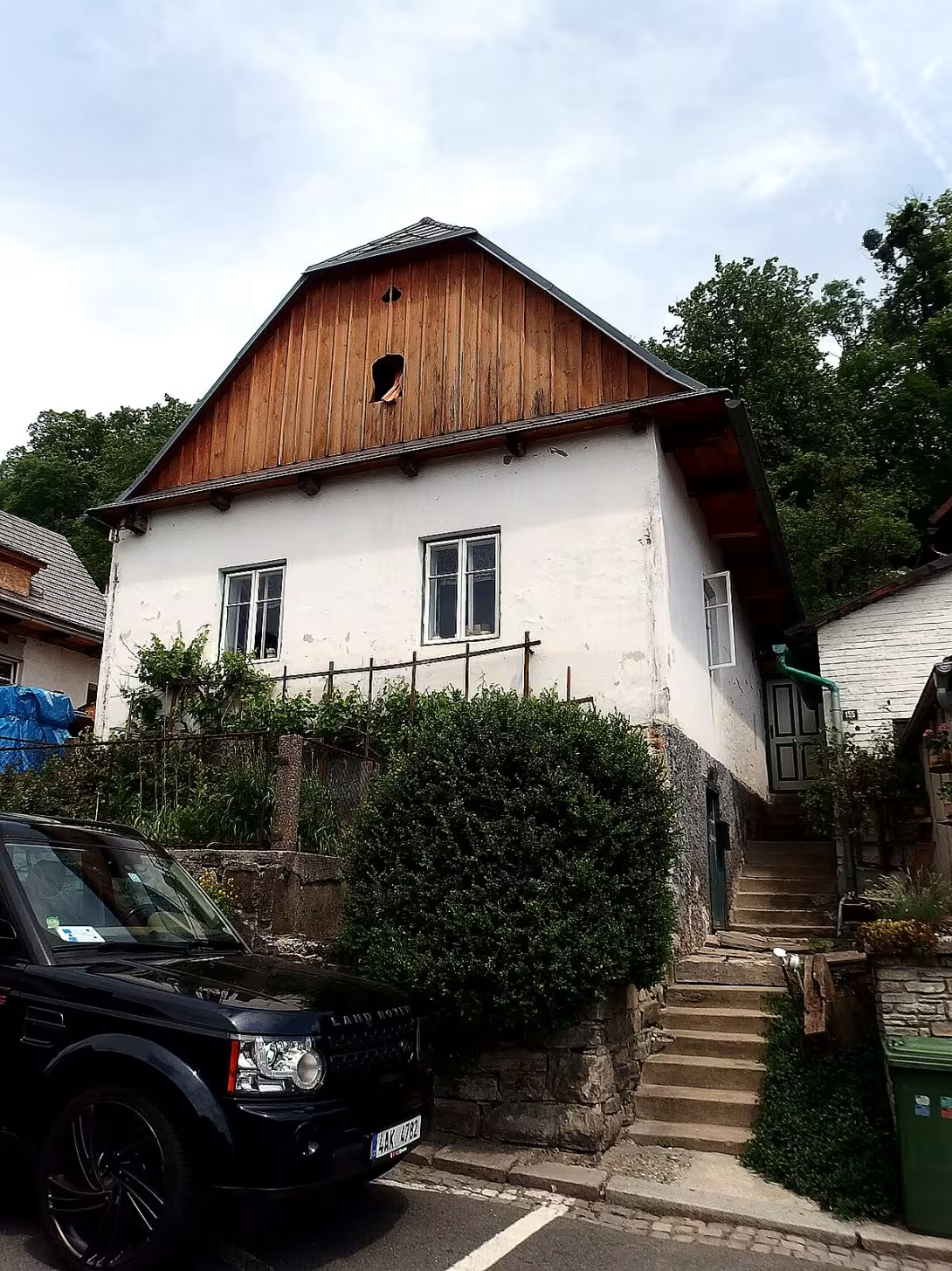
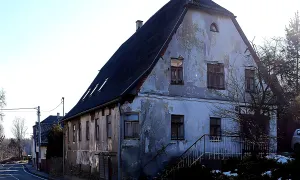
Dům čp. 155 is a walled monument from 1845, located on Zahulicí street in the village Štramberk, the district of Nový Jicin. It is a part of the town conservation and has been declared a cultural monument since 1995.
This building was built on the site of the original grafted house from the turn of the 18th and 19th centuries, which is confirmed by dating on a tilted beam. In the middle of the 19th century, wooden buildings were gradually replaced by walled buildings in Czech cities, which increased fire safety. The history of Štramberk shows the gradual growth of the building since the 16th century, when it expanded from the square and suburb; the first brick house in the place was built already in 1799.
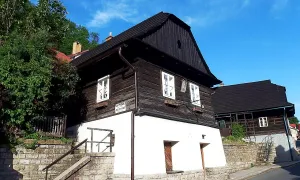
The monument is a single-storey brick building with a rectangular plan, oriented by the shield side to the street. It stands on a high-plastered stone suspect balancing the slope of the terrain. In this suspect there are cellar spaces and former stables with brick-filled vaults. The layout of the house includes a chamber, a hall and a scar. The entrance corridor with the kitchen has a segmentally arched arch, while the scar is covered with a flat beam ceiling.
The shield facade is two-axis with wall-to-wall windows. The shield is vertically formatted and contains a bell-shaped window with a marker and a break at the heel. The rear shield has three triple-leaf arrays. The whole building is sealed with a saddle roof.
Dům čp. 155 is an authentic example of the Štramberk suburb building and is a key element of the local monument reservation. Its preserved building design allows a glimpse into the architecture of the mid-19th century. The visit to this building offers insight into the historical development of the local building during the city walk.
Then and now
Drag the slider to compare how the landmark may have looked when it was built with the view today.
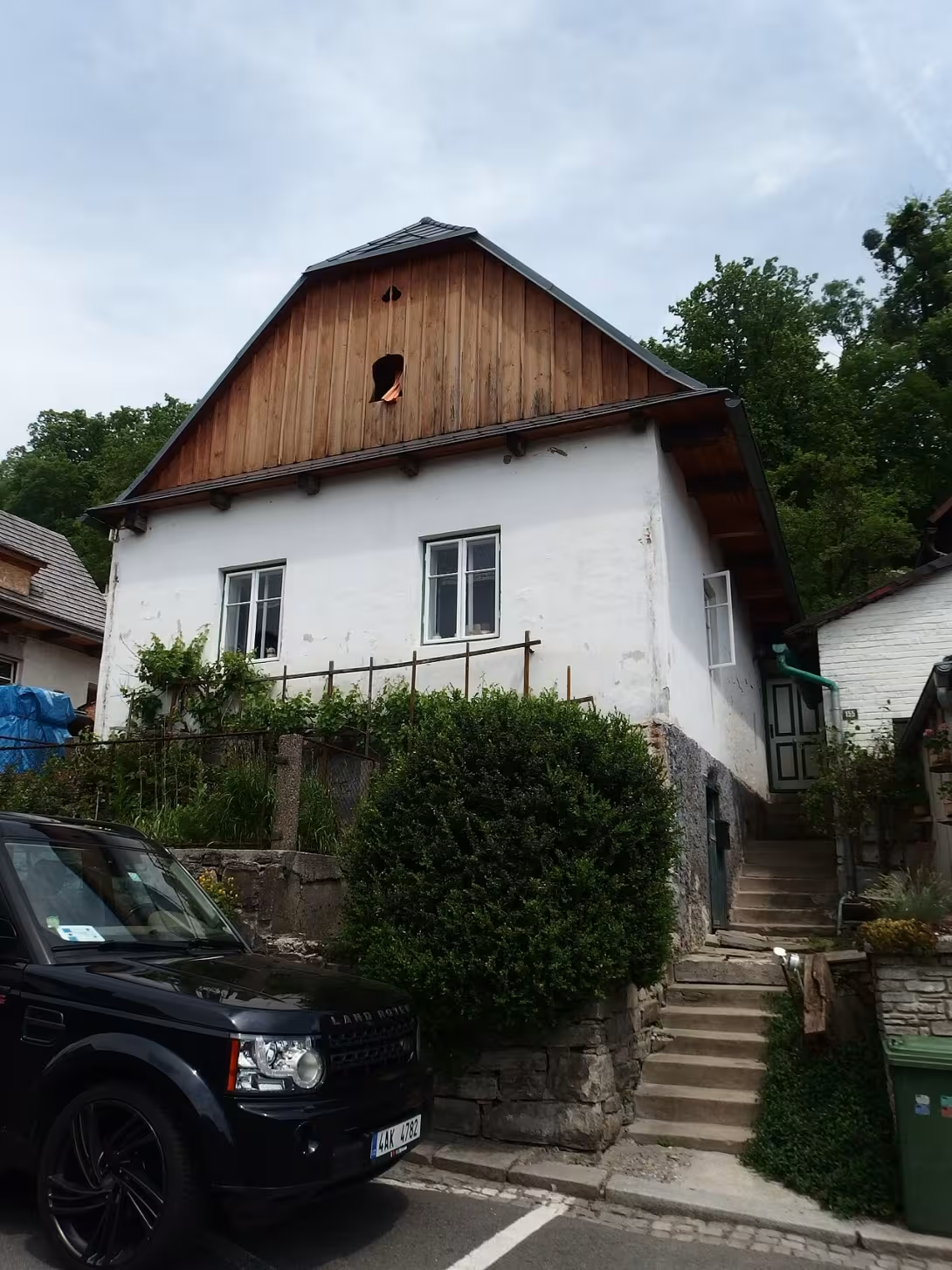
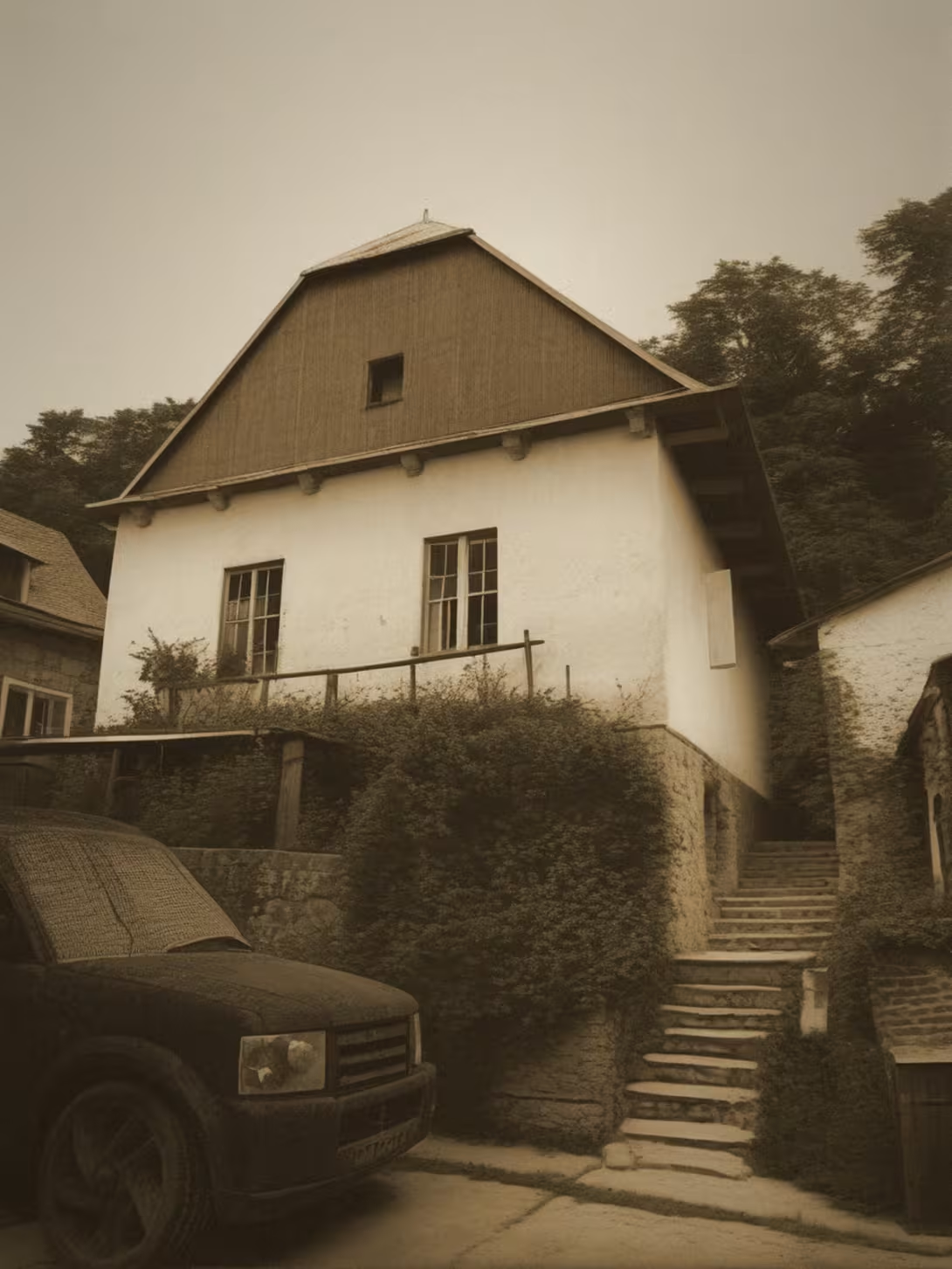
The historical appearance on the left is an AI-generated visualisation and serves as inspiration only.
Historical milestones
- 1799
- Position of the first brick house in place.
- 1845
- Construction of the current walled house No. 155.
- 1995
- Declaration for the cultural monument of the Czech Republic.
Architectural development
The building replaced the grafted building from the turn of the 18th and 19th centuries. It is a walled building with a saddle roof and a high suspicion containing cellar spaces and former stables with a brick-filled vault. In the interior, the entrance corridor and the kitchen are covered with a segmentalized vaults, while the scar has a straight beam ceiling.
Historical events
1845 - construction of a brick house; 1995 - declaration of the building for the cultural monument of the Czech Republic.
Points of interest
- Dům čp. 155 is a brick monument from 1845. - It is located on the street Zaušíí in the village Štramberk and is part of the city conservation. - It has been declared a cultural monument of the Czech Republic since 1995. - It was built at the site of the original grafted house from the turn of the 18th and 19th centuries. - It represents an authentic example of the Štramberk suburb building and is a key element of the local conservation.
Guide
Show guide text
This text was created by artificial intelligence and has not been editorially reviewed. It may contain inaccuracies.
Welcome to Štramberk, where history in every corner touches the present. Right now, you're standing in the street of Zahuljí and there's a house standing in front of you with the number 150 and a half. At first glance, you may find it a modest construction, but it is in this simplicity that its true value and its magic lies. Look at him carefully. You see a walled, ground-floor house in front of you that has a clear rectangular shape. It's a building that's absorbed decades of local life into itself, and today it tells us a story about how housing in our regions changed. Feel the atmosphere of this street and imagine how people used to walk through here in other times, as their steps sounded along the way and what the rhythm of their days was.
Let us now stop at how this house came into being and in what historical context it stands. In order to understand today's form of house number 150-5, we must return in time much further than you might expect. The history of this particular place begins at the turn of the eighteenth and nineteenth centuries. At that time, it was not the walled house you see today, but the original grafted structure. The grafting was a common way of building at the time, because the wood was available and provided the necessary heat in our climate. In the year one thousand seven hundred ninety-nine here was built the first brick house, which was at that time a big step forward and a symbol of modernization. The current resemblance you observe dates back to a thousand eight hundred forty-five. It was this year that today's walled house was built, which replaced older wooden structures. This transition from wood to stone and bricks was not only a matter of fashion, but above all safety and durability. Walled houses were more resistant to fires that often caused disasters in densely built cities.
Now pay attention to the architecture itself and the details that you can see right in front of you. Note that this is a ground-floor building with a very regular rectangular plan. It is a clean and functional approach to construction, which in the middle of the nineteenth century was typical of utility and residential houses. Look below, to the foundation of the house. Note the tall stone suspect that is plastered. This part of the building is key because it protects the walls of the house from moisture from the soil and at the same time gives the whole building some stability and fluidity in the field. Even if we can't see inside, we can try to imagine how the space of the house is spread out. The layout is very simple and efficient. The house consists of a chamber, a hall and a scar. Imagine that hall as the heart of the house, a place where people would welcome each other and where the main movement would take place. The scar was a resting place and a family gathering, while the chamber was used to store food and things that had to remain cold and dark. It is an arrangement that reflects the practicality and needs of people from when they lived in close contact with nature and each room had a clearly defined purpose.
When we think about the people who designed this house or lived in it, we come across an interesting fact. The names of builders or specific personalities that would be connected to the house have remained hidden in time. We don't know the name of the architect who drew this floor plan or the names of the craftsmen who raised these walls in the year one thousand eight hundred forty-five. You may find it sad, but it's actually fascinating. This house is not a monument to a famous person, but a monument to ordinary man, craftsman and inhabitants of Štramberka. He's a silent witness to thousands of unwritten stories, family pleasures, worries and everyday work. It is this anonymity that makes house number 150-five an authentic example of the construction industry at the time. It's the mirror of a time when the quality of work spoke more than the author's name.
Here we come to the part that might interest you. You may be asking why a house this simple is protected as a cultural monument. Since the year one thousand nine hundred ninety-five, this building has been officially declared a cultural monument to the Czech Republic. In addition, the house is part of the town conservation. So why are we paying attention to this particular construction? The mystery and fascination here is the preservation of authenticity. Nowadays, when many old houses are being rebuilt, modernised or unfortunately demolished, the house number 150-5 is a rare testament to what real living in the middle of the nineteenth century looked like. He represents a transitory era where people parted with grafted cottages and welcomed brick houses. It is basically a stone that talks about the social and economic development of the whole region. When you look at it, you don't just see walls and plaster, but you see the courage of people to change their way of life and invest in something that should last generations.
Now that we are slowly finishing our stop at this house, I suggest you observe its line quietly and fit into the surrounding building of Zahulici Street. Try to imagine how light changed here during the day, how the shadows hit the plastered walls and how the house reacted to the changes in the seasons. This modest rectangular house reminds us that history is not only made up of great battles and royal courtyards, but mainly of small pieces of everyday life, of walls that protected us from frost, and of roofs that covered us from rain.
We now invite you to explore this wonderful city monument reservation. Štramberk has many more secrets up its sleeve and every other building you meet probably tells you a different story. Follow the details, observe the materials and let yourself drift through the atmosphere of this unique place. I hope a visit to house number 150-five helped you feel the spirit of the nineteenth century better and appreciate beauty in simplicity. I wish you a pleasant continuation of the journey and many new discoveries in the back streets and on the historic trips Štramberka. Goodbye.
Tips for visitors
The best time to visit Dom no. 155 is in the spring or autumn season when the weather is pleasant and fewer people are there. These years are ideal for exploring historical architecture without the heat of summer days.
Parking in Štramberk is possible in public parking lots located near the city centre. It is appropriate to use buses or trains for arriving by transport, as Štramberk is well accessible by public transport. Check current connections and times in the online search engine.
When visiting, bring protective clothing such as shoes or hats, especially if you plan to walk the streets of the city. Photographs will be more advantageous on bright days when light is favourable.
In the vicinity of Dom no. 155 there is the City Monument Reservation Štramberk and other historical buildings in the suburbs that are suitable for sightseeing. These places offer an interesting view of the past of the city.
For families with children, Štramberk is an ideal destination where they can enjoy various activities and walks. Children will be happy to find out more about the history of the local area and can also look at other attractions in the area.
Businesses nearby
Do you run a restaurant, accommodation, shop, museum, rental, wellness or other visitor service near this monument? Show yourself directly to the people heading to it — this is how they will see you in the app and on the web:
Nearby
Městská památková rezervace Štramberk a okolní zástavba na předměstí.
Accommodation nearby
Themed route
Thematic cruise route: City Monument Reservation Štramberk
1.Dům čp. 155 - Type: Historical residential house. - Why is it worth a visit: This ancient home represents the architectural wealth of Štramberka. Its unique construction and history will give you insight into the life of the people of the city from the past.
2. Old Town Street - Type: Historical aisle. - Why is it worth a visit: Walk down this street will lead you to other historic houses and buildings that are characteristic of the city's landmark reservation. It is an ideal place to know the architectural features of Štramberka.
3. Streets on Suburb - Type: Historical suburban buildings. - Why is it worth visiting: This part of the city shows differences in architectural style and history compared to the old town. It is a suitable place to understand the development of Štramberk and its suburbs.
4. Old Town courtyard - Type: Historical courtyard. - Why is worth a visit: The reservoir is the centre of many historical buildings and houses that are part of the monument reservation. It's a place to relax and understand the atmosphere of old Štramberka.
5. Old Town Tower - Type: Historical tower. - Why is it worth a visit: The view from this tower offers a view of the whole city and its historical architecture. It is an ideal place for understanding the distribution and importance of each part of Štramberka.
This route will guide you to the most important places of the city conservation Štramberka, focusing on historical architecture and its development.
Seasonal recommendations
Spring: In the spring period Dům čp. 155 is transformed into a place full of life and new shades of green nature. Flowers are beginning to bloom, giving the surrounding countryside freshness and beauty. The sun illuminates the building in a lighter light, which highlights its historical architecture. For a visit it is advisable to come on Wednesday week when the crowds avoid and wear clothes according to the temperature that can be variable at this time. The best time for a tour is usually in the afternoon when the sun illuminates the structure from the best visible angles.
Summer: Summer brings Štramberk in full bloom and historic house No. 155 becomes a popular destination for tourists and locals. Sunlight illuminates the building from the most beautiful angles, which is the perfect time for photography. Summer, however, also becomes a time with a large number of visitors, especially in the middle of the day. It is recommended to arrive early or late in the afternoon when there are fewer people and the temperature is not so high. Don't forget your sunglasses and enough drinking.
Autumn: In autumn, Štramberk is transformed into a place with melancholy beauty, where leaves swell in various shades of brown and yellow. The sunlight illuminates the building in a special way, creating an atmosphere full of calm and reflection. The crowds are usually smaller than in the summer, which allows a more comfortable tour. Clothes should be warm because autumn weather can get worse quickly. The best time to visit is in the afternoon when light gives the building a gentle and mild tone.
Winter: Winter Štramberk offers a unique atmosphere where Dům čp. 155 stands in the covered snow environment. Sunshine shines on the snow surface and highlights the historical lines of the building. The crowds are usually the smallest during this season, which allows a calmer tour. The important thing is to wear warm clothes and suitable shoes with helmets because winter weather can be very cold. The opening times of the monument often shorten, so it is important to check the current information about its operation. The best time to visit is usually in the afternoon, when the sun lights up the building while the temperature rises slightly.
Visualizations and artistic views


The visualisations are generated by artificial intelligence and serve as inspiration.
Photos from the area
Real photos taken near the monument

Zdroj a licence jsou uvedeny u každého snímku.
Tips from visitors
No tips yet. Be the first!
Log in and add your tip.
Sources and literature
Photos: Palickap / CC BY-SA 4.0 — Wikimedia Commons. The author and licence also appear when you hover over the image.
Faktickým podkladem tohoto textu byl článek na Wikipedii, jehož autory jsou přispěvatelé Wikipedie. Článek je dostupný pod licencí CC BY-SA 4.0.
Location on the map
More monuments – Štramberk
Show all in the municipality
Příběhy a pověsti
Legendy, pověsti a příběhy spjaté s touto památkou
Fotografie návštěvníků
Zatím žádné fotografie. Buďte první, kdo přidá fotografii z návštěvy!
Log in a přidejte svou fotografii nebo hodnoťte.
Za ověřenou návštěvu v aplikaci získáte víc bodů — poznáme podle GPS, že jste na místě.
Reviews and comments