



Dům čp. 224 House
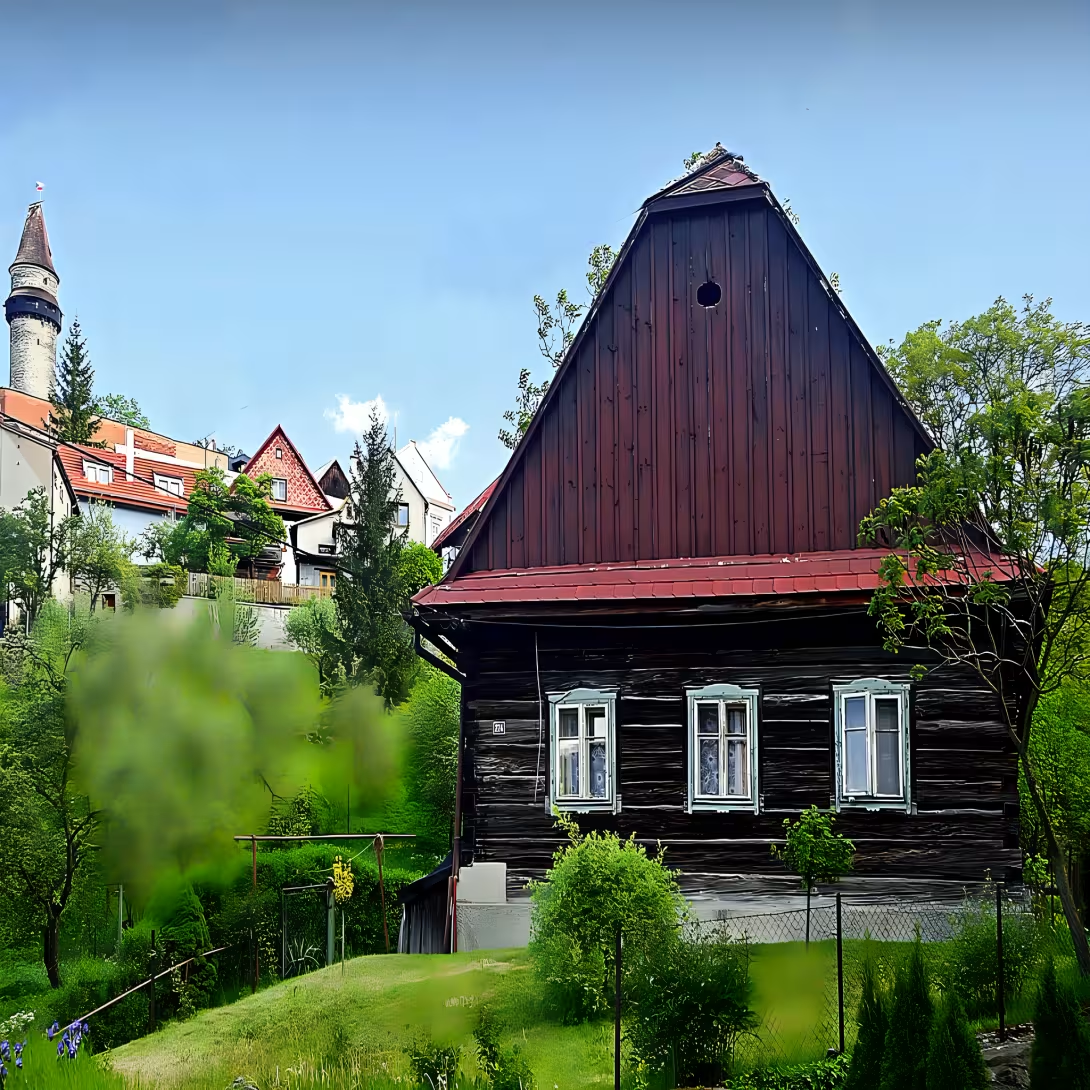
Dům čp. 224 is a grafted building from the first half of the 19th century, located in Dolní street in the village Štramberk in the district of Nový Jicin. The building is registered as a cultural monument of the Czech Republic and represents a typical example of the original suburban development within the city conservation.
It dates back to the beginning of the 19th century, although it is mentioned as the date of origin in 1843, already listed in the records of a stable cadastral from 1833. In the historical context of Štramberka, where in 1558 there were 22 houses with an archway and in 1656 53 houses, this object represents the time when traditional grafted structures were still in addition to the increasing number of brick buildings. The first walled house in the place was built in 1799, while in the 1930s there were still twelve wooden houses near the square.
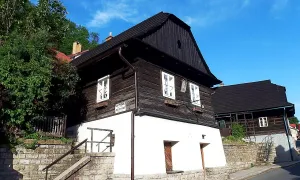
It is a ground-floor grafted object with a rectangular ground plan, oriented by the shield side to the street. The layout is three-piece and includes a hall, a scar and a chamber. The whole house stands on a low-plastered stone suspect that equalizes the slope inequality of the terrain. The street-facing shield facade is three-axis with squid windows located in decorative formwork. The triangular shield is vertically formatted, it has a lattling, an orbiter, a halibut in the top and a shank in the heel. The roof is a saddle semi-shaped, covered with eternity templates. The entrance to the house is located on the left gutter side, to which is attached a grafted extension with a counter roof.
During the 20th century the building underwent reconstruction and was extended with a wall extension.
Dům čp. 224 is a valuable witness to folk construction and urbanization of suburb Štramberka. Its conservation within the historical reservation allows you to look into the architecture of the 19th century. We recommend visiting it during a walk through the historical centre of the village.
Then and now
Drag the slider to compare how the landmark may have looked when it was built with the view today.
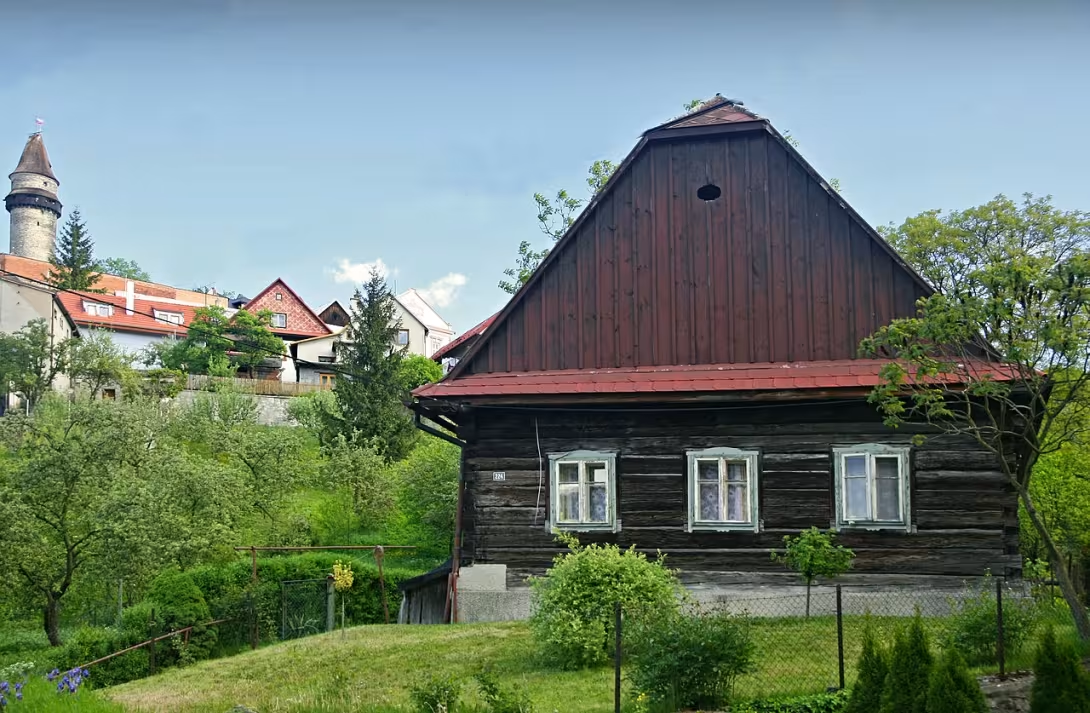
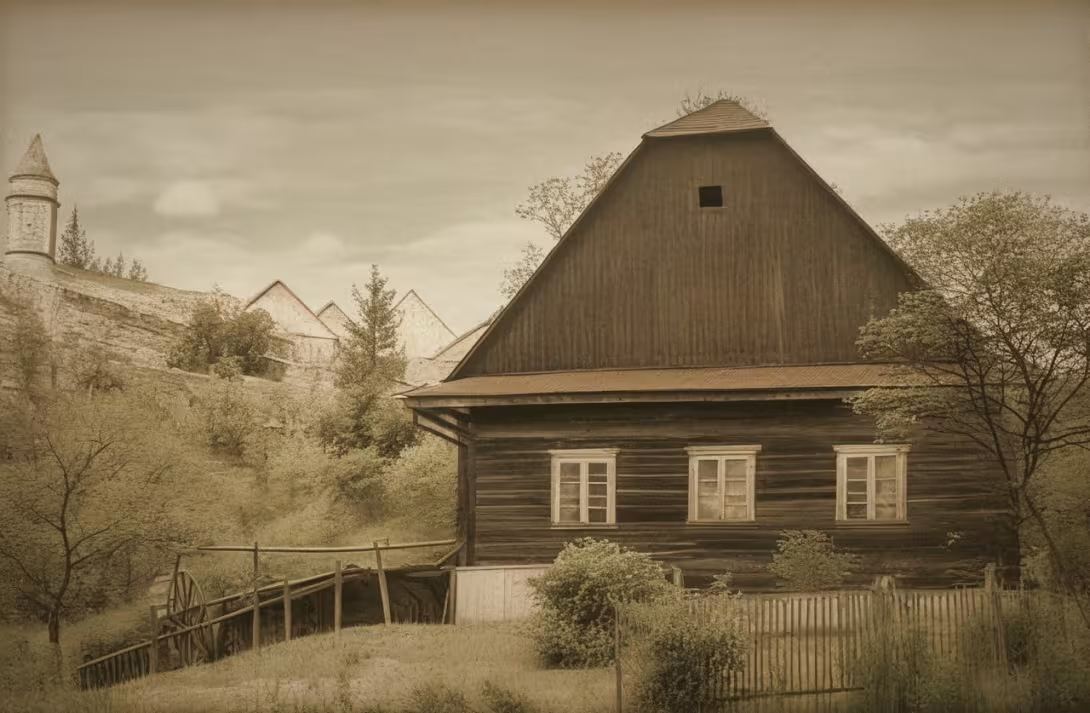
The historical appearance on the left is an AI-generated visualisation and serves as inspiration only.
Historical milestones
- 1833
- Record house in a stable cadastral
- 1843
- Date of establishment of the house
Architectural development
The original grafted building from the first half of the 19th century was reconstructed and expanded in the course of the 20th century with a brick extension. A grafted extension with a counter roof was added to the left gutter side. The roof is a saddle-shaped halibut covered by eternity templates.
Points of interest
- Dům čp. 224 is a grafted building from the first half of the 19th century. - The building is registered as a cultural monument of the Czech Republic and represents a typical example of the original suburban development inside the town conservation. - It comes from the beginning of the 19th century, although it is mentioned as the date of origin in 1843, already listed in the records of a stable cadastral from 1833. - It is a ground-floor grafted object with a rectangular plan and a layout of the hall-jizda-chamber, standing on a low plastered stone suspect. - During the 20th century the building underwent reconstruction and was extended to a wall extension.
Guide
Show guide text
This text was created by artificial intelligence and has not been editorially reviewed. It may contain inaccuracies.
Welcome to Štramberk, where history is inserted into every stone and every piece of wood. Right now, you're standing in front of the house with the number two hundred and twenty-four. Look at him. You see before you a typical grafted structure that carries the atmosphere of ancient times. It is a place that immediately takes you back to a time when the rhythm of life was determined by nature, craft and the proximity of neighbors. Feel this first impression from the point of view of a man who would have walked here 200 years ago. This house is not just an ordinary building, but a real witness to the first half of the nineteenth century and a rare piece of history that survived in its original form.
Let us now look at how this house was created and in what context it stood at that time. When exactly was it built? Here we come to a very interesting detail that old papers reveal to us. In the records of the so-called stable cadastral, which was then an official and very detailed overview of the property within the Austrian Empire, the house is mentioned already in the year one thousand eight hundred thirty-three. However, as its date of origin, the year of a thousand eight hundred forty-three is mentioned in other supporting documents. This ten-year expansion tells us that the house was created during the period when suburb Štramberka gradually developed. At that time, the city expanded outside its main centre and it was these buildings that formed the characteristic face of the city's then edge. Today we are no longer talking about any edge, because the house is part B of the valuable city conservation.
Now pay attention to the architecture itself and to what you see right in front of you. Note that this is a ground floor object with a rectangular plan. It's a simple but highly thought-out building. Please look down on the very foundation of the house. You see that low, plastered stone suspect? It plays a very important technical role here. Because Štramberk lies in a mountainous terrain, this stone base equalizes the slope inequality of the terrain. Thanks to it, the house could be built horizontally and firmly, even if the ground is rising or falling below it. It's a beautiful example of how ancient builders adapted to the landscape without violently changing it.
Even though we are now out watching the house from the outside, we can try to imagine how the space is arranged inside. According to historical descriptions, the house has a tripartite, which was a very common and practical solution at the time. Imagine entering. First, you'd be in the hall. The hall was basically an entrance space that served as a link between the other parts of the house and at the same time as a space where one could get rid of mud from shoes before entering cleaner parts of the house. From the hall you could enter the scar. Scar was the heart of home, the biggest and hottest room where the family would meet, eat, work and sleep. And finally, there's the chamber. The Chamber was an essential part of every economy, used to store food, tools and other things that had to be in cold and dark. It is this simplicity and functionality that makes the house no. two hundred twenty-four an example of the original suburban development.
Who designed and built this house? The names of particular architects or masters remained in oblivion, but that is where the magic of this place lies. This house was not built by the famous master of the great city, but probably by local craftsmen who knew their craft and materials offered by the surrounding landscape. Imagine the people who lived here 200 years ago. What were the conversations in the scar? What smells from the food chamber were they pouring into the hall? Although we do not know the specific names of the personalities who lived here, the house itself tells the story of the daily lives of the people of Štramberka, their hard work and how they built their homes in accordance with the surroundings. It's a story about anonymous people who, together, have created a unique atmosphere throughout the city.
The interesting thing that may interest you and which gives this place some importance is that the house is now registered as a cultural monument of the Czech Republic. That means the state has recognized its irreplaceable value for our shared history. It is not only because of its age, but mainly because the house No. 200 24 retains its original form and character. Today, when buildings are constantly changing, modernising and often losing their souls, such an object is a rare piece of reality. It's like an open book about what the suburbs of a small town looked like in the nineteenth century. You may be interested in the mystery mentioned with the date of origin. Why is the year one thousand eight hundred thirty-three in the cadastral, but as the date of origin the year one thousand eight hundred forty-three? Maybe the house was built gradually, maybe in the year one thousand eight hundred thirty-three it was only designed or started its foundation, and up to ten years later it was definitively completed. Such little differences in records are fascinating to historians because they show that history is not just a dry list of data, but a living process.
Now that you have become familiar with the house no. two hundred twenty-four, I suggest you observe it quietly for a while. Feel the texture of the wood, feel the calm of this place and try to imagine how the world around this house has changed over the last two hundred years. Did this house see the first cars coming? Did he hear the first radio? Did he see generations of kids playing around? This house is a silent observer of time.
Štramberk has many other hidden treasures waiting for your discovery. Each house here tells its own story, and although some of them are not as well documented as this one, they all together form the mosaic of our heritage. So let's move on slowly and explore the other corners of this beautiful city, which will still surprise you with its authenticity and beauty. Thank you for the attention you have given to this modest but rare house, and I wish you a pleasant continued journey along the streets of Strutber.
Tips for visitors
The best time to visit the house. 224 in Štramberk is during the summer months, especially in the spring and autumn periods, when the weather is favourable for walking around historical monuments. This house offers a peaceful way to sink into the atmosphere of the first half of the 19th century.
What to take with you: It is recommended to bring protective clothing against the sun, water and refreshments. If you are interested in photographing or viewing the memory in more detail, it is advisable to have a camera or mobile phone with you.
Photo: The best light for photo is usually in the early morning or late afternoon. The garden and surroundings of the house. 224 offer beautiful shots, especially when the sun illuminates the ancient building.
What to visit in the surrounding area: There is a city conservation Štramberka nearby which offers several other historical buildings and attractions. It is ideal for families with children to visit local parks or visit local museums.
Frequently asked questions
Can the monument be visited?
This is a residential or farm building, not a museum with opening hours. Please view it from public space and respect the owners' privacy. We have no information about access to the interior.
Where is the monument?
Location: Štramberk, Moravskoslezský kraj. The map on this page shows the exact spot.
Why is the monument protected?
It is listed in the Central List of Cultural Monuments of the Czech Republic as a cultural monument (register no. 1000122498).
Businesses nearby
Do you run a restaurant, accommodation, shop, museum, rental, wellness or other visitor service near this monument? Show yourself directly to the people heading to it — this is how they will see you in the app and on the web:
Nearby
Dům se nachází v městské památkové rezervaci Štramberka v okrese Nový Jičín.
Accommodation nearby
Themed route
Thematic cruise route in Štramberk
1.Dům čp. 224 - Type: Historical residential houses - Why is it worth a visit: This house is part of the city conservation Štramberka and represents a typical example of architecture from the time this part of the city developed. Its history is closely linked to the industrial past of Štramberka.
2. Old Town - Type: Historical Square - Why is it worth a visit: Naves is the center of the old part of the city and offers a view of a number of historic houses that resemble the past with their appearance. It is an ideal place to walk the streets with rich history.
3. Church of the Elevation of the Holy Cross - Type: Religious monument - Why is it worth visiting: This church is not only the spiritual centre of the city, but also architectural pearls with rich historical elements. Its views and interior attract visitors from all over the region.
4. City Museum - Type: Historical Museum - Why is it worth a visit: The museum offers exhibitions that focus on the history of Štramberk and its industrial history. It is a great way to better understand the context of residential houses and other monuments in the city reservation.
5. Štramberk - panoramic viewpoint - Type: Historical View - Why is it worth a visit: This lookout card offers a unique view of the whole city and its surroundings. It is an ideal place to relax after a walk in the old part of town where you can enjoy a beautiful view.
This route offers visitors the opportunity to immerse themselves in the history and architecture of Štramberka, each of the points visited bringing their unique properties.
Seasonal recommendations
Spring: In spring, Štramberk wakes up and the surrounding nature begins to bloom, creating a fresh and optimistic atmosphere. Light is soft in this period, which is ideal for observing the details of the historical building. We recommend taking a light jacket because the morning temperatures may be still low. The trip to the monument is very pleasant at this time and you will avoid the largest groups of tourists.
Summer: The summer season is characterized by bright sun and lively movement in the streets, which gives the place great energy. Due to high temperatures and large number of visitors, it is best to arrive at the house early in the morning. Dress very lightly and don't forget drinking mode. In the main summer season there are the most people around, so the early arrival will give you a quieter experience.
Autumn: Autumn brings peace to the town and the colours of leaves create a wonderful visual framework around the monument. The morning fog gives the place a mystery that is perfectly suited for exploring old buildings. Prepare yourself more layers of clothing, because the air is usually wet and cold. It's the best time for those who seek silence and want to enjoy history without a big rush.
Winter: In winter Štramberk works very quietly and in advent time it can have a fabulous touch thanks to snow. Days are very short, so plan your visit around noon to use the remaining light. It is necessary to wear very warm clothes and solid shoes to keep you balanced on slippery historical paths.
Visualizations and artistic views


The visualisations are generated by artificial intelligence and serve as inspiration.
Photos from the area
Real photos taken near the monument


Zdroj a licence jsou uvedeny u každého snímku.
Tips from visitors
No tips yet. Be the first!
Log in and add your tip.
Sources and literature
Photos: Kankovaa / CC BY-SA 4.0, rozlišení zvýšeno umělou inteligencí — Wikimedia Commons. The author and licence also appear when you hover over the image.
Faktickým podkladem tohoto textu byl článek na Wikipedii, jehož autory jsou přispěvatelé Wikipedie. Článek je dostupný pod licencí CC BY-SA 4.0.
Location on the map
More monuments – Štramberk
Show all in the municipality
Příběhy a pověsti
Legendy, pověsti a příběhy spjaté s touto památkou

Fotografie návštěvníků
Zatím žádné fotografie. Buďte první, kdo přidá fotografii z návštěvy!
Log in a přidejte svou fotografii nebo hodnoťte.
Za ověřenou návštěvu v aplikaci získáte víc bodů — poznáme podle GPS, že jste na místě.
Reviews and comments