



Dům čp. 288 House
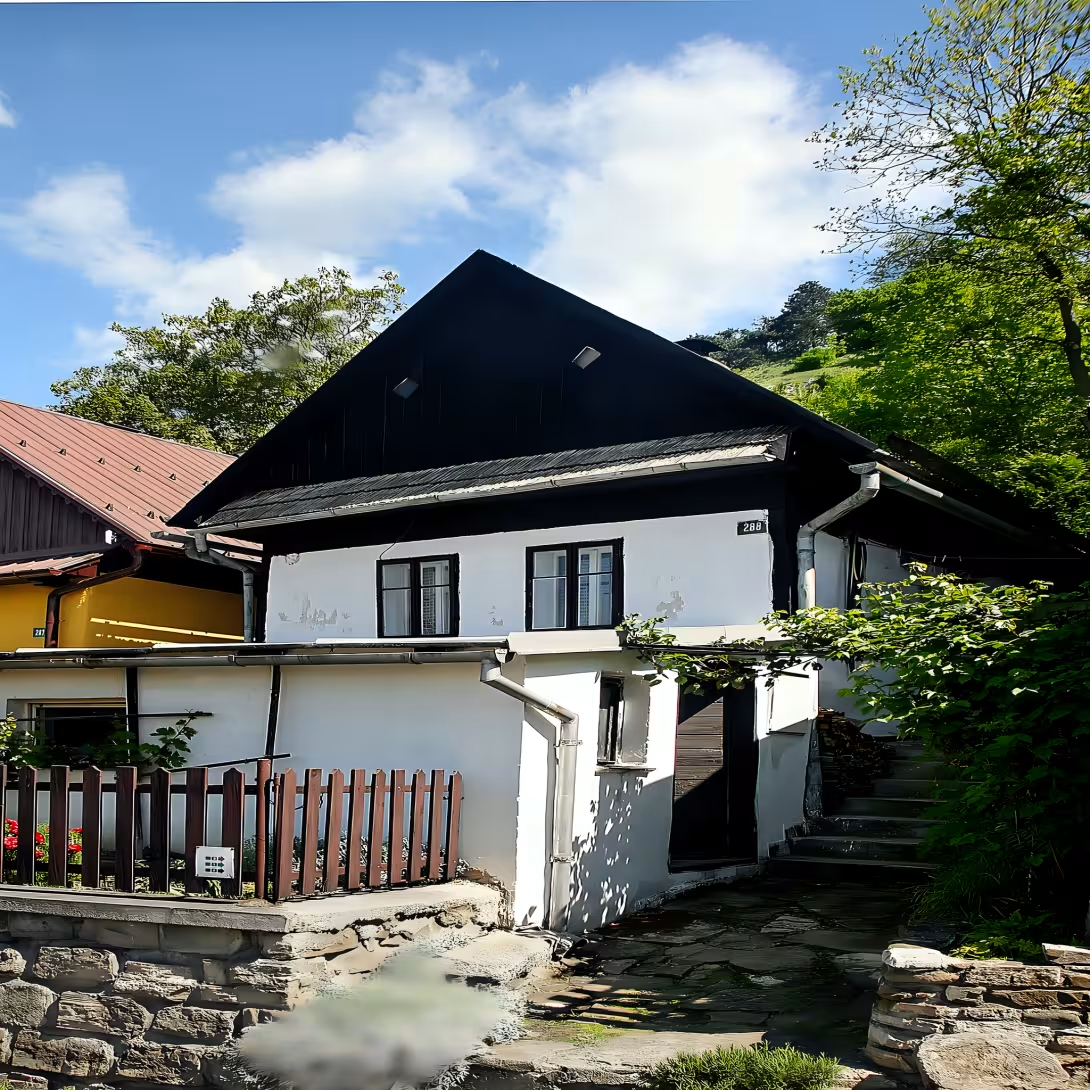
Dům čp. 288 in Štramberk, a village in Nová Jicin district, is a cultural monument from the middle of the 19th century and represents a typical suburban development of the time. This blasphemous house on Upper Bašta Street was listed in the Central List of Cultural Monuments of the Czech Republic and is part of the town conservation. Its historical importance is that it represents the architectural tradition of the period of industrial revolution and national renewal in Czech countries.
The history of Štramberka is rich in change. According to the urbarian from 1558, 22 houses were originally built with wooden flooring and seven residents in the suburbs. In 1614, the number of farms increased to 28, reflecting the growth of the population and the city's infrastructure. After the reign of Jesuits in 1656, there were already 53 houses in Štramberk. The first brick house No. 10, built in 1799, marked a new era in local architecture. In 1855, the fire destroyed 40 houses and two barns, leading to reconstruction and changes in construction. Dům čp. 288 was built in the middle of the 19th century as part of this renewal.
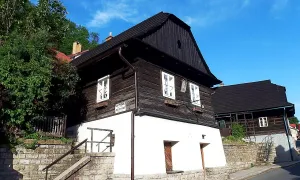
Architecturally, the house is a ground-floor plastered building with a rectangular floor plan, oriented by the shield side to Upper Bašta Street. The layout of the object is a two-piece hall with a scar and the main entrance is located in the draining facade. The stairs lead to the entrance, which gives the construction some architectural character. The building is built on a high stone suspect that equalises the slope inequality and includes basement spaces. A brick annex with a counter roof is attached to the suspect. The street facade is two axes, the shield is triangular in shape and is vertically boarded with two vents and a broken heel. The roof of the house covers the saddle.
Dům čp. 288 is a protected cultural object as part of the urban heritage reservation Štramberk, and its preservation contributes to maintaining the historical character of the village. The current state allows visitors to explore architectural elements from the period of industrial revolution and to understand how urban planning in Czech countries changed. Visiting this house offers a unique view of the history of Štramberka and its architectural heritage.
Dům čp. 288 is not only a monument, but also a witness to changes in the lives of local residents and their adaptation to new conditions. Its preservation allows the following generations to appreciate the historical value and architectural skills of past periods. Visiting this object is therefore not only a way to the past, but also an opportunity to learn about important historical events and their impact on the current appearance of Štramberka.
Architectural development
The construction is grafted of balls and plastered, with a saddle roof and a vertically boarded shield. It uses a high stone suspect to balance the slope in which there are basement spaces. A brick annex with a counter roof is attached to the suspect.
Points of interest
- Dům čp. 288 is a cultural monument from the middle of the 19th century and represents a typical suburban development of the time. - This blasphemous house on Upper Bašta Street has been entered into the Central List of Cultural Monuments of the Czech Republic and is part of the town conservation. - Its historical importance is that it represents the architectural tradition of the period of industrial revolution and national revival in Czech countries. - Dům čp. 288 was built in the middle of the 19th century as part of the reconstruction after the fire in 1855, which destroyed 40 houses and two barns. - Visiting this house offers a unique view of the history of Štramberk and its architectural heritage.
Guide
Show guide text
This text was created by artificial intelligence and has not been editorially reviewed. It may contain inaccuracies.
Welcome to Štramberk. You have just stopped at a place that tells a quiet story about tradition, peace and history, which has been imprinted into every stone and wooden beam in this city. You're standing right in front of house number two hundred eighty-eight on Upper Bašta Street. Feel the atmosphere surrounding you right now. You may feel the weight of the time that has been going on here for generations, and you may notice how this object is going to go into the overall appearance of the entire neighborhood. Before your eyes, there is a building that does not act as a foreign element, but rather as a natural part of this local lace. It's a house that has its own face and its own dignity.
Now let's go back a little bit to the past to understand why this house is so special. This object represents a typical suburban building, which began to form in this area in the middle of the nineteenth century. This was the time when the city of Štramberk grew and its borders moved outwards, creating a so-called suburb. House number two hundred eighty-eight is one of those rare examples that allows us to look into a time when architecture has not yet disconnected from nature and local materials. Although we do not know the exact date of its creation or the names of the people who built it, its existence clearly tells us how people lived in the middle of the nineteenth century and how they built houses on the edge of that city. It is a witness to the time when every building was counted and each was designed to serve its inhabitants for many decades.
Now pay attention to the very form of the house that is right in front of you. Look at the structure. It's a ground floor building, which means it only decomposes on one floor, which gives the whole building the appearance of modesty and presence in the body of the earth. Notice its ground plan, which is rectangular, which is a classic and practical shape for the construction at the time. What is very important, however, is how this house is oriented towards you and the street of Upper Bašta. The construction is oriented by the shield side directly towards you. That means that what you're watching most right now is the characteristic shield that dominates his appearance towards the road.
If you look closer, you'll see a fascinating combination of materials. This house is grafted, which means that its foundation and supporting structure are wooden beams. This is a technique that was very widespread in our countries and brought warmth and flexibility to the buildings. However, this particular house is also plastered. This plaster is not only an aesthetic element, but it also serves to protect the wooden core from the effects of weather. This combination of wood and plaster creates an interesting visual contrast between the organic structure and smoother finish. Now look even lower, where the house meets the ground. The whole building stands on a tall stone suspect. This stone base is crucial. Not only does the house physically take it above the street level, but it also gives it a sense of stability and strength. The stone foundation acts as a solid pillar on which the entire history of this place rests.
Even if we don't know the names of the particular personalities who lived in this house or the names of the architects who designed his face, you can imagine them easily. Imagine families living their daily lives here in the middle of the nineteenth century. Imagine craftsmen, businessmen or suburban residents for whom this house was their safe haven. Every year that survived this house is dedicated to these unknown people. Their lives, their joy and their sadness are an invisible part of these walls. Even though their names were forgotten over time, their presence in this space still resonates.
Perhaps you are now told what is the greatest treasure in this place. It's the fact that this house isn't just an ordinary old house. It is included in the central list of cultural monuments of the Czech Republic and is an inseparable part of the city conservation. This means that its value is recognised by the whole state. It is a mystery how this construction managed to remain preserved in such a form, while the world around it was changing, technology was evolving, and modern elements were trying to conquer the historic faces of cities. Its importance is that it is a living document about what suburban development looked like at a time that was crucial for the development of our modern world. It's a piece of history that allows us to understand our roots.
But now we will not keep you in one place. Štramberk offers much more than just a look at this one house. We recommend you continue your walk along these narrow and picturesque streets. Feel every detail, every inequality of the stone paths, and every plastered wall that meets you. Every next step can lead you to another surprise, another memory, or another story waiting for your discoverers. Thank you for spending this moment with us and for paying attention to this small but important piece of our heritage. We wish you a beautiful and inspiring journey further along the historic paths Štramberka. Goodbye.
Tips for visitors
The best time to visit the house No. 288 in Štramberk is in the spring or autumn season when the weather is pleasant and the historic city centre offers a beautiful view without excessive heat of summer days. In these months, there are also various cultural events that add interesting things to the visit.
Transport to the city can be carried out by car and by public transport, and it is advisable to check the specific connection using the search engine online. When visiting historical places, however, it is recommended to consider using a track or car if you want to move around the entire area.
When planning your visit, bring sunglasses and suitable clothes, especially during the winter months. Humidity and temperature can be variable, so it's good to be ready for different weather conditions. Don't forget to take water or drink, especially if you are planning an extended walk around the city.
The best place to photograph the house no. 288 is on Upper Bašta street, where you can capture the charming details of the building in the morning light. Sun Dawn offers ideal conditions for shooting architecture with fine shadows and natural atmosphere. If there is an option, try also using the sunny reflection on the middle of the day to highlight the details.
In the vicinity of the house No. 288 there is the historical centre Štramberka and the walls, which are ideal accessories for visitors interested in history and architecture. For families with children it is advisable to visit local parks or find various educational programs that often offer local cultural institutions.
Frequently asked questions
Can the monument be visited?
This is a residential or farm building, not a museum with opening hours. Please view it from public space and respect the owners' privacy. We have no information about access to the interior.
Where is the monument?
Location: Štramberk, Moravskoslezský kraj. The map on this page shows the exact spot.
Why is the monument protected?
It is listed in the Central List of Cultural Monuments of the Czech Republic as a cultural monument (register no. 1000122458).
Businesses nearby
Do you run a restaurant, accommodation, shop, museum, rental, wellness or other visitor service near this monument? Show yourself directly to the people heading to it — this is how they will see you in the app and on the web:
Nearby
Památka se nachází v městské památkové rezervaci Štramberk, v blízkosti historického centra a hradb.
Accommodation nearby
Themed route
Thematic cruise route to Štramberka
1.Dům čp. 288 - Type: Historical residential houses - Why is it worth visiting: This house is part of the Štramberk City Heritage Reserve and represents a typical example of historical residential buildings in the region. It is suitable for those who want to understand the architectural past of the city.
2. Historical Center Štramberka - Type: City Monument Reservation - Why is it worth a visit: The center is full of historic buildings and alleys that will carry you to the past. It's an ideal place to walk and explore local architecture.
3. Wall Štramberka - Type: Historical wall - Why is it worth a visit: The walls are an important monument that shows the city's defence capabilities. They are ideal for those who like historical and architectural details.
4. Square in Štramberk - Type: Historical Square - Why is it worth a visit: The square is the heart of the city and served as an important center for residents. It's where history and the present meet.
5. Adjoining Alleys - Type: Historical streets - Why is it worth a visit: These streets offer a view of diverse architecture and are ideal for walking where you can enjoy a quiet environment in historical context.
This route will guide you after the legacy of Štramberka and offer a view of its architectural beauty.
Seasonal recommendations
Spring: In the spring season Dům čp. 288 in Štramberk is charming with its flowering gardens and new living tree leaves that illuminate the memory with a pleasant green shine. The atmosphere is calm and full of hope, creating an ideal environment for relaxation and sightseeing. It is recommended to visit in the morning or in the shade of the afternoon sun to enjoy mild temperatures without excessive crowds. Clothes should be comfortable and suitable for a mild winter with the possibility to add a layer in case of colder weather.
Summer: In the years Štramberk is full of life, when local and visitors are looking forward to warm winter and long days. Dům čp. 288 offers the best conditions for tours during this period when lighting is natural light and nature is in full force. Summer is also an intensive visit time, which means it is recommended to visit early in the morning or later in the evening to overcome possible crowd overload. Dress up light and comfortable clothes suitable for warm winter and do not miss the water on the road.
Autumn: Autumn Štramberk is remarkable by its colour of leaves, which brings to the memory of Dům čp. 288 beautiful and changing colors. The atmosphere is calm and quiet, which allows you to enjoy the tour without many people. This period has a mild winter, so clothes should be suitable for colder weather with the possibility to add a layer. Best to visit the memory in the early afternoon or early evening when autumn light becomes special and calm.
Winter: In winter Dům čp. 288 in Štramberk is surrounded by snow and ice, bringing a unique atmosphere and lighting together. Cold weather may limit the accessibility of some parts of the monument, but it also offers a peaceful and quiet space for visitors. Hot clothes with protection against cold and wind are recommended, as is the purchase of drinking before the start of the tour.
Visualizations and artistic views


The visualisations are generated by artificial intelligence and serve as inspiration.
Photos from the area
Real photos taken near the monument


Zdroj a licence jsou uvedeny u každého snímku.
Tips from visitors
No tips yet. Be the first!
Log in and add your tip.
Sources and literature
Photos: Kankovaa / CC BY-SA 4.0, rozlišení zvýšeno umělou inteligencí — Wikimedia Commons. The author and licence also appear when you hover over the image.
Faktickým podkladem tohoto textu byl článek na Wikipedii, jehož autory jsou přispěvatelé Wikipedie. Článek je dostupný pod licencí CC BY-SA 4.0.
Location on the map
More monuments – Štramberk
Show all in the municipality
Příběhy a pověsti
Legendy, pověsti a příběhy spjaté s touto památkou
Fotografie návštěvníků
Zatím žádné fotografie. Buďte první, kdo přidá fotografii z návštěvy!
Log in a přidejte svou fotografii nebo hodnoťte.
Za ověřenou návštěvu v aplikaci získáte víc bodů — poznáme podle GPS, že jste na místě.
Reviews and comments