



Dům čp. 6 (Štramberk) House
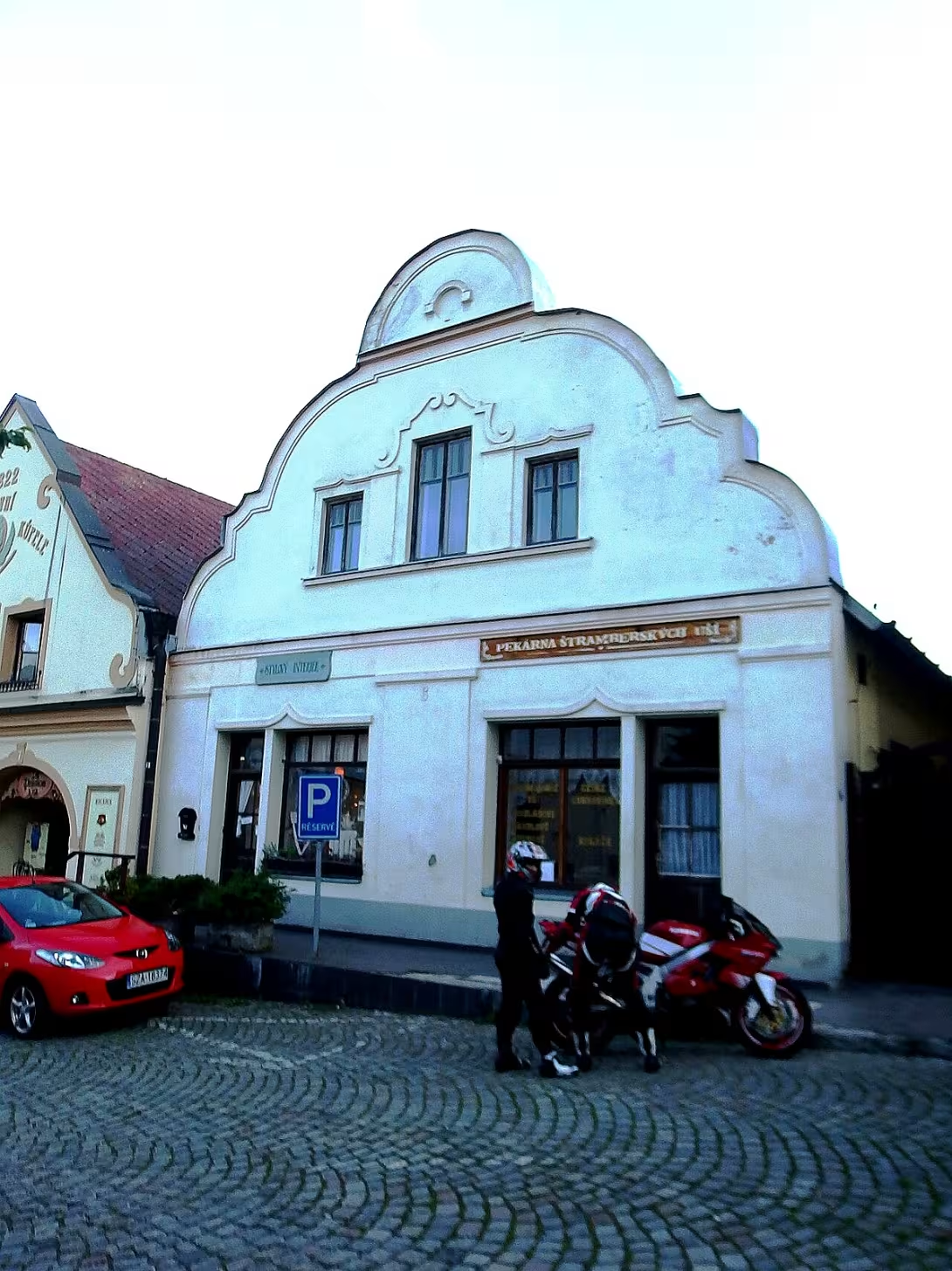
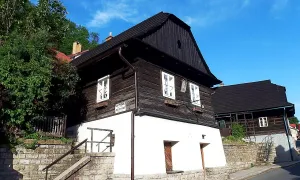
House No. 6 in Štramberk, the district of Nové Jicin, is a historical monument with a rich architectural history from the grafted building to the Empire and the neo-Baroque facade. This object is significant by its variability, which reflects wider cultural and architectural trends from the 18th century to the present. It is included in the Central List of Cultural Monuments of the Czech Republic and is part of the town conservation.
Originally, the house was a grafted building, which in the late 18th century became a brick. This architectural transition reflected wider trends in Europe, when construction moves from baroque style to classicism and later to romanticism. In the middle of the 19th century, an empirical atic floor was built, which connected house no. 6 with neighboring house no. 5. This addition is characteristic of the time when the Empire was popular in Europe.
The architecture of the house shows its variability over the years. Originally grafted building was converted into a wall, which was typical of the end of the 18th century. In the middle of the 19th century he was joined by an empirical attics floor which connected two neighboring houses. In the 1920s, the facade and the facade were adapted to Czech novobarok, adding its distinctive appearance to the object. This transformation reflects the historical trends of that time.
In the second half of the 19th century the house was owned by the township Hanzelka and his family. In the 1920s, Joseph David, senior, who was nationalized in 1948, modified him to trade meat and sausage. In the 1990s, the house returned restitution to the descendants of the David family.
At the end of the 18th century, significant architectural changes took place in Central Europe, when it moved from baroque style to classicism and later to romanticism. In the middle of the 19th century the Empire was popular in Europe, which also affected the architectural appearance of the house No. 6.
The house is now a free-standing ground building with a baroque facade facing the square and a saddle roof. It is part of the city conservation, making it an important historical monument. Its variability reflects broader cultural and architectural trends over the years.
House No. 6 is not only an important historical monument, but also a reminder of changing cultural and architectural trends in Europe. Its variability reflects broader trends from the 18th century to the present. It is a testament to the history of Štramberk and its population, which makes the house an important monument to visit.
House No. 6 in Štramberk is an example of architectural development and cultural history, which is worth considering and visiting. Its variability reflects wider trends in Europe and makes it an important monument to anyone interested in history and architecture.
Historical milestones
- end of 18th century
- The original grafted structure was converted into a wall, reflecting the architectural trends of the time.
- half of the 19th century
- Built an empirical atic floor that connected house no. 6 with neighboring house no. 5.
- 1920s
- The facade and the facade were adapted to the Czech Neo-Baroque, which added its characteristic appearance to the object.
- 1920s
- The house was adapted to the trade in meat and sausage of Josef David Elder, who was nationalized in 1948.
- 1990s
- The house returned restitution to the descendants of the David family.
Architectural development
The house started as a grafted building, which was rebuilt into a brick at the end of the 18th century. In the middle of the 19th century he was joined by an empirical atik floor and in the twentieth years of the 20th century the facade was adapted to Czech novobarok, indicating its architectural development.
Historical events
- 1799
- Position of the first brick house No. 10 in the square.
- 1855
- A fire in Štramberk that destroyed 40 houses and two barns.
- Connection of the Empire Atika floor between houses No. 5 and 6.
Owners
In the second half of the 19th century the house was owned by the township Hanzelka and his family. In the 1920s, Joseph David, senior, who was nationalized in 1948, modified him to trade meat and sausage. In the 1990s, the house returned restitution to the descendants of the David family.
Points of interest
- House No. 6 in Štramberk has a rich architectural history from the grafted building to the Empire and Neo-Baroque facade.
- This object is significant by its variability, which reflects wider cultural and architectural trends from the 18th century to the present.
- Originally, the house was a grafted building, which, in the late 18th century, became a walled-up building.
- In the 1920s, the facade and facade were adapted to Czech novobarok.
- The house is part of the city's monument reservation, which makes it an important historical monument.
Guide
Show guide text
This text was created by artificial intelligence and has not been editorially reviewed. It may contain inaccuracies.
Welcome to Štramberk. You're standing in front of a house with a descriptive number of six that stands right in front of you. If you look at him carefully, you probably think of his appearance as a whole that's always been there. But it's an illusion. This house is a living witness to how fashion, technology, and the needs of people have changed over the last 200 years. There's not only one structure in front of you, but layers of history that overlap each other. The facade you are now seeing has a clear print of the Czech Neo-Baroque from the 1920s. It's a style that added the house to its distinctive appearance today, full of details and certain festivities. But let me lead you deeper into his story, because under this elegant mask is a much older and simpler root.
Let's go back a few centuries in time. Originally, this object was not a walled building we know today. He started out as a grafted building. Roubenka was a common form of living at the time, built from wooden beams that were clenched together. Imagine what this house would look like if it was made of dark wood, with simple windows and without decorated robes. This wooden foundation was later, at the end of the eighteenth century, replaced by a brick construction. This reconstruction was not random. It reflected architectural trends at a time when brick buildings became a symbol of stability, wealth and modern approach to housing. The transition from wood to bricks and stone meant a change of status for the owner of the house. The house began to adapt to a changing lifestyle.
Now pay attention to the top of the house. Look up, to the roof line, and to what's lining it. In the middle of the nineteenth century, the original building was joined by the Empire Atika floor. Empire was a style inspired by ancient Greece and Rome, and characterized by peace, symmetry and dignity. Adding this floor wasn't just an aesthetic task. It was used to visually connect the house No. 6 with the neighbouring house No. 5. At that time Štramberk, as well as in many other cities, discussed how to create a harmonious whole in the square. Architects and builders tried to make each house complete and form a united front. What you see as part of this house today was once a separate architectural decision aimed at unifying the surroundings.
But time passed, and with it, the tasteful level changed. Another fundamental change took place in the 1920s. The facade and the facade have been adapted to the style of Czech novobarok. This style, which appeared at the turn of the century and blossom experienced just at that time, brought to architecture rich decoration, curves and sensitivity to detail. These are exactly the elements you see on the facade before you. The Neo-Baroque design added its distinctive appearance to the house today, which distinguishes it from neighbouring buildings and makes it so remarkable. It is the layer that dominates today and that decides how we remember this house.
Interestingly, this house wasn't just an apartment. At the same time, in the 1920s, it was converted into a commercial space. In particular, there was a trade in meat and sausage. The operator was Josef David older. Imagine what it was like to be a customer of this store at the time. Here, fresh products were sold, which were an essential part of the diet of the then families. Business was part of the daily life of the city. Štramberk was a city with a rich history, and thus shops played an important role in economic and social life. Josef David older became part of the history of this place by running his business here.
The history of this house does not end with his business era. In 1948 there was a major political and economic break in Czechoslovakia. The shop of Joseph David the Elder was nationalized. This means that the State has taken over the ownership and operation of this company. The David family lost control of the place where their business activities took place for many years. This process of nationalization affected many traders and craftsmen at the time. So the house changed its owner and its fate became dependent on state decisions.
Until the 1990s, the house remained in state hands. Only then, with the advent of new political conditions, did there be restitution. This is the process in which the property returns to the original owners or their descendants. House No. 6 was returned to the descendants of the David family. This return was a symbol for the family of recognition and return to the roots. For decades, the house has once again become a private property that bears the name of the family that identified with it. This fact gives the history of the house a human dimension. It's not just bricks and plaster, but the fate of the particular people who lived here, worked and left their tracks.
Let us now look at what this house tells us about broader cultural and architectural trends. Its variability is a key element. From a simple garb to a walled structure, an empirical floor to a neo-Baroque facade. Each of these changes corresponded to a certain period and a certain social context. Roubenka corresponded to wooden architecture, walled construction of urban class growth, empir of the quest for harmony and classical beauty, and novobarok of expression and decorativeness. This house is a kind of architectural palimpsém where individual layers overlap and complement.
The interesting thing is that the architects who performed these reconstructions are not known. They're not connected to any famous names that would be listed in the history of architecture. That doesn't mean their work was less important. On the contrary, it shows that it was a common practice at a time when houses adapted to the needs of owners and changing taste. It was not monumental buildings for kings or emperors, but housing and trading for ordinary people. And it is in these ordinary houses that the true history of the city takes place.
When you search, notice how the individual elements of the facade complement each other. The neo-Baroque details you see now are the result of work from the 1920s. But if you could see beneath the surface, you would see traces of the empir floor and even further, of the wall structure from the late eighteenth century. And underneath it all, in the foundation, lies a monument to the original grafted structure. So this house is a kind of time machine that allows you to see how the look of Štramberk changed.
When you look at the house, try to imagine what it looked like a hundred years ago, 200 years ago. How
Tips for visitors
The best time to visit the house No. 6 in Štramberk is the period from spring to autumn when the weather is favourable and the light is ideal for photo architectural details. This time of year also offers the most beautiful views of the surrounding landscape.
You can find current information about transport routes in the online search engine.
When visiting, take a high-quality camera or mobile phone to capture architectural details of house No. 6, which is visible from the outside. Photography will be best at noon, when light falls evenly.
The historical centre Štramberka is located around the house No. 6, which can be explored on foot. Visit also the local museum or visiting places nearby such as the castle and church, which are ideal for families with children.
Frequently asked questions
Can the monument be visited?
This is a residential or farm building, not a museum with opening hours. Please view it from public space and respect the owners' privacy. We have no information about access to the interior.
Where is the monument?
Location: Štramberk. The map on this page shows the exact spot.
Why is the monument protected?
It is listed in the Central List of Cultural Monuments of the Czech Republic as a cultural monument (register no. 1000122540).
Businesses nearby
Do you run a restaurant, accommodation, shop, museum, rental, wellness or other visitor service near this monument? Show yourself directly to the people heading to it — this is how they will see you in the app and on the web:
Nearby
🏰 Historic sites (193)
- Muzeum loutek 0.1 km
- Muzeum Šipka 0.1 km
- Muzeum Zdeňka Buriana 0.1 km web
- Štramberk 0.1 km
- Galerii lidového řemesla a umění 0.2 km web
- Štramberská trúba 0.2 km web
- Bohumír Jaroněk 0.4 km
- Karel Maska 0.4 km
- T.G. Masaryk 0.4 km
- Leoš Janáček 0.5 km
- Jan Žižka 0.5 km
- Památce padlým ve světové válce 0.6 km
- Památce padlým 0.6 km
- Sv. Václav 0.6 km
- Bratru Janu Čapkovi 0.6 km
- Alois Jirásek 0.6 km
- František Palacký 0.6 km
- Bedřich Smetana 0.6 km
- Hradiště Kotouč 0.8 km
- Oldřich Bijok 0.8 km
🍽️ Restaurants and dining (361)
- Městský pivovar 0.0 km web
- Obecní hospůdka 0.1 km
- Občerstvení pod Trúbou 0.1 km
- Pizzerie Piccollo 0.1 km
- Bistro Bašta 20 0.1 km
- Hrstka kafé 0.1 km
- Chata doktora Hrstky 0.1 km
- Bar Ucho 0.4 km
- U Mámy 1.2 km
- Palárna 1.2 km Nádražní 167
- Maestro 1.3 km Nádražní 820 +420603830262 web
- U Matesa 1.6 km
- Restaurace Na Sluneční 1.7 km Zdeňka Buriana 1350
- Restaurace Na hřišti Bařiny 1.7 km
- PizzaKopr 1.7 km +420 737 056 950 web
- Hans 1.8 km
- Harlekýn 1.8 km
- Restaurace Pod Kaštany 1.8 km
- U Můstku 1.8 km
- Bubla City Ranč 1.9 km
🏨 Accommodation (112)
- Hotel Štramberk 0.0 km Náměstí 8
- Ubytování U Tížků 0.0 km Horní Bašta 309
- Chaloupka pod náměstím 0.1 km Dolní Bašta 254
- Šipka 0.1 km
- Josef Petráš 0.1 km Zauličí 242
- Stará škola 0.1 km
- Ubytování V Podhradí 0.2 km Dolní Bašta 366
- GONG 0.4 km
- Hotel Roubenka 0.4 km Dolní 327
- ubytovna U Matesa 1.6 km
- Rekreační středisko U Kateřiny 1.6 km
- Penzion pod Bílou horou 1.9 km web
- Hotel Stadion 2.1 km
- Hotel Olympia 2.1 km
- Tatra Hotel 2.1 km
- Interhotel Tatra 2.1 km +420 556 872 111 web
- Villa 603 3.7 km
- Penzion Borovec 5.3 km +420604525200 web
- U Nádraží 5.5 km
- U Náměstí 5.7 km
🚲 Rentals and sport (77)
- Koupaliště Libotín 1.6 km
- Šitavanc 2.2 km
- Cykloart 2.2 km
- Krytý bazén 2.5 km
- Sportisimo 2.6 km
- Sportovní hala SOU 2.6 km
- Tesco Kopřivnice 2.8 km web
- FC Vlčovice-Mniší 5.0 km
- Fit centrum 5.2 km
- Sportovní hala 5.6 km
- Tělocvična Veřovice 5.6 km
- Městská sportovní hala 5.7 km
- Koupak v Příboře 5.7 km +420 737 594 590 web
- dětský bazén 5.7 km
- TopOutdoor 5.8 km +420 556 723 138 web
- OutdoorKWAK 5.8 km +420 605 172 557 web
- Elkol 5.8 km +420 603 804 846 web
- Tělocvična TJ Sokol Příbor 5.9 km
- Herna stolního tenisu 5.9 km
- Školní Basketbalová hala 5.9 km
🥾 Hiking and nature (286)
- Vyhlídkové místo na Štramberk 0.4 km
- Šipka 0.4 km
- 475 0.6 km
- Kocvínek 0.6 km
- Jeskyně pouťová 0.7 km
- Kamenný ovál s 12 křesly 0.7 km
- Studánka Míru 0.7 km
- Kamenný labyrint 0.7 km
- Botanická zahrada a arboretum 0.7 km
- Bílá hora 0.8 km
- Rozhledna Bílá hora 0.8 km
- Kotouč 0.8 km
- Váňův kámen 0.9 km
- Markétin pramen 0.9 km
- Studánka U Váňova Kamene 1.0 km
- Studánka U Vodojemu 1.2 km
- Studánka Na Lisinské 1.3 km
- Železitý pramen 1.7 km
- Bělá 1.8 km
- Havírenská studánka 2.1 km
Accommodation nearby
Themed route
Thematic cruise route from Štramberka
1. Dům čp. 6 (Štramberk) - House Type: Historical House Why is it worth a visit: This house is an example of architecture from when Štramberk prospered as a town. It is a great starting point for the knowledge of the history and traditions of this area.
2. Church of St. Lawrence (Štramberk) - Church Type: Religious construction Why is worth a visit: This church is not only the spiritual centre of the city, but also architectural pearls with rich historical elements. His interior and artistic details are fascinating.
3. Square of Peace (Štramberk) - Square Type: Public area Why is it worth a visit: This central square is an ideal place to relax and explore the city. It is also a place where the daily life of Štramberka can be observed.
4. Brewery Štramberk - Brewery Type: Industrial monument Why is it worth a visit: To visit this brewery means to become familiar with the traditions of beer production, which is part of the cultural heritage Štramberka. An opportunity to explore the production process and appreciate local drinks.
5. Memorial to the Square of Peace (Štramberk) - Memorial Type: Historical monument Why is worth a visit: This monument is an important place that reminds us of historical events and people associated with Štramberk. It's a place for reflection and understanding the past of the region.
This route offers a comprehensive view of cultural, historical and everyday life in Štramberk.
Seasonal recommendations
In spring, the surrounding area is dominated by the awakening nature and fresh greenery, which gives the facade of the house a new contrast. Soft morning light highlights the details of the construction. We recommend to wear more layers of clothing because the weather is variable, and set off for the morning dew, when the streets are quiet.
In the summer months the atmosphere is warm and the surrounding area is densely wooded. The bright sun hits the walls of the house and creates sharp shadows. In the high season there are most visitors, therefore it is best to choose late afternoon. Don't forget light summer clothes and sun protection.
Autumn brings to Štramberka colorful leaves and fog that give the memory a mysterious touch. The low sun is going to highlight the texture of the building material. Solid shoes are suitable for wet terrain and warm jacket, ideally when visiting in the afternoon.
In winter, the house can be surrounded by snow and frost, creating a calm and clean scene. Short days and warm light in the windows of the residential house seem cozy. It is necessary to wear warm thermo-linens, gloves and a hat so that a walk from the outside brings you joy.
Visualizations and artistic views

The visualisations are generated by artificial intelligence and serve as inspiration.
Photos from the area
Real photos taken near the monument


Zdroj a licence jsou uvedeny u každého snímku.
Tips from visitors
No tips yet. Be the first!
Log in and add your tip.
Sources and literature
Photos: Palickap / CC BY-SA 4.0 — Wikimedia Commons. The author and licence also appear when you hover over the image.
Faktickým podkladem tohoto textu byl článek na Wikipedii, jehož autory jsou přispěvatelé Wikipedie. Článek je dostupný pod licencí CC BY-SA 4.0.
Location on the map
More monuments – Štramberk
Show all in the municipality
Příběhy a pověsti
Legendy, pověsti a příběhy spjaté s touto památkou
Fotografie návštěvníků
Zatím žádné fotografie. Buďte první, kdo přidá fotografii z návštěvy!
Log in a přidejte svou fotografii nebo hodnoťte.
Za ověřenou návštěvu v aplikaci získáte víc bodů — poznáme podle GPS, že jste na místě.
Reviews and comments