



dům U Žluté sochy House
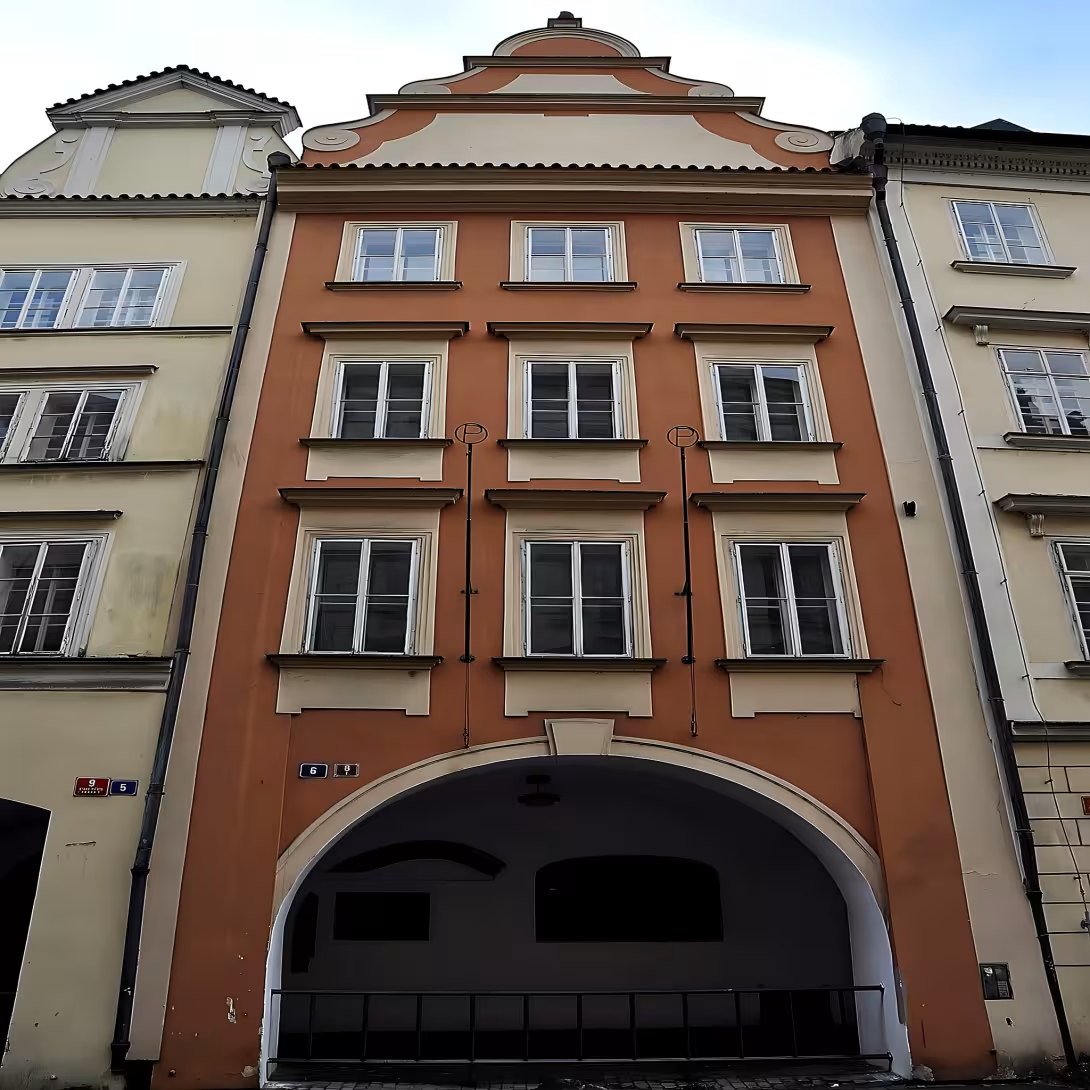
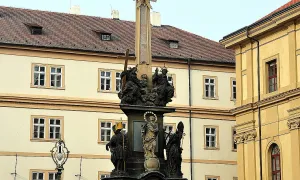
The House U Yellow Statue, also known as the Blue Column or U Ridge, is a historical monument in Prague's Small Square in the village Praha 1. This gothic object with descriptive number 8 has a rich history and architectural changes recorded over the centuries. It is protected as a cultural monument of the Czech Republic and stands between the houses U Trí lip and U Trí chimney.
The first mention of the yard dates back to 1401, which suggests its long history. It was originally a Gothic house built in several stages. The first extension dates back to the end of the 14th century, when an arch was built in the yard. This early Gothic style is characteristic of its architectural structure.
In the Renaissance period between 1531 and 1551 there was a significant change when the house was raised to two floors. This development was undertaken by the source Chmel ze Semechova, which at the time had a house. Another reconstruction took place before 1726 and in 1807 the house underwent a classical reconstruction under the direction of architect Zacharias Fiegert.
In the second half of the 19th century, namely in 1834, a late classicist tank was built in the yard, which was recently restored. This element adds additional historical value and points to continued efforts to preserve the monument.
In the 20th century there were several major events that affected the construction. In 1952 the court building was demolished and two years later, in 1956, the house was adapted. These changes indicate the dynamic history of the object and its ability to adapt to new conditions.
Today dům U Žluté sochy is not only a monument with rich history, but also a place worth visiting. Its location in the Small Square in Prague 1 makes it easily accessible and offers tourists an opportunity to explore the history of the Old Town. The preservation of its architectural elements, such as a late-classicist tank, gives visitors a valuable insight into the past.
The House of the Yellow Sculpture represents not only architectural value, but also testimonies of historical changes and adaptations to which home was subject. It's a monument that tells the story of the city and its inhabitants through the ages. Exploring it means not only appreciating its beauty, but also understanding the complex historical context in which it evolved. Visiting this place offers a unique view of the past and recalls the importance of preserving cultural heritage for future generations.
Historical milestones
- 1401
- First mention of the house
- 1531-1551
- Increase the house to two floors
- 1807
- Classicist reconstruction
- 1952
- Deforestation
Architectural development
Originally, the Gothic house was extended by the archway before the end of the 14th century. In the Renaissance period it was raised to two floors and in 1807 it underwent a classical reconstruction. In the yard there is a late classicist tank from 1834.
Historical events
1401: First mention of the house; 1531-1551: Increase the house to two floors; 1807: Classicist reconstruction; 1952: Breaking down the yard.
Owners
Chmel ze Semechova (between 1531- 1551)
Points of interest
- The House of the Yellow Sculpture has the descriptive number 8 and is located in the Small Square in Prague 1. - The first mention of the yard dates back to 1401, which suggests a long history. - In the Renaissance period between 1531 and 1551 there was a significant change when the house was raised to two floors by the Chmel ze Semechova. - In the second half of the 19th century, namely in 1834, a late-classicist tank was built in the yard. In 1952, the court building was demolished and two years later, the house was adapted.
Guide
Show guide text
This text was created by artificial intelligence and has not been editorially reviewed. It may contain inaccuracies.
Welcome to the Small Square in the heart of Prague, where the historical monument known as the Yellow Statue House is spread out in front of you. This majestic object that stands before you is witness to many ages and stories that he carries with pride. Look up and you'll see his impressive facade, which tells about the long history of transformations and architectural styles.
The Yellow Sculpture House has roots dating back to Gothic, but its present appearance is the result of several reconstructions. The first mention of this house dates back to 1401, indicating its long history and importance in the Middle Ages. During the Renaissance period between 1531 and 1551 there was a significant change when the house was raised to two floors by the Chmel ze Semechova. This act not only changed the physical appearance of the house, but also its position in society.
Let's move on to architecture and specific details that you can notice. The house is known for its classical reconstruction from 1807, carried out according to the design of Zacharias Fiegert. This phase has brought new aesthetics and structure that still affect the perception of this historical object.
The key story associated with this monument is the figure of Chmel of Semech. His decision to raise the house to two floors in the Renaissance period was not only an architectural but also a social gesture that reflected his position and ambition. The house became a symbol of power and prestige.
The interesting thing is that dům U Žluté sochy was also known as U Blue Column or U Ridge. These different markings reflect its changing history and importance to the people of Prague.
Now that you have learned a little more about this fascinating monument, I invite you to explore the Small Square and its surroundings. Every stone here speaks its history, every alley has a story. I hope you will enjoy going through this rich cultural heritage and discovering new aspects of Prague. Goodbye and hopefully we'll meet again in this historic place!
Tips for visitors
For the best experience we recommend a visit on bright days when light is beautifully reflected from historical facades. The best time to observe the details of the building is in the morning when the lighting is natural and balanced.
Transport to this part of Prague is very easy through urban connections; Please check the current timetable and routes in the internet search engine.
Take with you especially comfortable shoes suitable for historic paving streets and possibly a bottle of water. If you are planning a longer walk, it is good to have change for possible shopping nearby.
For photography are the most suitable places in the Small Square, from where the house is well seen. The best light for architecture images can be obtained during morning or late afternoon hours when shadows are softer.
You can take a tour nearby A small square or take a walk to the Old Town, which is all within walking distance. It is best for families with children to choose a slow pace to enjoy the atmosphere of historic alleys in peace.
Frequently asked questions
Can the monument be visited?
This is a residential or farm building, not a museum with opening hours. Please view it from public space and respect the owners' privacy. We have no information about access to the interior.
Where is the monument?
Location: Praha 1, Hlavní město Praha. The map on this page shows the exact spot.
Why is the monument protected?
It is listed in the Central List of Cultural Monuments of the Czech Republic as a cultural monument (register no. 1000150190).
Businesses nearby
Do you run a restaurant, accommodation, shop, museum, rental, wellness or other visitor service near this monument? Show yourself directly to the people heading to it — this is how they will see you in the app and on the web:
Events nearby

Zdroj akcí: otevřená data měst a obcí ČR (Národní katalog otevřených dat) a kalendář akcí Národního památkového ústavu.
Nearby
Malé náměstí a Staré Město v Praze.
Accommodation nearby
Trips and activities nearby
Guided tours, tickets and activities nearby from GetYourGuide
Affiliate link: if you buy from the partner, we may receive a commission. The price for you does not change.
Search tours and activities →Themed route
Thematic cruise route: Old Town and Small Square
1. House By Yellow Statue (House) This historic house is one of the oldest buildings in Prague, famous for its unique architecture and interesting history. Worth visiting for lovers of old monuments and the history of the city.
2. Small Square (Square) This place is the perfect starting point for exploring the Old Town. The square is famous for its beautiful Baroque houses and is the center of many cultural events.
3. Old Town Hall (Town Hall) This famous monument with the tower of the Virgin Mary is an icon of the Old Town. It is advisable to visit for its historical importance and impressive architecture.
4. Old Town Square (Square) Nearest to the Yellow Statue Dome, it's the heart of Old Town. The square is famous for its beautiful Gothic architecture and is the center of many events.
5. Old Town Bookstore One of the oldest bookshops in Europe, which offers a rich collection of old and new books. It's the perfect place for literature lovers.
This route will guide you through the beautiful Old Town of Prague, where you can appreciate the history and architecture of one of the oldest parts of the capital.
Seasonal recommendations
Spring: In the spring season dům U Žluté sochy is lit with warm rays of the sun, which decorate green trees and flowering shrubs around the historical monument. The atmosphere is full of new life and hope, which may be the perfect time to visit without too many crowds. It is recommended to arrive in the early afternoon when the temperature is pleasant and the crowds are minimal. Good shoes with tight soles are suitable for walking on possible rough roads.
Summer: In the summer months dům U Žluté sochy is surrounded by lively nature, which offers beautiful green spaces to relax and relax. The atmosphere is full of energy and sunlight, but the number of visitors increases as the temperature rises. It is recommended to arrive in the early afternoon or at the end of the day to avoid heat and crowds. Light clothing and sun protection are crucial for a comfortable visit.
Autumn: In the autumn months the surrounding dům U Žluté sochy has colour shades, when tree leaves go to gold and red colors. The atmosphere is calm and mild, making this time ideal for visiting without great crowd pressure. It is recommended to come at noon when the temperature is still pleasant, but the days are getting shorter. The warm coat and moisture protection are suitable for the autumn visit.
Winter: In winter months, dům U Žluté sochy offers a unique atmosphere where the surrounding area is covered with snow and the sun's light is projected into roofs and facades. Despite beauty, a visit in winter months can be associated with lower temperatures, which affects the opening times of the sights. It is recommended to come early in the morning or at noon when the temperature is slightly higher, and to be dressed well with a warm coat, fur coat and moisture protection.
Visualizations and artistic views


The visualisations are generated by artificial intelligence and serve as inspiration.
Photos from the area
Real photos taken near the monument


Zdroj a licence jsou uvedeny u každého snímku.
Tips from visitors
No tips yet. Be the first!
Log in and add your tip.
Sources and literature
Photos: Ben Skála / CC BY-SA 3.0, rozlišení zvýšeno umělou inteligencí — Wikimedia Commons. The author and licence also appear when you hover over the image.
Faktickým podkladem tohoto textu byl článek na Wikipedii, jehož autory jsou přispěvatelé Wikipedie. Článek je dostupný pod licencí CC BY-SA 4.0.
Location on the map
Příběhy a pověsti
Legendy, pověsti a příběhy spjaté s touto památkou
Fotografie návštěvníků
Zatím žádné fotografie. Buďte první, kdo přidá fotografii z návštěvy!
Log in a přidejte svou fotografii nebo hodnoťte.
Za ověřenou návštěvu v aplikaci získáte víc bodů — poznáme podle GPS, že jste na místě.
Reviews and comments