






Staré Město Historic centre
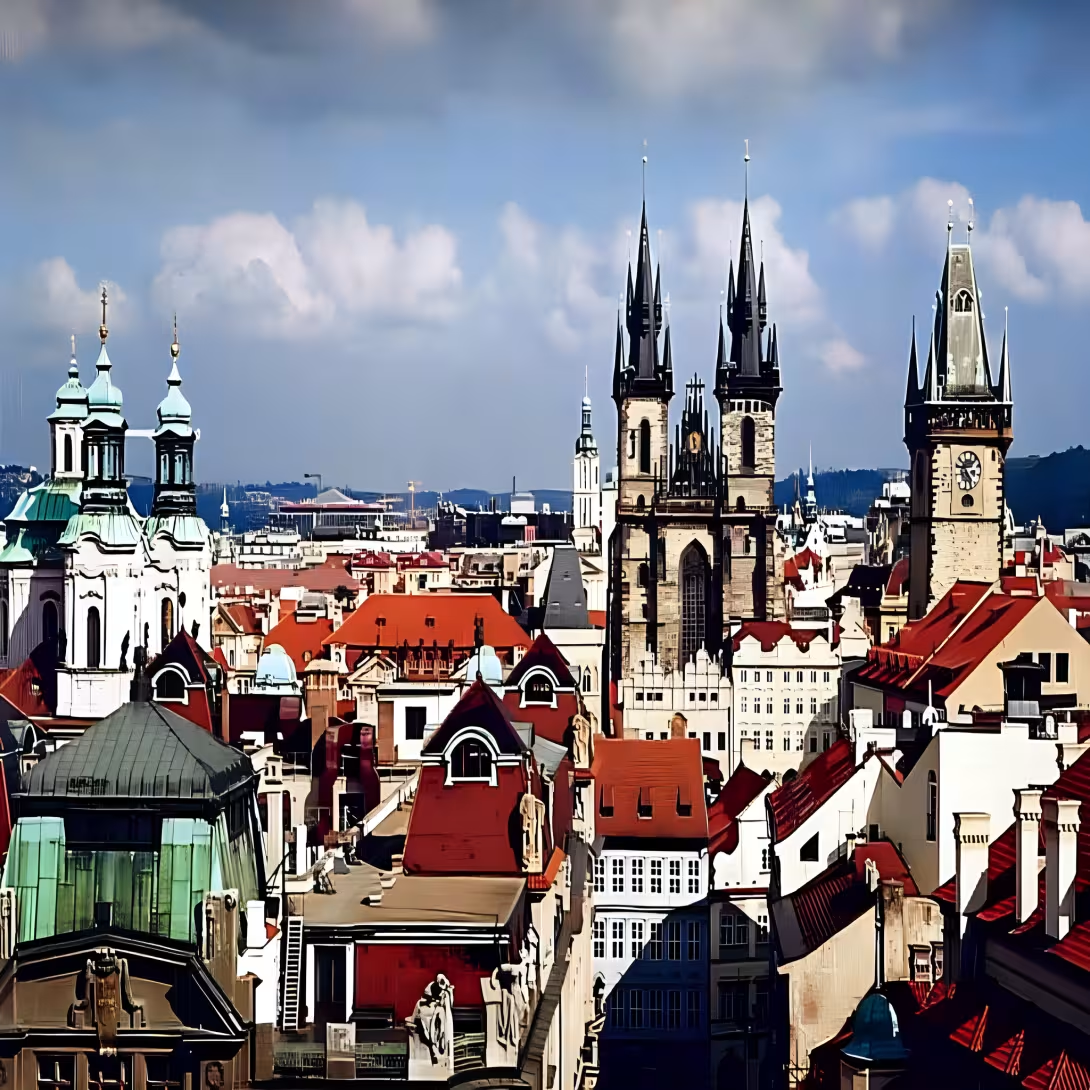
Staré Město occupies an area of 129 hectares and is among the most difficult parts of Prague 1. In the west and the north, it is bounded by the river Vltava, which separates it from Mala Strana and Holešovice, while in the east and south it is adjacent to the New Town. In its tight construction it also hides the smallest Prague district of Josefov and the attached Shooting Island.
The territory of today's Old Town has been inhabited since ancient times, but the first specific references point to the existence of tribal units in the 8th century. The first documents of Christian architecture in Prague came from the end of the 9th century, and already in the 10th century, Praha became the centre of the Premioned State. Evidence of the dense settlement of the Vltava banks is provided by the report of the medieval Chronicator of the Comas on the devastating flood of 1118. The first significant construction achievement was the construction of a stone bridge in 1172, which bears the name Judith, the wife of King Vladislav II.
The actual creation of the Old Town as an organized city unit took place gradually during the 13th century. The crucial moment was when between 1232 and 1234 the so-called Havel City was established for Bavarian buyers, founded by the king appointed by the locator Eberhar. After a straight street line, which can still be seen in the Knights street route, the city walls were exposed. By extending them to the Vltava River, the entire area of the later Old Town was gradually fortified. Originally, an unorganized settlement under the protection of the walls was rapidly transformed into a connected city body. Until 1287, the development continued when the city of Havel was legally connected to the Old Town, creating a single urban area. Only the Jewish ghetto and some of the church majetics remained independent.
The security and economic benefits of medieval life were attracted by the orders: in the first half of the 13th century, six new monasteries were created, which became spiritual and economic support. During the 13th and 14th centuries, the city was dominated by a wealthy, mostly German-speaking elite, but it changed over time. Since the second half of the 14th century, craftsmen of the association gained an ever greater influence on administration. The same period resulted in the gradual conception of urban culture. The growing confidence of the township corresponded to the permission of King John of Luxembourg from 1338 to build its own town hall. Its core was the house of the buyer Wolflin of the Stone on the corner of Old Town Square, to which was later connected the tower, chapel and famous Old Town Clock, which became one of the most famous symbols of Prague over the years.
When Karel IV. founded New Town in 1348, the role of Old Town changed. While both cities held joint councils in the wider modern period, Staré Město has maintained its dominance for decades. At the end of the 14th century there was a gathering of spiritual and intellectual peace, which later culminated in the reform movement. In this way, Staré Město has ceased to be a mere economic and administrative unit and has become the center of political and thought changes in Central Europe. .
Then and now
Drag the slider to compare how the landmark may have looked when it was built with the view today.
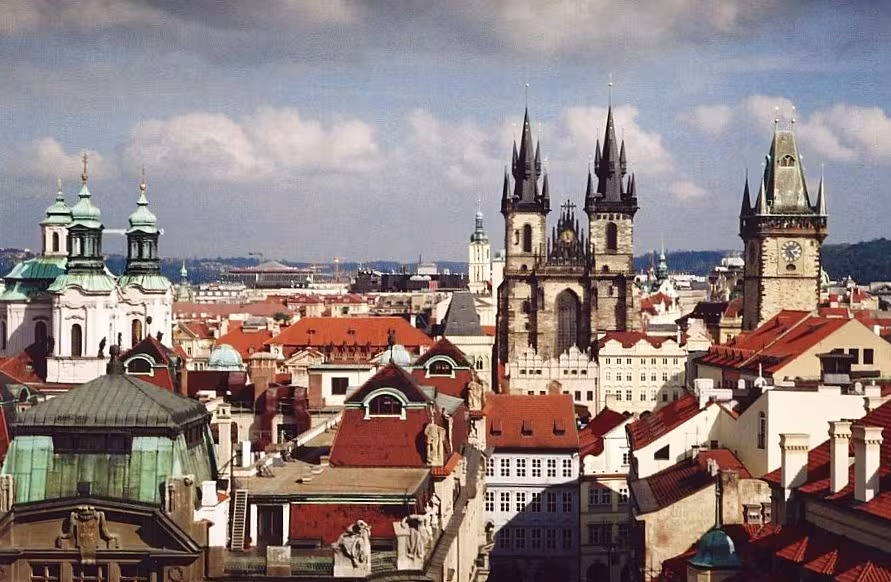
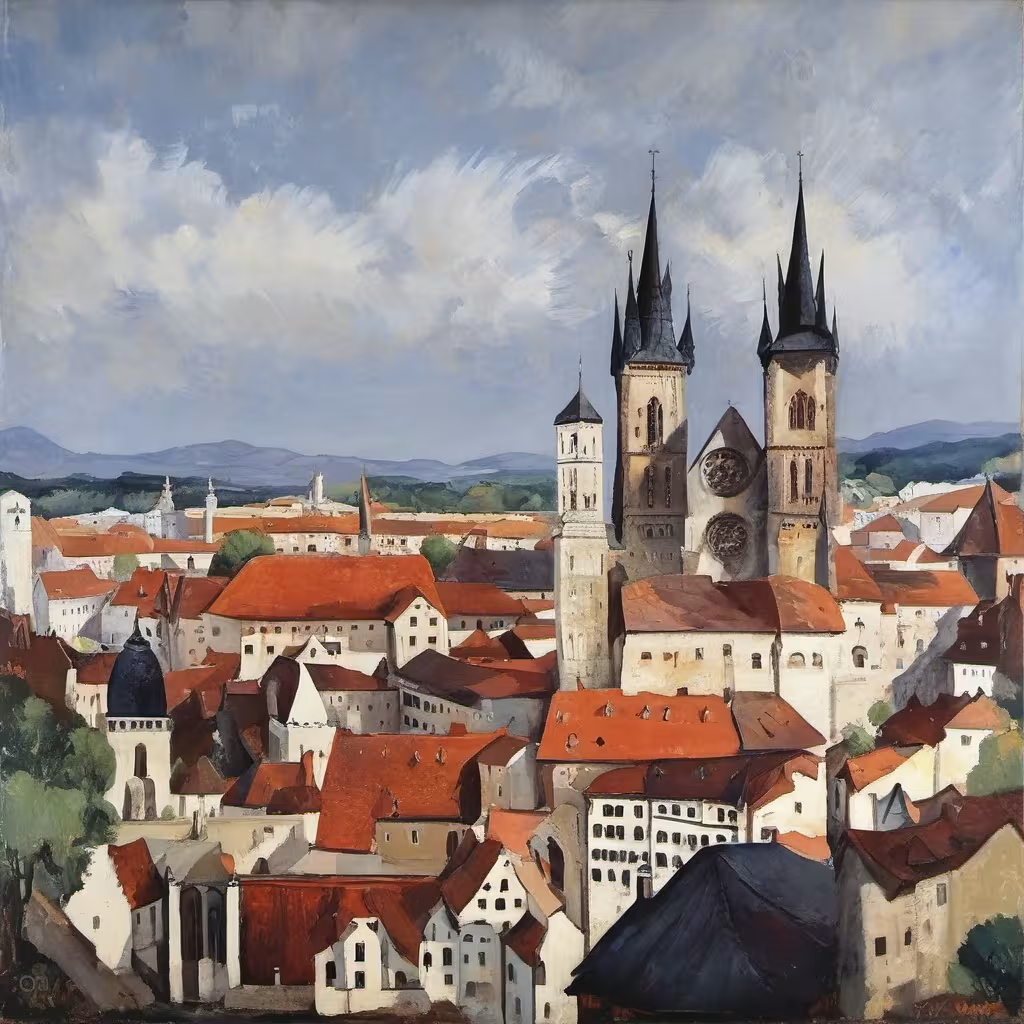
The historical appearance on the left is an AI-generated visualisation and serves as inspiration only.
Historical milestones
- 1232
- Václav I. Grants Prague's first privileges and rights
- 1338
- Karel IV.
Architectural development
The founding of the so-called Havel City (New Town at St. Havel) was crucial for Bavarian buyers by the royal locator Eberhard between 1232-1234. Originally fragmented settlements with individual settlements and individually fortified objects were quickly transformed into continuous urban settlements inside the walls.
Historical events
- 929
- tearing down the wooden bridge with great water
- 1118
- flood that took many houses in prague
- 1172
- completion of the stone bridge over the river Vltava
Owners
Medieval municipality Staré Město; since 1784 connected with other Prague cities in the unified municipality of Prague; Part of the capital Praha.
Points of interest
The territory of Prague today has been inhabited since prehistoric times.
The first stone bridge over the river Vltava was completed in 1172 and named after the wife of King Vladislav II. Judith Bridge.
In the 1990s, craftsmen began to join in the guilds and in the second half of the 14th century they gained a greater share of the city administration.
Guide
This guide is narrated by a synthetic voice generated by artificial intelligence.
Show guide text
This text was created by artificial intelligence and has not been editorially reviewed. It may contain inaccuracies.
Welcome to the heart of Prague. Right now, at this moment, you're standing in a place that represents the very beginning of this city's story. You are surrounded by Staré Město, the oldest city square in Prague, and although you may find yourself moving in a dense network of streets and buildings, each of them carries a foot of centuries. Do you feel that strange atmosphere floating here? It is a feeling of a place that has been inhabited since the time of memory, since the prehistoric times, when people first began to search for safety and resources near water.
Now let's look together at how this place came to be. What you see around you is not the result of chance, but of a gradual and fascinating process. This whole territory, which is situated on the right bank of the Vltava, began to form as a real city mainly during the 13th century. Before, however, there was no solid structure. Imagine this place as a collection of fragmented, disorderly settlements where houses and cottages were scattered without a clear order. But it was in the Middle Ages that this chaos began to turn into a whole inner city. This square became the true cradle of Prague's urban life, a place where trade, craft and power clash.
Now pay attention to how the city developed in time. Even though you're moving between buildings today that form a solid and stationary structure, look at the overall architecture of this place. Notice how the streets are twisting and how the buildings seem to be close together. This dense urban character is a direct consequence of medieval development. Feel the density, the organic structure, which developed gradually, how the city grew and how the original small settlements became an organized centre. Look at the facade of the buildings around you and try to see the glare of the time when the city began to build as a solid whole. Although individual details may seem inconsistent, this whole square forms one large, historical whole that shows how people managed to organize themselves and create permanent homes.
To understand the importance of this place, we need to look at the key events that have shaped the lives of the people here. One of the most important moments that fundamentally affected life in this part of town was the connection to the other side of the river. Did you know that the first stone bridge through Vltava was completed in eleven hundred seventy-two? This bridge was not only a construction work, but a symbol of progress. He was named after Judith, the wife of King Vladislav II, and became a key artery for the entire region. This bridge has allowed the city to grow and deepen its links.
Another important figure, even inindividually present, is the very socialism that built this city. In the nineties of the fourteenth century, a major turnaround took place here. The craftsmen, the people who formed the backbone of everyday life, began to come together in guilds. These guilds were not just groups of people doing the same work, but they became strong organizations. In the second half of the fourteenth century, these craftsmen gained a much greater share of the city's management and development. That means that it was their work, their art and their efforts to improve their surroundings that shaped what you see around you today. The city was not only made up of kings or nobility, but above all by these hardworking people who built their future on its streets.
If you're looking for something that really surprises you, think about what's under your footsteps. There is one fascinating thing that links this urban tourism to the deep past. Even if you're moving in the heart of a built medieval city, this territory has been inhabited since ancient times. This means that beneath the layers of stone, bricks and paved streets lies traces of human life that are much older than it seems at first sight. Every step you take is basically a step through the millennia of human existence. This connection between the prehistoric settlement and the built city of the 13th century gives this place an unrepeatable depth.
Now, however, we will not keep you in one place for too long. Staré Město is too rich to be able to examine in a single moment. I suggest you continue along these narrow streets, let yourself drift through their atmosphere and look around you with the attention you have just gained. Every corner, every corner and every building can hide another story about how a small settlement has become the heart of all of Prague. I wish you a beautiful journey through this historic heritage and enjoy every moment you spend in this unique place. Goodbye.
Tips for visitors
For the best experience we recommend a visit early in the morning or late in the evening, when historic streets are quieter and avoid the biggest crowds of tourists. In these times, the atmosphere is most magical.
It is best to arrive in the centre by public transport because parking in this part of the city is very challenging and expensive. Check current connections and timetables in the search engine or mobile application of the transport company.
Don't forget to wear comfortable shoes, water, and a plateau card or change for shopping in local stores.
For photography are the best places in the Old Town Square and in narrow streets during the golden hour, when light beautifully highlights historical facades and architecture details.
If you are visiting a memorial with family and children, prepare yourself for quite a lot of walking on an uneven surface. In the vicinity, which can be visited during a short walk, you will find, for example, the Small Side or the Shooting Island.
Frequently asked questions
What is a Prague astronomical clock?
The Prague astronomical clock is the oldest functional astronomical clock in the world, installed at the Old Town Hall in 1410. It shows the time, the motion of the sun and the moon, the zodiac and the phases of the moon. Every hour from 9: 00 to 9: 00, a parade of 12 apostles passes.
Where was Franz Kafka born?
Franz Kafka was born on July 3, 1883 in the House of the Tower on the corner of Maisel and Kaptiva street, just off Old Town Square. In Prague he lived almost his whole life and Prague's environment strongly influenced his literary work.
What are 27 crosses in Old Town Square?
Twenty-seven white crosses in the pavement of the Old Town Square commemorate the executions of 27 leaders of the anti-Habsburg uprising, held on 21 June 1621 after the defeat of the State uprising in the Battle of White Mountain. It is one of the most important commemorative places in the Czech Republic.
For kids
Imagine going back 796 years to the past. You have an ancient city ahead of you that looks very different than today's Praha. This is Staré Město, one of Europe's oldest city centers.
Did you know that the first wooden fortification was built here in the 9th century? It was the beginning of the history of this place. How did it look here? There was only a rock with a river called Vltava and there were small wooden houses around it. Who lived here? They were craftsmen, merchants and artists.
Businesses nearby
Natáčelo se zde
- Lucie a zázraky (1971) film
Zdroj: Wikidata (vlastnost „místo natáčení“) · Všechna filmová místa
Events nearby

Zdroj akcí: otevřená data měst a obcí ČR (Národní katalog otevřených dat) a kalendář akcí Národního památkového ústavu.
Nearby
Holešovice, Small Page, Smíchov, Shooting Island
Accommodation nearby
Trips and activities nearby
Guided tours, tickets and activities nearby from GetYourGuide
Affiliate link: if you buy from the partner, we may receive a commission. The price for you does not change.
Search tours and activities →Themed route
1. Smíchov, district: Great place to start tour of the urban areas. It offers an interesting atmosphere for the start of the trip. 2. Small Side, Quarter: Historical area with narrow streets. It is ideal for observing classical architecture before visiting the center. 3. Staré Město, historical center: The main destination of your trip and the heart of the city. You will find here the greatest concentration of historical details. 4. Shooting Island, island: Ideal place for a short rest by the water. It provides a pleasant space for relaxation near the center. 5. Holešovice, district: A more modern part for finishing the route. It offers a different view of urban construction.
Seasonal recommendations
In spring, the centre awakens into life, underlining blooming trees and fresh air. The atmosphere is full of hope and the light is fine, which is ideal for shooting historical facades. I recommend wearing layered clothes because the morning cold can quickly replace the warm noon. The best time is early morning hours before the streets fill with the first wave of visitors.
The summer season brings intense sun and hot air which is reflected from historical tiles. The city is pulsing with energy and is full of life, but narrow streets are very crowded in the season. It is necessary to choose light, breathable clothes and to come very early in the morning to avoid the greatest crowds and midday heat.
Autumn covers the city in golden colours and morning fog gives monuments a mysterious, melancholy mood. Lighting is soft and warm in this period, which highlights the details of architecture. It is practical to have a waterproof jacket with you and plan for walking to afternoon hours when the temperature is more pleasant and the number of tourists is falling.
In winter it dominates the freezing air and holiday lighting, which creates a cozy and magical atmosphere. In advent time, the streets are full of anticipation and fragrance of spices. Due to short days and low temperatures warm thermal clothing is necessary. I recommend counting on shorter opening times of some objects and visiting the center in the morning.
Visualizations and artistic views


The visualisations are generated by artificial intelligence and serve as inspiration.
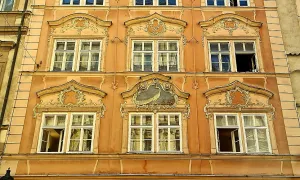
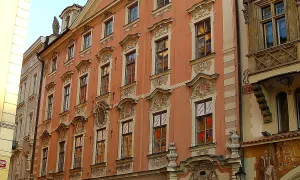
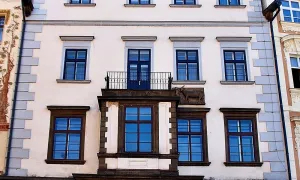
Photos from the area
Real photos taken near the monument

Zdroj a licence jsou uvedeny u každého snímku.
View from the area
This animation was generated by artificial intelligence from a real photograph of the surroundings. The motion and details are not real footage of the location.
Tips from visitors
No tips yet. Be the first!
Log in and add your tip.
Sources and literature
Fotografie: Maros M r a z (Maros) / CC BY-SA 3.0, rozlišení zvýšeno umělou inteligencí — Wikimedia Commons. The author and licence also appear when you hover over the image.
Faktickým podkladem tohoto textu byl článek na Wikipedii, jehož autory jsou přispěvatelé Wikipedie. Článek je dostupný pod licencí CC BY-SA 4.0.
Location on the map
More monuments – Praha 1
Show all in the municipality

Příběhy a pověsti
Legendy, pověsti a příběhy spjaté s touto památkou
Fotografie návštěvníků
Zatím žádné fotografie. Buďte první, kdo přidá fotografii z návštěvy!
Přihlaste se a přidejte svou fotografii nebo hodnoťte.
Za ověřenou návštěvu v aplikaci získáte víc bodů — poznáme podle GPS, že jste na místě.
Reviews and comments