






Sloup Nejsvětější Trojice (Malá Strana) Plague column
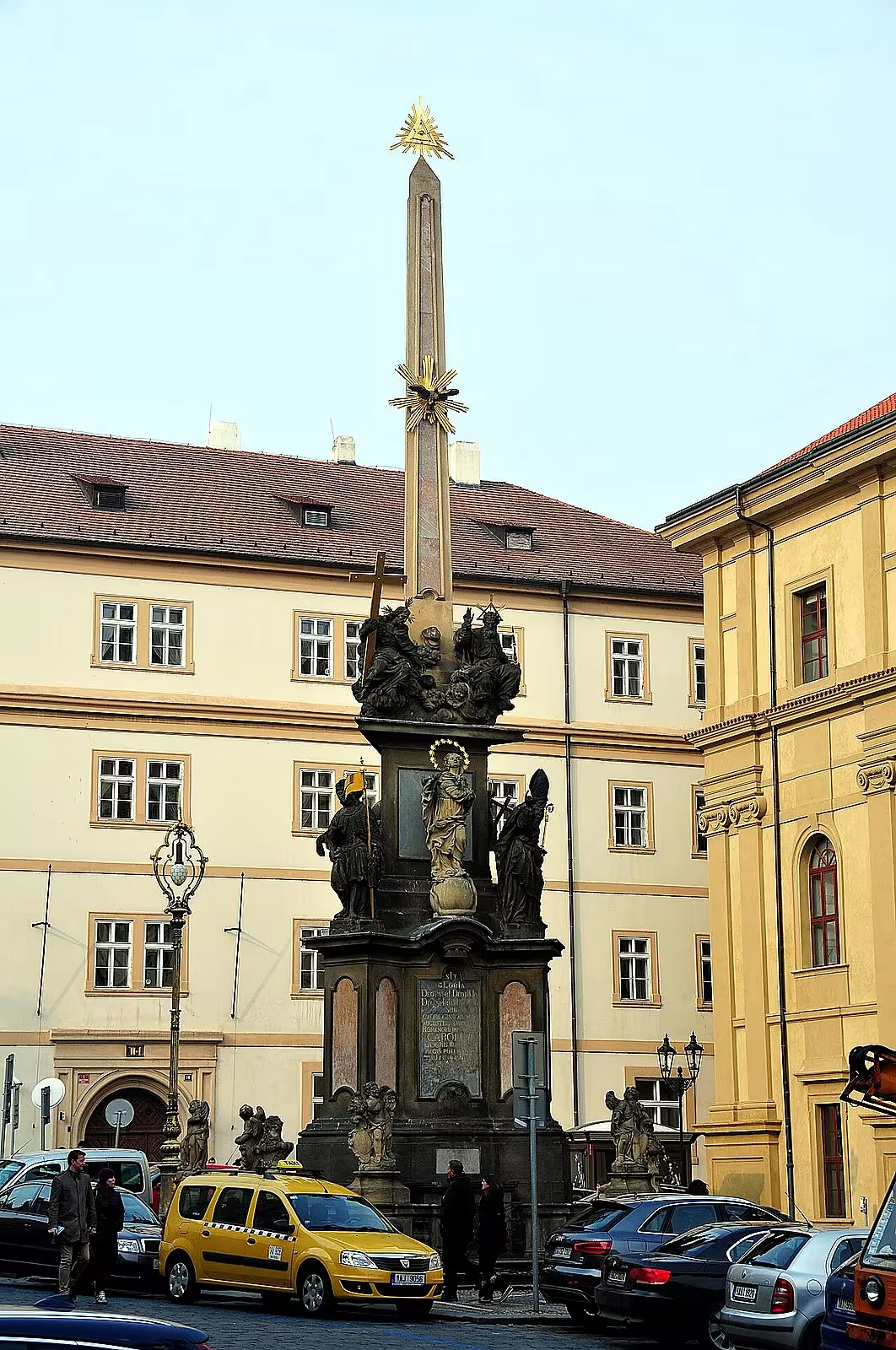
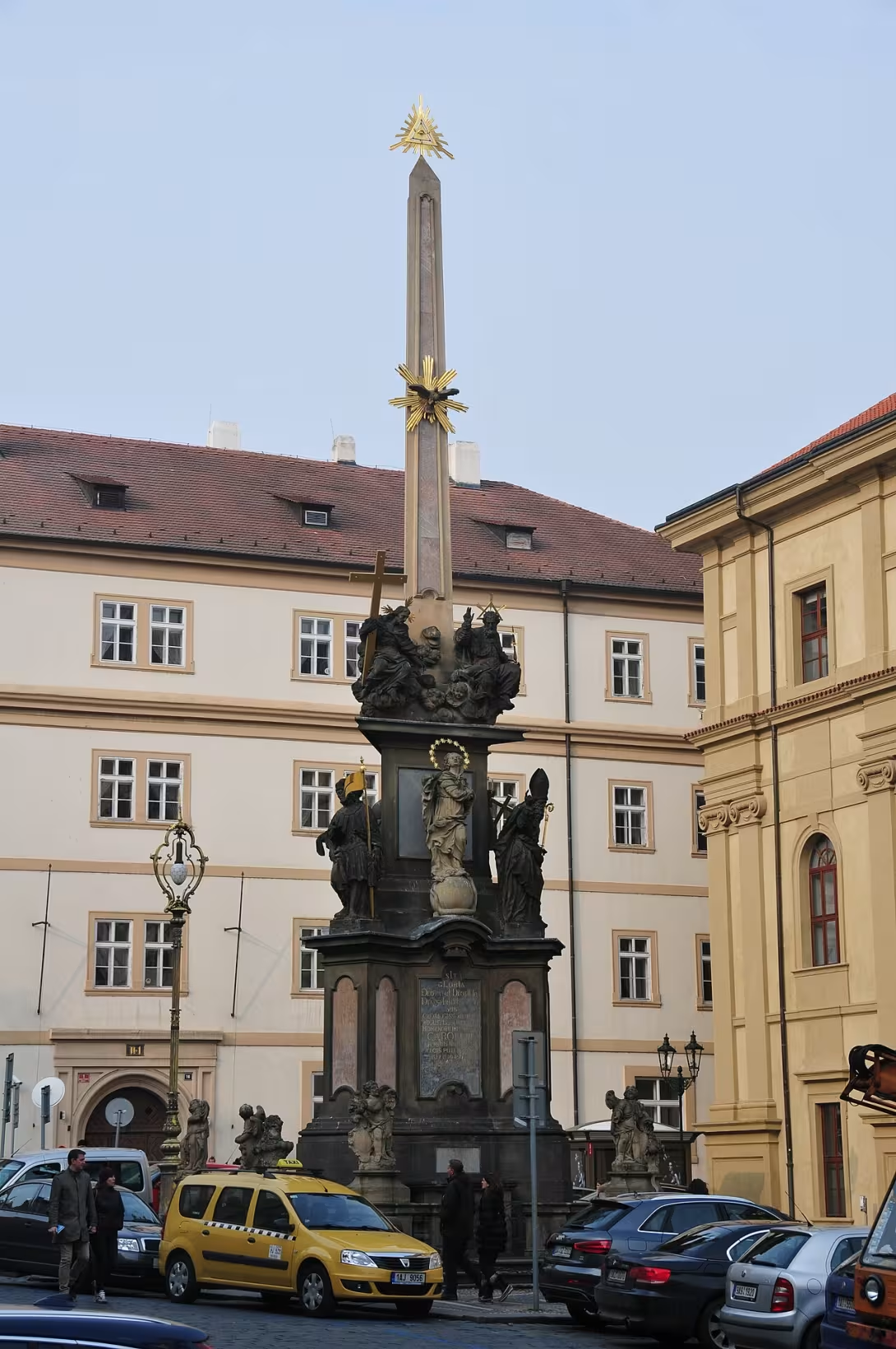
The Holy Trinity Column in Malá Strana stands as a testament to historical resilience and Baroque artistry. Located in Prague's Malá Strana district, this prominent Baroque plague column was erected in 1715 to commemorate the end of a devastating epidemic that began in 1713. Designed by Giovanni Battista Alliprandi and constructed by Franz Wolfgang Herstorfer, it features sculptures crafted by Jan Oldřich Mayer and Ferdinand Geiger, with additional work by František Ignác Platzera. The column is adorned with symbolic representations including the Holy Trinity, patron saints of Bohemia, and a depiction of the Immaculate Virgin Mary.
The monument's origin dates back to 1713 when it was erected as a votive offering for the cessation of the plague epidemic that had ravaged the region. Initially intended to be dedicated to St. Wenceslas, its dedication was changed at the request of the Czech Chancellery in Plzeň to honor the Holy Trinity instead. This change reflects both religious devotion and cultural identity during a time when Bohemia was part of the Habsburg Monarchy, experiencing significant cultural and political developments.
Architecturally, the Holy Trinity Column is a quintessential example of Baroque style, characterized by its grandeur and intricate details. The structure features a three-sided obelisk topped with a symbol representing God's eye, surrounded by a balustrade adorned with putti and vases. These elements enhance its aesthetic appeal and imbue it with symbolic meaning, reflecting the religious fervor of the period.
Throughout its history, the column has undergone modifications that reflect its enduring significance. In 1772, additional decorative elements were added following a severe famine, further enriching its artistic and historical value. These changes underscore the monument's role as both a spiritual symbol and a witness to the trials faced by the community it serves.
Today, the Holy Trinity Column stands in Malostranské náměstí, surrounded by other Baroque buildings and monuments that contribute to Prague's iconic skyline. Its preservation allows visitors to appreciate not only its artistic beauty but also its historical context as a symbol of hope and resilience. The column remains accessible to tourists, offering a glimpse into the rich cultural tapestry of early 18th-century Bohemia.
Visiting the Holy Trinity Column provides an opportunity to connect with a pivotal moment in history while appreciating the artistry that defines Baroque architecture. Its presence in Prague's Malá Strana district invites exploration and reflection on its enduring legacy, making it a must-see for anyone interested in the intersection of history, religion, and art.
Then and now
Drag the slider to compare how the landmark may have looked when it was built with the view today.

The historical appearance on the left is an AI-generated visualisation and serves as inspiration only.
Historical milestones
- 1713
- Začátek morové epidemie.
- 1715
- Výstavba Sloupu Nejsvětější Trojice dokončena.
- 1772
- Přidání dekorativních prvků po hladomoru.
Architectural development
Originally intended to be dedicated to St. Wenceslas, the column was instead consecrated to the Holy Trinity at the request of the Czech Chancellery in Plzeň. The structure features a three-sided obelisk topped with a symbol of God's eye and is surrounded by a balustrade adorned with putti and vases.
Historical events
The column was completed in 1715 as a votive offering for the cessation of the plague epidemic that began in 1713.
In 1772, additional decorative elements were added following a severe famine.
Guide
This guide is narrated by a synthetic voice generated by artificial intelligence.
Show guide text
This text was created by artificial intelligence and has not been editorially reviewed. It may contain inaccuracies.
On the Malostranské Square in Prague stands a Late Baroque plague column of the Most Holy Trinity. It was created as thanksgiving for averting a plague epidemic from the year 1713 and was completed in 1715.
The architectural design was prepared by Giovanni Battista Alliprandi. The stonemason Franz Wolfgang Herstorfer erected the column and the sculptural decoration was created by Jan Oldřich Mayer and Ferdinand Geiger. The construction was paid for by the Menší Město pražské together with residents who contributed their own gifts.
The column was originally meant to be dedicated to Saint Václav. However, the Czech office, which was then headquartered in Plzeň, requested a change, and so the column dedicated to a saint became a Trinity column.
The top is formed by a three-sided obelisk, on whose point is the symbol of the Eye of God. Below it is depicted the Most Holy Trinity, namely Christ, God the Father, and the dove of the Holy Spirit. One story lower stands the statue of the Virgin Mary Immaculata and statues of Czech patrons: Saint Vojtěch, Jan Nepomucký, Prokop, Ludmila, and Václav.
The lower part of the column is formed by a tall pedestal with marble inscription plaques, fountains, and a mensa, that is an altar table. The whole structure stands on a low stepped base, which is bordered by a balustrade. Small statues of cherubs called putti and vases were added to it only after the great famine of 1772. They come from the workshop of František Ignác Platzer. The column is further surrounded by stone bollards connected by chains. In the paving in front of its main side is a cross with the year 1882.
On August 16, 2023, the column was damaged by a lightning strike.
Tips for visitors
The best time to visit the Sloup Nejsvětější Trojice is during late spring or early fall when the weather is pleasant, allowing you to comfortably explore Malostranské náměstí and its surroundings. These seasons offer optimal lighting for photography and fewer crowds compared to summer months. Additionally, visiting on a weekday can provide a more serene experience as weekends tend to attract larger groups of tourists.
For transportation, the Sloup Nejsvětější Trojice is easily accessible by public transport or car. The area around Malá Strana is well-served by Prague's metro and tram systems, with several lines stopping nearby. Always verify current routes and schedules through a local transport app or website.
When visiting, consider bringing comfortable walking shoes as exploring the cobblestone streets of Malá Strana can be more enjoyable on foot. A camera is recommended to capture the stunning Baroque architecture and vibrant atmosphere of the area. Additionally, carrying a map or using a navigation app will help you navigate the historic district with ease.
For photography enthusiasts, early morning offers soft natural light that beautifully highlights the intricate details of the Sloup Nejsvětější Trojice and surrounding Baroque buildings. The column is best photographed from Malostranské náměstí for a clear view against Prague's skyline. Exploring nearby streets can also reveal charming angles and perspectives.
Nearby attractions within a 30-minute walk include the Church of St. Nicholas, known for its stunning frescoes and historical significance, and the Spanish Synagogue, which showcases exquisite Moorish architecture. Both are perfect for extending your exploration of Prague's rich cultural heritage.
For families with children, visiting the Sloup Nejsvětější Trojice can be both educational and entertaining. The column itself is a fascinating piece of history that tells a story of resilience against adversity. Nearby, Malá Strana offers several family-friendly cafes where you can relax after your exploration. Engaging children with stories about the plague and its impact on Prague can make the visit more meaningful.
Frequently asked questions
Can the monument be visited?
This is a structure in a public space that can usually be seen from outside free of charge. We have not verified that this particular one is freely accessible.
Where is the monument?
Location: Praha 1, Hlavní město Praha. The map on this page shows the exact spot.
Why is the monument protected?
It is listed in the Central List of Cultural Monuments of the Czech Republic as a cultural monument (register no. 1000150892).
Businesses nearby
Do you run a restaurant, accommodation, shop, museum, rental, wellness or other visitor service near this monument? Show yourself directly to the people heading to it — this is how they will see you in the app and on the web:
Events nearby

Zdroj akcí: otevřená data měst a obcí ČR (Národní katalog otevřených dat) a kalendář akcí Národního památkového ústavu.
Nearby
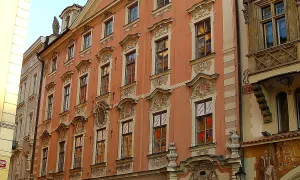
Located in Malostranské náměstí, the area is rich with historical architecture including other Baroque buildings and monuments, set against the backdrop of Prague's iconic skyline.
Accommodation nearby
Trips and activities nearby
Guided tours, tickets and activities nearby from GetYourGuide
Affiliate link: if you buy from the partner, we may receive a commission. The price for you does not change.
Search tours and activities →Themed route
Tematická výletní trasa: Barokní krása Malé strany
1. Sloup Nejsvětější Trojice (Malá Strana)
Typ: Morový sloup
Proč stojí za návštěvu: Tento impozantní morový sloup, postavený v roce 1683, je jedním z nejznámějších barokních památek Prahy. Jeho bohaté sochařství a architektonická krása představují úspěšnou akci proti moru v 17. století, což činí z něj nejen historicky, ale i umělecky zajímavým místem.
2. Kostel svatého Mikuláše
Typ: Barokní kostel
Proč stojí za návštěvu: Nacházející se v blízkosti Sloupu Nejsvětější Trojice, Kostel svatého Mikuláše je příkladem barokní architektury s bohatými interiéry. Jeho krásná fasáda a vnitřek jsou plné detailů, které odrážejí duchovní i uměleckou hodnotu doby.
3. Kostel svatého Jiljí
Typ: Barokní kostel s gotickými prvky
Proč stojí za návštěvu: Tento kostel je známý svým jedinečným architektonickým směsím, kde se setkávají gotika a baroko. Jeho výhled z vyššího terénu nabízí jedinečné pohledy na Prahu, což ho činí ideálním místem pro relaxaci po návštěvě dalších památek.
4. Kostel svaté Anny
Typ: Barokní kostel
Proč stojí za návštěvu: Kostel svaté Anny je známý svou výškou a elegantní barokní architekturou. Jeho výhled z vyhlídkového patra nabízí jedinečný pohled na Pražský hrad a další části starého města, což ho činí nejen duchovním centrem, ale i ideálním místem pro milovníky panoramatických výhledů.
Tato trasa nabízí návštěvníkům možnost seznámit se s bohatou barokní architekturou Malé strany a ocenit historickou i uměleckou hodnotu jedinečných památek v tomto oblasti.
Seasonal recommendations
Spring: The Sloup Nejsvětější Trojice, a prominent Baroque monument on Malá Strana, is particularly enchanting in spring when the surrounding gardens and streets of Prague 1 begin to bloom with vibrant flowers and fresh greenery. This season offers soft natural lighting that enhances the intricate details of the column's sculptures and reliefs. Visitors can enjoy the mild weather, which makes it ideal for leisurely strolls around the area. It is advisable to wear comfortable walking shoes and light layers as temperatures can vary. Arriving in the late morning or early afternoon allows you to avoid any lingering crowds from opening time.
Summer: In summer, the Sloup Nejsvětější Trojice stands out against a backdrop of lush greenery under bright sunlight, which highlights the golden hues and intricate details of its Baroque design. The area around Malá Strana is lively with tourists, especially during peak travel months. To make the most of your visit, consider arriving early in the morning or later in the afternoon to avoid the largest crowds. Dressing in light clothing and wearing a hat can help manage the heat, while staying hydrated is essential.
Autumn: The Sloup Nejsvětější Trojice offers a unique charm during autumn as the leaves around Malá Strana turn into vibrant shades of red, orange, and yellow. This natural palette creates a picturesque setting that complements the column's architectural beauty. The cooler temperatures make it comfortable for exploring without the summer crowds. Wearing layers is recommended to adjust to varying weather conditions throughout the day. Visiting in mid-morning or early afternoon can provide optimal lighting while still avoiding peak tourist times.
Winter: During winter, the Sloup Nejsvětější Trojice presents a striking contrast against Prague's snowy landscape, with its golden details standing out vividly under soft, diffused light. The atmosphere is serene and magical, often enhanced by holiday decorations in nearby areas during the Advent season. Arriving early can help avoid any potential queues, allowing more time to appreciate the monument's beauty in this tranquil setting.
Visualizations and artistic views


The visualisations are generated by artificial intelligence and serve as inspiration.
Photos from the area
Real photos taken near the monument


Zdroj a licence jsou uvedeny u každého snímku.
View from the area
This animation was generated by artificial intelligence from a real photograph of the surroundings. The motion and details are not real footage of the location.
Tips from visitors
No tips yet. Be the first!
Log in and add your tip.
Sources and literature
Photos: Ralf Roletschek / FAL — Wikimedia Commons. The author and licence also appear when you hover over the image.
Faktickým podkladem tohoto textu byl článek na Wikipedii, jehož autory jsou přispěvatelé Wikipedie. Článek je dostupný pod licencí CC BY-SA 4.0.
Location on the map
More monuments – Praha 1
Show all in the municipality

Příběhy a pověsti
Legendy, pověsti a příběhy spjaté s touto památkou

Fotografie návštěvníků
Zatím žádné fotografie. Buďte první, kdo přidá fotografii z návštěvy!
Log in a přidejte svou fotografii nebo hodnoťte.
Za ověřenou návštěvu v aplikaci získáte víc bodů — poznáme podle GPS, že jste na místě.
Reviews and comments