






Dvořákova vila Villa
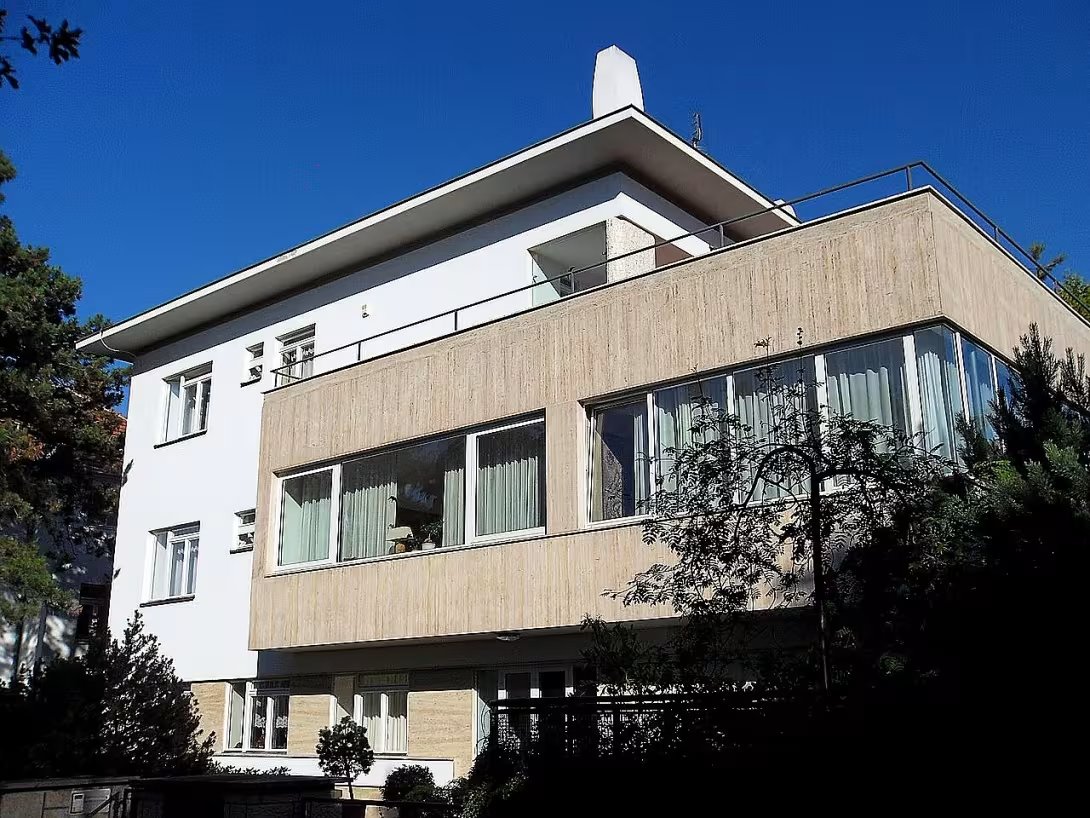
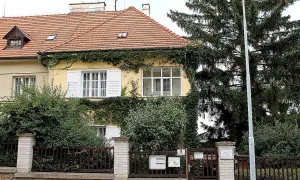
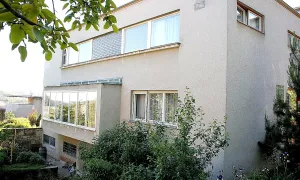
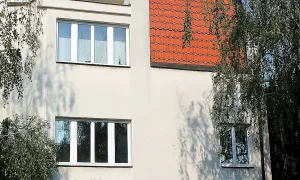
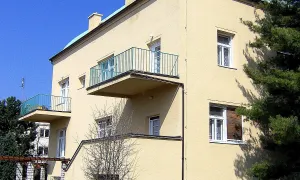
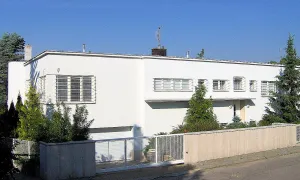
Dvořákova vila is a notable functionalist house in Brno's Masaryk Quarter, built in 1936-1937 by architect Václav Dvořák. This unique structure showcases Brno's modern architecture of the 1930s, featuring a valved roof, a crowned cornice, and a façade with travertine cladding. The villa's interior was designed by architects Mojmír Kyselka and Jaroslav Grunt, and it served as a private gallery for Dvořák's extensive art collection, which included works by prominent Czech artists such as Antonín Procházka, Emil Filla, and Josef Šíma.
Built during Brno's heyday as a major cultural and economic center in Czechoslovakia, the Dvořákova vila was a prime example of functionalist architecture in the city. The villa's design resulted from a collaboration between Dvořák, architect Sergej Medvěděv, and local architect Mojmír Kyselka. Its unique features include a valved roof, a crowned cornice, and a façade with travertine cladding.
The villa's interior was designed to display Dvořák's art collection, a significant part of his life's work. The interior was divided into two halves, with one side facing the street and the other facing the garden. The design was functional and efficient, focusing on showcasing Dvořák's art collection. Architects Mojmír Kyselka and Jaroslav Grunt worked closely with Dvořák to create a space that would highlight his art.
The villa's ownership changed significantly over the years. In 1948, Dvořák's company was nationalized, and in 1952, the villa was nationalized as well. In 1959, Dvořák's art collection was confiscated, and the villa was used for various purposes, including as a private residence and a children's nursery. In 1988, the villa's façade was listed as a cultural monument, recognizing its historical and architectural significance.
Today, the Dvořákova vila is a protected cultural monument and a testament to Brno's rich architectural heritage. It is a must-visit destination for those interested in modern architecture and the history of Brno. Visitors can admire the villa's unique design and learn about its fascinating history, which reflects the city's rich cultural and artistic heritage.
Then and now
Drag the slider to compare how the landmark may have looked when it was built with the view today.
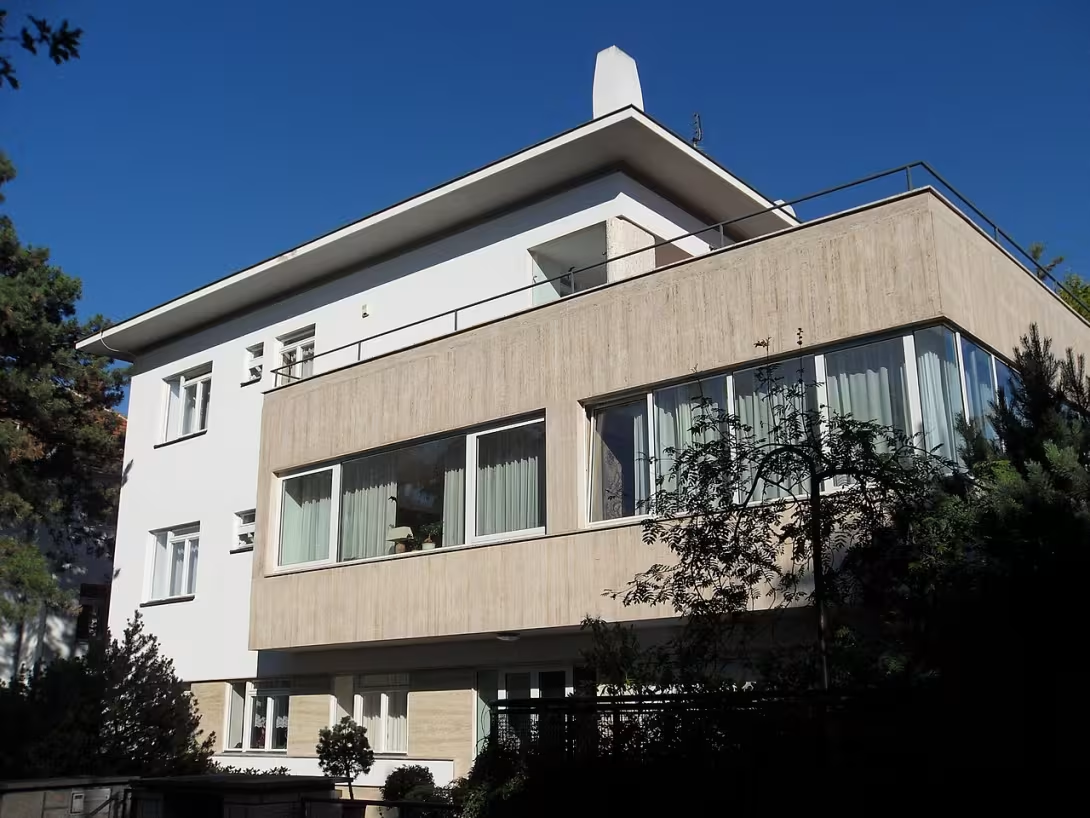
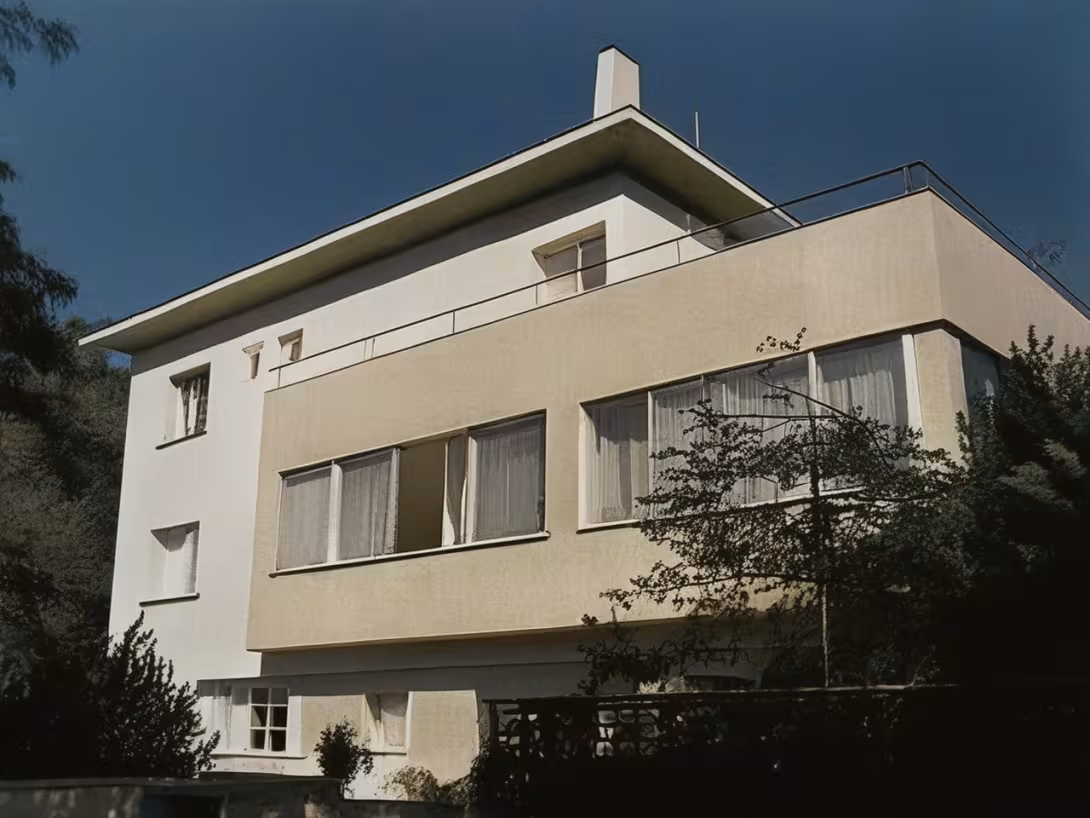
The historical appearance on the left is an AI-generated visualisation and serves as inspiration only.
Historical milestones
- 1936
- Construction of the villa began
- 1937
- The villa was completed
- 1948
- Dvořák's company was nationalized
- 1952
- The villa was nationalized
- 1959
- Dvořák's art collection was confiscated
- 1988
- The façade was listed as a cultural monument
Architectural development
The villa was built in 1936-1937 using a functionalist style. The design features a valved roof, a crowned cornice, and a façade with travertine cladding. The interior was designed by architects Mojmír Kyselka and Jaroslav Grunt. The villa was used as a private gallery for Dvořák's art collection.
Historical events
1936-1937: Construction of the villa
1948: Dvořák's company was nationalized
1952: The villa was nationalized
1959: Dvořák's art collection was confiscated
1988: The façade was listed as a cultural monument
Owners
Václav Dvořák (1936-1984), state (1952-1989), descendants of Václav Dvořák (1989-present)
Points of interest
– The Dvořákova vila was built on a site where a medieval monastery once stood, which adds a layer of historical significance to the structure.
– The villa's design was influenced by the work of Le Corbusier, a Swiss-French architect who was a prominent figure in the development of modern architecture.
– The Dvořákova vila was initially intended to be a private residence for the architect Václav Dvořák, but it has also served as a gallery for his extensive art collection and even a children's nursery.
– The villa's façade is made of travertine, a type of limestone, which was a rare and expensive material at the time of its construction.
– The Dvořákova vila's interior design was influenced by the Bauhaus movement, a school of art and design that emphasized functionality and simplicity.
Guide
This guide is narrated by a synthetic voice generated by artificial intelligence.
Show guide text
This text was created by artificial intelligence and has not been editorially reviewed. It may contain inaccuracies.
Welcome! You are standing in front of the Dvořák Villa, an outstanding functionalist building in Brno. At first glance, you might be surprised by its unique mansard roof, crowned base, and travertine façade. Let's move closer and take a look at the architectural details.
This villa was built between 1936 and 1937 according to a design by architect Václav Dvořák, who also owned the house. The interior spaces were designed by Mojmír Kyselka and Jaroslav Grunt. Originally, the Dvořák Villa served as a private gallery for Dvořák's art collection.
Notice how the travertine façade reflects the fashion of that time. The Dvořák Villa was designed under the influence of Le Corbusier, the Swiss-French architect who was a significant figure in the development of modern architecture.
The villa is also interesting for its history. It was built on a site where a medieval monastery once stood. Although it's not visible, this adds another layer of fascinating history that gives the building its uniqueness.
Let's return to the present. The Dvořák Villa was declared a cultural monument in 1988. Today, it is a place where you can explore architectural details and appreciate how architecture has evolved from functionalism to the modern era.
Today, you can feel like you're in a private gallery where you can view art collections that were originally part of Dvořák's collection. After all, the Dvořák Villa has always been a place where art, architecture, and history meet.
Tips for visitors
The best time to visit Dvořákova vila is during spring and autumn when the weather is mild and sunny.
The villa is easily accessible by car and public transportation.
It's recommended to bring a camera to capture the unique design of the villa and its surroundings.
The best spots for photography are the front and back of the villa, especially during the golden hour.
If you're visiting with children, consider bringing a picnic lunch to enjoy in the nearby Wilson Forest.
Frequently asked questions
Can the monument be visited?
This is a residential or farm building, not a museum with opening hours. Please view it from public space and respect the owners' privacy. We have no information about access to the interior.
Where is the monument?
Location: Stránice, Jihomoravský kraj. The map on this page shows the exact spot.
Why is the monument protected?
It is listed in the Central List of Cultural Monuments of the Czech Republic as a cultural monument (register no. 1999995315).
Businesses nearby
Do you run a restaurant, accommodation, shop, museum, rental, wellness or other visitor service near this monument? Show yourself directly to the people heading to it — this is how they will see you in the app and on the web:
Events nearby


Zdroj akcí: otevřená data měst a obcí ČR (Národní katalog otevřených dat) a kalendář akcí Národního památkového ústavu.
Nearby
The villa is located in the Masaryk Quarter of Brno, near the Wilson Forest.
Accommodation nearby
Trips and activities nearby
Guided tours, tickets and activities nearby from GetYourGuide
Affiliate link: if you buy from the partner, we may receive a commission. The price for you does not change.
Search tours and activities →Themed route
Dvořákova vila
1. Wilson Forest (park) - worth visiting for its peaceful atmosphere and view of the city of Brno.
2. Masarykovo náměstí (náměstí) - worth visiting for its historical architecture and significant role in the history of the city.
3. Moravské náměstí (náměstí) - worth visiting for its historic buildings and lively atmosphere.
4. Dvořákova vila (vila) - must be visited for its historical and cultural values.
Seasonal recommendations
Jaro: In the spring season, Dvořák's Villa is surrounded by blooming trees and flowers, creating a pleasant atmosphere. The tour can be conducted in mild weather, but it’s advisable to wear warm clothing as it may be chilly inside.
Léto: During the main summer season, Dvořák's Villa is a sought-after tourist attraction, so it’s good to arrive early to avoid large crowds. It’s advisable to bring an umbrella or sunglasses for sun protection.
Podzim: In autumn, Dvořák's Villa is surrounded by beautiful colors of fallen leaves, creating a pleasant atmosphere. The tour can be conducted in mild weather, but it’s advisable to wear warm clothing as it may be chilly inside.
Zima: In winter, Dvořák's Villa is closed due to cold weather, but it may be open for special events on occasion. It’s advisable to wear warm clothing and protect your head from frostbite.
Visualizations and artistic views


The visualisations are generated by artificial intelligence and serve as inspiration.
Photos from the area
Real photos taken near the monument


Zdroj a licence jsou uvedeny u každého snímku.
Tips from visitors
No tips yet. Be the first!
Log in and add your tip.
Sources and literature
Photos: Harold / CC BY-SA 3.0 — Wikimedia Commons. The author and licence also appear when you hover over the image.
Faktickým podkladem tohoto textu byl článek na Wikipedii, jehož autory jsou přispěvatelé Wikipedie. Článek je dostupný pod licencí CC BY-SA 4.0.
Location on the map
Příběhy a pověsti
Legendy, pověsti a příběhy spjaté s touto památkou
Fotografie návštěvníků
Zatím žádné fotografie. Buďte první, kdo přidá fotografii z návštěvy!
Log in a přidejte svou fotografii nebo hodnoťte.
Za ověřenou návštěvu v aplikaci získáte víc bodů — poznáme podle GPS, že jste na místě.
Reviews and comments