






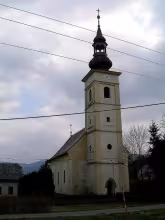
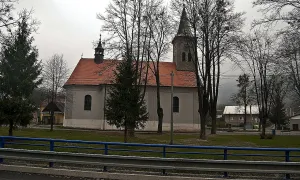
The Evangelical Church in Hodslavice is a protected classicist structure belonging to the Czechoslovak Hussite Church. It is located in the village of Hodslavice, within the Nový Jičín District, Moravian-Silesian Region. Built between 1813 and 1819, this church symbolizes religious tolerance following the Tolerance Patent of 1782, which permitted non-Catholic denominations like the Augsburg Confession congregations in Hodslavice to establish their places of worship. It replaced an earlier wooden structure destroyed by a storm, highlighting its importance in local history.
The origins of this church trace back to the period after the Tolerance Patent of 1782, which granted religious freedom for non-Catholic communities within the Habsburg Monarchy. In Hodslavice and nearby areas, many adherents secretly practiced Protestant beliefs during the Counter-Reformation. Following the patent's enactment, one of Moravia's first Augsburg Confession congregations was established here. Initially, worship occurred in barns until a wooden church was built in 1783. However, this structure was destroyed by a storm and replaced by the current stone building.
Architecturally, the Evangelical Church features a classicist style with a longitudinal nave, polygonal presbytery, and lunette vaults. The cornerstone of this new stone church was laid on June 29, 1813, and construction concluded in 1819. Initially, due to tolerance laws, it lacked windows, a tower, and bells. These elements were added after restrictions were lifted between 1851 and 1852 when a four-sided tower with bells and clock was installed, making it the first evangelical church in Moravia with such features.
Throughout its history, the church has undergone several significant changes. In the early 20th century, new installations included an altar in 1891 and a roof renovation in 1905. A major refurbishment took place between 1951 and 1952 under parish priest Josef Ondruch, notably altering the interior. More recently, a comprehensive reconfiguration addressed technical issues while enhancing its cultural utility. This project involved architects Václav Šuba and Jakub Červenka in collaboration with OBJEKTOR studio, resulting in multifunctional installations that have broadened the church's role within the community.
The church has been a site of notable events, including František Palacký delivering his first and only sermon here shortly after completing his studies at an Evangelical lyceum in Pressburg. This highlights its historical significance not just as a place of worship but also as a cultural landmark.
Today, the Evangelical Church in Hodslavice serves both as a religious site and a cultural venue, reflecting its evolving role within the community. Its recent adaptations have made it accessible for various activities beyond traditional services, enhancing its appeal to visitors interested in history and architecture. The church's blend of historical significance and modern utility makes it a worthwhile destination for those exploring the rich tapestry of Moravian-Silesian heritage.
Historical milestones
- 1813
- Cornerstone of the new classicist church was laid.
- 1819
- Construction of the church was completed.
- 1851
- A four-sided tower with bells and clock was added to the church.
Architectural development
The original wooden church built in 1783 was destroyed by a storm and replaced by the current stone structure. The new classicist building's cornerstone was laid on June 29, 1813, with construction completed in 1819. Significant additions included a four-sided tower with bells and clock installed between 1851-1852 after tolerance restrictions were lifted.
Historical events
In 1782, following the issuance of the Tolerance Patent, one of the first Augsburg Confession congregations was established in Hodslavice on Moravia. The original wooden church built in 1783 was destroyed by a storm and replaced by the current stone structure.
František Palacký delivered his first and only sermon at this church during a visit to Hodslavice, shortly after completing his studies at an Evangelical lyceum in Pressburg.
Points of interest
- The Evangelical Church in Hodslavice is a testament to the Tolerance Patent of 1782, which was one of the earliest legal acknowledgments allowing non-Catholic denominations like the Augsburg Confession congregations to establish places of worship within the Habsburg Monarchy. This patent marked a significant shift towards religious freedom during a time when such tolerance was rare.
Guide
Show guide text
Welcome to the Evangelical Church in Hodslavice, a serene and captivating testament to history nestled within this quiet locale of Moravskoslezský kraj. As you stand here, take a moment to absorb the presence of this elegant classicist structure belonging to the Czechoslovak Hussite Church. Its simple yet profound architecture speaks volumes about its storied past.
The church's journey began in 1813 when the cornerstone was laid for what would become a significant symbol of religious tolerance and architectural beauty. This new edifice replaced an earlier wooden structure that had succumbed to a storm, marking a new chapter not just for Hodslavice but also for the communities it served. By 1819, construction was completed, although initially, the church stood without windows, a tower, or bells—a reflection of the tolerance laws of its time.
As you gaze upon the church's façade, notice its longitudinal nave and polygonal presbytery. The lunette vaults that grace the interior add to its classicist charm. It wasn't until 1851 that a four-sided tower adorned with bells and a clock was added, enhancing both its functionality and beauty.
This church is intricately linked to significant historical narratives, including the Tolerance Patent of 1782. This groundbreaking decree allowed non-Catholic denominations like those following the Augsburg Confession to establish places of worship within the Habsburg Monarchy. It marked a pivotal moment in history, fostering religious diversity and coexistence.
Among the notable figures connected with this church is František Palacký, whose contributions to Czech history are well-regarded. His legacy intertwines with the broader story of Hodslavice's church, adding depth to its historical significance.
A fascinating aspect of this church is how it embodies the spirit of tolerance and resilience. Its very existence challenges us to reflect on the power of acceptance and community in shaping our world.
As you continue your exploration, let yourself be drawn into the stories etched within these walls. Each detail invites curiosity and contemplation. This church isn't just a structure; it's a living narrative waiting to be discovered.
Thank you for joining me on this journey through time and faith at the Evangelical Church in Hodslavice. I encourage you to delve deeper, uncover more stories, and let the spirit of this place guide your exploration. Safe travels as you continue your adventure!
Businesses nearby
Do you run a restaurant, accommodation, shop, museum, rental, wellness or other visitor service near this monument? Show yourself directly to the people heading to it — this is how they will see you in the app and on the web:
Accommodation nearby
Themed route
Tematická výletní trasa: Evangelický kostel v Hodslavicích
1. Evangelický Kostel v Hodslavicích (Kostel) Začněte svůj výlet u samotného hlavního cíle, evangelického kostela v Hodslavicích. Tento kostel je významnou památkou s bohatou historií a architektonickými rysy, které přitahují návštěvníky z celé oblasti. Je to ideální místo pro ty, kteří mají zájem o duchovní stavby a jejich historii.
2. Místní Obecní Úřad (Historický Objekt) Přibližně 200 metrů od kostela se nachází místní obecní úřad, který je také považován za historický objekt. Tento budovu lze navštívit pro pochopení administrativního a společenského života v Hodslavicích během minulých století.
3. Památník na Nádražní Zastávce (Pomník) Pokračujte směrem k nádražní zastávce, kde se nachází památník věnovaný důležitým událostem nebo osobnostem místní historie. Tento pomník je vhodný pro ty, kteří mají zájem o kulturní a historické aspekty regionu.
4. Kostelní Nádvoří (Park) Po návštěvě památníku se vraťte ke kostelu a prozkoumejte jeho nádvoří. Toto místo nabízí klidný prostor k odpočinku, zatímco si můžete užít pohled na kostel a okolní přírodní krásy.
Tato trasa vám umožní prozkoumat nejen hlavní cíl, ale i další historické a kulturně významné místa v Hodslavicích.
Seasonal recommendations
Spring: The arrival of spring breathes new life into the Evangelical Church in Hodslavice, with its surroundings painted in vibrant hues as wildflowers begin to bloom and trees start to bud. This season offers a gentle atmosphere, perfect for appreciating the church's architecture against the backdrop of awakening nature. Visitors can enjoy longer daylight hours, making it an ideal time to explore without feeling rushed. While crowds are typically minimal during this period, wearing comfortable walking shoes is advisable as paths may still be damp from spring rains.
Summer: Summer in Hodslavice brings warm sunshine and lush greenery, enhancing the picturesque setting of the Evangelical Church. The long days provide ample opportunity for leisurely exploration, though it's wise to arrive early or later in the day to avoid peak visitor times during the main summer season. Light clothing is recommended due to the heat, along with sun protection such as hats and sunscreen. This is a great time to enjoy outdoor activities nearby, like picnicking in the surrounding meadows.
Autumn: Autumn transforms the landscape around the Evangelical Church into a tapestry of warm colors, making it an enchanting season for visitors. The cooler temperatures create a cozy atmosphere, perfect for leisurely strolls and photography. As leaves begin to fall, it's advisable to wear layers that can be adjusted with changing weather conditions. While crowds are generally lighter compared to summer, visiting during weekdays can offer a more peaceful experience.
Winter: Winter cloaks the Evangelical Church in Hodslavice with a serene blanket of snow, creating a magical and tranquil atmosphere. The church's architecture is particularly striking against the snowy backdrop, offering unique photo opportunities. However, visitors should dress warmly in layers to combat the cold, as well as wear comfortable footwear suitable for potentially icy paths. Due to shorter daylight hours, it’s best to plan visits during midday when lighting is optimal. Keep in mind that opening times may be reduced, so checking ahead is recommended.
Visualizations and artistic views

Vizualizace jsou generovány umělou inteligencí a slouží jako inspirace.


Tips from visitors
No tips yet. Be the first!
Log in and add your tip.
Location on the map

Příběhy a pověsti
Legendy, pověsti a příběhy spjaté s touto památkou
Reviews and comments