



evangelický kostel v Hrubé Vrbce Church
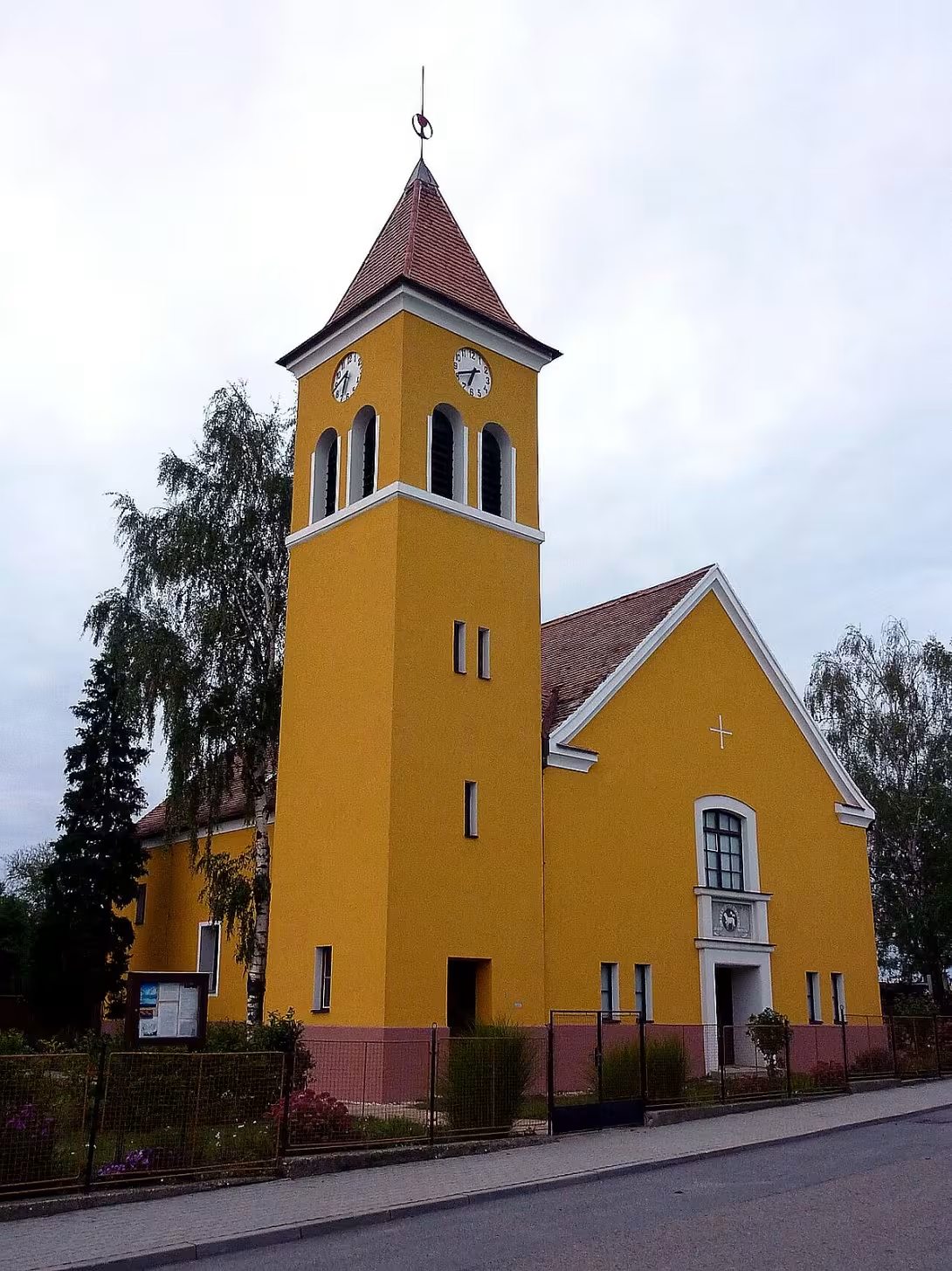
The Evangelical Prayer in Hrubé Vrbka, registered in the register of cultural monuments in 2022, speaks of a repressed minority, which gradually gained space for its own religious life. The territory of today's Hrubý Vrbky was one of the guardianship whose owners tried to bring the population to his Catholic religion after 1620. Pressure threw people out of the region: between 1719 and 1749 234 evangelists left this village. Yet there was a significant group of secret non-Catholics who openly applied to Lutheran's religion immediately after the Tolerance Patent was declared. In 1782 a local choir was established and the construction of the church began without delay.
But the Tolerance patent did not mean total freedom. The Evangelical Prayer was not allowed to stand in the middle of the village, nor was it allowed to have a tower or main entrance from the main street. The first building therefore entered on the edge of the village between the barn as a wooden building. The forest provided local land and wood to the construction of all the families that owned the horse's clothing. This house of prayer served believers for 48 years, until 1830 when a new church grew up in the same place.
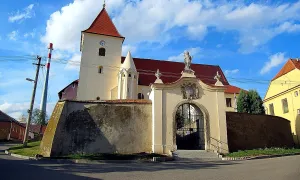
The church built in 1830 represents a classical, simple architectural shape, respecting the original restriction of the Tolerance Patent. It has rectangular windows and a saddle roof covered with burnt bags. It gradually changed and expanded: after the middle of the 19th century, wooden belfry was added, and in the early 20th century it switched to renewal. In the 1940s, a four-sided bell tower with a clock machine was built on the southwest side of the entrance facade, with a lower extension of the hall with wooden doors on the north side.
The interior is typical of the evangelical churches of the Australian religion in Upper Hungary. Two circles on the opposite shorter sides, the altar next to the circle and the pulpit on the side speak of a different understanding of liturgy. The organ comes from the time of Pastor Emil Pellar (1875-1891). The Iron Bell dedicated the Evangelical Choir from Prusinovic in 1948, since 2012 the church bears a new bell, bronze.
Other buildings belong to the prayer house. The rectory was built already in 1785, formerly the clergymen lived in the cottage. The new parish grew up in the middle of the 19th century and later became a choir house. The evangelical school, whose foundation stone was laid in 1783, had a difficult fate: originally without permission, later allowed, burned down in 1842 and was immediately rebuilt. The new school building consecrated in September 1884 served children until the abolition of church schools in 1923.
Today the prayer room with historical interior is a valuable church and cultural-historical building. Despite the additional construction arrangements, she retained the character of her creation and position - a unique witness to the life of evangelists in a landscape where their faith should not be given space.
Then and now
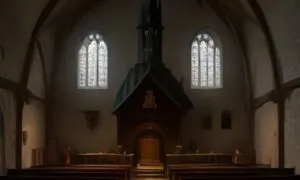
Drag the slider to compare how the landmark may have looked when it was built with the view today.
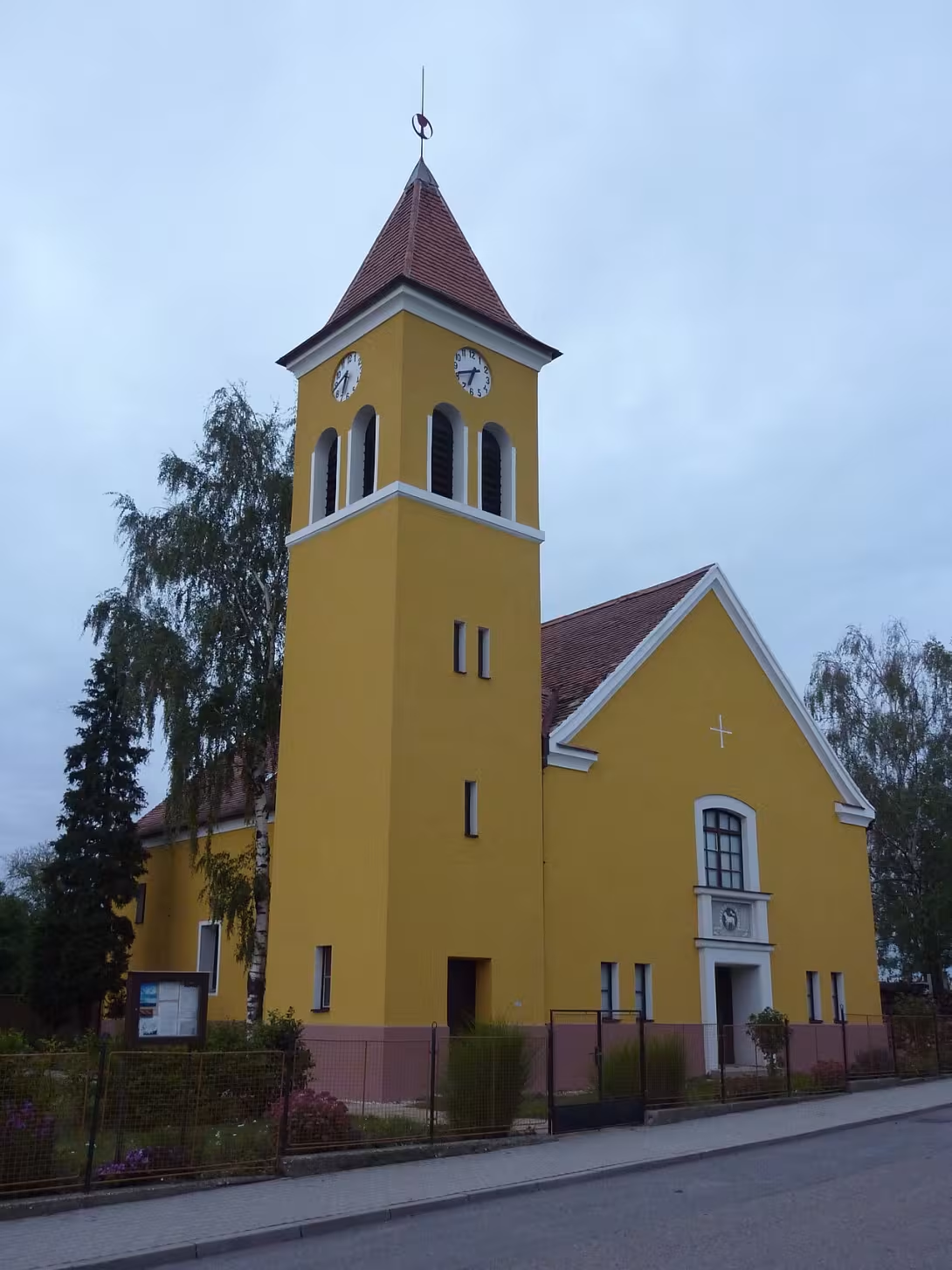

The historical appearance on the left is an AI-generated visualisation and serves as inspiration only.
Historical milestones
- 1782
- The formation of the choir and the construction of the first wooden prayer house.
- 1830
- The completion of a walled-up classical church.
- 1948
- Donating the Iron Bell to the Evangelical Choir of Prusinovice.
- 2022
- Declaration for a cultural monument.
Architectural development
The original wooden prayer house was replaced in 1830 by a wall of classical construction. In the mid-19th century, a wooden bell tower was added, which was replaced by a four-sided wall tower with a clock machine in the 1940s. There is also a hall and historically valuable interior.
Historical events
1782: Establishment of the choir and construction of the first wooden prayer house. 1830: Construction of a walled classical church. 2022: Registration of the building among cultural monuments.
Owners
Evangelical Choir in Hruby Vrbka
Points of interest
- The Evangelical Prayer was entered in the register of cultural monuments in 2022. - The original wooden prayer room had to stand on the edge of the village between the barns, not having a tower or main entrance from the main street. - The wood for the construction of the first prayer house provided local soil and was tied up by all the families that owned the horse's clothing. - The church built in 1830 has a classical shape, rectangular windows and a saddle roof covered with burnt bags. - The Iron Bell dedicated the choir in 1948 to the choir from Prusinovic, since 2012 the bell has been bronze in the church.
Guide
This guide is narrated by a synthetic voice generated by artificial intelligence.
Show guide text
This text was created by artificial intelligence and has not been editorially reviewed. It may contain inaccuracies.
The Evangelical prayer house in Hrubá Vrbka is a tolerance church. It has been a cultural monument since 2022. After 1620, the owners of the Strážnice estate tried to convert the inhabitants to the Catholic faith. Non-Catholic nobility and evangelical preachers left the estate, and between 1719 and 1749, 234 people fled from Hrubá Vrbka. Nevertheless, many secret non-Catholics remained there. Right after the Edict of Toleration was proclaimed, 500 locals declared themselves members of the Lutheran evangelical faith.
The congregation was founded in 1782 and construction of the church began immediately. The first preacher was Ondřej Skultéty the Elder, a native of the region. The Edict of Toleration stipulated that the prayer house must not stand in the middle of the village and must not have a tower or an entrance from the main street. That is why it was built on the edge of the village between barns. It was made of wood. The wood came from the local forest and was transported by all families who owned horses. In 1830, it was replaced on the same site by a longitudinal neoclassical stone church, which still respected the tolerance regulations.
After the middle of the 19th century, a wooden bell tower was added. In the 1940s, a tall four-sided stone bell tower with a clock mechanism was built next to the southwestern side of the façade. A lower entrance vestibule was created on the north side. The prayer house itself has a simple shape, rectangular windows, and a pitched roof made of burnt tiles. The tower has a tent roof, paired windows on all four sides, and a metal spire.
The interior is particularly remarkable. Two galleries stand on opposite shorter sides, the altar adjoins the gallery, and the pulpit is on the side. This arrangement is typical of Augsburg Confession churches in the former Upper Hungary. The organ was acquired under Pastor Emil Pellar, who served there from 1875 to 1891. An iron bell was donated in 1948 by the evangelical congregation from Prusinovic. Since 2012, the church has had a new bronze bell.
The parsonage near the church was built in 1785. Until then, the clergyman lived in house number 4. A new parsonage was built in the middle of the 19th century. The evangelical school had a turbulent history. The first building from 1783 had no permission and teaching in it was soon interrupted. In 1842, the school burned down and was replaced by a new building. It too soon fell into disrepair, so another was consecrated in 1884. Teaching took place in it until church schools were abolished in 1923.
Tips for visitors
The best time to visit is during the spring or summer months, when you can relax to see the exterior of the building and enjoy the atmosphere of Hornáck. In this period the surrounding landscape is the most photogenic and the weather wishes to walk around the village.
You can easily reach the village Hrubá Vrbka by car. Parking is possible on public areas near the centre of the village. If you choose public transport, check the current connection in available connection search engines, as the frequency of the lines may vary.
For the photography of the church we recommend to use soft light during the morning or shortly before sunset when the classical architecture of the building excels. Don't forget to wear comfortable shoes because the surrounding area offers beautiful views of the typical mining landscape.
In the immediate vicinity, you can discover rich folklore heritage and folk culture, which is famous for the Upper Town. We recommend focusing on exploring local architecture and traditions that are absolutely unique to this site.
For families with children the visit is suitable as part of a sightseeing trip to history and folk culture. Due to the nature of the monument, we recommend to the children the story of the creation of the prayer house after the issue of the Tolerance Patent in the form of a story about the history of the region.
Frequently asked questions
Is evangelický kostel v Hrubé Vrbce open to the public?
Yes, the church is open to the public from Monday to Saturday from 9:00 to 5:00 and Sunday from 13:00 to 18:00.
How do I get to the place by car / public transport?
Parking is possible in the parking lot near the church. The public transport links Hrubou Vrkka to Brno, so you can use bus number 57.
How much is the entrance fee and is it paid on the spot?
Admission is free.
Is the tour suitable for children and seniors?
Yes, the church is accessible to all visitors regardless of age or health.
How long does the tour take?
The tour takes approximately 30 minutes.
What are the opening times and booking is required?
The church is open from Monday to Saturday from 9:00 to 5:00 and Sunday from 13:00 to 18:00. Reservation is not necessary.
What's interesting in the immediate vicinity?
In the vicinity of the church is the Hrubověcký forest, which offers beautiful walks and views of the surrounding countryside.
For kids
Imagine going back 244 years to one of the most beautiful villages in our parts. It was Hrubá Vrbka, a small community lying deep in the heart of our country. How did it look here? Who lived here? What happened here?
It was a time of great change and new religions. Evangelists who came from Germany built a beautiful church here. It was their new house of prayer. The people of the village came to them and began to learn new beliefs.
Businesses nearby
Do you run a restaurant, accommodation, shop, museum, rental, wellness or other visitor service near this monument? Show yourself directly to the people heading to it — this is how they will see you in the app and on the web:
Nearby
The village Hrubá Vrbka is located in the region of Hornácka, which is known for its rich folklore heritage and folk culture.
Accommodation nearby
Themed route
1. Evangelical Church in Hrubé Vrbka (Type: Church) - The main destination of the trip, which represents the historical and spiritual center of the location. 2. Church reservoir (Type: Area) - Space around the monument, where its architecture can be observed in peace. 3. Hrubá Vrbka (Type: Village) - Walk around the village will allow you to soak up the atmosphere of the local environment. 4. Mining (Type: Regional area) - The journey within this area will surround you with rich folklore heritage and folk culture.
Seasonal recommendations
Spring: In the spring period, the evangelical church in the Hrubé Vrbci receives unique lighting, when the sun rays penetrate through coloured windows and distinguish historical architecture. The growth of bushes and flowering trees in the surrounding area adds freshness to the green frame of the church, creating a harmonious view. Visitors should be dressed according to temperature, because spring weather can suddenly be variable. The best time to visit is an eccentric day or evening when there are smaller crowds and you can enjoy a quiet viewing of the church.
Summer: Summer brings long sunny days with ideal lighting for the photograph of historical details of the evangelical church in Hrubé Vrbka. The atmosphere is full of life, where local and tourists rejoice in the warm weather and natural beauty of the surroundings. Visitors should visit the church earlier in the day to enjoy a peaceful tour without heat or crowds. It is recommended not to meet with a surprise of warm weather, so it is advisable to wear light clothes and sun glasses.
Autumn: In autumn, the church in Hrubé Vrbka offers views with coloured leaves that provide a special atmosphere. Short days and longer evenings bring a softer light, which can create a romantic atmosphere for visitors. Autumn weather is usually friendly, but can be variable, so it is recommended to dress in multiple layers. The best time to visit the church is an eccentric day or early afternoon when there are smaller crowds and you can enjoy a quiet moment.
Winter: During winter evangelický kostel v Hrubé Vrbce receives a unique atmosphere under the snow vault, which gives the place magic. Short days and cooler temperatures mean shorter opening times of the monument, so it is advisable to plan a visit in light. Visitors are advised to wear warm clothes and shoes suitable for freezing conditions. The best time for a tour is an eccentric day or early afternoon when there are smaller crowds and you can enjoy a quiet moment while visiting the church.
Visualizations and artistic views


The visualisations are generated by artificial intelligence and serve as inspiration.
Photos from the area
Real photos taken near the monument


Zdroj a licence jsou uvedeny u každého snímku.
Tips from visitors
No tips yet. Be the first!
Log in and add your tip.
Sources and literature
Photos: Marek Blahuš / CC BY-SA 3.0 — Wikimedia Commons. The author and licence also appear when you hover over the image.
Faktickým podkladem tohoto textu byl článek na Wikipedii, jehož autory jsou přispěvatelé Wikipedie. Článek je dostupný pod licencí CC BY-SA 4.0.
Location on the map



Příběhy a pověsti
Legendy, pověsti a příběhy spjaté s touto památkou
Fotografie návštěvníků
Zatím žádné fotografie. Buďte první, kdo přidá fotografii z návštěvy!
Log in a přidejte svou fotografii nebo hodnoťte.
Za ověřenou návštěvu v aplikaci získáte víc bodů — poznáme podle GPS, že jste na místě.
Reviews and comments