



Fara (Vidžín) Parish house
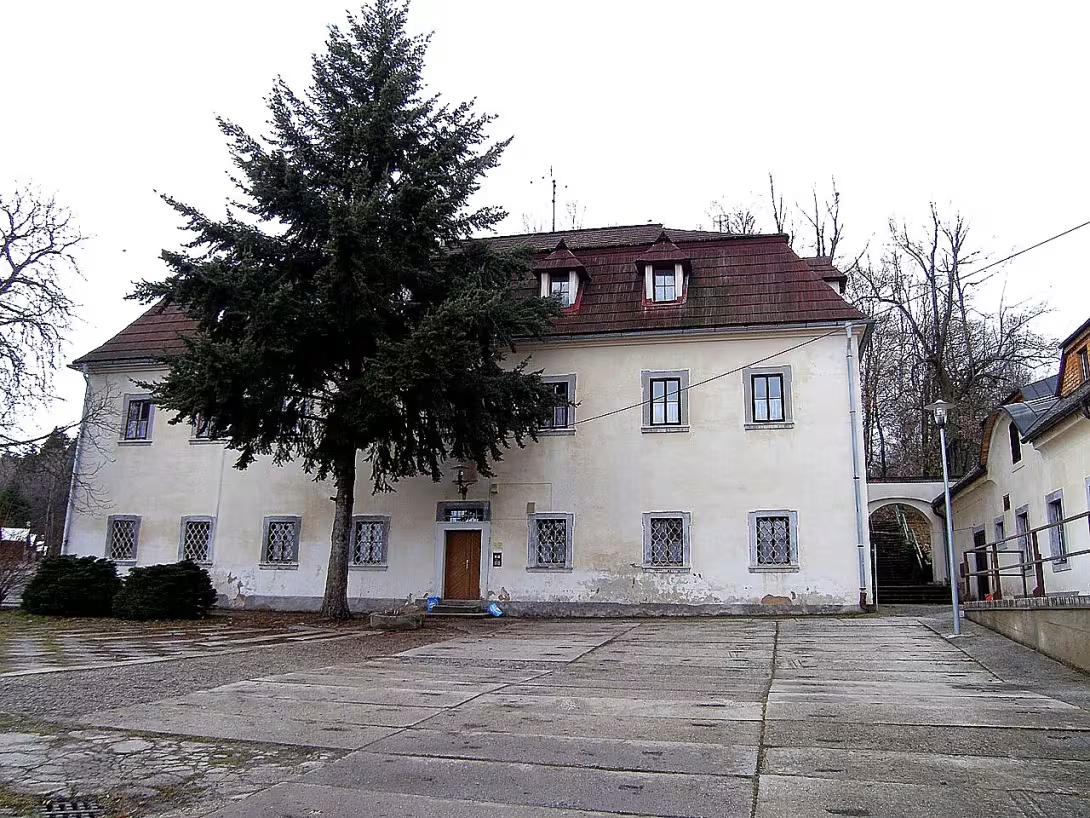
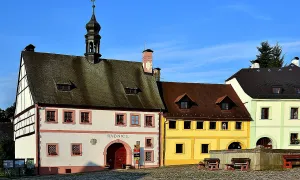
Fara Vijen, located in the village Úterý under the number descriptive 8, is a Baroque building from 1753, founded by abbey from the monastery in Teplá. Since 1958 this object has the status of cultural monument of the Czech Republic. It represents not only an important architectural element, but also an historical part of the Pilsen-North area.
The creation of the building in 1753 is closely linked to the Baroque period in Central Europe. This style was exhibited by rich architecture and art, which was especially popular with church institutions in Bohemia. The abbey from the monastery in Teplá built it as part of a wider effort to develop and strengthen religious structures in this area.
The Vijena architecture is a typical example of the Baroque style of the 18th century, characterized by rich decoration and dynamic forms. The area was once made up of other buildings, like a horse-house and a barn, which were part of a closed complex. However, these buildings have not been protected as cultural monuments since 1982.
The history of the site is associated with the monastery in Teplá, which played a key role in the administration and development of the surroundings. In 1958, the building was declared a cultural monument to the Czech Republic, which underlines its importance as a historical and architectural heritage.
Today, the Vijen rectory is available for visit and represents an interesting destination for people interested in history and architecture. Its cultural heritage status provides care for this object and allows the following generations to appreciate its value.
Fara Vijen reminds of the rich past and architecture, which remains an important part of the cultural heritage of the Czech Republic. Her visit offers an opportunity to explore the Baroque style and understand the historical context in which the construction was built.
Historical milestones
- 1753
- The establishment of the Vijen rectory by abbey from the monastery in Tepla.
- 1958
- Declaration of the rectory for the cultural monument of the Czech Republic.
Architectural development
Fara Vijen is an example of Baroque architecture from the 18th century, built in 1753 opaté z kláštera v Teplé. The area of the rectory was once made up of other buildings such as the horticulture and barn, which were part of a closed complex.
Historical events
- 1753
- Status of the farm opaté z kláštera v Teplé.
- 1958
- Fara was declared a cultural monument of the Czech Republic.
Points of interest
- Fara Vijen is a Baroque building from 1753. - It was founded by an abbey from the Temple of Warm. - Since 1958 the object has the status of cultural monument of the Czech Republic. - It is a typical example of the Baroque style of the 18th century with rich decoration and dynamic forms. - The history of the site is connected to the administration and development of the monastery in Tepla.
Guide
Show guide text
This text was created by artificial intelligence and has not been editorially reviewed. It may contain inaccuracies.
Welcome to the place where time stopped and where every wall tells a story about ancient times. You are standing in front of the parish in Vijuna, which is an integral part of the village which belongs to the city of Úterý. The first sight of this object will probably immediately welcome you with a sense of peace and historical dignity. Before your eyes, there is a baroque building that carries an echo of the eighteenth century. Feel the atmosphere, the weight of history floating in this space. This whole complex, which surrounds walls and gates, creates a closed world as if it were separated from the normal course of the day and from the daily hustle and bustle of the surrounding countryside.
Now let's move further into the past together to understand why this place is standing here and how it formed. In order to understand the real meaning of this building, we need to go back to when everything started to be built. If we return in time by more than 200 years, we will reach the year one thousand seven hundred fifty-three. That was the year that the abbey of the Temple in Tepla decided to establish this parish. It wasn't a random act or just building a house. Building a parish in Vijuna was part of a wider, carefully planned effort by the monastery brothers to manage and develop this territory. The abbey of Warm didn't just want to build a place here for spiritual administrators, but to create a solid base that would help organize life around. This rectory became the heart of the local community and the center around which everything revolved, from spiritual needs to administrative matters.
Now pay attention to the architecture itself that you are currently observing. Even if we can't look into the inner space, the very view of the building tells you a lot about its character and how people at the time perceived beauty and strength. This is a typical and very rare example of baroque style, which in the eighteenth century dominated European architecture and brought new energy to the construction industry. If you look at the shapes of the building, notice their dynamics. The Baroque is not about calm and simple, flat lines, but about motion, about curves and about feeling constantly happening. In this construction, this style is visible in rich decoration, which decorate its surface. Although at first sight the building may seem static, its shapes are designed to act live to play with light and shadows and to inspire wonder.
Note also how the entire complex is organized. The rectory is not just this one main booth. There was a time when there were other important structures that were closely related. They were part of this whole, for example, the former horse farms and barns. These buildings were part of one functional and living unit which was protected by a wall and a gate. This gate and these walls are not just ordinary building elements but symbolic interfaces. They separated the area of the rectory, the place of sanctified service, prayer and administration, from the world of ordinary fields, roads and work. This whole represents a very important cultural element for the whole area and shows us what land management and management looked like at a time when power and influence were in the hands of monasteries.
When we look at this memory, we can't forget the people who stood behind it and who kept it over the years. Although history has not given us the names of the particular architects who laid these stones, we know of the incredible will and vision of the abbey from the monastery in Tepla. It was they who decided that this place deserved such a noble building. Their decision affected Vijen's fate for centuries. Imagine the people who watched this place become the center of administration in the year one thousand seven hundred fifty-three. Every detail, every decorative line on the facade was the result of their efforts to make the place look dignified and reflect the importance of the monastery administration in this part of the country.
You may think you're looking at an old house, but you're actually looking at an object that has a very special and rare position in our state. Because there is one fact that underlines its impotence. Since the year one thousand nine hundred fifty eight, this rectory has been officially declared a cultural monument to the Czech Republic. This means that its value is not only local, but is recognised by the whole nation. It's proof that even a place like Vijen carries a piece of our common history that we must protect for future generations. This status of the monument tells us that every floor, every gate and every wall are part of an inheritance that is not to be forgotten, but is to be protected as the treasure of our ancestors.
Now I want to invite you to look at this space again, but this time with another, deeper look. Let yourself be carried away by the dynamic of baroque shapes you see before you. Try to imagine how shadows lean on these walls in the afternoon sun and how the appearance of the building changes depending on how the sun moves in the sky. Take a look at the gate that was once visited by humans and horses leading to the horsemen 'houses. Feel the invisible connection between the spiritual life that the rectory represented and the practical, everyday life that took place in the surrounding barns and horsemen.
Thank you for taking the time to come and see this place. Vijen and his rectory are living witnesses to the history that awaits you. We hope that this brief insight into the past has enriched you and that your next steps will guide you through other interesting places in this beautiful landscape. We wish you a pleasant continuation of the tour and enjoy the peace and beauty this place offers.
Tips for visitors
The best time to visit the Vijen rectory is in the spring or autumn season when the weather is pleasant and light suitable for photography. Baroque architecture is depicted most beautifully in these months.
It is possible to use a car or public transport to reach Vijen. You can check current information about routes and connections online.
When visiting, remember suitable shoes, because the tour is mostly done by walking. Photography is possible from all sides of the building, the best light offers morning and afternoon hours.
There are several picturesque paths around the Vijen rectory for short walks. Distance 30 minutes allows you to visit other historical sites in the Úterý area, which can be interesting for the whole family.
It is advisable for families with children to prepare some toys or books for the journey. The local area offers a quiet space for relaxation and short entertainment.
Frequently asked questions
Can the monument be visited?
This is a residential or farm building, not a museum with opening hours. Please view it from public space and respect the owners' privacy. We have no information about access to the interior.
Where is the monument?
Location: Úterý. The map on this page shows the exact spot.
Why is the monument protected?
It is listed in the Central List of Cultural Monuments of the Czech Republic as a cultural monument (register no. 1000140070).
Businesses nearby
Do you run a restaurant, accommodation, shop, museum, rental, wellness or other visitor service near this monument? Show yourself directly to the people heading to it — this is how they will see you in the app and on the web:
Nearby
🏰 Historic sites (42)
- Holčikův mlýn 1.4 km
- Zuckerův mlýn 1.7 km
- Jansův mlýn 1.8 km
- Opatství Nový Dvůr 2.2 km web
- Röllerův mlýn 2.4 km
- Dolské domky 3.0 km
- M. A. Turba 3.1 km
- Mariánský sloup 3.3 km
- Davidova observatoř 4.2 km
- DAVID, Alois Martin 6.0 km
- Bezdružice 6.4 km
- M131.1 7.0 km
- Václav Bečkovský - pomník letecké havárie - 7.6 km web
- Svatý Josef 7.7 km
- Vesnické muzeum Harlosee 8.1 km
- Falkenštejn 9.2 km
- Památník selského povstání 1680 9.3 km
- Muzeum historické hasičské techniky 9.4 km
- Březín 10.3 km
- Krasíkov 10.4 km
🍽️ Restaurants and dining (23)
- U Kašny 3.3 km
- Kavárna a cukrárna Bellissima 6.4 km
- Sázavan 6.5 km
- Klášterní restarurace 7.3 km
- Café Kryštof Harant 8.1 km
- Staré Lázně 8.3 km
- Pizzerie Kuželna 8.4 km Školní 592 +420 353 227 158 web
- Na Vsi 8.4 km
- Alte Post 8.5 km
- Pivnice U Indiána 8.5 km Palackého 300
- Restaurace Plzeňka 8.6 km
- Hotel u nádraží restaurace 8.7 km Žižkova 345 +420 353 223 549
- V Aleji 8.8 km
- Alžbětin dvůr 9.1 km
- Na Kopečku 9.3 km
- U Krkovičky 9.4 km
- Bistro Krasíkov 10.0 km
- Pod Hradem 10.0 km
- Stop Cafe 10.6 km
- U Marienky 11.1 km
🏨 Accommodation (22)
- U Derků 3.5 km +420 373 312 283
- Rekreační středisko Bezdružice 5.3 km
- Hotel u nádraží 8.6 km Žižkova 345 +420 353 223 549 web
- La Rocca 8.7 km
- Alžbětin dvůr 9.0 km
- Penzion Flora 9.1 km +420 602 432 182 web
- Lázeňský penzion Mír 9.1 km
- Lázeňský hotel Jirásek 9.1 km Plzeňská 79
- Jirásek 9.1 km
- Lázeňský penzion Palacký 9.1 km
- Betlem 9.2 km
- Lázeňský penzion Marie 9.3 km
- V Pohodě 9.3 km
- LD Mánes 9.4 km Lázeňská 4
- Léčebný Hotel Prusík 9.4 km
- Penzion Dvůr Krasíkov 9.9 km +420 777 687 077 web
- ByTheLake 10.2 km web
- Bývalý špitál 12.9 km +420373313104 web
- Zámek Nečtiny 12.9 km
- U kaprů 13.2 km +420 604 741 337 web
🚲 Rentals and sport (1)
- Sokolovna 10.3 km
🥾 Hiking and nature (162)
- Stěnský vrch 1.2 km
- Reitenbergův pramen 2.0 km
- Adelka / Aurelie 2.2 km
- Špičák 2.8 km
- Sepuska 3.0 km
- Dřevohryzská kyselka 3.2 km
- Branišovská studánka 3.4 km
- Křivce 3.4 km
- Na rovníčkách 3.9 km
- Kázek 4.0 km
- Branišovský vrch 4.2 km
- Zahrádecká kyselka 5.4 km web
- Špičák 5.6 km
- Polínský vrch 5.6 km
- Třebouňský vrch 5.6 km
- Nezdická kyselka 5.8 km web
- Saskův kopec 6.0 km
- Ovčí hora 6.4 km
- U višně 6.8 km
- Lanové centrum Dolní Polžice 7.9 km
Accommodation nearby
Themed route
Thematic cruise route from Úterý with a visit to the rectory (Vijen)
1. Fara Vijen: - Type: Religious monument. - Why is it worth a visit: This parish is an important historical and architectural monument that attracts its ancient construction and rich history. It is an ideal place for those interested in the history of religious buildings.
2. Old village headquarters: - Type: Historical object. - Why is it worth visiting: This place is a reminder of the past of Úterý and offers a view of life in the past centuries. It is suitable for people interested in the history of the local population and architecture.
3. Traditional Czech Field: - Type: Cultural landmark. - Why is it worth visiting: This place is a symbol of the traditional way of life in Bohemia. This is a great example for those who want to understand how rural dwellings and farming have been organised.
4. Forest corridor: - Type: Natural space. - Why is it worth a visit: A beautiful corridor leads through the local forest, which is ideal for relaxing and looking at nature. It's a place for nature lovers and those looking for peaceful moments.
5. Historical Path: - Type: Cultural landmark. - Why it is worth a visit: This path combines various historical points in the village and offers a view of their connection. It is suitable for those interested in cultural heritage and its preservation.
This route offers a combination of historical, cultural and natural experiences near Vijen rectory.
Seasonal recommendations
Spring: In the spring season, Vijena's rectory is turned by a light that penetrates through flowering trees and bushes, providing an unforgettable background. The landscape flourishes in various colours of flowers, which gives the atmosphere a freshness and durability. For a visit it is advisable to take light clothes with the possibility to add layers for a cooler spring afternoon. Best to visit in the morning or evening when the crowd can avoid and all the colors are full of beauty.
Summer: In summer, the rectory is surrounded by dense greenery, which provides shade and protection from sunlight. The atmosphere is warm and calm, allowing for relaxed viewing of the surroundings. Visitors are advised to wear light clothes and protective sunglasses, while a water-filled beverage can be useful. Preferably visit early morning or late evening to avoid the hottest hours and possible crowds.
Autumn: In the autumn period, the rectory is turned by silver leaves of falling trees and shrubs that create beautiful symmetry. The atmosphere is calm and quiet, often accompanied by the sound of walking snowmen or rustling leaves. For a visit it is advisable to take clothes with layers due to cold morning and evenings, while warm shoes may prove useful. The best time to visit is in the early afternoon when the sun lights the fallen leaves and the crowd can avoid.
Winter: In winter, the rectory is turned by a calm atmosphere, often covered with snow or sticky glaciers. Nature around offers fine and soft colors that bring a sense of quiet and calm. Visitors should wear warm clothes, including hat, gloves and protective shoes. Best to visit in the morning or evening, when the temperature is milder and the crowd can avoid, while sunlight creates a magical effect on the snow cover.
Visualizations and artistic views

The visualisations are generated by artificial intelligence and serve as inspiration.
Photos from the area
Real photos taken near the monument

Zdroj a licence jsou uvedeny u každého snímku.
Tips from visitors
No tips yet. Be the first!
Log in and add your tip.
Sources and literature
Photos: Tusiman / CC BY-SA 3.0 — Wikimedia Commons. The author and licence also appear when you hover over the image.
Faktickým podkladem tohoto textu byl článek na Wikipedii, jehož autory jsou přispěvatelé Wikipedie. Článek je dostupný pod licencí CC BY-SA 4.0.
Location on the map


Příběhy a pověsti
Legendy, pověsti a příběhy spjaté s touto památkou
Fotografie návštěvníků
Zatím žádné fotografie. Buďte první, kdo přidá fotografii z návštěvy!
Log in a přidejte svou fotografii nebo hodnoťte.
Za ověřenou návštěvu v aplikaci získáte víc bodů — poznáme podle GPS, že jste na místě.
Reviews and comments