



Radnice v Úterý Town hall
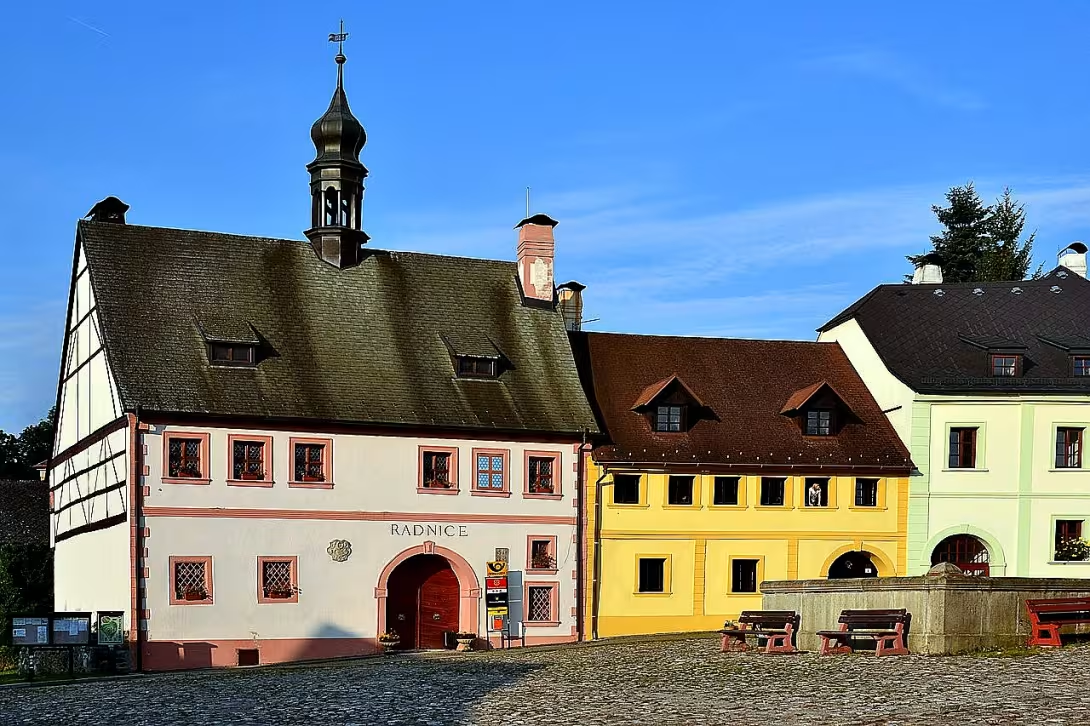
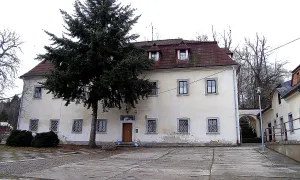
Radnice v Úterý is a historical monument with architectural value and long history. Located on the southwest side of the town square Úterý in the district of Plzeň-North, built in the style of the northern Renaissance. This one-storey raked building from 1561 is a key part of the urban monument zone, declared in 1992. It serves as a seat of the local office and is registered in the Central List of Cultural Monuments of the Czech Republic.
Built in 1561, it belongs to older Renaissance buildings in Central Europe. The style of the northern Renaissance combines Gothic and Renaissance elements, which is visible on the facade of the town hall in Úterý. After the fires in 1694 and 1719, the building was repaired several times to maintain its original form. The last reconstruction after 1990 ensures its good condition and functionality.
Architecture is simple, but elegant. It is a single-storey raked house with a passage as an entrance. In the facade there is a stone emblem of the city with a year of construction, highlighting its historical significance. The destruction of the first floor from the side and the yard adds architectural complexity. The roof ended with an occipital tin bell with an onion top and a crowned cross gives the building a distinctive look.
The building has been the center of local administration for centuries. After the fires in 1694 and 1719, repairs were made which preserved its historical character. The last reconstruction ensures its good condition for administrative purposes.
The council can be considered as a key part of the cultural heritage Úterý. Its architecture and history attract local and visitors from all over the Czech Republic. Today, the town hall is publicly available and serves as a seat of the local office. Its historical significance and architectural value make it an important monument worth visiting.
The town hall in Úterý represents a living example of the town's history and culture. Its architecture and long-term use as the headquarters of the administration demonstrate its importance for the population of Úterý. Today, when the town hall is open to the public, everyone can appreciate its historical value and architectural beauty. Visiting the City Hall in Úterý is not only a way into the past, but also an opportunity to learn about the history and culture of our region.
Historical milestones
- 1561
- Town Hall in Nordic Renaissance style
- 1694
- Repair of City Hall after fire
- 1719
- Repair of City Hall after fire
- 1992
- Announcement of the urban monument zone
Architectural development
The construction dates back to 1561 and is realized in the style of the Nordic Renaissance. It's a one-story raked house with a pass. During history, the building was repaired after several fires.
Historical events
In 1561, the town hall was built. After the fires in 1694 and 1719, the building was repaired. After 1990, the town hall was subjected to the last reconstruction.
Points of interest
- Radnice v Úterý is a single-storey raked building built in the style of the northern Renaissance from 1561. - It is a key part of the town monument zone declared in 1992 and is registered in the Central List of Cultural Monuments of the Czech Republic. - After the fires of 1694 and 1719, the building was repaired several times to maintain its original form. - The architecture of the town hall includes a stone emblem of the city with an annual building on the facade and an octave metal bell bell with an onion peak and a crowned cross. - The town hall can be considered a key part of the cultural heritage Úterý, attracting local and visitors from all over the Czech Republic.
Guide
Show guide text
This text was created by artificial intelligence and has not been editorially reviewed. It may contain inaccuracies.
Welcome to the beautiful city of Úterý. Right now, you're standing at his most important point, in the heart of the urban monument zone, where history meets everyday life. Before your eyes is a building that is absolutely crucial to this city. It's City Hall. Look around you at this square and perceive the atmosphere of a place that has been the center of all important decisions and meetings for centuries. This building, which you are currently observing, is not just an ordinary house, but a living witness to many of the events that have taken place here. Its location on the southwest side of the square is not random; it is here that it forms a solid part of the urban picture.
Now, if you look at the very form of this building, you are immediately interested in its unusual and very specific construction. It's not a stone block, it's a barbed building. This means that wooden beams and fillings are connected in its walls, which creates the typical, very cozy and historical appearance that is so characteristic of this region. This construction technique allows us to perceive the deep link between human work and the materials that were available at the time. The whole building is single storey, which gives it some human measure and friendliness, although it also exudes its historical importance. If you look below, you'll notice that the building has a passageway. This passage through the City Hall's body is not only a practical element, but also an important connecting link that connects parts of the square and allows people to move within urban buildings in a very natural way.
Now let's go back together in time deep into the past to understand how this object came into being. This town hall has a very long history that goes back to the year one thousand five hundred sixty-one. It was this year that the construction was built in what we call the Nordic Renaissance. This style is very interesting because it contains elements that are typical of the northern regions of Europe and gives the building its unique character. Although we do not know the names of the particular architects who designed this project, we can clearly see their championships in every detail of this construction. This town hall has been designed since its inception to serve as a seat of the city administration, and this function, albeit in modern form, remains in the building today.
Now pay attention to details that you can see right in front of you. When you look up at the top of the building, notice what the throne on the roof is. It's a tin bell. This small but significant element has been a tool for centuries that has announced important events, time or danger to all the inhabitants of the city. It's a symbol of communication and vigilance. Another important element you should not overlook is the stone emblem of the city. This character is carved into stone and serves as a permanent proof of the identity of this place. It's a reference to the fact that this city has its own history, its own pride and its own seal. These details, even if they may seem small, form the soul of the entire building.
However, the history of this town hall has not always been about quiet duration and construction. As with every important place in history, she also had to face severe trials that could lead to her destruction. Two crucial moments that left a deep mark on city hall and town were fires. The first one broke out in one thousand six hundred ninety-four, and the second one followed in one thousand seven hundred nineteen. Imagine the tension and effort that people had to make to lift this important structure from the ashes and restore its original form. These repairs after the fires show us the incredible resilience of the locals and their determination to protect their city's heart. Every repair was a new beginning and every other layer of history was inserted with the intention of ensuring that the building served future generations.
It's fascinating to see how this historical object has adapted to the changing world. Although the time has changed dramatically since one thousand five hundred sixty-one, the city hall has remained a functional center. In the year one thousand ninety-two, this area was declared an urban landmark zone, highlighting its immense value for the whole country. The town hall is today registered in the Central List of Cultural Monuments of the Czech Republic, which means it is protected as a precious treasure of our heritage. And although the world is changing around her, she still serves her original purpose as the seat of the city office. It is a fascinating combination of past and present, where old wooden beams and modern administrative work meet in one building.
If you're looking for something that might really interest you, think about how many generations of people just stood here, just like you. How many officials here in the past have decided the fate of the city, how many people have looked at the bell tower waiting for the signal and how many important urban debates have taken place in this area. This building is not just a dead object made of stone and wood, it is a vessel that keeps memories of thousands of lives. He is a silent witness every day, every year, and every century this city has lived.
Now that you've looked at the city hall and understood its meaning, I suggest you continue your walk around the city monument zone. Explore other parts of the square, look at the details of the surrounding buildings and see how history intertwines with today's life in every corner of this place. Every building here has a story waiting to be discovered. Thank you for spending this moment with us and paying attention to this beautiful memory. We wish you a beautiful and inspiring next part of your trip by the city of Úterý. Goodbye.
Tips for visitors
The best time to visit is in the morning or late afternoon when soft light hits the facade of the building. For the best photos we recommend focusing on details of the Nordic Renaissance and transit in the southwest part of the square.
Town Hall is available by car and public transport.
We recommend you take comfortable shoes suitable for walking through the historical centre. For families with children, the visit is a great opportunity to familiarize yourself with the architecture of played structures within educational walks.
The Úterý City Monument Zone is located in the immediate vicinity, which is worth exploring its entire length to get a better idea of the history of the city.
Frequently asked questions
Can the monument be visited?
The building is in use (offices, a school, shops and the like). The interior is generally accessible only during operating hours and tours are not usually offered; we have not verified the details. You can see the exterior from the street.
Where is the monument?
Location: Úterý, Plzeňský kraj. The map on this page shows the exact spot.
Why is the monument protected?
It is listed in the Central List of Cultural Monuments of the Czech Republic as a cultural monument (register no. 1000144562).
Businesses nearby
Do you run a restaurant, accommodation, shop, museum, rental, wellness or other visitor service near this monument? Show yourself directly to the people heading to it — this is how they will see you in the app and on the web:
Nearby
Městská památková zóna Úterý.
Accommodation nearby
Themed route
Thematic cruise route: City Monument Zone Úterý
1.Radnice v Úterý - Type: Historical building, administrative building. This town hall is the heart of the city and a symbol of its history. Its architecture reflects different periods of development, from Gothic to Baroque. The inner space offers visitors a view of historical documents and works of art.
2. Old Town Square - Type: Public area, city centre. The square is the heart of Úterý. Here are a number of historical buildings and monuments that resemble the rich history of the city. It is an ideal place for relaxing and visiting local shops.
3. Old Town Church - Type: Religious building, monument. - Why is it worth visiting: This church is one of the oldest and most important sacral buildings in the city. Its architecture and interior attract travelers who are interested in spiritual history and artistic elements.
4. Old Town Street - Type: Historical commercial space. - Why is it worth visiting: This street is famous for its historical architecture and offering local shops. It is an ideal place for those who want to discover traditional Czech crafts and food.
5. City Library - Type: Cultural institutions. - Why is it worth a visit: The library offers not only a rich collection of books, but also various cultural events and exhibitions. It's a place for those who want to learn more about local history and culture.
This route offers a comprehensive view of the historical and cultural wealth of Úterý.
Seasonal recommendations
Spring: In the spring season Radnice v Úterý receives wonderful lighting, when the sun projects its golden beam on historical facades. Flowers begin to bloom around the monument and restore the beauty of the surrounding seeds. The atmosphere is full of hope and new initial feelings, making the visit a special experience. It is recommended to visit in the morning or late afternoon to avoid the mid-winter sun and mild doses of people enjoying spring weather. Clothes should be suitable for warm days with the possibility to add a layer to a cooler morning or evening.
Summer: In summer Radnice v Úterý takes on life and attractions, where nearby streets are filled with tourists and locals. The sunny days bring a bright light that emphasizes the architectural beauty of the monument. The atmosphere is full of energy and joy, which makes the visit popular by calling for families and individuals. We recommend that you arrive early in the morning or later in the evening to avoid noon heat and a special crowd increase. Don't forget the sun protection and plenty of drinking water.
Autumn: In autumn Radnice v Úterý receives soft, golden shades when leaves fall from trees around the monument. The atmosphere is calm and friendly, making the visit ideal for relaxing and enjoying local colors. You should visit her in the afternoon or in the evening when the temperature is pleasant and the crowds are smaller. Clothes should be suitable for mild weather with the possibility to add a layer to a cooler afternoon or evening.
Winter: In winter Radnice v Úterý becomes calm and quiet, when snow covers decorate the surrounding streets. The sunny days bring bright light, which particularly highlights the historical architecture of the monument. The atmosphere is calm and you will often meet local people enjoying cold weather. We recommend you visit in the morning or late afternoon to avoid short winter classes and freezing air. Don't forget to wear warm clothes, sunglasses and enough drinking water to keep the body hydrated in cold weather.
Visualizations and artistic views


The visualisations are generated by artificial intelligence and serve as inspiration.
Photos from the area
Real photos taken near the monument

Zdroj a licence jsou uvedeny u každého snímku.
Tips from visitors
No tips yet. Be the first!
Log in and add your tip.
Sources and literature
Photos: Petr Kinšt / CC BY-SA 4.0 — Wikimedia Commons. The author and licence also appear when you hover over the image.
Faktickým podkladem tohoto textu byl článek na Wikipedii, jehož autory jsou přispěvatelé Wikipedie. Článek je dostupný pod licencí CC BY-SA 4.0.
Location on the map


Příběhy a pověsti
Legendy, pověsti a příběhy spjaté s touto památkou
Fotografie návštěvníků
Zatím žádné fotografie. Buďte první, kdo přidá fotografii z návštěvy!
Log in a přidejte svou fotografii nebo hodnoťte.
Za ověřenou návštěvu v aplikaci získáte víc bodů — poznáme podle GPS, že jste na místě.
Reviews and comments