






grandhotel a okresní dům v Pardubicích Palace
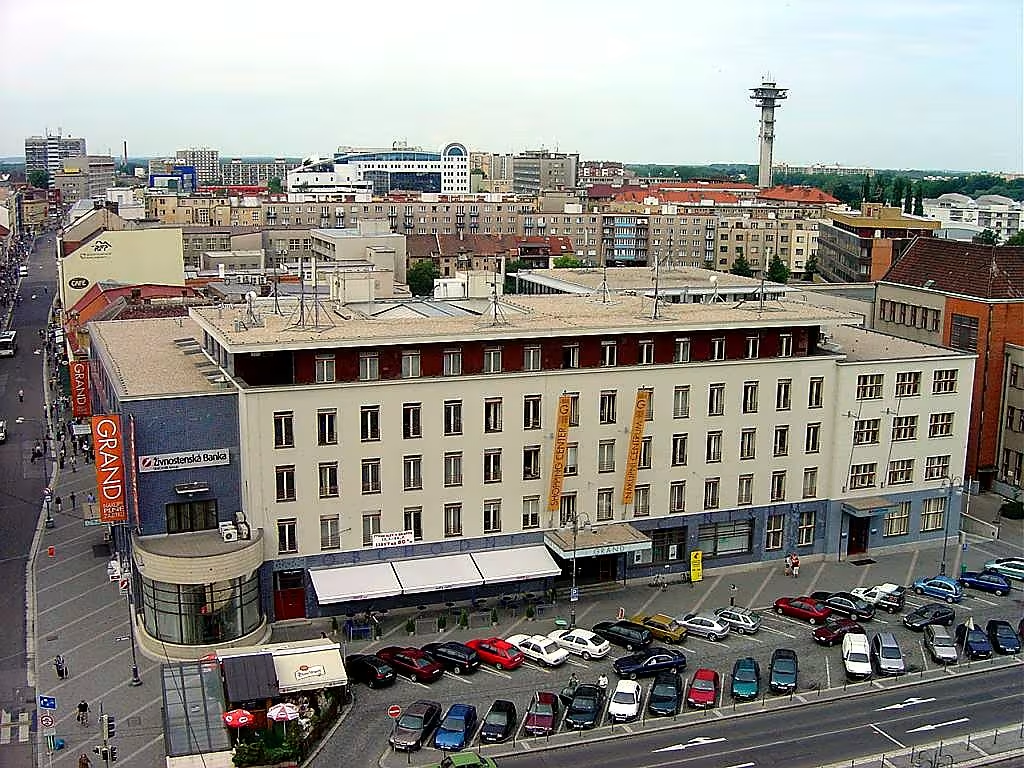
The Grandhotel a Okresní dům in Pardubice exemplifies early 20th-century modernist architecture, showcasing functionalism's practicality and Czechoslovakia’s evolving culture. Situated at Zelené Předměstí within the Pardubice district of Pardubický kraj, this four-story building was constructed from 1927 to 1931 under Josef Gočár's architectural vision. Its pioneering use of reinforced concrete skeleton construction marked a significant departure from traditional methods in Czechoslovakia.
The Grandhotel’s origins are tied to the socio-political changes following Czechoslovakia's establishment in 1918, when modernist architecture emphasizing functionality and simplicity gained popularity across Europe. The District Office of Pardubice commissioned Josef Gočár to design this multifunctional building for administrative and hotel purposes, reflecting the era's innovative spirit.
Architecturally, the Grandhotel is notable for its functionalist style with clean lines and practical elements. Its reinforced concrete skeleton construction was revolutionary, offering structural integrity and aesthetic appeal. Originally, it featured two wings: one for hotel functions with 57 rooms and another for administrative use. Additional facilities included a café, restaurant, billiards room, large social hall, clubrooms, wine cellar, and a cinema in the basement, highlighting its role as a community hub.
Initially owned by the District Office of Pardubice, the Grandhotel underwent significant changes between 1997 and 2000 when architects Petra Drexler and Ladislav Vrbata transformed it into a commercial-administrative center. This renovation altered the internal layout with mezzanines and removed several original elements. Despite these changes, its status as a cultural monument remains.
A key historical event is President Tomáš Garrigue Masaryk’s stay on May 30, 1931, marking him as the building's first guest. This visit underscores the Grandhotel's importance in Czechoslovakia's national history and its role in hosting significant figures of the time.
Today, the Grandhotel a Okresní dům serves as an Obchodně-administrativní centrum (commercial-administrative center), maintaining relevance in Pardubice’s urban landscape. Its location near Třída Míru and Náměstí Republiky places it amidst historical and modern architecture, making it a focal point for locals and visitors. The building's preservation as a cultural monument ensures its architectural heritage is protected for future generations.
Visiting the Grandhotel offers a unique opportunity to explore Czechoslovakia’s architectural history. Its transformation from a multifunctional palace to a modern administrative center reflects broader societal changes while preserving its historical essence, standing as an enduring symbol of innovation and cultural significance in Pardubice.
Then and now
Drag the slider to compare how the landmark may have looked when it was built with the view today.
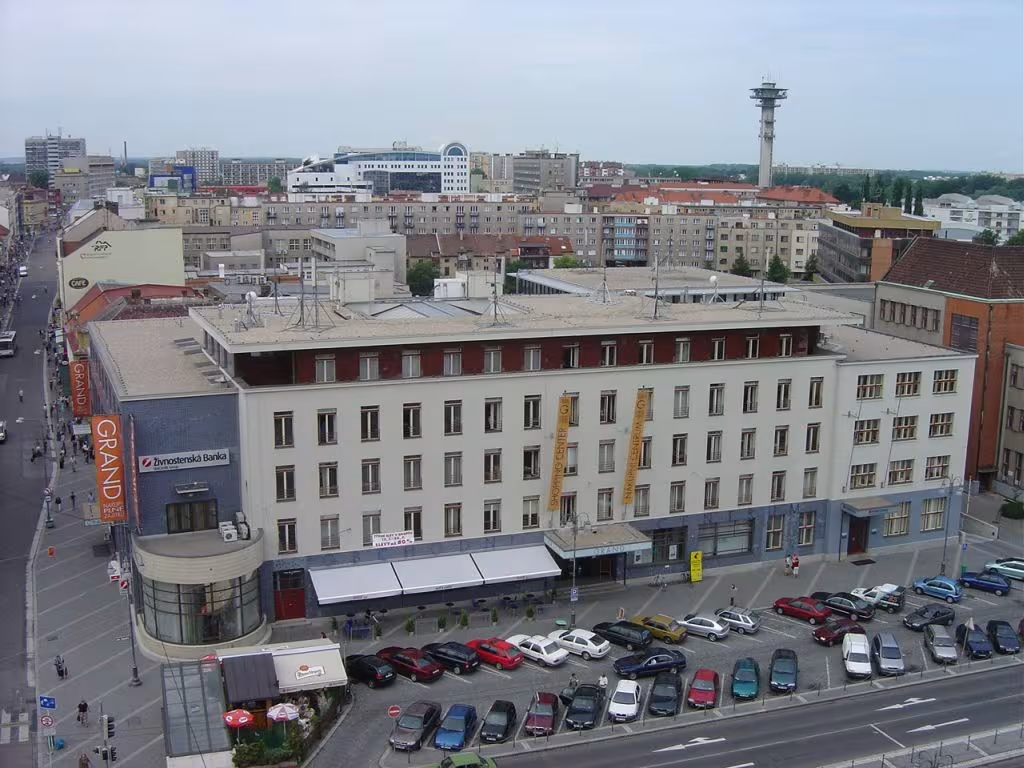
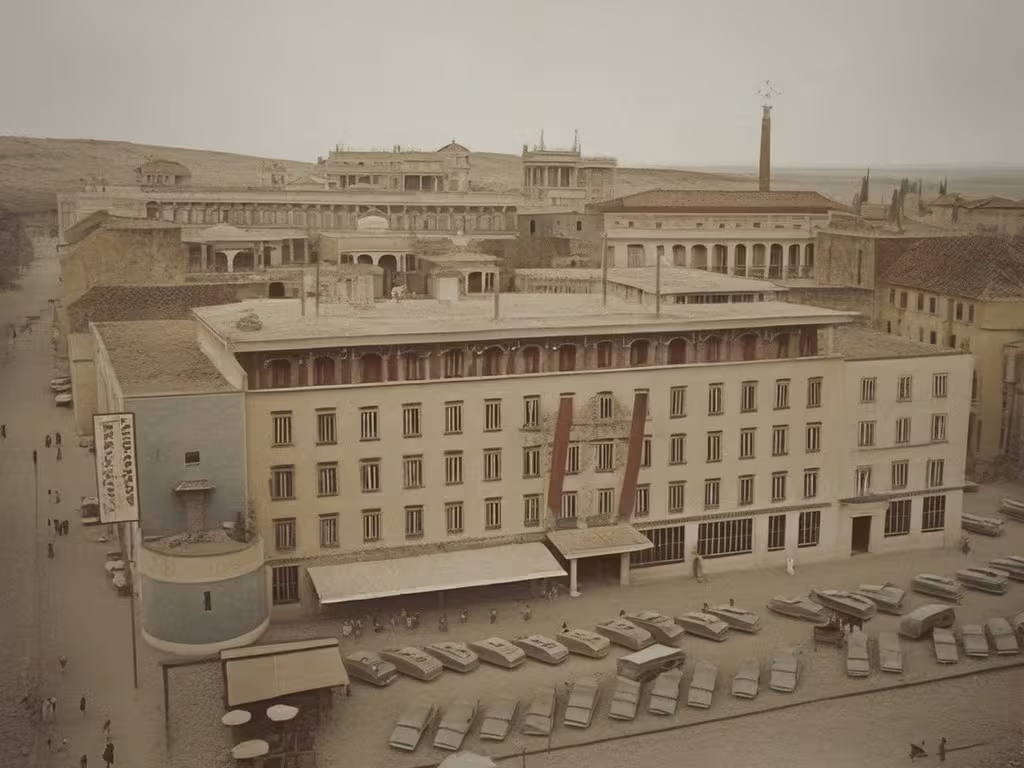
The historical appearance on the left is an AI-generated visualisation and serves as inspiration only.
Historical milestones
- 1918
- Establishment of Czechoslovakia.
- 1927
- Construction of Grandhotel began under Josef Gočár's design.
- 1931
- Grandhotel completed and President Masaryk became its first guest.
- 1997
- Renovation by architects Petra Drexler and Ladislav Vrbata began.
- 2000
- Completion of Grandhotel's transformation into a commercial-administrative center.
Architectural development
The Grandhotel was originally designed in the functionalist style by Josef Gočár, featuring reinforced concrete skeleton construction. It included two wings: one for hotel purposes and another for administrative offices. The building underwent major renovations from 1997 to 2000, which altered its internal layout significantly and introduced new architectural elements.
Historical events
The building was completed and opened in 1931, with President Tomáš Garrigue Masaryk being its first guest on May 30, 1931.
Between 1997 and 2000, the building underwent significant renovation to become a commercial-administrative center.
Owners
Initially owned by the District Office of Pardubice; later transformed into a commercial-administrative center.
Guide
This guide is narrated by a synthetic voice generated by artificial intelligence.
Show guide text
This text was created by artificial intelligence and has not been editorially reviewed. It may contain inaccuracies.
Welcome to the grandeur of The Grandhotel and District House in Pardubice, a beacon of architectural innovation nestled in the heart of Zelené Předměstí. As you stand before this majestic structure, take a moment to absorb its towering presence—a four-story testament to functionalist design that commands attention with its unique silhouette against the sky.
The story of this remarkable building begins in 1927, born from the visionary mind of architect Josef Gočár. This was a time when Czechoslovakia had just emerged as an independent nation in 1918, brimming with new ideas and aspirations. The construction of The Grandhotel spanned four years, culminating in its completion in 1931. It was designed to serve multiple purposes, embodying the spirit of innovation by housing not only a hotel with 57 rooms but also offices for district administration, a café, restaurant, billiards room, large social hall, clubrooms, wine cellar, and even a cinema nestled within its basement.
As you gaze upon The Grandhotel today, take note of its reinforced concrete skeleton construction—a pioneering technique in Czechoslovakia at the time. This architectural choice marked a significant departure from traditional building methods and set a precedent that would influence future designs across the region. Its functionalist style is evident in every detail, from the streamlined forms to the harmonious integration of diverse functions within one edifice.
The history of The Grandhotel is also intertwined with key figures who have walked its halls. Among them was Tomáš Garrigue Masaryk, the first President of Czechoslovakia, whose presence as a guest upon its completion in 1931 added to the building's storied legacy. Fast forward to 1997, and The Grandhotel underwent another transformation under the guidance of architects Petra Drexler and Ladislav Vrbata, evolving into a vibrant commercial-administrative center by the year 2000.
One intriguing aspect of this architectural gem is its pioneering use of reinforced concrete construction, which was quite revolutionary for its time. This technique not only provided structural integrity but also allowed for more creative freedom in design—a feature that resonates through the building's modernist lines and spacious interiors.
As we conclude our journey around The Grandhotel and District House, I invite you to continue exploring this remarkable site. Each corner holds a story, each detail a testament to the visionaries who brought it into being. Thank you for joining me on this auditory tour; may your visit inspire curiosity and admiration for the architectural marvel that is The Grandhotel in Pardubice.
Enjoy your exploration!
Tips for visitors
The best time to visit The Grandhotel a Okresní dům is during the late spring or early fall when the weather is pleasant, allowing for comfortable exploration of both the hotel and its surroundings. These seasons offer mild temperatures ideal for walking around Pardubice's Zelené Předměstí area without the summer crowds or winter chill. Additionally, visiting outside peak tourist season may provide a more intimate experience with fewer visitors, making it easier to appreciate the architectural details of this functionalist masterpiece.
Parking and transportation options are convenient for those planning to visit The Grandhotel. There is parking available in the vicinity, though spaces can be limited during busy times, so arriving early might be beneficial. Public transport serves the area well, with buses and trams connecting Pardubice's central locations to Zelené Předměstí. For the most current transportation options and schedules, it’s advisable to check a local travel website or app prior to your visit.
When planning your visit, consider bringing comfortable walking shoes as you'll likely spend time exploring both inside The Grandhotel and its surrounding area. A camera is also recommended to capture the unique architectural features of this functionalist building. Early morning or late afternoon visits are ideal for photography enthusiasts seeking soft natural light that enhances the building's facade.
Nearby, within a 30-minute walk, you can explore Náměstí Republiky and Třída Míru, which offer a mix of historical and modern architecture. These areas provide additional cultural insights into Pardubice’s development over the years. For families with children, these locations are not only educational but also engaging, offering various shops and cafes where you can take a break.
For families visiting The Grandhotel with children, consider planning your visit to include interactive elements that will engage younger visitors. While exploring the hotel's architecture, encourage them to notice different shapes and designs in the building’s structure. Nearby Náměstí Republiky offers spaces where children can play or simply enjoy a snack while you take in the surroundings. Always check ahead for any family-friendly events or exhibitions that might be taking place during your visit.
Businesses nearby
Do you run a restaurant, accommodation, shop, museum, rental, wellness or other visitor service near this monument? Show yourself directly to the people heading to it — this is how they will see you in the app and on the web:
Events nearby
Zdroj akcí: otevřená data měst a obcí ČR (Národní katalog otevřených dat) a kalendář akcí Národního památkového ústavu.
Nearby
The Grandhotel is located in Pardubice, near Třída Míru and Náměstí Republiky. The area features a mix of historical and modern architecture, with cultural and commercial establishments nearby.
Accommodation nearby
Themed route
Tematická výletní trasa: Historie a architektura Pardubic
1. Grandhotel a okresní dům v Pardubicích (palác) *Typ:* Historické staveniště *Proč stojí za návštěvu:* Tento impozantní palác, který sloužil jako Grandhotel, je jednou z nejznámějších památek Pardubic. Jeho architektura odráží bohatou historii a kulturu města. Vnitřek nabízí nádherné sálů a výstavy, které předvádějí dědictví regionu.
2. Třída Míru *Typ:* Historická ulice *Proč stojí za návštěvu:* Tato ulička je známá svou krásnou architekturou a historickým významem. Procházka po Třídě Míru nabízí pohled na klasické domy s bohatými dekoracemi, které připomínají minulost Pardubic.
3. Náměstí Republiky *Typ:* Historické náměstí *Proč stojí za návštěvu:* Náměstí Republiky je srdcem města a nabízí pohled na různorodou architekturu, která zahrnuje moderní i historické prvky. Je to ideální místo pro relaxaci a prohlédnutí se po ulicích Pardubic.
4. Okolní kulturní a obchodní zařízení *Typ:* Kulturní a obchodní centrum *Proč stojí za návštěvu:* V okolí Grandhotelu se nachází různé kulturní instituce a obchody, které představují současnou kulturu města. Tyto místa jsou ideální pro zahřátí po prohlídce historických památek nebo pro nákupy.
Tato trasa vám umožní objevit jak historii, tak i moderní tvář Pardubic prostřednictvím jejich architektury a kultury.
Seasonal recommendations
Spring: As the grandeur of spring envelops the Grandhotel and District House in Zelené Předměstí, visitors are greeted by a vibrant display of blooming flowers and lush greenery that accentuates the historic architecture. The gentle warmth of the season breathes life into the gardens surrounding the palace, making it an ideal time for leisurely strolls. During this period, the area is less crowded than in summer, offering a tranquil atmosphere to appreciate the site's beauty. Visitors should dress in layers to accommodate fluctuating temperatures and consider early morning visits to fully enjoy the serene environment before crowds begin to gather.
Summer: The grandeur of the Grandhotel and District House shines brightest during the summer months, when long daylight hours provide ample opportunity to explore every nook of this historic site. This season is characterized by its lively atmosphere, with families and tourists flocking to experience the palace's splendor under the warm sun. To avoid peak crowds, it’s advisable to arrive early in the morning or later in the afternoon. Comfortable walking shoes and light clothing are recommended due to the warmer weather, ensuring a pleasant visit as you soak up the vibrant energy of summer.
Autumn: Autumn transforms Pardubice's Zelené Předměstí into a picturesque landscape of golden hues and crisp air, making it an enchanting time to visit the Grandhotel and District House. The cooler temperatures create a cozy ambiance perfect for exploring the historic interiors without the discomfort of summer heat. As the foliage changes color, the setting sun casts a warm glow over the palace, enhancing its architectural details. Visitors should wear warmer clothing and consider visiting during weekdays when fewer tourists are present, allowing for a more intimate experience with the site's autumnal charm.
Winter: Winter cloaks the Grandhotel and District House in Pardubice’s Zelené Předměstí with a serene blanket of snow, offering a magical backdrop to this historic landmark. The atmosphere is quiet and reflective, ideal for those who appreciate the beauty of architecture against a winter landscape. However, shorter daylight hours mean the site may close earlier than in other seasons, so planning ahead is essential. Visitors should dress warmly in layers and consider bringing gloves or scarves to comfortably navigate the chilly air while enjoying the unique winter ambiance that envelops this historic site.
Visualizations and artistic views


The visualisations are generated by artificial intelligence and serve as inspiration.
Photos from the area
Real photos taken near the monument


Zdroj a licence jsou uvedeny u každého snímku.
Atmosphere of the place
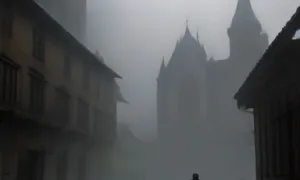
This atmospheric visualisation of the place and period was generated by artificial intelligence. It is not real footage of the location.
Tips from visitors
No tips yet. Be the first!
Log in and add your tip.
Sources and literature
Fotografie: Czech Wikipedia user Marzper / CC BY-SA 4.0 — Wikimedia Commons. The author and licence also appear when you hover over the image.
Faktickým podkladem tohoto textu byl článek na Wikipedii, jehož autory jsou přispěvatelé Wikipedie. Článek je dostupný pod licencí CC BY-SA 4.0.
Location on the map
More monuments – Zelené Předměstí
Show all in the municipality


Příběhy a pověsti
Legendy, pověsti a příběhy spjaté s touto památkou
Fotografie návštěvníků
Zatím žádné fotografie. Buďte první, kdo přidá fotografii z návštěvy!
Přihlaste se a přidejte svou fotografii nebo hodnoťte.
Za ověřenou návštěvu v aplikaci získáte víc bodů — poznáme podle GPS, že jste na místě.
Reviews and comments