






Hercovka (usedlost, Praha 6) Villa
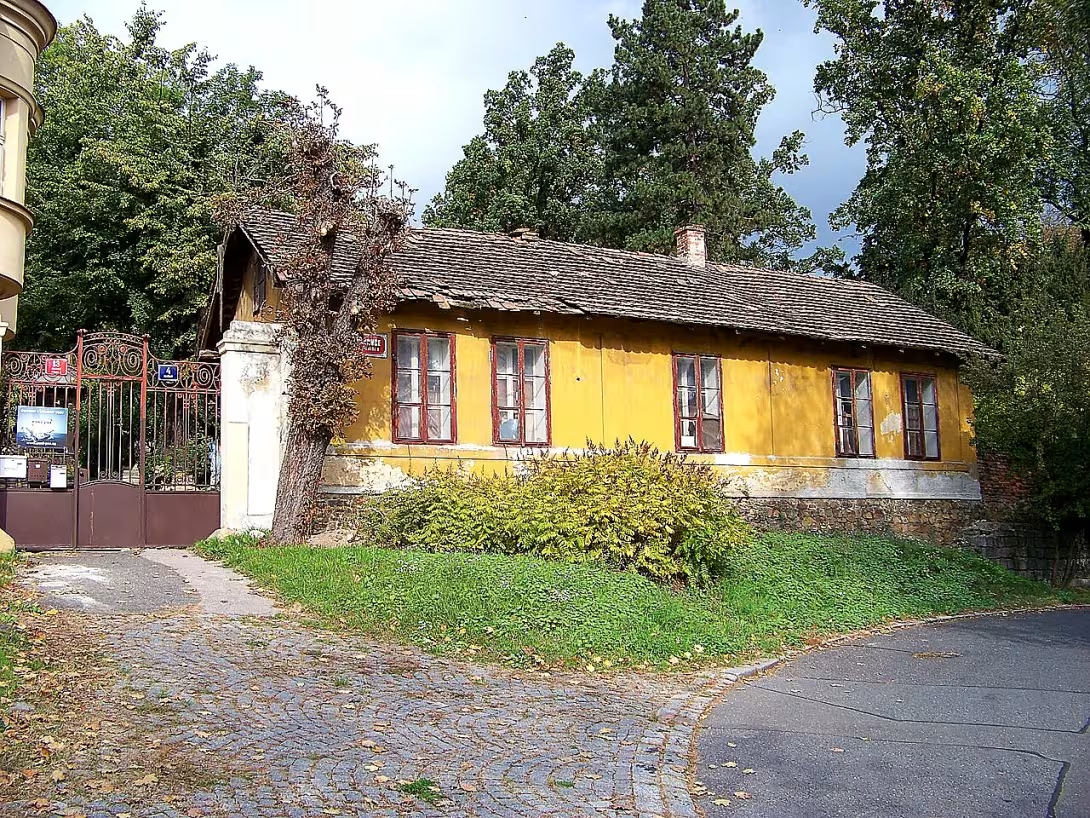
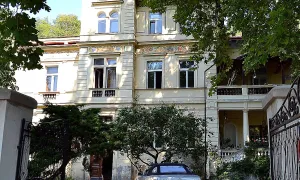
Hercovka is a neoclassical villa located in Prague's Dejvice district, constructed between 1925 and 1926. This historical monument stands out for its architectural evolution from an earlier vineyard estate with roots dating back to the 17th century. The site has been preserved as a cultural heritage landmark, notable not only for its architectural style but also for its rich history of ownership changes and structural transformations.
The origins of Hercovka trace back to several merged vineyards. In the late 17th century, a new wine press was constructed on the estate, marking an important development in its agricultural use. By 1741, documentation from an estate sale detailed winery equipment, indicating the site's significance as a productive vineyard. The property underwent significant changes during the wars over Austrian inheritance, leading to periods of destruction and non-reconstruction.
Ownership of Hercovka changed hands several times throughout history. Initially owned by Matěj Lichtenberger in 1628, it was later acquired by Řehoř Augustin Hofman in 1750, who renamed it from Lychtenberka to Herčovka, and eventually Hercovka. In 1809, Jan Adolf hrabě z Pöttingu became the owner, maintaining its use as a residential estate with various outbuildings. By 1855, Jan Wiltsch purchased the property, parceling and selling parts of it while retaining some land to construct what is now known as Vlčovka. Gabriela Haaseová z Wranau owned the site in the late 19th century, commissioning a gardener's house that still stands today.
The current neoclassical structure was designed by architect Josef Donát between 1925 and 1926. The villa incorporates older architectural elements within its cellar and some walls, yet it presents a modern appearance. This blend of old and new reflects the historical layers of the site while showcasing early 20th-century design influences.
Today, Hercovka is privately owned and serves as residential property. Its garden features an alpine plant collection and a decorative pond, enhancing its aesthetic appeal with lion sculptures near the steps. The villa's location in Dejvice offers proximity to Prague Castle and several parks and cultural institutions within a five-kilometer radius.
Visiting Hercovka provides insight into the architectural evolution of Czech estates from agricultural roots to modern residential use. Its historical significance and preserved features make it a noteworthy destination for those interested in both architecture and history. The villa's blend of past and present invites visitors to explore its unique story within Prague's vibrant cultural landscape.
Then and now
Drag the slider to compare how the landmark may have looked when it was built with the view today.
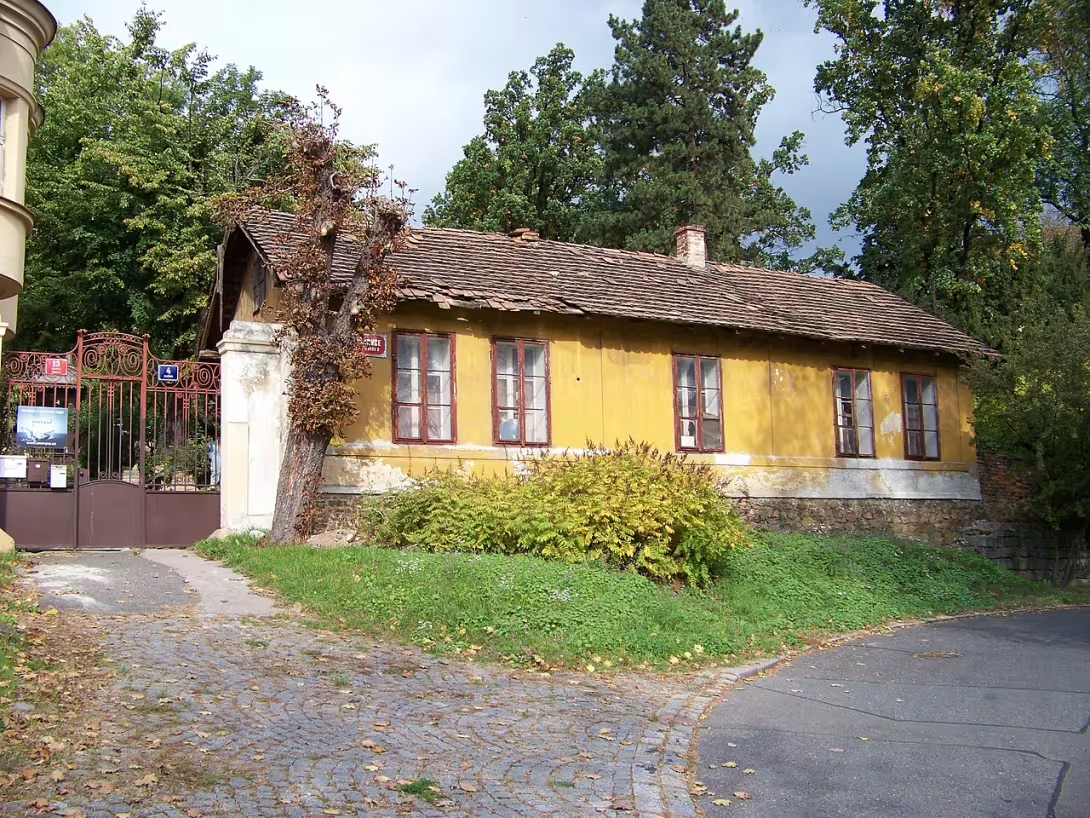

The historical appearance on the left is an AI-generated visualisation and serves as inspiration only.
Historical milestones
- 1628
- Matěj Lichtenberger becomes the owner.
- 17th century
- A new wine cellar is built on the estate.
- 1741
- Sale documentation mentions winemaking equipment.
- 1750
- Řehoř Augustin Hofman renames the estates to Herčovka.
- 1809
- Jan Adolf Count of Pötting becomes the owner.
- 1925
- The construction of a new neoclassical villa begins.
Architectural development
Originally part of several vineyards, Hercovka evolved from an agricultural estate to a residential villa. The current neoclassical building was constructed between 1925 and 1926 by architect Josef Donát, incorporating older structural elements. Earlier structures included a gardener's house built in the 1870s.
Historical events
In the late 17th century, a new wine press was constructed on the estate.
The property underwent significant changes in ownership and structure during the wars over Austrian inheritance.
Owners
Matěj Lichtenberger (1628)
Řehoř Augustin Hofman (1750)
Jan Adolf hrabě z Pöttingu (1809)
Jan Wiltsch (1855)
Gabriela Haaseová z Wranau (1871)
Points of interest
- Despite its neoclassical appearance today, Hercovka incorporates older architectural elements in its cellar and some walls, showcasing a blend of historical layers within the modern design.
- The original name of the estate was Lychtenberka before being changed to Herčovka by Řehoř Augustin Hofman in 1750, reflecting personal influence over property names during that era.
- During the wars over Austrian inheritance, Hercovka experienced periods of destruction and non-reconstruction, highlighting its vulnerability amidst historical conflicts.
- The site once hosted a gardener's house commissioned by Gabriela Haaseová z Wranau in the late 19th century, which still stands today as a testament to the estate’s evolving functions over time.
- Hercovka's garden features an alpine plant collection and lion sculptures near the steps, adding unique decorative elements that enhance its aesthetic appeal beyond typical residential gardens.
Guide
This guide is narrated by a synthetic voice generated by artificial intelligence.
Show guide text
This text was created by artificial intelligence and has not been editorially reviewed. It may contain inaccuracies.
Hercovka in Prague's Dejvice district is a neoclassical villa built between nineteen twenty-five and nineteen twenty-six. It was designed by architect Josef Donát and constructed on the land and foundations of an old wine-growing homestead, from which it took its name. It is a protected cultural monument.
The homestead was formed by combining several original vineyards. In the seventeenth century it was called Lychtenberka, because from sixteen twenty-eight it was owned by Matěj Lichtenberger. Around sixteen seventy a new wine press was built there. Historical sources mention it as late as seventeen forty-one, when the equipment was documented during a sale: a large vat in the pressing room, two tubs under the press, five filtering tubs, a marking tool, a jug, four buckets and seven large barrels. During the War of the Austrian Succession the vineyard was devastated and nobody restored it.
In seventeen fifty a stonemason named Řehoř Augustin Hofman bought the homestead. He was the steward of Johann Michael Hertsch, the dean of the Prague chapter, and the place took its name Herčovka, later Hercovka, after this dean. A record from seventeen sixty-eight describes a residential building, a garden, pasture land and fields covering seven acres. The homestead remained roughly the same size for the next hundred years.
In eighteen oh nine it belonged to Count Jan Adolf from Pötting. At that time there stood a lower dwelling, a cellar, a vaulted passage, a stable, a barn and a shed. The count presumably lived on the upper floor of the house during the summer. In eighteen fifty-five Jan Wiltsch bought the homestead. He subdivided and sold off the land, keeping only part of it and building on it a neighboring homestead called Vlčovka, originally named Vilčovka after himself.
In the eighteen seventies Hercovka was owned by Gabriela Haaseová from Wranau. She had a gardener's cottage built, which still stands today and dates from eighteen seventy-one to eighteen seventy-four. She also had stables built, which were converted into residential spaces in nineteen twenty-five.
In building the present villa older structures were used. They can be found in the basement and in some of the outer walls, but they do not affect the external appearance of the house. A large part of the garden consists of an alpine garden with a pond. Balustrades have been preserved and a stone lion stands by the stairs. To the east of the villa stands an older cottage, originally the gardener's residence. The villa is now in private ownership and serves as a dwelling.
Tips for visitors
The best time to visit Hercovka is during the late spring or early autumn months, when the weather is mild and pleasant for exploring both the villa and its surrounding green spaces. During these times, you can enjoy the lush gardens without the discomfort of summer heat or winter cold. Additionally, visiting on a weekday might offer a quieter experience compared to weekends.
The area is well-served by trams and buses that connect to the rest of Prague. Always check current routes and schedules as they may vary.
When visiting Hercovka, it's recommended to bring comfortable walking shoes, especially if you plan to explore the nearby parks and green spaces. A camera is also advisable to capture the architectural beauty of the villa and its surroundings. Since weather can be unpredictable, carrying a light raincoat or umbrella might be useful.
For photography enthusiasts, the best spots around Hercovka are those that take advantage of natural lighting during the golden hours—shortly after sunrise or before sunset. The villa's neoclassical architecture is particularly striking in soft, diffused light. Additionally, the surrounding parks offer scenic backdrops for capturing both the building and its environment.
In terms of nearby attractions within a 30-minute radius, visitors can explore several cultural institutions such as the Czech Museum of Music or enjoy leisurely strolls through the expansive Letná Park. These locations are perfect for extending your visit to include more than just the villa itself.
Frequently asked questions
Can the monument be visited?
This is a residential or farm building, not a museum with opening hours. Please view it from public space and respect the owners' privacy. We have no information about access to the interior.
Where is the monument?
Location: Dejvice, Hlavní město Praha. The map on this page shows the exact spot.
Why is the monument protected?
It is listed in the Central List of Cultural Monuments of the Czech Republic as a cultural monument (register no. 1000121918).
Businesses nearby
Do you run a restaurant, accommodation, shop, museum, rental, wellness or other visitor service near this monument? Show yourself directly to the people heading to it — this is how they will see you in the app and on the web:
Events nearby

Zdroj akcí: otevřená data měst a obcí ČR (Národní katalog otevřených dat) a kalendář akcí Národního památkového ústavu.
Nearby
Hercovka is situated in Dejvice, a district known for its green spaces and proximity to Prague Castle. The area features several parks and cultural institutions within a five-kilometer radius.
Accommodation nearby
Trips and activities nearby
Guided tours, tickets and activities nearby from GetYourGuide
Affiliate link: if you buy from the partner, we may receive a commission. The price for you does not change.
Search tours and activities →Themed route
Hercovka (usedlost, Praha 6) - The main goal of this tour is to visit this beautiful villa, which is a unique example of Art Nouveau architecture.
Dejvická zahrada (park, Dejvice) - A peaceful oasis in the heart of the city, perfect for a relaxing stroll.
Kinsky Palace (palác, Dejvice) - A stunning example of Baroque architecture, featuring an impressive courtyard and beautiful gardens.
Dejvice Square (náměstí, Dejvice) - A charming square surrounded by beautiful buildings and cafes, perfect for a coffee break.
Petřín Hill (vrch, Dejvice) - A popular spot for a panoramic view of the city, with a beautiful park and a historic observatory.
Seasonal recommendations
Jaro:
In the spring season, visiting Herceovka offers pleasant weather that allows for exploring the site without concerns about poor visibility. The atmosphere is calm and serene, making it ideal for a deeper exploration of historical spaces.
It’s advisable to go on a Tuesday or Wednesday to avoid large crowds of tourists. We recommend bringing comfortable shoes and clothing to enjoy walking through the historic corridors.
Léto:
Summer is the peak season for visiting Herceovka, characterized by very warm weather that allows unrestricted exploration of the site. The atmosphere is full of life and energy, making it perfect for families with children.
It’s advisable to arrive early in the morning to avoid large crowds of tourists. We recommend bringing an umbrella and comfortable shoes for a pleasant walk through the historic corridors.
Podzim:
Fall is a season when Herceovka is full of color and life. The weather is pleasant, allowing unrestricted exploration of the site. The atmosphere is calm and serene, ideal for a deeper exploration of historical spaces.
Practical tips: The best time to visit Herceovka in fall is during its open season from September to November. It’s advisable to go on a Tuesday or Wednesday to avoid large crowds of tourists. We recommend bringing comfortable shoes and clothing for an enjoyable walk through the historic corridors.
Zima:
Winter is when Herceovka is closed. The weather is very cold, requiring warm clothing. The atmosphere is calm and serene, allowing a deeper exploration of historical spaces.
Practical tips: The best time to visit Herceovka in winter is during its limited opening season, and it’s advisable to go on a Tuesday or Wednesday to avoid large crowds of tourists. We recommend bringing warm clothing and shoes for an enjoyable walk through the historic corridors.
Visualizations and artistic views


The visualisations are generated by artificial intelligence and serve as inspiration.
Photos from the area
Real photos taken near the monument


Zdroj a licence jsou uvedeny u každého snímku.
Tips from visitors
No tips yet. Be the first!
Log in and add your tip.
Sources and literature
Photos: ŠJů (cs:ŠJů) / CC BY-SA 3.0 — Wikimedia Commons. The author and licence also appear when you hover over the image.
Faktickým podkladem tohoto textu byl článek na Wikipedii, jehož autory jsou přispěvatelé Wikipedie. Článek je dostupný pod licencí CC BY-SA 4.0.
Location on the map
More monuments – Dejvice
Show all in the municipality


Příběhy a pověsti
Legendy, pověsti a příběhy spjaté s touto památkou
Fotografie návštěvníků
Zatím žádné fotografie. Buďte první, kdo přidá fotografii z návštěvy!
Log in a přidejte svou fotografii nebo hodnoťte.
Za ověřenou návštěvu v aplikaci získáte víc bodů — poznáme podle GPS, že jste na místě.
Reviews and comments