






Usedlost Žežulka Homestead
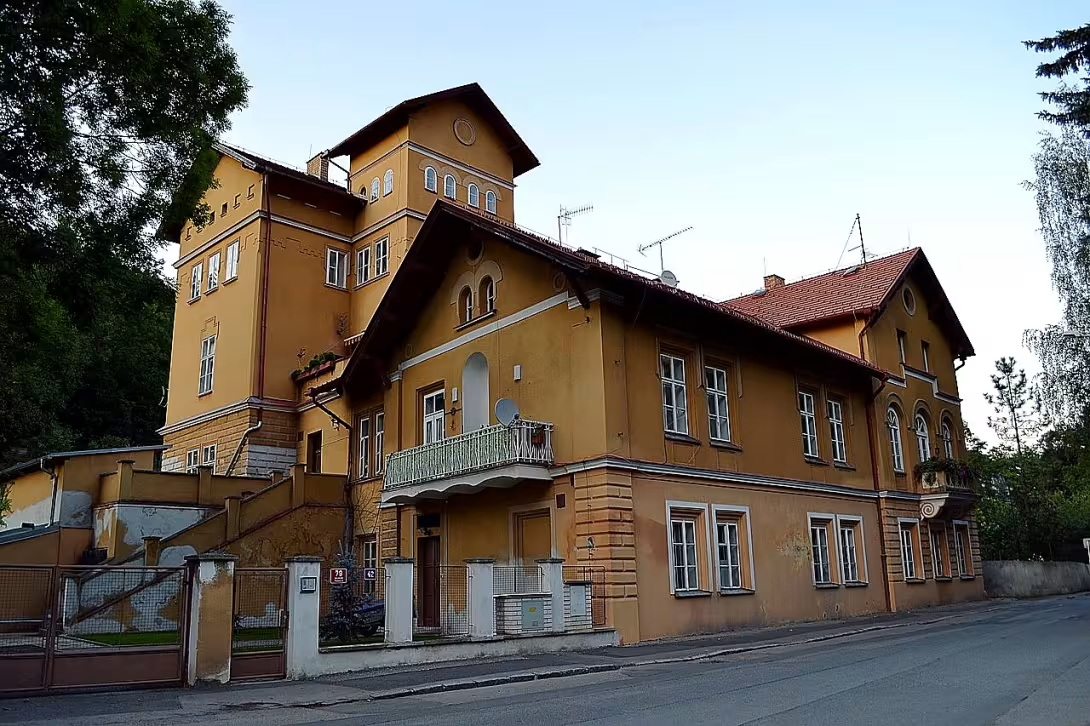
Žežulka is a historic usedlost located in the Dolní Šárka settlement within the Šárecký potok valley in Dejvice. Registered as a cultural monument since 1958, this site is notable for its evolution from a 16th-century vineyard estate into a romantic-eclectic residential complex and a former popular excursion inn.
The history of the site is closely tied to viticulture, with the earliest mention of a vineyard appearing in records from 1563. This vineyard was originally formed by combining three separate plots owned by different individuals. By 1600, Jakub Žežul became the sole owner of the property, a name from which the usedlost derives its title.
The estate changed hands several times over the centuries. In 1627, Jindřich Žežule sold the vineyard to Viktorín Ferdinand Domažlický, a tax official from Prague Castle. Between 1651 and 1674, the property was held by Engl z Englflussu, during which time residential and agricultural buildings were established alongside the vineyard.
The property remained in noble hands until 1708, when it was sold to Maur Roučka, the abbot of St. Nicholas monastery in the Old Town, under the condition that the vineyard would not become monastery property. Leopold Kveistr also purchased the estate in 1637. From 1762, the Miňovský family owned the usedlost for an additional century.
In 1784, the estate included 9.5 jitra of land, one-third of which was dedicated to vineyards. The current architectural appearance of the usedlost was designed around 1874 by J. V. Staněk. It features wings of varying heights, a tower that is partly two stories and partly three stories, and saddle roofs.
The original vineyard house is now entirely enclosed within this larger structure. The main building is partially vaulted and connects to a terrace with a staircase. A separate, single-story building, which served as an inn and was likely also constructed around 1874, stands within the complex.
This building features a half-hip roof, a wooden veranda with a saddle roof at the front, and a hall that was modified in 1913. To the north, a large garden is enclosed by a stone wall, and a preserved cast iron water stand is located to the left of the entrance.
During the ownership of Abbot Roučka, a vineyard chapel dedicated to St. Isidore was established for religious services. In the late 19th century, following its radical reconstruction, the usedlost became a well-known and popular excursion inn, frequently visited during the Matějské poutě festivities in Prague.
In recent years, the usedlost has undergone reconstruction and is currently used for residential purposes. While the main building is inhabited, the ground-floor building that formerly served as an inn and an atelier is currently unused. The site remains a significant historical landmark in the Dolní Šárka area. Its architectural layers and long history of viticulture offer a unique glimpse into the development of the Šárecký valley. Visitors interested in the intersection of rural history and romantic architecture will find this usedlost a compelling destination.
Historical milestones
- 1563
- First mention of a vineyard on the Žežulka site
- 1600
- Jakub Žežul becomes the sole owner of the property
- 1627
- Jindřich Žežul sells the vineyard to Viktorín Ferdinand Domažlický
- 1651
- Engl z Englflussu purchases the property and establishes residential and agricultural buildings
- 1708
- Maur Roučka, abbot of St.
Architectural development
The building has undergone several transformations over the centuries, with the current structure dating back to the late 19th century. It features a unique blend of architectural styles, including romantic and eclectic elements.
Historical events
- 1563
- First recorded mention of the vineyard.
- 1600
- Jakub Žežul becomes the sole owner of the property.
- 1627
- The property is sold to Viktorín Ferdinand Domažlický.
- 1708
- The property is sold to opatus Roučka.
Owners
The property has had various owners throughout its history, including Jakub Žežul, Viktorín Ferdinand Domažlický, Engl z Englflussu, and others.
Points of interest
– The Usedlost Žežulka is a historic site located in Dejvice, specifically within the Dolní Šárka settlement and the Šárecký potok valley.
– The site has been registered as a cultural monument since 1958 and is notable for its evolution from a 16th-century vineyard estate into a romantic-eclectic residential complex and former popular excursion inn.
– The earliest mention of a vineyard on the site dates back to records from 1563, when it was formed by combining three separate plots owned by different individuals.
Guide
Show guide text
This text was created by artificial intelligence and has not been editorially reviewed. It may contain inaccuracies.
Welcome to this peaceful corner of Dejvice. As you stand here, take a moment to simply breathe and absorb the atmosphere of the Dolní Šárka settlement. You are standing in a place where the rush of modern life seems to fade, replaced by the gentle presence of nature and the deep, quiet echoes of the past. To your side, the valley of the Šárecký potok flows, carving its way through the landscape, and it is within this beautiful, verdant setting that you find the historic Usedlost Žežulka. As you look at the buildings before you, try to imagine them not as they appear today, but as they might have looked centuries ago, serving as the heart of a working estate, surrounded by the rhythms of agricultural life and the seasonal changes of the valley.
The story of this site does not begin with the walls you see now, but rather with the very earth beneath your feet. To understand Usedlost Žežulka, we have to travel back much further than the current structures suggest. Our journey begins in the year 1563. At that time, there was no grand farmhouse here; instead, the historical records first mention a vineyard occupying this specific site. Imagine the hillsides of Dolní Šárka covered in rows of vines, a testament to how much this landscape has been shaped by human hands over the centuries. By the year 1600, the property had become more firmly established under the ownership of a man named Jakub Žežul, who became the sole owner of the land. It is a fascinating detail that the very name of this landmark, Žežulka, is tied directly to his legacy, a linguistic footprint left behind by a man who lived hundreds of years ago.
As we move forward through the seventeenth century, we see how the ownership of this land shifted, reflecting the broader social and political changes of the era. In 1627, Jindřich Žežul sold the vineyard to Viktorín Ferdinand Domažlický, marking a transition in the estate's history. However, the most significant transformation in terms of the physical landscape occurred in 1651. That was the year Engl z Englflussu purchased the property. It was under his stewardship that the site began to evolve from a simple vineyard into a more complex estate. He was responsible for establishing the residential and agricultural buildings that laid the foundation for the architectural character you are observing today. This was a period of building and settling, where the land was being organized into a functional, lived-in space that combined the needs of a home with the demands of farming.
Now, I invite you to turn your attention to the architecture of the buildings before you. While the specific architects who designed these structures remain a mystery to history, their work speaks volumes through its endurance. As you observe the facade and the arrangement of the buildings, notice the well-preserved nature of the site. Usedlost Žežulka is a remarkable example of a historic farmhouse that has managed to retain its essence despite the many transformations it has undergone. You can sense the layers of time in the way the structures are composed. It is a site that has successfully transitioned from a purely agricultural hub into a residential space, all while maintaining its cultural significance. Notice how the buildings seem to sit naturally within the landscape, as if they have grown out of the valley itself. Even without knowing the names of the craftsmen, you can appreciate the skill required to create a space that has stood the test of time, surviving through centuries of use and change.
The history of this estate is also a history of the people who called it home or sought to protect it. One of the most intriguing chapters began in 1708, when the estate was purchased by Maur Roučka, the abbot of the St. Nicholas monastery. His acquisition of the property came with a very specific and telling condition: he was required to maintain the vineyard. This detail offers us a glimpse into the importance of the land and the continuity of tradition; even as ownership changed hands among the elite or the clergy, the fundamental character of the site as a place of cultivation remained a priority. Following this era, a new chapter of stability arrived in 1762, when the Miňovský family took ownership. Their tenure lasted for an entire century, providing a long period of continuity that helped preserve the estate's character through the shifting tides of the eighteenth and nineteenth centuries.
As you continue to look around, you might find yourself wondering about the secrets held within these walls. While much of the history is documented, there is always a sense of mystery surrounding sites as old as this one. How many generations have walked these paths? How many seasons of harvest have been celebrated here? One thing that is certain is the enduring value of this location. Its importance is officially recognized, as the site has been registered as a cultural monument since 1958. This designation ensures that the legacy of Usedlost Žežulka, from its origins as a sixteenth-century vineyard to its current life as a residential landmark, will be protected for future generations to discover.
As you finish your time here in front of the usedlost, I encourage you to take a slower walk through the surrounding area. The beauty of Dolní Šárka and the peaceful atmosphere of the Šárecký potok valley are just as much a part of this experience as the buildings themselves. Let the history of the Žežul family, the monks of St. Nicholas monastery, and the long-standing Miňovský family stay with you as you explore the greenery and the winding paths. Thank you for joining me on this brief journey through time. Please, enjoy the rest of your walk through this extraordinary landscape.
Tips for visitors
Best Time to Visit: The Žežulka usedlost is open year-round, but the best time to visit is during spring and autumn when the weather is mild and sunny. This allows you to fully appreciate the property's architecture and natural surroundings without the harshness of winter or summer heatwaves.
Businesses nearby
Events nearby

Zdroj akcí: otevřená data měst a obcí ČR (Národní katalog otevřených dat) a kalendář akcí Národního památkového ústavu.
Nearby
The property is situated in the Dolní Šárka settlement, surrounded by natural features such as the Šárecký potok river and its tributaries.
Accommodation nearby
Trips and activities nearby
Guided tours, tickets and activities nearby from GetYourGuide
Affiliate link: if you buy from the partner, we may receive a commission. The price for you does not change.
Search tours and activities →Themed route
Route: "Discovering Dejvice"
Stop 1: Usedlost Žežulka Type: Historic Farmhouse Why visit: This charming farmhouse offers a glimpse into rural life in the past, with its well-preserved architecture and rustic charm.
Stop 2: Šárecký potok river Type: Natural Feature Why visit: Take a stroll along the picturesque Šárecký potok river, which flows gently through the Dolní Šárka settlement, offering scenic views and a chance to connect with nature.
Stop 3: Tributaries of Šárecký potok Type: Natural Feature Why visit: Explore the tributaries of the Šárecký potok river, which offer additional opportunities for hiking and taking in the beautiful surroundings.
This route takes you on a journey through the charming countryside around Dejvice, with its historic farmhouse, natural features, and scenic views.
Seasonal recommendations
Spring
The Usedlost Žežulka in Dejvice is particularly charming during spring. The gentle sunlight and blooming flowers create a serene atmosphere. As the weather warms up, the surrounding nature awakens from its winter slumber, making it an ideal time to visit.
Practical tips: Spring is a great time to avoid crowds, so consider visiting early in the morning or later in the afternoon. Wear comfortable shoes for exploring the outdoor areas, and don't forget your camera to capture the beautiful blooming flowers.
Summer
Summer brings warmth and vibrancy to Usedlost Žežulka. The lush greenery is in full bloom, and the atmosphere is lively with the sounds of birds chirping and children playing. As the days get longer, it's a perfect time to enjoy the outdoor spaces and take in the sights.
Practical tips: Be prepared for larger crowds during peak summer hours, so consider arriving early or later in the day. Wear light, breathable clothing and don't forget your sunscreen. Take advantage of the extended opening hours to make the most of your visit.
Autumn
As autumn arrives, Usedlost Žežulka transforms into a picturesque haven. The leaves turn golden, and the air is crisp with a hint of woodsmoke. The atmosphere is cozy and inviting, making it an excellent time to explore the historic site.
Practical tips: Autumn is a great time to visit without the crowds that come during peak summer months. Wear layers for changing weather conditions, and consider visiting earlier in the day when the light is soft and golden.
Winter
During winter, Usedlost Žežulka takes on a serene and peaceful quality. The snow-covered landscape creates a magical atmosphere, and the historic site is even more atmospheric with the cold, crisp air. As the days get shorter, it's a perfect time to cozy up and enjoy the quiet ambiance.
Practical tips: Be prepared for shorter opening hours during winter months, so plan your visit accordingly. Wear warm, layered clothing and consider visiting earlier in the day when the light is soft and golden.
Visualizations and artistic views


The visualisations are generated by artificial intelligence and serve as inspiration.
Photos from the area
Real photos taken near the monument


Zdroj a licence jsou uvedeny u každého snímku.
Tips from visitors
No tips yet. Be the first!
Log in and add your tip.
Sources and literature
Fotografie: Sefjo / CC BY-SA 3.0 — Wikimedia Commons. The author and licence also appear when you hover over the image.
Faktickým podkladem tohoto textu byl článek na Wikipedii, jehož autory jsou přispěvatelé Wikipedie. Článek je dostupný pod licencí CC BY-SA 4.0.
Location on the map
More monuments – Dejvice
Show all in the municipality


Příběhy a pověsti
Legendy, pověsti a příběhy spjaté s touto památkou

Fotografie návštěvníků
Zatím žádné fotografie. Buďte první, kdo přidá fotografii z návštěvy!
Přihlaste se a přidejte svou fotografii nebo hodnoťte.
Za ověřenou návštěvu v aplikaci získáte víc bodů — poznáme podle GPS, že jste na místě.
Reviews and comments