



hospoda Bílý beránek Homestead
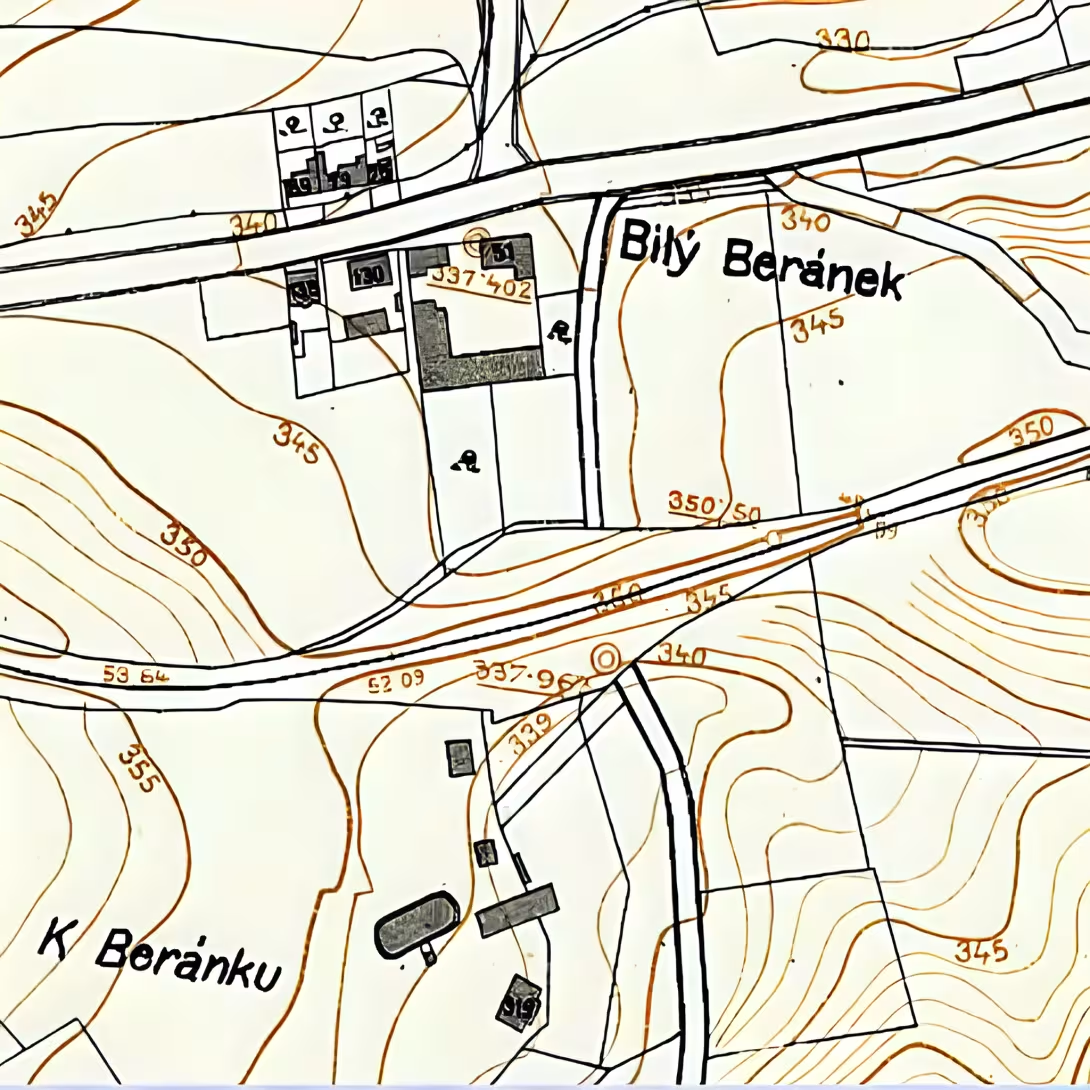
Objekt se nedochoval — na místě dnes nestojí. Následující text popisuje jeho historii, ne současnou návštěvu.
The white lamb was a touring inn in Stodůlce, Prague, which was established in 1738-1740. This building served as an important stop point on the Reich road leading from Prague to Pilsen and Nuremberg. In 1985 it was completely demolished.
The inn was founded and set up at its own expense by the Ruzynese speedster Vavřinec Kubr on the property. The building stood at the newly measured road from Prague, in the place of today's intersection of the streets of Pilsen, Slanská and Jeremiah. It was located near the court of Hája and the chapel of the Holy Cross. The original name of the object, U white sheep, referred to the then widespread sheep breeding in Stodůlce. In 1740 the highest purple Jan Arnošt Staffgotsch confirmed the pub as an hereditary possession.
Architecturally, it was an empirical residential building with a shallow risalite in the facade. The main building was followed by a yard surrounded by economic buildings oriented towards Pilsen Street. The estate also included fields, meadows, gardens and ponds.
The property remained in the Kubra family for a long time. It was owned by Karel Kubr, whose era the inn burned down in 1840. The building and the land were subsequently purchased by the nephew Matej Kubr, who restored the operation. In 1860 Jan Kubr became owner. In 1939, Kubra was rented some of the fields and economic buildings to the Agricultural Union. He remodeled the stables in the compound and brought in the offices. The family operated innkeeper activities until 1949. Albina Kubrová lived here until the end of the 1950s, while the hospitality itself was run by the Unity Praha- west. After the owner's death, the estate was expropriated in 1961.
In 1974, the White Lamb was registered as a cultural monument. However, due to the emergency condition of the building, ONV Prague 5 asked for a waiver from protection in 1981. It was subsequently cancelled in 1983. The building was finally demolished in 1985 during construction of the settlement and reconstruction of the junction.
Today on the site of the former inn is a new office building with a description number 1110, the owner of which is the Stodel Property Administration spol. s r.o. Although the object no longer exists, it resembles the history of the transport hub in Stodovence and the development of the Reich road. The place is worth a visit to the urban development study of this part of Prague.
Historical milestones
- 1740
- Validation of the pub In a white sheep as an hereditary possession of the highest purgrave by Jan Arnešt Staffgotsch.
- 1840
- An inn fire for the property of Karl Kubra.
- 1961
- Expropriation of the estate after the death of the owner of Albino Kubra.
- 1985
- The collapse of the building within the construction of the settlement and the reconstruction of the junction.
Architectural development
The original building from 1740 was restored after the fire in 1840. Later, the building obtained an empirical appearance with a risalite in the facade. In 1939, stables were rebuilt and offices for the Agricultural Union were added.
Historical events
1840 burning down the inn, 1974 entry to the list of cultural monuments, 1985 total demolishing of the building.
Owners
Vavřinec Kubr (founder of 1738-1740), Karel Kubr (until 1840), Matej Kubr (since 1840), Jan Kubr (since 1860), Albina Kubrová (until the late 1950s), State / Expropriated (1961)
Points of interest
- The inn was established in 1738-1740 and served as a stop point from Prague to Pilsen and Nuremberg. - Original name In the white sheep it was based on the then widespread sheep breeding in Stodůlce. The building was hit by fire in 1840, but the operation was subsequently restored. - In 1974 the building was registered as a cultural monument, but in 1983 this protection was abolished. - The entire building was completely demolished in 1985 during construction of the settlement and reconstruction of the junction.
Guide
Show guide text
This text was created by artificial intelligence and has not been editorially reviewed. It may contain inaccuracies.
Welcome to Prague, part Stodůlky. You are standing in the very place that once formed the heart of transport and social life here. If you look around now, you may see modern buildings, roads and crossroads, but I want to invite you to a common imagination. Imagine that time goes back hundreds of years. It was here, in this space, that the once important Ticket Inn of the White Lamb stood. Today, the building does not exist, but its history is so strong that we still see its trail in the very layout of this place.
Let's move together into the early eighteenth century. It is year seven hundred thirty-eight. At this time, the inn is starting to be built here, which should serve as a key stop point for all passengers. Imagine then the main road from Prague to Pilsen. There were no cars, just horses, cars, and people who wandered further into the depths of the earth or into the distant Nuremberg. That's why White Lamb was so important. It was a place of rest where passengers could refresh their journey, feed their horses and sleep before the next journey.
In the year of these seven hundred and forty, the existence of the pub, then called The White Sheep, was officially confirmed. It was made by the highest purple Jan Arnošt Staffgotsch, which was a very important person at the time. The fact that such a high-ranking official has been involved shows the strategic value of this inn for the whole area. The white lamb was not only a common tavern, but a real centre, surrounded by meadows, field areas, and there was also a pond that gave the place a quiet and pleasant atmosphere.
Now let's think about what the building looked like. Even though we can't see her anymore today, we know that at a later date she won the character of a summer in the spirit of the Empire. This means that her appearance was balanced and elegant. Note in the spirit of her facade, where there was a so-called shallow risalite, which is a slightly ascended part of the facade, which provided the building with nobility and rhythm. It was a house that was supposed to emit stability and hospitality for anyone who drove west from Prague.
But living in such an inn has not always been easy. The history of the White Lamb is also accompanied by dramatic events. In the year one thousand eight hundred forty, exactly a hundred years after his confirmation, the inn hit by fire. At that time, he was owned by Karel Kubra. Imagine the chaos, the flames rising to the sky and the people trying to save the property. Yet the owners were not discouraged. The building was renovated and the operation was restored. This shows the huge economic value of this place. Whoever owned the inn on the Reich Road had a gold mine in their hands, because the stream of passengers never stopped.
Let's move forward in time closer to our days. The inn has remained in the Kubra family for many generations. The last owner was Albina Kubra. But her era ended with the arrival of new political flags. In the year nine hundred sixty-one the estate was expropriated. It was a sad break when private family space passed into the hands of the state. The building has served for some time, but its fate has been substantially sealed.
Now let's stop at one interesting thing that will help you better understand the spirit of this place. Have you noticed the original name at the white sheep? It wasn't chosen at random. At that time Stodůlky was known for its extensive sheep breeding. The sheep were the main source of livelihood and wealth for many locals. So the name of the inn was not only an ornament, but a mirror of the region's economy at that time. The white lamb was thus a symbol of the link between local agriculture and international trade and transport.
It's fascinating to think how many thousands of people have come through here. How many merchants, diplomats, passengers or simple craftsmen have rested here. The white lamb witnessed the transformation of the century, from carriages to the first cars. It was the point where the roads crossed and the news from other cities spread.
Unfortunately, the end of this story is final. In the year nine hundred and eighty-five, the building was completely demolished. The reason for this was the construction of a new settlement and the need to rebuild the junction in order to meet modern transport requirements. At one point, a building that stood here for over 150 years disappeared. All she left behind was memory in archives and maps.
If you look around again, feel differently about this space. You have a place beneath your feet where the smell of food from the kitchen of the inn, the smell of horses and the noise of passengers once mixed. Even though you see only asphalt and concrete today, the history of the White Lamb reminds us of how our city is changing and how quickly the monuments that once were the center of the world for thousands of people can disappear.
Thank you for coming with me to this forgotten point in Prague history. I hope this short journey in time has helped you to feel the atmosphere of Stodůlek better. Now invited to further explore the surroundings. Follow the signs and discover other hidden stories that this place still carries. Have a safe trip and meet me at the next landmark.
Businesses nearby
Do you run a restaurant, accommodation, shop, museum, rental, wellness or other visitor service near this monument? Show yourself directly to the people heading to it — this is how they will see you in the app and on the web:
Events nearby

Zdroj akcí: otevřená data měst a obcí ČR (Národní katalog otevřených dat) a kalendář akcí Národního památkového ústavu.
Nearby
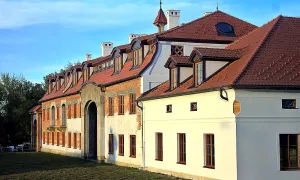
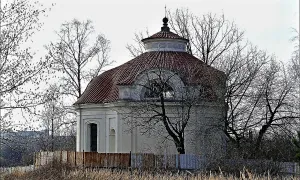
Dvůr Háje, kaple Nalezení svatého Kříže.
Visualizations and artistic views

The visualisations are generated by artificial intelligence and serve as inspiration.
Photos from the area
Real photos taken near the monument


Zdroj a licence jsou uvedeny u každého snímku.
Tips from visitors
No tips yet. Be the first!
Log in and add your tip.
Sources and literature
Photos: vojenský zeměpisný ústav, ministerstvo financí a obec pražská / Public domain, rozlišení zvýšeno umělou inteligencí — Wikimedia Commons. The author and licence also appear when you hover over the image.
Faktickým podkladem tohoto textu byl článek na Wikipedii, jehož autory jsou přispěvatelé Wikipedie. Článek je dostupný pod licencí CC BY-SA 4.0.
Location on the map


Příběhy a pověsti
Legendy, pověsti a příběhy spjaté s touto památkou
Fotografie návštěvníků
Zatím žádné fotografie. Buďte první, kdo přidá fotografii z návštěvy!
Log in a přidejte svou fotografii nebo hodnoťte.
Za ověřenou návštěvu v aplikaci získáte víc bodů — poznáme podle GPS, že jste na místě.
Reviews and comments