






Hrádek (Kutná Hora-Vnitřní Město) Castle
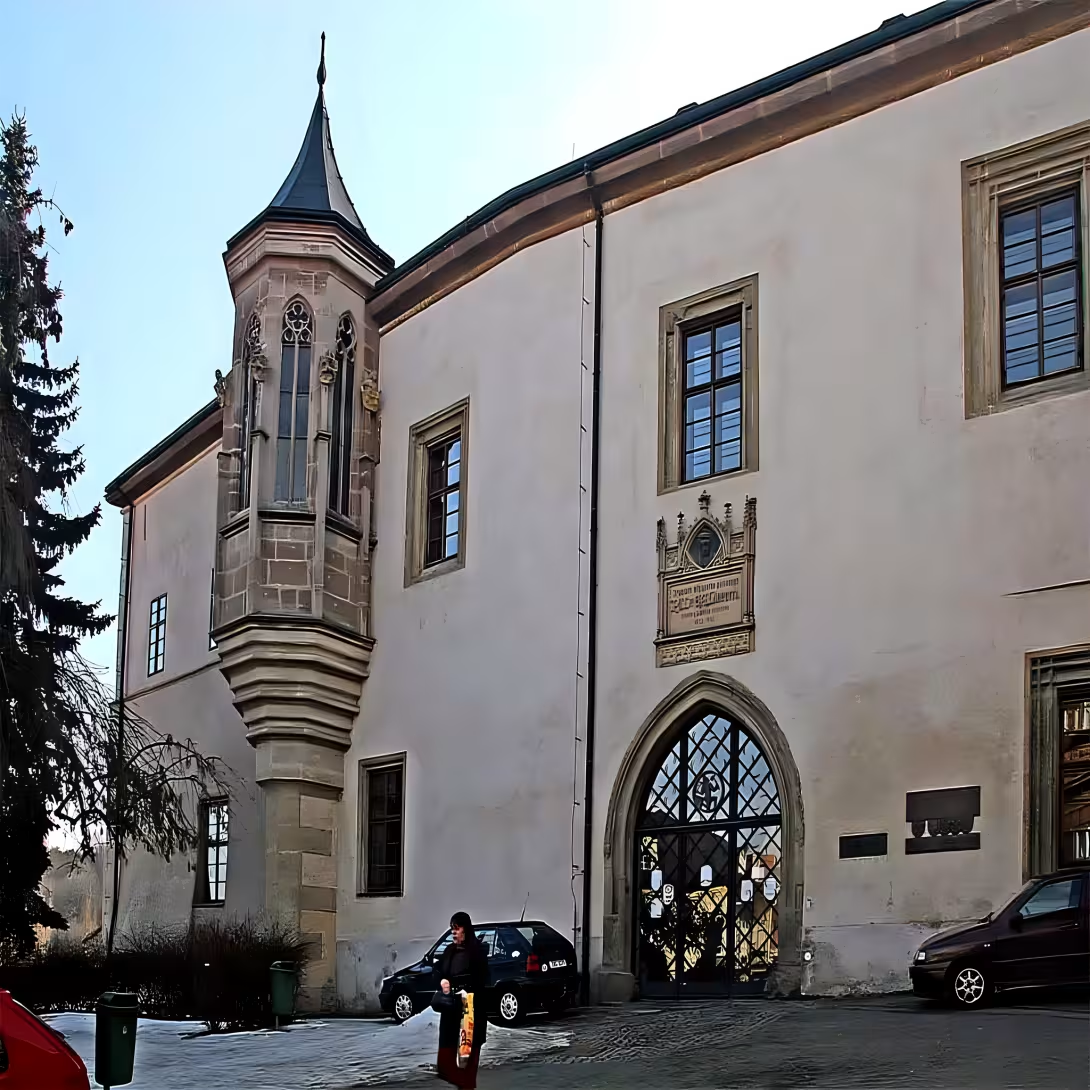
Hrádek in Kutná Hora stands as a testament to the region's rich Gothic architectural history and cultural evolution. Situated on a terrace above the Vrchlice River valley, this monument began its journey as a Gothic fortress at the start of the 15th century. Over time, it transformed into a nobleman’s palace and later served educational purposes under the Jesuit Order before becoming home to an exhibition by the Czech Silver Museum. Its significance is underscored by its role in reflecting socio-political changes from medieval fortifications to cultural heritage sites.
The origins of Hrádek trace back to the late 13th century, when it began as a small wooden fortification designed to protect the burgeoning mining settlement from western threats. This early structure was situated on an important strategic location, overlooking the valley and providing defense against potential invasions. By the turn of the 14th century, the fortification had evolved into a stone tower, marking its transition from a rudimentary wooden structure to a more formidable Gothic fortress.
Architecturally, Hrádek underwent significant transformations reflecting stylistic and functional shifts over centuries. Initially reconstructed around 1400 by Václav z Donína, it became a Gothic stronghold with two opposing residential wings connected by a defensive wall and attached economic buildings. The most notable architectural change occurred at the end of the 15th century when Jan Smíšek z Vrchoviště rebuilt the damaged fortress into a patrician palace in Vladislav Gothic style, incorporating large halls and mining motifs. Later modifications by the Jesuits included adding an upper floor to the southern wing, further adapting its structure for educational purposes.
Ownership of Hrádek shifted through various hands, each leaving their mark on its history. Václav z Donína was a key figure in its early transformation into a Gothic fortress. Jan Smíšek z Vrchoviště later played a crucial role by converting it into a nobleman’s palace after the Hussite Wars. In 1684, the Jesuit Order acquired Hrádek and established a seminary and school, which operated until their suppression in 1773. These transitions highlight the site's adaptability to changing societal needs over time.
Throughout its history, Hrádek has witnessed significant events that shaped its legacy. The transformation from a medieval fortress into a patrician palace during the late 15th century marked a pivotal change in its function and design. Its acquisition by the Jesuits in 1684 led to its use as an educational institution, further embedding it within Kutná Hora's cultural fabric.
Today, Hrádek stands not only as a monument but also as a vibrant cultural site housing the Czech Silver Museum's exhibition. This museum showcases extensive collections related to mining, metallurgy, and numismatics, reflecting the region’s historical significance in these fields. The well-preserved medieval St. George's Shaft from the 14th century adds another layer of historical intrigue for visitors.
Visiting Hrádek offers a unique opportunity to explore a site that encapsulates centuries of architectural evolution and cultural history. Its rich past as a fortress, nobleman’s palace, educational institution, and museum makes it a compelling destination for those interested in Gothic architecture and Bohemian heritage. The monument's enduring legacy invites visitors to delve into the stories embedded within its walls and appreciate its contribution to Kutná Hora's historical tapestry.
Then and now
Drag the slider to compare how the landmark may have looked when it was built with the view today.
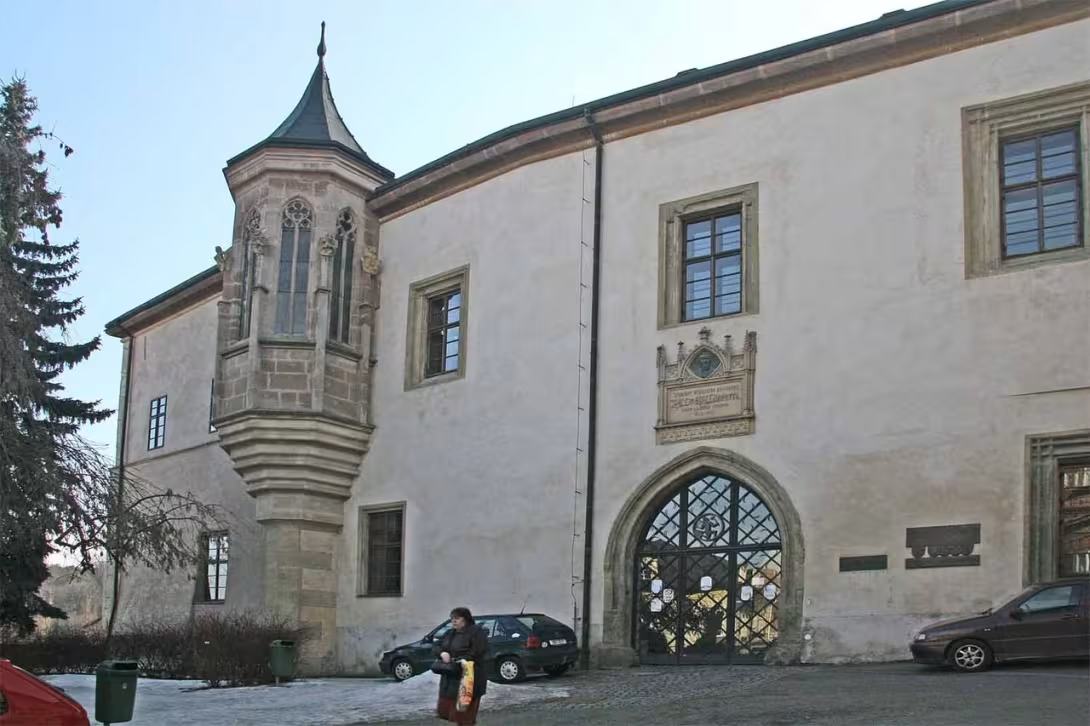

The historical appearance on the left is an AI-generated visualisation and serves as inspiration only.
Historical milestones
- end of the 13th century
- Establishment of a small wooden fortress for the protection of cattle settlements.
- turn of the 14th century
- The fortress was transformed into a stone tower.
- 1400
- Reconstruction by Václav z Donína into a Gothic fortress.
- end of the 15th century
- Renovation by Jan Smíšek z Vrchoviště into a patrician palace in the Vladislav Gothic style.
- 1684
- The fortress was converted by the Jesuit order into a seminary and school.
- 1773
- The Jesuit order was abolished, and Hrádek ceased to serve as an educational institution.
Architectural development
Initially built as a wooden fortification at the end of the 13th century, Hrádek was transformed into a Gothic fortress around 1400 by Václav z Donína. In the late 15th century, Jan Smíšek z Vrchoviště rebuilt it into a patrician palace with large halls and mining motifs in Vladislav Gothic style. The Jesuits further modified it in 1620 by adding an upper floor to the southern wing.
Historical events
Transformation from a medieval fortress to a patrician palace in the late 15th century.
Acquisition by the Jesuits in 1684, who established a seminary and school until 1773.
Owners
Václav z Donína (1400–1420)
Jan Smíšek z Vrchoviště (late 15th century)
Jesuit Order (1684–1773)
Points of interest
- The original wooden fortification of Hrádek was strategically built in the late 13th century to protect Kutná Hora's burgeoning mining settlement from western threats, highlighting its early role in regional defense.
- In a significant architectural evolution at the end of the 15th century, Jan Smíšek z Vrchoviště transformed the damaged fortress into a patrician palace with Vladislav Gothic style elements, incorporating unique large halls and mining motifs that reflected both aesthetic trends and local industry influences.
- After being acquired by the Jesuit Order in 1684, Hrádek was repurposed as an educational institution, including a seminary and school, until their suppression in 1773, demonstrating its adaptability to serve various societal functions over time.
- The Czech Silver Museum's exhibition at Hrádek features extensive collections on mining, metallurgy, and numismatics, showcasing the region’s historical significance in these fields and connecting the site’s past with contemporary cultural heritage.
- During its history, Hrádek has been owned by several influential figures, including Václav z Donína who initiated its transformation into a Gothic fortress, and Jan Smíšek z Vrchoviště who later converted it into a nobleman's palace, each leaving a distinct mark on its architectural and functional evolution.
Guide
This guide is narrated by a synthetic voice generated by artificial intelligence.
Show guide text
This text was created by artificial intelligence and has not been editorially reviewed. It may contain inaccuracies.
Welcome to the historic site of Hrádek in Kutná Hora-Vnitřní Město. As you stand here, take a moment to absorb the grandeur of this majestic structure perched on a terrace above the Vrchlice River valley. The air carries whispers of its storied past, inviting you to delve into centuries of history.
The origins of Hrádek trace back to the late 13th century when it began as a modest wooden fortification. This strategic decision was made to protect Kutná Hora's burgeoning mining settlement from potential threats coming from the west. As time marched forward, this simple structure evolved significantly. By the turn of the 14th century, it had transformed into a stone tower, marking an important shift in its architectural and defensive capabilities.
The year 1400 marked another pivotal moment when Václav z Donína undertook its reconstruction into a Gothic fortress. This era brought with it not just structural changes but also fortified Kutná Hora's role as a significant regional stronghold. However, the ravages of time and conflict did not spare this edifice; during the Hussite Wars, Hrádek suffered considerable damage.
In the waning years of the 15th century, Jan Smíšek z Vrchoviště saw an opportunity in its ruins. He masterfully transformed it into a patrician palace designed in the Vladislav Gothic style, infusing new life and purpose into the structure. This transformation was not merely architectural but also cultural, as Hrádek became a symbol of resilience and renewal.
As you explore this site today, notice how the remnants of these transformations are etched into its very fabric. The transition from fortress to palace is palpable in the surviving elements that speak volumes about its layered history. While specific details like towers or spires may not be visible, the overall atmosphere and layout still reflect its storied past.
Jan Smíšek z Vrchoviště remains a key figure associated with Hrádek, his vision leaving an indelible mark on its architectural legacy. His work ensured that the site would continue to stand as a testament to both Gothic craftsmanship and the adaptive spirit of its inhabitants.
One intriguing aspect of Hrádek is its original purpose as a wooden fortification, which highlights its early role in regional defense strategies. This detail underscores the strategic importance of Kutná Hora during medieval times, serving as a guardian for its mining community.
As you continue your journey through this historic site, I encourage you to immerse yourself in the rich tapestry of stories and transformations that have shaped it over the centuries. Each step here is a step back in time, offering insights into the lives and legacies of those who walked these grounds before us.
Thank you for joining me on this exploration of Hrádek. May your visit inspire curiosity and appreciation for the enduring legacy of this remarkable site.
Tips for visitors
The best time to visit Hrádek is during the late spring or early autumn months, when the weather is pleasant and the surrounding nature is particularly beautiful. During these seasons, you can enjoy the lush greenery and vibrant colors of the landscape without the crowds that often accompany peak tourist season in summer. Additionally, visiting outside of major holidays ensures a more tranquil experience, allowing for better appreciation of the site's historical significance.
Parking and transportation options are convenient for visitors to Hrádek. There is parking available near Kutná Hora, from where you can easily access the site either by car or public transport. For those preferring not to drive, local buses provide a connection to the town center, making it easy to reach the fortress on foot. Always check current transportation options and schedules online before your visit to ensure smooth travel plans.
When planning your visit, consider bringing comfortable walking shoes as exploring Hrádek involves some hiking up steep paths. A hat and sunscreen are advisable for protection against the sun, especially during warmer months. Don't forget a camera or smartphone to capture the stunning views from the fortress. Additionally, carrying water and snacks can enhance your experience, particularly if you plan on spending several hours at the site.
For photography enthusiasts, Hrádek offers breathtaking panoramic views of Kutná Hora and its surroundings. The best light for capturing these scenes is during the golden hour—shortly after sunrise or before sunset—when the soft lighting accentuates the Gothic architecture and natural landscape. Exploring different angles around the fortress can reveal unique perspectives, especially from higher vantage points.
Nearby attractions within a 30-minute walk include the Church of St. Barbara and the Jesuit College, both significant landmarks in Kutná Hora. The Church of St. Barbara is renowned for its stunning Baroque architecture and historical importance, while the Jesuit College offers insights into the town's educational history with its well-preserved buildings and collections.
For families with children, visiting Hrádek can be a delightful experience. The site provides ample space for kids to explore and play safely. Consider planning your visit during school holidays when family-friendly activities are more available in Kutná Hora. Engaging children with stories about the fortress's history or organizing a small scavenger hunt can make the trip educational and fun.
Frequently asked questions
Can the monument be visited?
Yes. We verified the opening hours or admission on the official website (12. 10. 2026); you will find them in the visitor information on this page. Please double-check with the operator before you travel.
What are the opening hours and admission?
Details verified on the official website (12. 10. 2026) are listed in the visitor information on this page. Official website: https://www.cms-kh.cz/
Where is the monument?
Location: Barborská 28/9, Kutná Hora-Vnitřní Město, Kutná Hora, Středočeský kraj. The map on this page shows the exact spot.
Why is the monument protected?
It is listed in the Central List of Cultural Monuments of the Czech Republic as a cultural monument (register no. 29408/2-1043).
Businesses nearby
Do you run a restaurant, accommodation, shop, museum, rental, wellness or other visitor service near this monument? Show yourself directly to the people heading to it — this is how they will see you in the app and on the web:
Nearby
Hrádek is located near Kutná Hora, known for its historical silver mines and Gothic architecture. Within a 5 km radius are the Church of St. Barbara and the Jesuit College, both significant landmarks.
Accommodation nearby
Trips and activities nearby
Guided tours, tickets and activities nearby from GetYourGuide
Affiliate link: if you buy from the partner, we may receive a commission. The price for you does not change.
Search tours and activities →Themed route
Tematická výletní trasa: Hrádek a historické památky Kutné Hory
1. Hrádek (Kutná Hora-Vnitřní Město) - Typ: Hrad - Proč stojí za návštěvu: Hrádek je klíčovou historickou památkou Kutné Hory, která nabízí pohled na bohaté dějiny města a jeho významnou architekturu. Je to ideální místo pro pochopení historie regionu a jeho kulturního vývoje.
2. Kostel svaté Barbory - Typ: Kostel - Proč stojí za návštěvu: Tento kostel je jedním z nejznámějších gotických sakrálních památek v Kutné Hoře. Jeho významná architektura a historie, spojená s místními doly na stříbro, činí z něj nezbytnou návštěvu pro každého milovníka historie a umění.
3. Jesuitský kolegium - Typ: Historický komplex - Proč stojí za návštěvu: Jesuitské kolegium je vynikajícím příkladem barokní architektury a bylo důležitým centrem vzdělání a kultury. Jeho historie a architektonická krása nabízejí hlubší vhled do kulturního odkazu Kutné Hory.
Tato trasa nabízí komplexní pohled na důležité historické a architektonické památky Kutné Hory, které společně představují bohatou minulost města.
Seasonal recommendations
Spring: Visiting Hrádek during spring offers a breathtaking display of nature as the surrounding landscapes burst into vibrant colors with blooming flowers and lush greenery. The soft, diffused light of early mornings or late afternoons creates an enchanting atmosphere perfect for photography. This season is ideal for those who appreciate tranquility, as visitor numbers are generally lower compared to summer. To fully enjoy your visit, wear comfortable walking shoes and layer your clothing to adapt to the variable temperatures typical of spring days.
Summer: Summer at Hrádek is characterized by long daylight hours and warm weather, making it a popular time for tourists to explore the historic site. The lush greenery provides a picturesque backdrop, but be prepared for larger crowds as this is the peak season. To avoid the busiest times, consider visiting early in the morning or later in the afternoon. Light, breathable clothing and sun protection are essential, and carrying water will help you stay hydrated during your exploration.
Autumn: Autumn transforms Hrádek with a stunning palette of reds, oranges, and yellows as the leaves change color. The cooler temperatures and shorter days contribute to a serene atmosphere, ideal for those seeking a peaceful experience away from summer crowds. This season is perfect for photography enthusiasts looking to capture the historic site amidst the vibrant autumnal hues. Dress in layers to accommodate the fluctuating temperatures, and consider bringing a light jacket as evenings can be quite chilly.
Winter: Winter at Hrádek offers a unique charm with its snow-covered landscapes and crisp air, creating an almost magical atmosphere around the historic site. The shorter days mean that visiting early is advisable to make the most of the limited daylight hours. While visitor numbers are lower, it's essential to dress warmly in layers, including a heavy coat, hat, gloves, and thermal wear. Be aware that some areas may have restricted access due to weather conditions, so checking ahead for any closures or changes in opening times is recommended.
Visualizations and artistic views


The visualisations are generated by artificial intelligence and serve as inspiration.
Photos from the area
Real photos taken near the monument


Zdroj a licence jsou uvedeny u každého snímku.
Tips from visitors
No tips yet. Be the first!
Log in and add your tip.
Sources and literature
Photos: Zp at Czech Wikipedia / CC BY-SA 3.0, rozlišení zvýšeno umělou inteligencí — Wikimedia Commons. The author and licence also appear when you hover over the image.
Faktickým podkladem tohoto textu byl článek na Wikipedii, jehož autory jsou přispěvatelé Wikipedie. Článek je dostupný pod licencí CC BY-SA 4.0.
Location on the map
More monuments – Kutná Hora-Vnitřní Město
Show all in the municipality

Příběhy a pověsti
Legendy, pověsti a příběhy spjaté s touto památkou
Fotografie návštěvníků
Zatím žádné fotografie. Buďte první, kdo přidá fotografii z návštěvy!
Log in a přidejte svou fotografii nebo hodnoťte.
Za ověřenou návštěvu v aplikaci získáte víc bodů — poznáme podle GPS, že jste na místě.
Reviews and comments