



Hradiště Zámčisko Hillfort
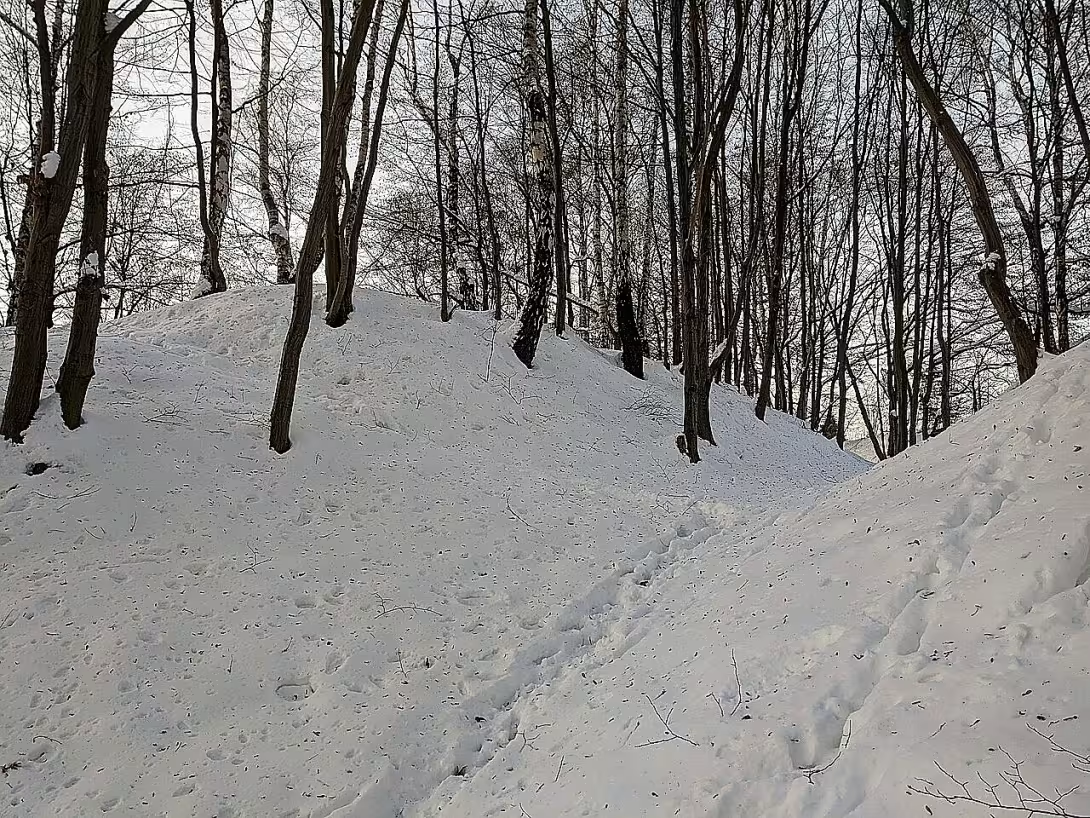
Hradiště Zámčisko, also known as Castle Návsí, is a medieval fortification in the village of Návsí in the region of Jablonic saddle. It comes from before the 14th century, it remained significant during the 15th century. The site is characterized by strategic location on an island formed by the confluence of the stream Jasí and the Olše River, serving as a defensive fortress in medieval Bohemia.
Hradiště Zámčisko was built mainly with wood elements in the period before the 14th century, lacking stone foundations, suggesting that it was temporary or less permanent compared to other contemporary structures. Its continued use until the 15th century probably served local defence and control over the strategic area of the Apple saddle.
Architecturally, fortifications represented a central triangle platform, levers of natural defense benefits provided near the water bodies. This included a semi-circular moat and defensive wall on its west side towards the current, with another protective structure along the northeast side of the river. Archaeological evidence suggests that there may have been two ditches for additional protection, although their exact configuration remains uncertain due to changes in human activity and natural forces over time.
The historical context of the complex is set when Bohemia was part of the Holy Roman Empire, experiencing significant political and territorial changes. The medieval era in Europe was characterized by feudalism, with numerous fortifications such as Hradiště Zámčisko built to defend against invasion. Although specific details of ownership or administration are not documented, the municipality of Návsí had a written reference from 1435, indicating a non-feudal agricultural settlement.
Key events in Hradiště Zámčisko include archaeological surveys conducted between 1977 and 1983. These efforts revealed several ceramic artefacts on site that provide knowledge of its historical use and occupation. The central courtyard was thoroughly cleaned during these excavations, revealed no irregularities in the field and indicated a well-maintained area in the fortifications.
Today, Hradiště Zámčisko is located in a natural landscape characterized by rivers and rivers, with other historical monuments near the region of Jablonic saddle. The site remains freely accessible to visitors, although there is currently no archaeological work. Its preservation allows you to appreciate medieval fortification techniques and offers a view of the strategic importance of this site in history.
Visit Hradiště Zámčisko provides a unique opportunity to explore a piece of medieval history of Bohemia. The historical importance of the site, combined with its natural setting, makes it a valuable destination for people interested in history and archaeology. Its availability ensures that visitors can experience firsthand and remnants of this fascinating fortification.
Then and now
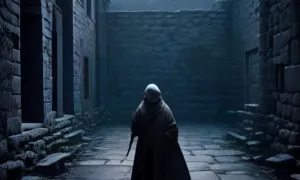
Drag the slider to compare how the landmark may have looked when it was built with the view today.
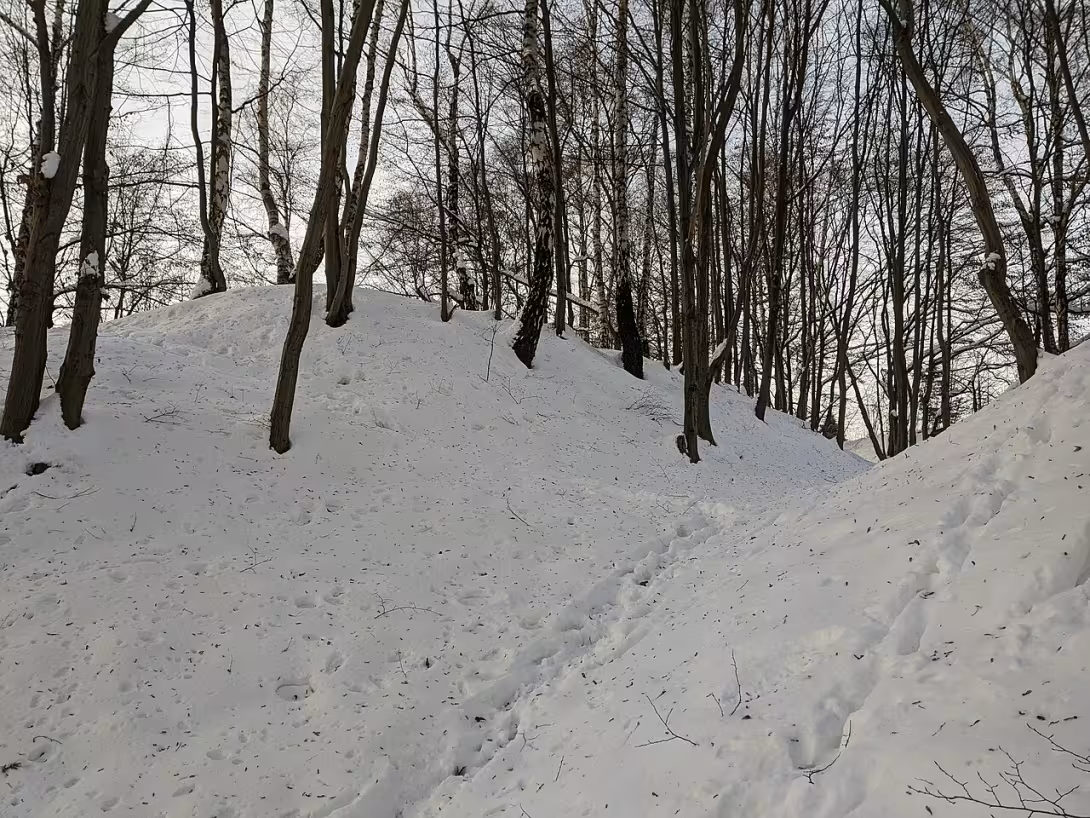

The historical appearance on the left is an AI-generated visualisation and serves as inspiration only.
Historical milestones
- Before 14th Century
- The Castle was created as a wooden fortification.
- 15th Century
- The fort served for local defense and control of Jablunk Pass.
- 1435
- First written mention of the village Návsí near the fortress.
- 1977-1983
- Archaeological surveys on site revealed ceramic artifacts.
Architectural development
Hradiště Zámčisko consisted mainly of wood elements without stone foundations. The fortification was probably oval with a shortened front, a semi-circular moat and a defensive wall. Archaeological findings indicate two possible ditches for additional protection.
Historical events
The earliest possible construction Hradiště Zámčisko dates back to the 14th century.
It still existed in the 15th century.
Points of interest
- Hradiště Zámčisko is a medieval fortification in the village of Naví in the region of Jablonic saddle. - The site has a strategic location on an island formed by the confluence of the stream Jasí and the river Olš, serving as a defensive fortress. - Made mainly by wood elements in the period before the 14th century, it lacked stone foundations, suggesting temporary or less permanent construction compared to other structures. - Archaeological surveys carried out between 1977 and 1983 revealed several ceramic artifacts on the spot which provide knowledge of its historical use and occupation. - Today Hradiště Zámčisko is freely accessible to visitors, which allows you to appreciate medieval fortification techniques in the natural landscape.
Guide
This guide is narrated by a synthetic voice generated by artificial intelligence.
Show guide text
This text was created by artificial intelligence and has not been editorially reviewed. It may contain inaccuracies.
Hradiště Zámčisko, known also as hrad Návsí, belonged to several guard castles in the Jablunkovský průsmyk pass. It must not be confused with Zamčisko in Hrádku. It stood on a promontory above the confluence of the Jasení stream and the Olše river and was part of the village of Návsí.
According to archaeological surveys, the castle could have originated before the fourteenth century and still existed in the fifteenth century. It was predominantly wooden, without stone structures and foundations. The village of Návsí first appears in written sources in the year fourteen thirty-five. At that time, a free farm was established there, that is, a non-subject agricultural homestead.
The core of the castle was probably formed by a central platform of triangular shape with a front side about forty meters long. However, archaeologists allow for the possibility that the fortifications could have had more of an oval shape with a sloped front side. Natural protection was provided by steep slopes down to the stream in the west and to the river in the northeast. However, the site has been significantly damaged by both people and nature over the centuries.
From the side of the rising terrain, the castle was protected by a semicircular ditch ten to twelve meters wide and five or more meters deep. In front of it stood an earthwork two meters high and ten meters wide. To the east, the ditch ends in a rise of about two and a half meters and connects to a small terrace. The castle entrance might have been through here, perhaps across a bridge.
On the southern side in front of the earthwork lies a relatively extensive area. There could have been an outer ward or economic facilities. A cut separates it from the surrounding area, through which a forest path now runs. Archaeologists consider two possibilities. According to the first, it is a second ditch that protected the outer ward. The entrance would then lead from the east and the path would divide into the outer ward and into the castle core. According to the second, it is an intentionally created cut for a path from a ford across the Olše. That would lead directly into the outer ward and further to the bridge across the main ditch.
During surface surveys in nineteen seventy-seven to nineteen eighty, ceramic shards were found on the northeastern slope. In nineteen eighty-one to nineteen eighty-three, archaeologists examined the main courtyard with two soundings. In a trench twenty meters long, already at a depth of about fifteen centimeters, a quantity of finds appeared. In the smaller sounding they then found a thick layer with charcoal and pieces of daub. Most of the finds consisted of grey to beige ceramics with brown-yellow glaze, among them fragments of rims and bell-shaped lids. On pieces of daub remained impressions of boards and rods.
Tips for visitors
The best time to visit Hradiště Zámčisko is at the end of spring or early autumn when the weather is mild, and the natural landscape is especially beautiful with fresh greenery and flowering flowers. These seasons offer comfortable temperatures to discover ruins and enjoy the surrounding nature without crowds that could be present at the peak of the summer months. In addition, a visit during this time will allow you to experience a place of quiet atmosphere and capture stunning photos of the bathing area in soft natural light.
For visitors who prefer public transport, local buses can be used to reach the surrounding cities, from where you can continue your journey by foot or bike. It is advisable to check current transport options and plans in advance to ensure a smooth trip. The site is accessible enough that most visitors find walking the best way to fully appreciate their natural environment.
When planning your visit, it is wise to bring comfortable walking shoes as you likely discover uneven terrain around the ruins. The hat, sunscreen and water is also recommended due to the outdoor environment and the potential for sunny weather. For interested photographers, a zoom camera can help capture detailed images of fortifications from different angles. Do not forget binoculars if you are interested in observing wildlife or remote views of the landscape.
Photographed enthusiasts will find several places around Hradiště Zámčisko ideal for capturing its historical essence, especially during the golden hour at sunrise and sunset when light is soft and warm. The Jasí Competition provides a picturesque background that increases the medieval charm of ruins. For family visits, consider bringing a picnic to enjoy the open spaces nearby, which is a wonderful day out for children who can explore freely while learning about history.
In addition to Hradiště Zámčisko itself, there are other historical sites within a 30-minute drive or walk that offer more information about the past of the region. Exploring these other sites can provide context and enrich your understanding of the medieval heritage area. Families with children could look forward to visiting surrounding natural paths where children can participate in outdoor activities while adults appreciate the picturesque beauty.
Frequently asked questions
Can the monument be visited?
This is an archaeological site. Often there is little to see on the ground and the land may be private. We have not verified access.
Where is the monument?
Location: Návsí, Moravskoslezský kraj. The map on this page shows the exact spot.
Why is the monument protected?
It is listed in the Central List of Cultural Monuments of the Czech Republic as a cultural monument (register no. 1000139079).
Businesses nearby
Do you run a restaurant, accommodation, shop, museum, rental, wellness or other visitor service near this monument? Show yourself directly to the people heading to it — this is how they will see you in the app and on the web:
Nearby
Hradiště Zámčisko is located in a natural landscape characterized by rivers and rivers. The surrounding area includes other historical sites in the region of Jablonic saddle.
Accommodation nearby
Themed route
Tour: Hradiště Zámčisko and Surrundings
1. Hradiště Zámčisko (main objective) Hradiště Zámčisko is an important archaeological monument and a historical monument that offers a unique opportunity to explore the remains of prehistoric and medieval times. Located at a height of 750 metres and its history dates back to the Bronze Age.
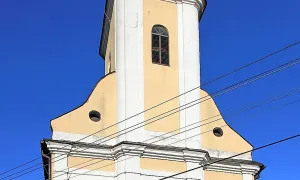
2. St. Lawrence Church (Square) The Church of Saint Lawrence is an early Gothic church in the village of Návsí, located near the hill of Castle. The church is remarkable for its architecture and history, offering a beautiful view of the surrounding landscape.
3. Upper Lomná (about 5 km from the Square) Upper Lomná is a small village in Jablonkov Pass, located near the hill Castle. The village offers a peaceful atmosphere and an opportunity to explore traditional folk architecture.
Seasonal recommendations
Spring: Spring is an ideal way to build the castle castle, because nature is in full planning. Forests are green and that, it boils with a pleasant contract for the project around the castle. It is recommended that the fort be built in an article or article that needs to be carried out and if not possible. It comes with siege shoes and water, because walking through the castle can be challenging.
Summer: Summer is the main sector for own resources paid by the Castle. We recommend that we come to the castle, not to light up the sun to avoid the crowd and to see the castle in peace. Currently, this ideal thing is for walking around the woods and around the castle, which can be seen for small and small. Forget about the adjoining sunlight and umbrella because the sun can be strong.
Autumn: Autumn is a beautiful period for determining the castle castle. The woods are colored into beautiful pasts, which knows a pleasant contract for a walk through the castle. It is recommended that the fort be built in September or October, when it is assisted and not specified otherwise. It is necessary to ensure that these measures do not apply only if necessary.
Winter: Winter is a quiet area for the determination of Castle Castle. The fort is open only limited, so it is good to know about opening times in advance. An additional contribution to build a fort in the area from the time until February, when the contribution is small. It is possible that even warm round, chopsticks and jaws because there is dreaming and can be submitted.
Visualizations and artistic views


The visualisations are generated by artificial intelligence and serve as inspiration.
Photos from the area
Real photos taken near the monument

Zdroj a licence jsou uvedeny u každého snímku.
Tips from visitors
No tips yet. Be the first!
Log in and add your tip.
Sources and literature
Photos: MartinVeselka / CC BY-SA 4.0 — Wikimedia Commons. The author and licence also appear when you hover over the image.
Faktickým podkladem tohoto textu byl článek na Wikipedii, jehož autory jsou přispěvatelé Wikipedie. Článek je dostupný pod licencí CC BY-SA 4.0.
Location on the map
Příběhy a pověsti
Legendy, pověsti a příběhy spjaté s touto památkou
Fotografie návštěvníků
Zatím žádné fotografie. Buďte první, kdo přidá fotografii z návštěvy!
Log in a přidejte svou fotografii nebo hodnoťte.
Za ověřenou návštěvu v aplikaci získáte víc bodů — poznáme podle GPS, že jste na místě.
Reviews and comments