



Hřbitov Salmů Cemetery
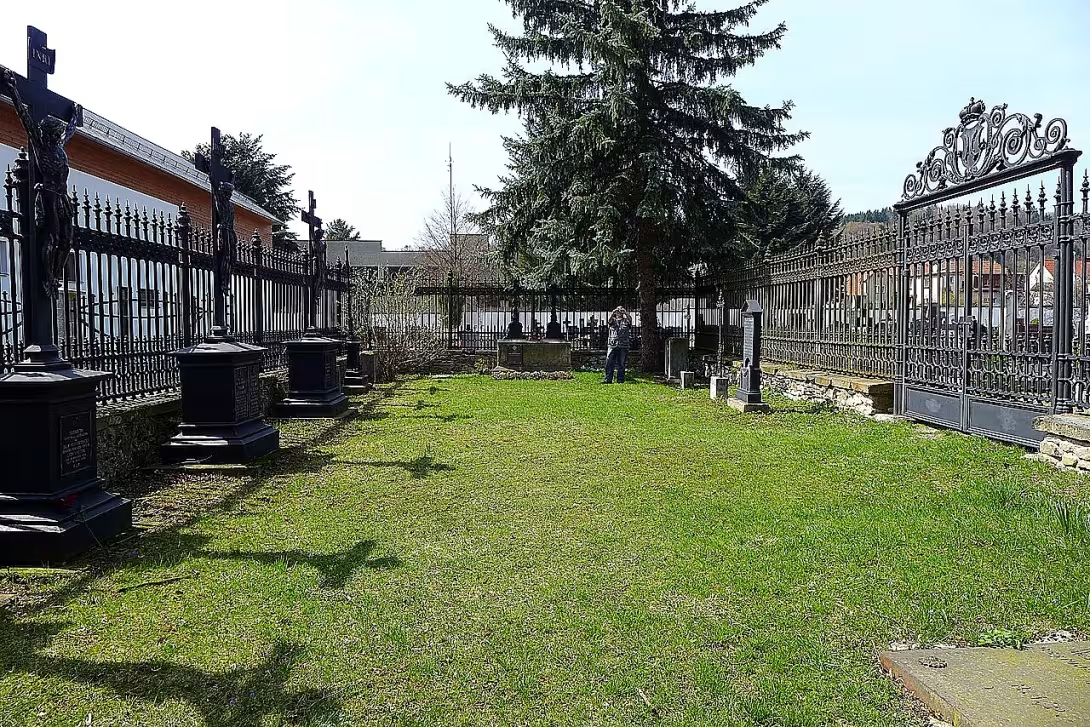
The Salm cemetery is a classic noble burial ground located in the southeast part of the village cemetery in Sloup in Blansko district. The site was founded in 1825 and is protected by the high artistic value of cast iron tombstones as well as the unique secular architecture of the 19th century.
Sloup became a part of the paradise estate in 1587 when Bernard from Drnovice in Rajc purchased it. The House Salm-Reifferscheidt-Raitz, who won the estate in 1763, established a family part of the cemetery here in 1825. The founder was Prince Karel Josef ze Salm-Reifferscheidt-Raitze. Burying in this place took place until 1946, and after the Velvet Revolution, this tradition was restored.
The area has a rectangular plan and is surrounded by cast iron fence on a low wall. The basic element of fencing is the bars with tips. The entrance consists of a two-wing cast iron gate above which there is a supraport made of a warm belt, decorated with a Salm coat of arms with a prince's crown. There are two memorable linden trees growing inside the complex. The tombstones, made in the Blanen ironworks, represent styles of classicism, neo-Gothic, neo-Baroque and eclectism.
The most important monuments include the tombstone Marie Terezie ze Salm-Reifferscheidt-Raitze, which is one of the oldest cast iron tombstones in Moravia. This classic work consists of sandstone base and cast iron stalks with relief of the mask and antikiating shield. The Neobarical tombstone of Františka's daughter consists of a cast-iron Latin cross with a rokaja cartouche and the head of an angel. The neo-gothic tombstone of Robert Antonín and his wife Felicia is also cast iron and decorated with broken arches and circles. The gravestone of Hugo Nicholas and his daughter combines a stone stalk with cast iron crosses and a glass cemetery lamp.
The House of Salm owned the paradise estate and was a pioneer in the use of cast iron for artistic purposes. After World War II, the property was confiscated. In 2007, the grid fencing of the cemetery passed through the entire restaurant.
Today the burial ground is accessible as an important document of the secular culture and history of the nobility. Visiting this place offers a unique opportunity to see the precise craftsmanship of cast iron, which in the 19th century defined the form of native piety places. This monument represents a valuable goal for everyone interested in the history of Moravian nobility and the development of industrial art.
Historical milestones
- 1825
- The establishment of the estate of the cemetery by Prince Charles Joseph of Salm-Reifferscheidt-Raitz.
- 1830
- The year of death indicated on the oldest stalk in the cemetery.
- 2007
- The cemetery fence was restored.
Architectural development
The cemetery has a rectangular plan surrounded by a cast iron fence on a low wall. The entrance consists of a two-wing cast iron gate with a supraport decorated with Salm coat of arms. The tombstones use cast iron as the main material, moving in style from classicism to neo-gothic.
Historical events
1825: The establishment of the master part of the cemetery. 1946: Termination of burial during totalitarianism. 2007: Restoration of grid fencing.
Owners
Rod Salm-Reifferscheidt-Raitz since 1763.
Points of interest
- The Salm cemetery is a classic noble burial ground founded in 1825, which is protected by monuments for its artistic value of cast iron tombstones and unique architecture. - The area has a rectangular plan, it is surrounded by cast iron fence with spikes and inside it grows two memorable lids. - The tombstones were made in the Blanen ironworks and represent styles of classicism, neo-Gothic, neo-Baroque and eclectism. - The tombstone Marie Terezie ze Salm-Reifferscheidt-Raitze belongs to the oldest cast iron tombstones in Moravia. - In 2007, the grid fence of the cemetery passed through the entire restaurant.
Guide
Show guide text
This text was created by artificial intelligence and has not been editorially reviewed. It may contain inaccuracies.
Welcome to a quiet and noble space that tells stories long ago up to the goner times. You are standing right in front of the Salm cemetery, a place that is absolutely exceptional within the entire village burial ground in Sloup. If you look around you, you'll notice you're in his southeast area. This space differs from the rest of the common cemetery by its atmosphere, by its structure and by how it works on everyone who enters it. There is a strange sense of peace and a profound respect for the history that took place here. In front of your eyes there is an area that is not just a simple place of rest, but is a work of art in itself, which immediately attracts you with its elegance and order.
Let us now go back deep into the past together to understand why this place was created and what importance it was to society at that time. In order to understand the nature of this place, we need to look at the year one thousand eight hundred twenty-five. It was this year that Prince Karel Josef of the noble family Salm-Reifferscheidt-Raitz laid the foundations for this noble burial ground. It was not just a random decision, but a manifestation of the great need to create a dignified and lasting place for its ancestors and for the future generations of its mighty family. This cemetery was designed as a public burial ground, which means that it was intended exclusively for noble families that had large assets and influence in the region. The whole area thus serves as a living proof of the power and tradition of the Salm family, which left its irreplaceable mark.
Now pay attention to what you see right in front of you and what surrounds you. Look at this work of art, which now locks you into its space. Notice this cast iron fence, which is so characteristic of this cemetery. It is a very precise work, which has its sharp tips and gives the whole complex a sense of protection and also some nobility. This iron, precisely the cast iron, is a key element of the whole place. If you now look closer at the tombstones that are inside, you will see their unusual quality and detailed processing. These tombstones were not made randomly or cheaply. They were made directly in the family ironworks in Blansko. This means that every detail, every curve and every line on these tombstones was the result of a high craft and a top technological advance of the time. The House of Salms was founded on their departure being documented with the highest possible artistic value, and it is these cast-iron monuments that are clear evidence of this. The whole complex has a clear and clear rectangular ground plan, which gives the place a sense of geometric order and calm. And if you look up to the sky, notice the two memorable ones that grow better here. These trees are like the silent guardians of this place, their shadows falling on their tombstones and giving the whole place a vibrant, natural beauty that perfectly complements solid cast iron.
Now when you walk past these tombstones, you can imagine people whose lives were closely linked to this place. This burial ground is not just a set of metal objects, but it is a place where specific, significant personalities rest. We can mention here Prince Charles Joseph, who founded all this and put himself in this place. There are other members of the noble family who played a vital role in this region. You can find names like Marie Terezie ze Salm-Reifferscheidt-Raitze or František from the same family. Let us not forget Robert Antonín of Salm-Reifferscheidt-Raitz. Each of these names represents a piece of history that is kept here. When you look at these tombstones, you don't just see names, but you see the history of the nobility that shaped the surrounding landscape and the lives of many people.
You might be interested in one thing that you can see for yourself if you look at the oldest stalks that stand here. One of them has an engraved year of eight hundred and thirty. This is the year of death that is listed here, and it means that this place is really very old and still retains its authenticity and trueness. It's fascinating to see time change, but this place stays. Even though centuries have passed, people are still taking care of this place so it doesn't go away. This can be seen, for example, in the year two thousand and seven, that important work was done to restore this cast iron grid fence. This restoration was necessary to preserve the beauty and integrity of the entire cemetery for future generations. It's a beautiful example of how old iron and old stories can connect with modern care and survive centuries.
Now, we'll let you continue to search this unique place. Walk between these tombstones, feel the silence and look at the details of the cast iron that awaits you at every step. Let the atmosphere of this classic cemetery drift and feel the connection between human work and nature in the form of those two better. Look at every detail that fits your eyes, and try to imagine the lives of those who rest here. Thank you for choosing to visit this corner of history in Sloup. We wish you a peaceful and inspiring walk.
Tips for visitors
The best time to visit is during the morning hours or at late afternoon sun, when soft light beautifully draws details of noble tombstones and allows you to take impressive pictures with depth.
For photography we recommend focusing on detailed images of stoneware elements and inscriptions on tombs, which will excel especially in side lighting. The site is piety, so take care of the utmost respect for the surroundings.
When visiting with children, take the opportunity to have an educational interpretation of the history of noble families in our countries. The place is quiet and quiet, therefore it is suitable for a walk where you explain to children the importance of respect for the ancestors.
In the vicinity you can visit the village Sloup, which offers interesting architecture, or go to the castle Rajec nad Svitavou. The entire area of the Moravian Karst is ideal for longer trips associated with exploring history and nature.
Take with you comfortable shoes suitable for moving on the cemetery terrain and possibly the camera. Due to the nature of the site we recommend to choose suitable clothes and behave quietly so as not to disturb the peace of other visitors.
Frequently asked questions
Can the monument be visited?
Cemeteries and graves are usually accessible; please respect the dignity of the place. We have not verified the opening hours of this cemetery.
Where is the monument?
Location: Sloup. The map on this page shows the exact spot.
Why is the monument protected?
It is listed in the Central List of Cultural Monuments of the Czech Republic as a cultural monument (register no. 1000142542).
Businesses nearby
Do you run a restaurant, accommodation, shop, museum, rental, wellness or other visitor service near this monument? Show yourself directly to the people heading to it — this is how they will see you in the app and on the web:
Events nearby

Zdroj akcí: otevřená data měst a obcí ČR (Národní katalog otevřených dat) a kalendář akcí Národního památkového ústavu.
Nearby
Zámek Rájec nad Svitavou, obec Sloup, Moravský kras.
Accommodation nearby
Trips and activities nearby
Guided tours, tickets and activities nearby from GetYourGuide
Affiliate link: if you buy from the partner, we may receive a commission. The price for you does not change.
Search tours and activities →Themed route
Thematic cruise route from Cemetery Salm
1.Hřbitov Salmů
Type: Historical monument
Why is it worth a visit: The cemetery is a burial ground for prominent Salm personalities, known for their history and architectural elements. It is a place full of peace and beauty where you can enjoy the view of ancient tombstones and monuments.
2. The Castle of the Paradise over Svitavou
Type: Historical castle
Why is worth a visit: The castle is a beautiful example of Baroque architecture and provides a view of the history of the region. Its parks and sets are an ideal place to relax and walk where you can enjoy natural beauty and peace.
3. Moravian Karst
Type: Natural Reservations
Why is it worth visiting: Even if it is a little further away, Moravian Karst offers a unique landscape with caves and rock formations. It's the perfect place for nature lovers and those looking for fresh air.
4. Municipality of Sloup
Type: Local municipality
Why it is worth a visit: The village is famous for its peaceful atmosphere and beautiful rural landscapes. It's the perfect place for those who want to enjoy local culture and traditions.
5. The Castle Castle Radek over Svitavou
Type: Historical courtyard
Why it is worth a visit: The Castle Station offers a view of the historical complex and is an ideal place for photography. It is also a place where various cultural events and exhibitions take place.
This route combines history, nature and calm atmosphere of the region around Sloup, making it ideal for a day trip.
Seasonal recommendations
Spring: In the spring, this place awakens to life. The trees start to green and the first flowers appear around the graves. The light is soft and pleasant in this period, which underlines a calm atmosphere. We recommend wearing layered clothes because the morning cold can quickly vary with heat. The best time to visit is in the morning when everything is fresh and fresh.
Summer: During the summer months there is warmth and vegetation is in full bloom, creating a rich shadow. The sun shines strongly, so it's good to have a headgear and plenty of fluids. If you want to escape the greatest heat, choose a time just after sunrise or late evening when the air is coldest and the light is golden.
Autumn: Autumn brings melancholy and silence to space. Leaves turn colour into golden and brown shades, and morning fog gives the place mystery. It is advisable to prepare waterproof shoes and warmer clothing as the soil is usually wet. The ideal is a visit in the afternoon when the low sun creates long and interesting shadows.
Winter: In winter the monument is very noble and strenuous. Naked branches of trees and any snow highlight the quiet and serious nature of this place. Due to short days and cold, we recommend choosing the lunch hours when the lights are the most. Don't forget to wear very warm clothes, gloves and tight shoes to move around the freezing surface.
Visualizations and artistic views

The visualisations are generated by artificial intelligence and serve as inspiration.
Photos from the area
Real photos taken near the monument


Zdroj a licence jsou uvedeny u každého snímku.
Tips from visitors
No tips yet. Be the first!
Log in and add your tip.
Sources and literature
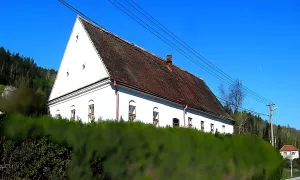
Photos: Koutne1 / CC BY-SA 3.0 — Wikimedia Commons. The author and licence also appear when you hover over the image.
Faktickým podkladem tohoto textu byl článek na Wikipedii, jehož autory jsou přispěvatelé Wikipedie. Článek je dostupný pod licencí CC BY-SA 4.0.
Location on the map


Příběhy a pověsti
Legendy, pověsti a příběhy spjaté s touto památkou
Fotografie návštěvníků
Zatím žádné fotografie. Buďte první, kdo přidá fotografii z návštěvy!
Log in a přidejte svou fotografii nebo hodnoťte.
Za ověřenou návštěvu v aplikaci získáte víc bodů — poznáme podle GPS, že jste na místě.
Reviews and comments