



Hřídelík Rock castle
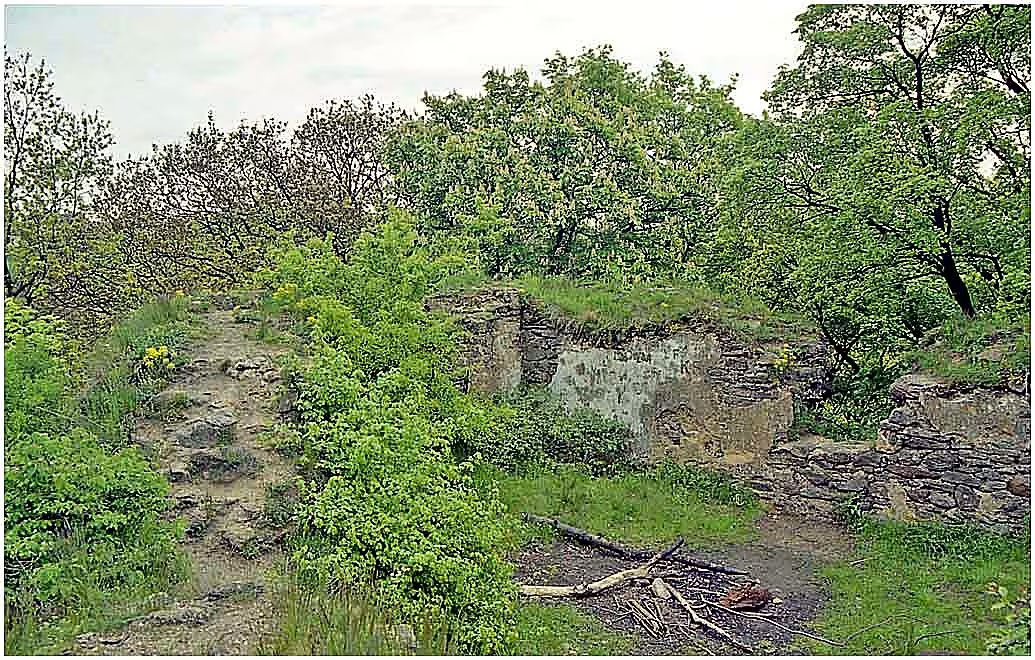
Hřídelík is a ruin of a rock castle located on a sandstone block near the southern edge of the village Blíževedly in the district of Česká Lípa. This monument excels with its rocky location and historical function of the church prison.
Archaeological research demonstrated the settlement of the site in the second half of the 13th century. It is assumed that the castle was founded at the initiative of the Prague bishop before 1300. The first written mention of it dates back to 1334. Historical sources indicate the existence of the construction already in 1292, when the Purcrabi Martin z Hřídelíka managed Blíževedly.
The construction belongs to a group of rock castles and its core was built on a steep sandstone column. The upper surface is lined by a preserved circular wall about half a metre high. The walls of the square palace are preserved on the surface. The unique element is the entrance to this building, which leads through a broken underground corridor with a Gothic profile of 18 meters long. In the southeast part of the rock there are partially touched covered spaces and overhangs.
The castle has been connected in the past to the Prague Bishop. After obtaining the nearby castle Helfenburg near Úštěk in 1375, Hřídelík lost its significance. In 1395 it was used as a carcer for priests convicted by the church court of the Prague Archdiocese. During the Hussite wars, it was damaged and then abandoned. In the 19th century, the lithomeric Bishop Augustin Hille had built a brick castle, which served as an inn before this object was left to its fate.
The object was formerly known as the Old House. In addition to the role of the prison for the priest, the castle is characterized by architecture using natural sandstone rock.
Hřídelík is today protected as a cultural monument of the Czech Republic. It is located on a red tourist route leading from Ronov and Gemini to Úštěk; From the southern edge of the village there is a marked turn about 100 metres long. The railway station Blíževedly, which is located about 1 km north, or regular buses stopping at the square in the village, can be used for the monument.
The ruin represents an interesting example of the use of rock terrain for medieval fortifications in the area near CHKO Kokořín - Mách region. It is a suitable destination for people interested in historical monuments.
Then and now
Drag the slider to compare how the landmark may have looked when it was built with the view today.
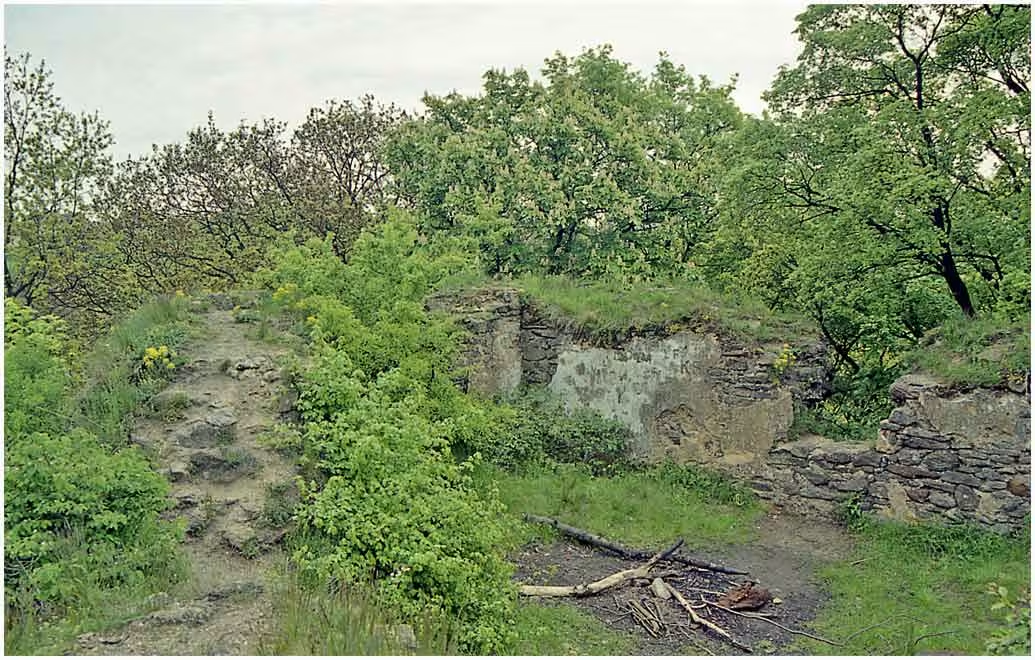

The historical appearance on the left is an AI-generated visualisation and serves as inspiration only.
Historical milestones
- 1292
- Purcrab Martin z Hřídelíka manages Blíževedly
- 1334
- First written mention of the castle
- 1375
- Castle loses importance after obtaining Helfenburg
- 1395
- The castle is used as a cardinal for a priest
Architectural development
The castle was built on a steep sandstone column with a square palace and a ring wall. The entrance to the palace leads through a broken underground corridor on the Gothic profile. In the 19th century, a brick building of the castle was built on site.
Historical events
1334 - first written mention of the castle; 1375 - loss of the importance of the castle; 1395 - use of the castle as a cartel; hussite wars - damage to the castle.
Owners
Prague Bishop, Litomeric Bishop Augustin Hille (19th century)
Points of interest
- Hřídelík is a rock castle that served as a church prison. - The core of the building was built on a steep sandstone column. - The unique element is the entrance to the building leading through a broken underground corridor of 18 metres long. - In 1395, the castle was used as a cartel for priests convicted by the church court of the Prague Archdiocese. - In the 19th century Bishop Augustin Hille built here a brick summer castle serving as an inn.
Guide
Show guide text
This text was created by artificial intelligence and has not been editorially reviewed. It may contain inaccuracies.
Welcome to the ravine ruins. You're standing in front of one of those places where history is not only spoken in books, but in the silence of the surrounding space and the hardness of the stone that surrounds you. Look around you and pay attention to the monumental sandstone block on which this monument stands. It is fascinating to see the natural shapes of the rock tangled to the human work, how the line between what the earth created and what man built almost wipes out in this place. Feel the atmosphere of a place that was once important, then forgotten and eventually found again in the form of these romantic ruins.
Let's move forward together in time and understand why it was here, on this steep sandstone column, that it began to build. To understand the essence of Hřídelíka, we have to go back deep into the Middle Ages, to a time when power and strength protection were absolutely necessary. Probably just a year ago, thousands of hundreds began to take place here the first events that led to the founding of this rock castle. All this was probably initiated by the Prague bishop, who sought out his solid base and symbol of his presence in this area. Already in the year one thousand and ninety-two we know that there was a purcrabi Martin z Hřídelíka, who managed the surrounding villages, including Closevedlid. But the first clear paper trail that confirms the existence of this castle appears only in the year one thousand and thirty-four. Imagine the era when the castle was built with regard to relentless natural conditions and when each height had its strategic significance.
Now pay attention to what you see right in front of you. Even if you look at the ruins today, try to imagine in your mind the incredible complexity of the construction. The core of the whole building was built directly on this steep sandstone column. It wasn't just an idea, it was a necessity. The rock here served as the strongest possible base even as a natural wall of defense. Notice how the structure of the castle tries to integrate into this rock body. Even if you don't see the entire walls or the entire room today, you can see how architecture adapted to the terrain. Later, in the nineteenth century, there was another interesting story that gave this place a completely different, less crude character. Bishop Augustin Hille had a brick castle built here. Imagine the contrast - a raw, rocky castle from the medieval era and then this newer, brick object that was designed for rest and stay rather than for defense. This layer of history shows us how the perception of this place has changed over the centuries.
The history of Hřídelíka is not just a story about building and aesthetics, it is also a story about decline and unexpected fates. In the year one thousand and seventy-five there was a major break. After the nearby castle Helfenburg was acquired, Hřídelík lost its original strategic weight and importance. He stopped being a key fortress and his role began to change. Instead of being a symbol of power, it became a place that people preferred to go around. This era of decline was later deepened during the devastating Hussite wars, when the castle was damaged and then completely abandoned. And it is during this period, at the time of the greatest decline, that one of the darkest chapters of this place takes place.
In the year one thousand and ninety-five, Hřídelík became a place none of us would want to visit voluntarily. The castle was used as a cartel, specifically as a prison for priests. Imagine the irony - a place that was founded under the Church's impulse and intended to serve its interests has become a place where its own representatives condemned by the church court in Prague have been condemned. This dark role of the prison for spiritual persons gives this rock castle a strange, even frosty touch. Now, when you look at these ruins, try to remember that these stones witnessed not only political changes, but also human suffering and unexpected life fates.
If you really want to understand the secret of this place, you need to focus on what is not visible at first sight. Hřídelík has an element in it that can really surprise you. Under your feet, inside the rock itself, there is a unique element - a broken underground corridor. This corridor measures 18 metres and leads directly to the depth of the sandstone block. It's fascinating proof of how people have managed to work with the material around them in the past. This corridor was probably a key element in ensuring access or security, but today it is more like a silent witness to the ancient technical skill and secrets that lie in these rock cracks.
Now that you've been through the main stages of the history of this place, I suggest you let yourself be carried away by the atmosphere and continue your tour of the area. Look at the details of the sandstone surface, see how light breaks on the remnants of walls and how nature slowly but relentlessly takes back what people once built. Hřídelík is not just a pile of stone, it is a living chronicle that waits for every visitor to wake her up with his eyes and reflection. Thank you for sharing this story with us. Brig, let the next journey along these historic tracks fill you with experiences and rooms.
Tips for visitors
The best time to visit the ruins of Hřídelík are spring and autumn months when sandstone is surrounded by greenery and temperatures are pleasant for walking. In summer it may be hot on the exposed rock block, while in winter the road to the castle may be slippery and dangerous due to snow and ice coating on rock formations.
The best way to remember is by car, which you can park in the village Blíževedly.
Don't forget to wear solid shoes with good heel and anti-slip soles on the trip, because the terrain around the sandstone block can be uneven and rocky. We also recommend taking enough drinking water and light refreshments as there are no facilities or refreshments available in the immediate vicinity of the ruins.
For photography is ideal morning or late afternoon light that highlights the texture of sandstone and creates dramatic shadows in ruins. The best views of the castle can be obtained from the surrounding rock formations and from the perspective points in CHKO Kokořín - Mácha region where you can capture the overall context of the landscape.
In the surroundings, at a distance of about 30 minutes, you can visit the town of Úštěk or explore other beauty of CHKO Kokořín - Mácha region. For families with children it is important to note that access to the rock castle is not always safe for the smallest because of heights and rock cliffs, so it is advisable to check the safety of the route in advance and keep children under constant supervision.
Frequently asked questions
Can the monument be visited?
This is a ruin. Such sites are often freely accessible, but some can only be visited with a guide or are closed for safety reasons. We have not verified the current situation – take care and respect any restrictions.
Where is the monument?
Location: Blíževedly, Liberecký kraj. The map on this page shows the exact spot.
Why is the monument protected?
It is listed in the Central List of Cultural Monuments of the Czech Republic as a cultural monument (register no. 1000131448).
Businesses nearby
Do you run a restaurant, accommodation, shop, museum, rental, wellness or other visitor service near this monument? Show yourself directly to the people heading to it — this is how they will see you in the app and on the web:
Nearby
Blíževedly, Úštěk, CHKO Kokořín - Máchov region, railway station Blíževedly.
Accommodation nearby
Trips and activities nearby
Guided tours, tickets and activities nearby from GetYourGuide
Affiliate link: if you buy from the partner, we may receive a commission. The price for you does not change.
Search tours and activities →Themed route
Thematic cruise route around Hřídelík
1. Hřídelík (ruin) * Type: * Historical ruins * Why is it worth a visit: * This interesting historical monument in the village Blíževedly represents a part of the former castle that testifies to the rich past of this area. It's the perfect place for people who like history and want to make up their own stories from ancient times.
2. CHKO Kokořín - Mach Region * Type: * Protected landscape area * Why is it worth a visit: * This area offers beautiful natural scenery and is an ideal place for relaxation in the presence of nature. It is also a place where the Kokořín Castle is located, an inspiration for several works of Karel Mácha.
3. Railway station Blíževedly * Type: * Transport equipment * Why is it worth a visit: * This stop is the starting point for those who want to visit Hřídelík and the surrounding area. It's also a comfortable place to start or end your trip.
4. Municipality of Blíževedly * Type: * Urban area * Why is it worth a visit: * The village offers a peaceful and friendly atmosphere, ideal for short walks on the streets or exploring local life. It is also a suitable place to relax between visits to other attractions.
5. * Type: * Urban area * Why is it worth visiting: * Úžek is famous for its history and architecture, which includes ancient houses and the natural beauty of surrounding forests. It is the ideal place for those who want to expand their knowledge of the region around Hřídelík.
This route offers a combination of historical and natural experiences in one harmonious unit.
Seasonal recommendations
In spring, the ruins of Hřídelík awaken together with the surrounding nature. The light is fine in this period and the colors of the fresh green contradict the grey stones of the old walls. The atmosphere is fresh and full of expectations. For the visit I recommend choosing the morning hours when the air is the cleanest. Prepare your layered clothes because the morning cold can still feel, even when the sun is starting to warm better.
The summer months bring intense sunlight and dense vegetation to the place, which tries to devour the ruins completely. Shadows cast by trees offer a pleasant refuge from the heat. Due to the increased attendance in the high summer season, it is best to arrive early in the morning to enjoy the peace. Remember enough drinking water, headgear and light, breathable clothes.
The autumn visit offers melancholy beauty, with fog floating around the castle remains and surrounding forests in gold and red shades. The afternoon light in this period is very deep and ideal for photography. However, it is important to remember that roads can be slippery from rain, so it is worth choosing quality waterproof shoes and taking a windbreaker.
In winter, the ruins are very raw and lonely, especially when its stones are covered with snow. The bare branches of the trees reveal details of the building that are otherwise hidden in the leaves. Due to lower temperatures and shorter days, I recommend planning a visit in bright, sunny hours. The necessity is a very warm winter outfit, including a hat and a solid shoe that keeps you dry and warm.
Visualizations and artistic views


The visualisations are generated by artificial intelligence and serve as inspiration.
Photos from the area
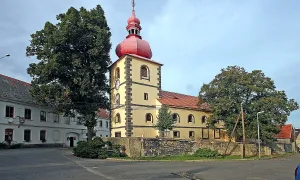
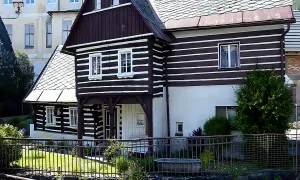
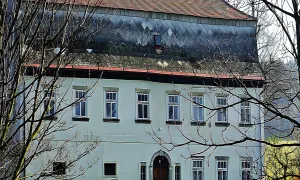
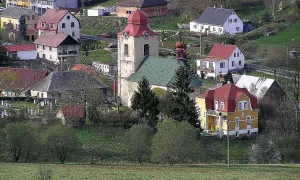
Real photos taken near the monument


Zdroj a licence jsou uvedeny u každého snímku.
Tips from visitors
No tips yet. Be the first!
Log in and add your tip.
Sources and literature
Photos: Zp at Czech Wikipedia / Public domain — Wikimedia Commons. The author and licence also appear when you hover over the image.
Faktickým podkladem tohoto textu byl článek na Wikipedii, jehož autory jsou přispěvatelé Wikipedie. Článek je dostupný pod licencí CC BY-SA 4.0.
Location on the map
Příběhy a pověsti
Legendy, pověsti a příběhy spjaté s touto památkou
Fotografie návštěvníků
Zatím žádné fotografie. Buďte první, kdo přidá fotografii z návštěvy!
Log in a přidejte svou fotografii nebo hodnoťte.
Za ověřenou návštěvu v aplikaci získáte víc bodů — poznáme podle GPS, že jste na místě.
Reviews and comments