






Kittelův dům Homestead
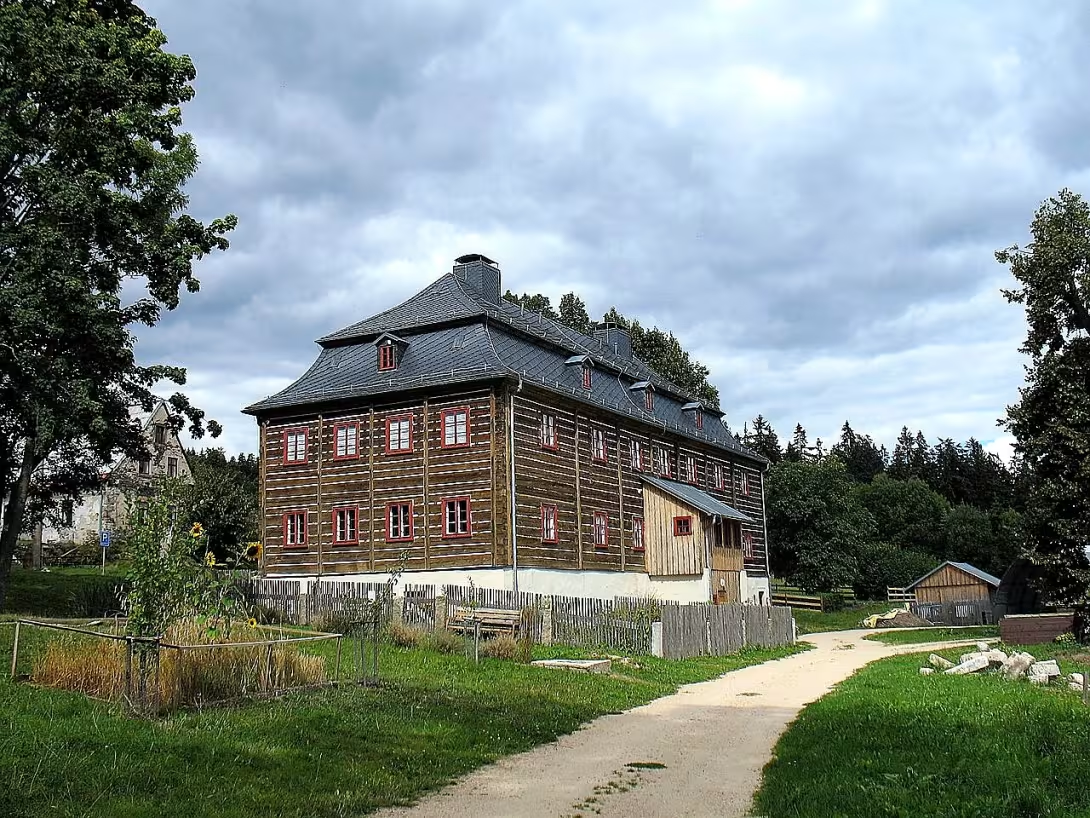
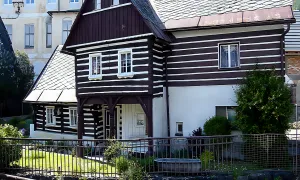
Kittelův dům is a large timber-framed homestead in Krásné, a part of Pěnčín in the Jablonec nad Nisou district within the Liberec Region. Built in the mid-18th century by the renowned physician and healer Johann Josef Antonín Eleazar Kittel, the property functioned as a home, pharmacy, and small sanatorium for the public and nobility alike. Today, this carefully restored building is a protected cultural monument listed in the Central Register of Cultural Monuments of the Czech Republic and operates as a museum.
Locally known as "Burk"—derived from the German word Burg, meaning castle—the property's history is closely tied to Johann Josef Antonín Eleazar Kittel (1704–1783). Coming from a family of fourteen children, Kittel continued a family tradition of bonesetters and healers established by his father and grandfather. His medical practice grew so successful that he eventually served as personal physician to the Desfours counts, who resided at Hrubý Rohozec. Kittel constructed the homestead in Krásné around the middle of the 18th century, although an original heritage listing from the late 20th century incorrectly estimated its construction date to the late 18th century. Within the house, a pharmacy was run by Johann's brother, Ignác Kašpar Antonín Kittel. While the Czech lands underwent gradual modernization and reforms under Maria Theresa in the mid-18th century, rural life remained heavily shaped by popular piety and beliefs in the supernatural. This fostered numerous local legends surrounding Kittel's alleged pact with the devil.
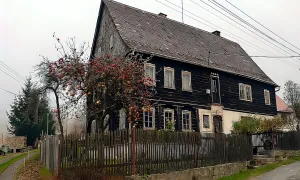
Architecturally, the monument is a three-storey timber-framed building with a mansard roof. It is partially masonry-built on the ground floor, situated on parcel no. 88 in the center of Krásné, roughly 80 meters east of the pilgrimage Church of Saint Joseph. The rectangular structure is oriented roughly north-south and features an added masonry annex on its western side. The original timber-framed house sits above a stone basement with barrel vaults. Former stables occupy the eastern part of the basement, while the western side contains smaller rooms, including one with a small pool supplied by water likely originating from springs between the house and the church. A central corridor divides the ground floor into two halves containing two so-called black kitchens and large living rooms. A wide staircase leads to the upper floor, which mirrors this layout with large rooms on the northern and southern sides and a spacious central hall.
The Kittel family owned the property until 1817, after which a succession of different owners held the estate. Following 1945, the building fell into progressive neglect and decay. In the second half of the 20th century, the state enterprise Metrostav—founded in 1971 for the construction of the Prague metro—acquired the property. Between 1971 and 1977, and again in 1986, Metrostav petitioned to strip the heavily deteriorated building of its heritage protection, supporting its application with expert assessments claiming a successful restoration was impossible. Consequently, the house deteriorated further, reaching a state of emergency by the early 21st century.
Initial rescue operations began in 2004, focusing on static stabilization, documentation, and the rehabilitation of the timber-framed structures. During this phase, workers dismantled the timber portion of the house and erected a new roof truss on supports. Between 2014 and 2016, an extensive restoration of the entire property took place with support from Pěnčín and the Ministry of Culture of the Czech Republic. A subsequent restoration phase followed between 2016 and 2019 under the Czech-German cross-border project Slow Tourism in the Nisa Euroregion - Connecting Culture with Nature, realized with European funding. In the summer of 2019, the Kittelovo muzeum officially opened to the public in the municipal-owned building at Krásné čp. 10.
Today, Kittelův dům houses the Kittelovo muzeum and the local information center, welcoming visitors year-round. A parking area is located approximately 100 meters from the homestead near the heritage-protected baroque parsonage and the Church of Saint Joseph. Weekday bus connections to the village are available from Jablonec nad Nisou and Železný Brod. Furthermore, bicycle route no. 4249 passes directly by Kittelův dům, intersecting with bicycle route no. 4247 near the church.
As a survivor of decades of severe neglect and near-demolition, Kittelův dům stands as a testament to both 18th-century vernacular architecture and regional medical history. Visitors exploring the restored rooms and subterranean spaces gain authentic insight into the life of a legendary practitioner and the rural heritage of the Jablonec nad Nisou district.
Historical milestones
- 1750
- Johann Josef Antonín Eleazar Kittel built the homestead in Krásná around the mid-18th century.
- 1817
- The house remained in the Kittel family until 1817.
- 2004
- Initial rescue work began, such as structural stabilization of the building and remediation of the timber-framed structures.
- 2019
- The Kittel Museum was opened in Kittel's House in the summer.
Architectural development
The building is a two-storey timber-framed house with a mansard roof, built over a stone basement and partially masonry on the ground floor. To the west, it is expanded by an additionally built brick annex. The basement features cellars vaulted with barrel arches, while the ground floor contains two smoke kitchens and large living rooms. During the comprehensive renovation, rescue work was carried out, along with the dismantling of the timber-framed section and the construction of a new roof truss on supports.
Historical events
1817 – Kittelův dům opustil vlastnictví rodiny Kittelů. 1971–1977 – Národní podnik Metrostav požadoval upuštění od památkové ochrany zanedbaného objektu. 2004 – Zahájeny prvotní záchranné práce, statické zajištění a sanace roubených konstrukcí. 2019 – Otevřeno Kittelovo muzeum po rozsáhlé rekonstrukci podpořené obcí Pěnčín, Ministerstvem kultury ČR a evropskými fondy.
Owners
Johann Josef Antonín Eleazar Kittel (do roku 1817), následně různí majitelé, od 2. poloviny 20. století národní podnik Metrostav, v současnosti obec Pěnčín.
Points of interest
– Kittelův dům is a large timber-framed homestead located in Krásné, which is part of Pěnčín in the Jablonec nad Nisou district within the Liberec Region. – The property was built in the mid-18th century by the renowned physician and healer Johann Josef Antonín Eleazar Kittel and served as a home, pharmacy, and small sanatorium. – Locally, the property is known as "Burk," a name derived from the German word Burg, meaning castle. – Within the house, a pharmacy was operated by Johann's brother, Ignác Kašpar Antonín Kittel. – The building is a three-storey timber-framed structure with a mansar
Guide
Show guide text
This text was created by artificial intelligence and has not been editorially reviewed. It may contain inaccuracies.
Welcome to Krásná. As you stand here, take a moment to truly absorb the atmosphere of your surroundings. You are standing before a remarkable piece of history, a place where the past feels remarkably present. Before you rises the Kittelův dům, a structure that has witnessed centuries of change, serving as a silent observer to the evolving life of this region. As you look at the building, try to imagine the sounds and sights of the mid-18th century, when this site first began to take shape. The air was different, the pace of life was slower, and this very spot was becoming a sanctuary for those in need of healing.
The story of this magnificent homestead begins around the year 1750. It was during this era, in the heart of the 18th century, that the foundation for what you see today was laid. This was not merely a construction project; it was the vision of a man whose reputation would become legendary in these parts. Johann Josef Antonín Eleazar Kittel, a renowned physician and healer, chose this location in Krásná to establish his home and his practice. He was a man of science and compassion, and he required a space that could accommodate both his family life and his professional calling. Because of his significant presence and the importance of this location, the local people eventually gave the house a special name, calling it Burk, a term derived from German roots that echoed through the generations.
As you direct your attention to the architecture of the building, please notice the impressive scale of the structure. You are looking at a large, three-story timber-framed homestead, a style that speaks to the traditional craftsmanship of the period. Notice how the building is composed; it is not a uniform mass, but a thoughtful combination of materials. The ground floor is partially constructed of masonry, providing a solid, sturdy base that anchors the house to the earth. Above this, the timber-framed construction takes over, creating a sense of warmth and organic connection to the landscape. Look upward and observe the mansard roof, a distinctive architectural feature that adds a sense of elegance and complexity to the silhouette of the house. This design was not just about aesthetics; it was a practical way to maximize the space within the upper levels, allowing the house to serve its many functions.
Now, let us consider the purpose of this house, for it was far more than just a residence. Under the care of Johann Josef Antonín Eleazar Kittel, the Kittelův dům functioned as a multi-purpose center. It was a home, yes, but it was also a pharmacy and a small sanatorium. Imagine the activity that once filled these rooms. This was a place where medical knowledge met hospitality. The physician provided care to a wide spectrum of society, from the local commoners to members of the nobility. It was a rare space where different social classes might cross paths, all united by the common goal of health and recovery. This dual identity as both a private sanctuary and a public place of healing is what gives the building its unique soul.
The Kittel family remained deeply connected to this house for many decades. The legacy of the physician was carried forward, and the property remained in the hands of the Kittel family until 1817. Names like Johann Josef Antonín Eleazar Kittel and Ignác Kašpar Antonín Kittel are etched into the history of this site, representing a lineage of influence and service to the community. When you think about the people who walked through these doors, think of the patients seeking relief and the family members maintaining the traditions of their house.
However, the passage of time is rarely kind to historic structures. For many years, the Kittelův dům faced the inevitable wear and tear that comes with centuries of existence. There were times when the very stability of the timber-framed walls was at risk. It was not until 2004 that a vital turning point arrived. Significant rescue work was initiated to save this treasure. Engineers and specialists worked to provide structural stabilization and to perform essential sanitation of the timber constructions. These efforts were not just about fixing a building; they were about preserving a piece of our collective memory. It was a race against time to ensure that the craftsmanship of the 18th century would not be lost to decay.
The culmination of these preservation efforts led to a wonderful new chapter in the building's life. In the summer of 2019, the Kittelův dům was officially opened to the public as the Kittelovo muzeum. What was once a private home and a place of healing has now become a place of learning and reflection. The museum allows us to step back in time and understand the life of the Kittel family and the medical history of the region.
As you prepare to continue your journey, consider the incredible resilience of this place. From its origins in 1750 to its rebirth as a museum in recent years, the Kittelův dům has survived through dedication and care. It stands as a testament to the life of a great healer and the enduring beauty of traditional architecture. We invite you now to move closer, to explore the details of the museum, and to immerse yourself in the stories held within these walls. Take your time, wander through the spaces, and let the history of Krásná unfold before you. Thank you for joining us, and enjoy your exploration of the Kittelův dům.
Tips for visitors
Plan your visit to Kittelův dům during the late spring or early summer months to fully enjoy the scenic beauty of Krásná and comfortable weather for exploring the area. Arriving in the morning allows you to tour the spacious timbered homestead at a relaxed pace before afternoon visitors arrive.
For transport and parking, the site is accessible by car or public transport; visitors arriving by car should utilize designated parking options nearby, while those using public transport should check current regional connections in an online transport finder. The surrounding terrain is historic and uneven, so sturdy walking shoes are strongly recommended for exploring the property and its immediate surroundings.
Photography enthusiasts will find great angles from the exterior grounds, capturing the impressive architecture of this mid-18th-century three-story timbered homestead built for the renowned healer Johann Josef Antonín Eleazar Kittel. The morning and late afternoon light provides the best illumination for highlighting the historic wooden details of the building.
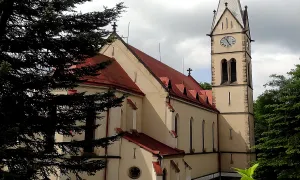
While exploring the vicinity, make sure to visit the Pilgrimage Church of St. Joseph, built in 1760, which is located just about 80 meters west of the homestead. This nearby historical landmark makes for an effortless and enriching addition to your walk.
Families visiting with children will appreciate the engaging museum exhibits dedicated to local history and folklore surrounding the legendary healer Kittel. The open outdoor spaces around the homestead also offer a pleasant environment for kids to stretch their legs during the trip.
Businesses nearby
Do you run a restaurant, accommodation, shop, museum, rental, wellness or other visitor service near this monument? Show yourself directly to the people heading to it — this is how they will see you in the app and on the web:
Events nearby


Zdroj akcí: otevřená data měst a obcí ČR (Národní katalog otevřených dat) a kalendář akcí Národního památkového ústavu.
Nearby
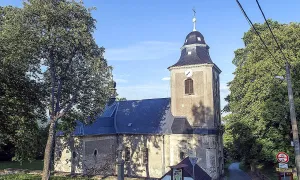
The pilgrimage Church of St. Joseph, built in 1760, is located about 80 metres west of the homestead.
Accommodation nearby
Trips and activities nearby
Guided tours, tickets and activities nearby from GetYourGuide
Affiliate link: if you buy from the partner, we may receive a commission. The price for you does not change.
Search tours and activities →Themed route
1. Kittelův dům Type: Museum Why visit: Explore the fascinating history and legends surrounding the famous local healer and polymath known as the Faust of Jizera Mountains. The exhibition offers a deep dive into the region's history and traditional medicine.
2. Poutní kostel sv. Josefa Type: Pilgrimage Church Why visit: Located just about 80 meters west of the homestead, this striking church built in 1760 serves as a remarkable example of local sacred architecture and spiritual heritage.
Seasonal recommendations
Spring: Visiting Kittelův dům in Krásná during spring offers a unique experience as the surrounding nature awakens with vibrant colors and fresh blooms. The soft, warm light of longer days enhances the beauty of both the museum's exhibits and its gardens. This is an ideal time to explore without the large crowds typical of summer, allowing for a more intimate encounter with history. Visitors should wear comfortable layers that can be adjusted as temperatures fluctuate throughout the day.
Summer: Summer at Kittelův dům is marked by lush greenery and abundant sunshine, creating a lively atmosphere perfect for outdoor exploration. The peak tourist season means larger crowds, so arriving early in the morning can help avoid long lines and ensure a more peaceful visit. Lightweight clothing is recommended to stay comfortable under the summer sun, along with sunscreen and hats for protection.
Autumn: Autumn brings a stunning transformation of colors at Kittelův dům, as leaves turn into shades of red, orange, and gold. The crisp air and softer light create a cozy atmosphere ideal for enjoying the historical site. This is also a quieter time to visit compared to summer, with fewer tourists around. Layered clothing is advisable to accommodate the cooler temperatures that are typical during this season.
Winter: Winter at Kittelův dům offers a serene and picturesque setting under a blanket of snow, creating a magical atmosphere for visitors. The shorter days mean the museum has reduced hours, so planning ahead is crucial. Warm clothing, including coats, hats, gloves, and scarves, is essential to stay comfortable during your visit. Despite potential closures or limited access due to weather conditions, winter provides a unique charm that enhances the historical experience.
Visualizations and artistic views


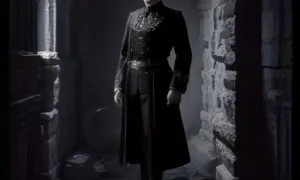
The visualisations are generated by artificial intelligence and serve as inspiration.
Photos from the area
Real photos taken near the monument


Zdroj a licence jsou uvedeny u každého snímku.
Tips from visitors
No tips yet. Be the first!
Log in and add your tip.
Sources and literature
Fotografie: Marie Čcheidzeová / CC BY-SA 4.0 — Wikimedia Commons. The author and licence also appear when you hover over the image.
Faktickým podkladem tohoto textu byl článek na Wikipedii, jehož autory jsou přispěvatelé Wikipedie. Článek je dostupný pod licencí CC BY-SA 4.0.
Location on the map
Příběhy a pověsti
Legendy, pověsti a příběhy spjaté s touto památkou
Fotografie návštěvníků
Zatím žádné fotografie. Buďte první, kdo přidá fotografii z návštěvy!
Přihlaste se a přidejte svou fotografii nebo hodnoťte.
Za ověřenou návštěvu v aplikaci získáte víc bodů — poznáme podle GPS, že jste na místě.
Reviews and comments