






Kostel svaté Anny (Jeřmanice) Church
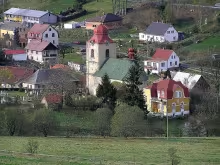
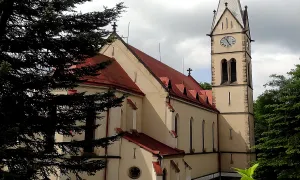
The church of St. Anne stands at the cemetery in Jermanice and has acquired its present appearance in 1812-1816. The project was developed by builder J. Brauner from Smržovka, and the building was connected to an older chapel from 1760-1764 - part of its equipment was preserved to this day and forms the most valuable component of the interior. Since 1966, the church has been registered as a cultural monument.
The building has a rectangular, so-called unoriented floor plan, which means that its axis does not go liturgically east. It's a one-ship construction of three axes with a half-circle priesthood. The dominant element of the facade is the massive prism tower; The date 1819 is carved on her portal, which shows that the tower was completed a little later than the ship itself. The interior overlaps the segmental rolled vault, the presbytery is encapsulated by a condom and the circle is wooden.
The heart of the church is the main altar of the portal, the column type. It is decorated with artistically valuable sculptures of St. Peter and St. Paul, which are apparently the work of J. Hájek of Munich Hradiště from 1764 and come from the old chapel. The altar painting of the Holy Family was created during the construction of the church and painted by F. Leubner of Liberec. The side altar is rococo; His central motive is the painting of the Virgin Mary by Johann Gruss of Litoměřice from 1841, set in frame by I. Ehrlich. The pulpit bears the same artistic concept as the statues of the main altar, i.e. Hájka's hand. The organ are empirical and dates back to 1816, i.e. directly from the time of construction.
In the ship hang pictures of St. Mary Magdalena, St. Catherine and St. John Nepomuk dated approximately 1836. The painting of St. Anthony from 1852 is the work of I. Muller from Rychnov and is one of the youngest artistic additions to the interior.
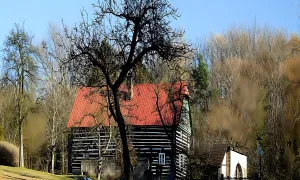
The church visit is accompanied by a stop near the nearby baroque torture of God with the column chapel of St. John Nepomuk from 1752, which stands in the immediate vicinity of the building and completes the historical nature of the place. For an inquisitive tourist, the church in Jermanice is particularly interesting as proof of continuity - in a new 19th-century building, works of art survive from the previous sacral space and form a whole that goes beyond mere regional architecture.
Then and now
Drag the slider to compare how the landmark may have looked when it was built with the view today.
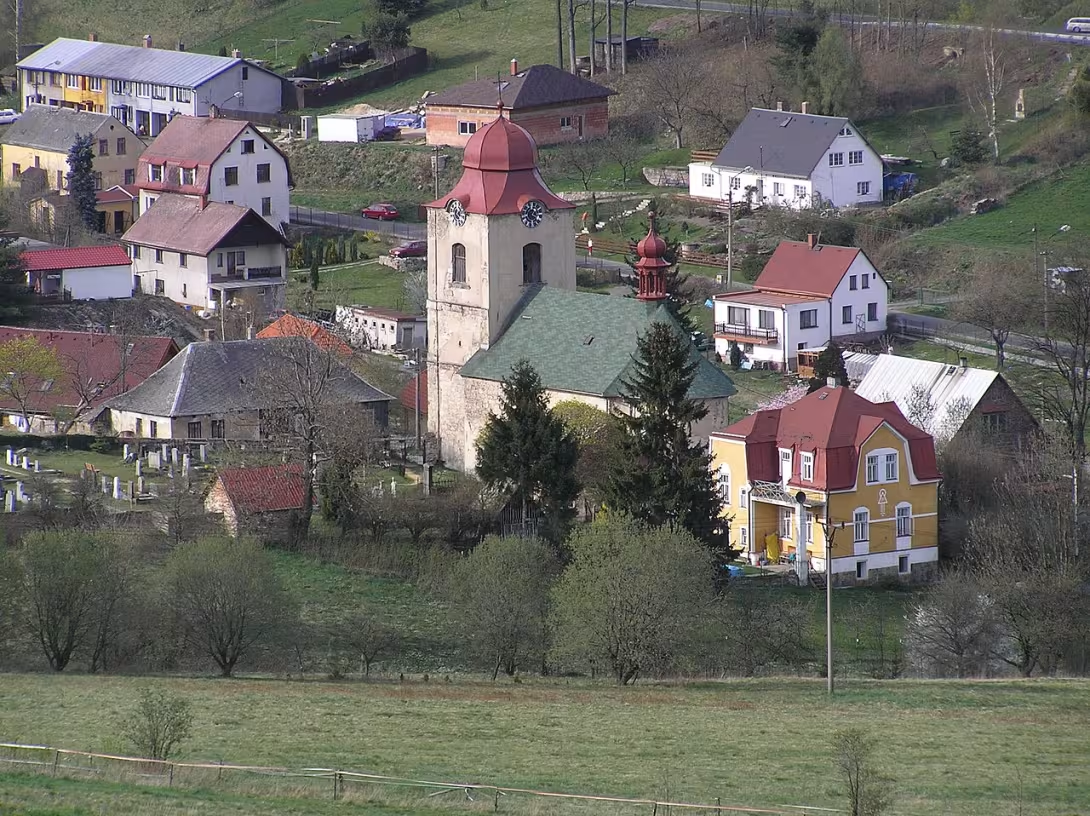

The historical appearance on the left is an AI-generated visualisation and serves as inspiration only.
Historical milestones
- 1760-1764
- The status of St. Anne's original Baroque chapel.
- 1812-1816
- The conversion of the chapel to the present church according to the plans of Josef Brauner.
- 1819
- Complete the massive prism tower.
- 1966
- Writing the church into a list of cultural monuments.
Architectural development
The original chapel from 1760-1764 was built from a quarry wall in a Baroque style. In 1816 it was rebuilt into a single-boat church with classicist elements, including segmentalized glass and massive prism towers. The interior was supplemented with new works of art such as altars and organ from the period 1816-1841.
Historical events
- 1760
- The establishment of the original Baroque chapel at the site of the present church.
- 1816
- The reconstruction of the church according to the plans of Josef Brauner.
- 1966
- Writing the church into a list of cultural monuments.
Owners
parish
municipality
Points of interest
- The church of St. Anne was built in 1812-1816, the tower was completed in 1819.
- The interior preserved equipment from the original chapel from 1760-1764, including the statues of St. Peter and St. Paul from 1764.
- The main altar is a portal, column type with artistically valuable sculptures from the original chapel.
- The church has an unoriented plan, which means that its axis does not go east.
- Near the church stands the baroque torture of God with the pillar chapel of St. John Nepomuk from 1752.
Guide
This guide is narrated by a synthetic voice generated by artificial intelligence.
Show guide text
This text was created by artificial intelligence and has not been editorially reviewed. It may contain inaccuracies.
Welcome to Yermanice, the beautiful corner of the Liberec Region. Stop for a moment, take a breath and fully sense the space around you. Right now, you are standing in front of the Church of Saint Anne, a building that has been telling us for more than two centuries of silent testimony about faith, art and time changes. Look at this building. The first impression that comes out of it is a sense of stability and peace. It is a place where two distinct echelons of architecture, Baroque and classicism meet, creating a harmonious whole that we admire today as a cultural monument.
Let us now take a look together at how this building was created. Her story does not begin as a great church as you see today, but as a more humble sacral space. From 1760 to 1764, the original Baroque chapel of St. Anne was built here. Imagine the atmosphere at that time, the simplicity of baroque shapes and the deep spirituality that came to this village with the chapel. The chapel served as a refuge and a place of prayer for the people, but over time it became clear that more space was needed.
That brings us to the first big change. In the early nineteenth century, namely between 1812 and 1816, there was a major reconstruction. It was at this time that the chapel turned into a contemporary church. The whole project was entrusted to architect Josef Brauner. Brauner was a man who could link tradition to the new trends of his time. Thanks to his plans, the church gained its present form, combining the playfulness of the baroque with a stricter and cleaner line of classicism. It is fascinating to think of how much work and effort the community at that time was responsible for making a small chapel a dignified temple.
Now please pay attention to the architecture itself that you see before you. If you look at the total available, you'll notice it's a single-boat structure. This means that the inner space is made up of one main ship heading towards the altar. Take a look at the end of the construction where the semi-circular presbytery is located. This rounded shape is typical of sacral architecture and gives the building softness and fluidity.
Now please look up. Your view certainly dominates the mighty prism tower. This tower is one of the most significant elements of the whole church, but the interesting thing is that it was not completed simultaneously with the main building. While the reconstruction of the church ended in 1816, this dominant tower was completed in 1819. Notice her robust appearance, which gives the complex a sense of strength and grandeur. It was this tower that served as a landmark for the people around it, and its bells echoed important moments in the lives of generations of Jermanians.
Now, when we think of the inner space, a real treasure awaits you. Although the construction was significantly changed in the nineteenth century, the interior preserved valuable equipment from the very first Baroque chapel from 1760 to 1764. It's like a window into the past. Note in particular the statues of St. Peter and St. Paul. These plastic paintings come from 1764 and are the silent witnesses of everything that has happened in these walls over the centuries. Imagine the craftsmen who made these statues in the eighteenth century with such precision to accompany the faithful for centuries.
The next item you should pay attention to is the main altar. It's a work of portal, column type. This means that the altar is framed by columns that create a sense of monumental entry into the celestial sphere. The altar is supplemented by artistically valuable sculptures, which complement the overall atmosphere of the interior with its dynamics and expression. It is this combination of older baroque elements and later classical frames from the hand of Josef Brauner that makes St. Anne's church a unique place.
You may be wondering why this building is so important in terms of state protection. In 1966, St. Anne's church was officially listed in the list of cultural monuments. This is not only a formal recognition, but a confirmation that the architecture and equipment of this church have an irreplaceable value for the entire area of the Liberec Region. It is a monument that survived political change, war, and transformation into a understanding of religion, and yet retained its integrity.
The interesting thing to think about is the time shift in the construction. It's fascinating how the project developed in several waves. First the chapel, then the extensive reconstruction and finally after a few years of finishing the tower. This procedure shows us that building the temple was not a one-off act, but a long process that required patience, finance and faith in the final outcome. Every stone and every statue here has their exact time and place.
Now that you know the story of the origin and details of architecture, I suggest you let your eyes and mind wander freely. Walk around the church, perceive the light game on its walls and try to imagine how people felt in these areas two stylets ago. Feel the contrast between the power of the tower and the fineness of the half-circle presbytery.
The church of St. Anne in Jermanice is not just a building of stone and mortar. It is a place where human effort meets, artistic talent of architect Josef Brauner and deep history of the region. It's a space that teaches us patience and respect for what our ancestors have left us.
Thank you for stopping by this beautiful monument for a moment. I hope this short trip to history has helped you better understand what you see before you. I now invite you to explore the surroundings of Jermanic and discover other hidden corners of this region. I wish you a pleasant rest of the day and many other inspirational experiences. Goodbye.
Frequently asked questions
Is Kostel svaté Anny (Jeřmanice) open to the public?
Yes, the church is open to the public. The entrance is free.
How do I get to the place by car / public transport?
The church is located in a quiet village Jeřmanice. The nearest public transport stop is in a nearby town from where you can continue on foot or by bike.
How much is the entrance fee and is it paid on the spot?
The church entrance is free.
Is the tour suitable for children and seniors?
Yes, the tour is also suitable for families with children and seniors. The church offers a quiet environment and interesting historical information.
How long does the tour take?
The church tour takes approximately 30 minutes.
What are the opening times and booking is required?
The church is accessible throughout the year, but in winter months entry can be restricted due to poor travel conditions. Reservation is not necessary.
What's interesting in the immediate vicinity?
In the vicinity of the church there are forests and the river Jermanický, where you can take a pleasant walk.
For kids
Imagine going back to a time when fewer people lived in the world and the country was full of forests and rivers. Up to one place where there are now small villages in Bohemia - a Yermanic village.
It was like in a game where all the villagers gathered at St. Anne's church, which was standing in a place where the same church was standing today. But he was much older then, and he looked very different than he did today. The church was built in the 14th century, which is really old.
Businesses nearby
Do you run a restaurant, accommodation, shop, museum, rental, wellness or other visitor service near this monument? Show yourself directly to the people heading to it — this is how they will see you in the app and on the web:
Events nearby




Zdroj akcí: otevřená data měst a obcí ČR (Národní katalog otevřených dat) a kalendář akcí Národního památkového ústavu.
Nearby
{'Memories': [{\ 'Nazen': 'The Torment of God with the column chapel of St. John Nepomuk', 'Year': '1752', 'Stations': 'The Baroque Torture of God is located near the church and dates back to 1752'}], 'Stores': None}
Accommodation nearby
Trips and activities nearby
Guided tours, tickets and activities nearby from GetYourGuide
Affiliate link: if you buy from the partner, we may receive a commission. The price for you does not change.
Search tours and activities →Themed route
The daily cruise route around St. Anne's Church in Jermanice * * * *
1.Kostel svaté Anny (Jeřmanice) The most important goal is a Baroque church dedicated to Saint Anne, built in the 18th century. Its architectural beauty and historical value are evidence of local religious and cultural heritage. The interior decoration with frescoes and statues captures the spiritual traditions of the region.
2. God's torture with the pillar chapel of St. John Nepomuk (1752) Approximately 500 metres from the church is the Baroque torture of God from 1752. These monuments symbolize religious ceremonies and local traditions. The Chapel of St. John Nepomuk is a small but important building that resembles protection against dangers.
Conclusion The route is short but rich in historical and religious monuments. Suitable for families and culture lovers, when enough 1.5-2 hours for a tour. It is recommended to visit during a quiet time to avoid overcrowding.
Seasonal recommendations
Spring The spring at St. Anne's Church offers a unique atmosphere where the sun's rays penetrate glass windows and illuminate the inner spaces with golden light. Around the church is awakening to life - spring flowers flourish and the forests around Jermanice are green. The interior of the church, surrounded by old stone elements, then excels in contrast to clear outdoor nature. The ideal time for visiting is after the rain, when the air smells of moisture and earth, and the church bell spreads cleaner and brighter. I recommend to come early in the morning when the place is quiet and the light falls directly on the altar. Light clothes are suitable, but prepare an umbrella too - spring weather is unpredictable.
Summer In the summer months, St. Anne's church attracts its cold and calm before the heat of the surrounding fields and forests. The sun does not penetrate here as intensely as it does outside, and therefore the interior is pleasantly illuminated but unheated. The surrounding area of the church will turn into a green oasis, where you can walk the surrounding roads or relax in the meadows. The best time to visit is early in the morning or after the 15th hour, when you avoid crowds of tourists who come here to visit nature and the monument. Suitable is light, but covering clothing - the sun can be strong here, and in the countryside there is often light wind.
Autumn The autumn visit to St. Anne's church is magical, as the surrounding forests are painted in golden and red shades, while the church stands like a dark oasis of peace. The sun is no longer so high, and therefore its rays illuminate the church interior from one side, creating long shadows and a mysterious atmosphere. The interior then rises to a depth where old stone elements and wood elements stand out in softer light. The ideal time is after 10: 00, when you avoid morning fog and visitors. I recommend warmer clothes - autumn winds can be cold, and in the country they cool quickly. Don't miss the surrounding forests that are the most beautiful these days.
Winter The winter visit to St. Anne's Church offers peace and quiet, which is rare at this time. The snow cover surrounds the church with a white landscape while the interior remains warm and cozy. The sun shines only briefly and low here, and therefore the church spaces are lit with a fine, scattered light that highlights the old stone details. The best time to visit is in the afternoon when the lights are out and the crowds are smaller. Hot clothes are suitable - it can be cold outside, and strong wind blows in the countryside. Don't miss the surrounding landscape that turns into a winter fairy tale.
Visualizations and artistic views


The visualisations are generated by artificial intelligence and serve as inspiration.
Photos from the area
Real photos taken near the monument


Zdroj a licence jsou uvedeny u každého snímku.
View from the area
This animation was generated by artificial intelligence from a real photograph of the surroundings. The motion and details are not real footage of the location.
Atmosphere of the place
This atmospheric visualisation of the place and period was generated by artificial intelligence. It is not real footage of the location.
Tips from visitors
No tips yet. Be the first!
Log in and add your tip.
Sources and literature
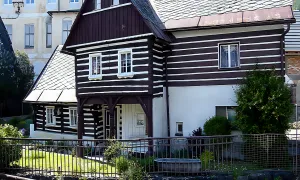
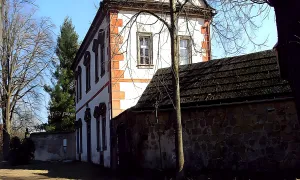
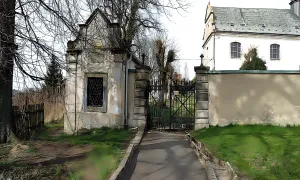
Fotografie: MartinVeselka / CC BY-SA 4.0 — Wikimedia Commons. The author and licence also appear when you hover over the image.
Faktickým podkladem tohoto textu byl článek na Wikipedii, jehož autory jsou přispěvatelé Wikipedie. Článek je dostupný pod licencí CC BY-SA 4.0.
Location on the map

Příběhy a pověsti
Legendy, pověsti a příběhy spjaté s touto památkou
Fotografie návštěvníků
Zatím žádné fotografie. Buďte první, kdo přidá fotografii z návštěvy!
Přihlaste se a přidejte svou fotografii nebo hodnoťte.
Za ověřenou návštěvu v aplikaci získáte víc bodů — poznáme podle GPS, že jste na místě.
Reviews and comments