






Kostel svatého Františka z Assisi (Šumburk nad Desnou) Church
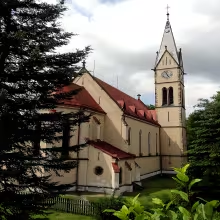
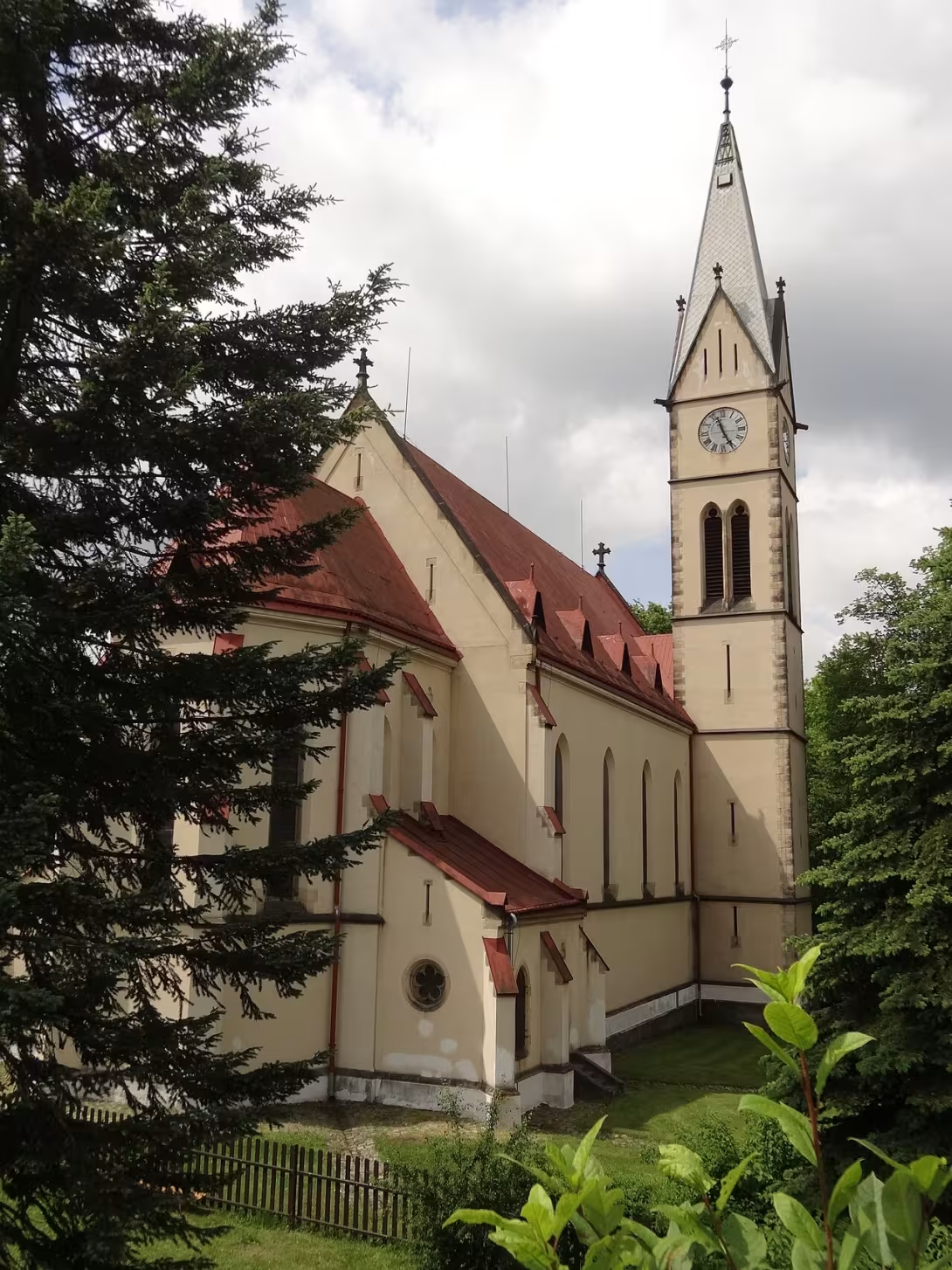
The church of St. Francis of Assisi, also called the church of St. Francis of Serafinski, in Šumburk nad Desna is a pseudo-gothic sacral building and a protected cultural monument. It is raised as a dominant factor in the Tanvald region and significantly affects the appearance of the surrounding countryside.
The construction of the church started with the laying of the foundation stone on the third December 1898, in the year of the important anniversary - fifty years after the beginning of Emperor Franz Joseph I. on the Czech throne. The church was therefore given the original name Jubilee church of emperor Franz Joseph I. The base stone contains a flagged box with a charter, building plans and correspondence concerning the building, which thus bears the legacy of its time. Construction was led by local builder Karel Pekárek. The actual consecration of the temple building took place on the 15th of August 1901, but the construction work continued for two years until 1903. After 1918, when political conditions changed, the church received a new name - it became the temple of St. Francis of Assisi, sometimes referred to as the church of St. Francis of Serafinski.
From the point of view of architecture, the construction is based on simple and clear principles. It is a rectangular building with a single boat and a rectangular presbytery that ends in polygonally. A characteristic element is the northwest tower, which rises above the surrounding building. The presbytery is a glazed cross rib arch that creates a typical pseudo-gothic look of the interior.
The furniture and equipment of the church are modern and historic. The original tower bells were confiscated during World War II. In 1993 the church received two new bells, which are still part of its appearance and liturgical life.
Then and now
Drag the slider to compare how the landmark may have looked when it was built with the view today.

The historical appearance on the left is an AI-generated visualisation and serves as inspiration only.
Historical milestones
- 1898
- Opening of the building by laying the base stone
- 1901
- Temple building consecration
- 1903
- Completion of construction work
- 1918
- Change the name of the church to the St. Francis Temple from Assisi
- 1939-1945
- Confiscation of original bells during World War II
- 1993
- Receiving two new bells
Architectural development
The church is rectangular, single boat with polygonal end presbytery and northwest tower. The presbytery has a rib arch. The church's facilities are modern and historic, the bells were confiscated during World War II and replaced in 1993.
Historical events
- 1898
- The cornerstone of the church was laid.
- 1901
- The church was ordained.
- 1918
- The church began to be referred to as St. Francis of Assisi.
Points of interest
- The church of Saint Francis of Assisi was originally named Jubilee church of emperor Franz Joseph I. to celebrate the 50th anniversary of his accession to the Czech throne. - The base stone of the church contains a box with a foundation sheet, building plans and correspondence concerning the building. - Construction was run by local builder Karel Pekárek. - After 1918 the church was given a new name - it became the temple of St. Francis of Assisi, sometimes referred to as the church of St.
Guide
This guide is narrated by a synthetic voice generated by artificial intelligence.
Show guide text
This text was created by artificial intelligence and has not been editorially reviewed. It may contain inaccuracies.
Welcome. You are standing in front of a building that is completely dominated by its presence over the surrounding landscape and which has been determining the face of this place for over a century. Before you go any further, stop for a moment and perceive the atmosphere of this space. In front of your eyes is the church of St. Francis of Assisi, a monumental sacral building that immediately gives its appearance respect. Feel the silo with which this architecture emerges from the background and how it becomes the natural center of everything that happens here. This building is not just a wall of stone and mortar, it is a symbol of a certain era that tried to capture eternity within the world at that time.
To understand why this church is standing right here and why it is so impressive, we must return together to the end of the nineteenth century. Imagine the time when the world was on the threshold of a new millennium, but at the same time it still held the tradition of the old order. This temple was not built randomly. He was created as a Jubilee church to honor the 50-year reign of emperor Franz Joseph I. It was an expression of respect, a celebration of stability and the duration of the empire. The work on this magnificent project began in 1898 when the foundation stone itself was laid. However, the whole process was very difficult and lasted several years. Although the church was ceremonially consecrated already in August 1901, the final finishing work, which provided its precise form, continued until 1903. It is fascinating to think of the effort, the energy of the entire region that has been put into this project to create something that will take generations.
Now pay attention to the architecture itself that you are currently observing. The whole building is realized in pseudogotic style. Now, if you look at the overall structure of the building, you'll notice the effort towards a vertical direction, to make the church lines seem to be heading towards the sky. This style was not selected randomly; pseudogotics at that time carried deep spiritual meaning, referred to the golden era of faith and sought inspiration for the present in the past. The architect Karel Pekárek was behind this whole visual expression. He was the one who had to combine the demanding requirements of the jubilee building with an aesthetic beauty that would fit into this region, while being sufficiently dominant. Even though you're looking at the finished structure today, try to imagine the work, the precision with which Bakárek had to deal with every detail so that the whole material structure would be so harmonious and so noble.
But the history of this place is much more than just a story about stones and an architect. It's a story about people, their faith, and their trials. Notice how time was changing. In 1918, when the political map of the world changed, the name of this place changed and the church became the temple of St. Francis of Assisi. But the hardest times came much later. If you now think about the fate of this church during World War II, you will come across a sad chapter. Between 1939 and 1945 his original bell equipment was confiscated from this temple. Imagine that quiet, heavy atmosphere where a place that was meant to announce joy and sadness to the whole neighborhood became a place without voice. The bells were the heart of the church, his voice, which connected the community.
However, history also has its brighter sides that prove the resilience of people. After long years of silence, the sound of the bells returned to Šumburk. In 1993, two new bells were donated to the church, which once again filled the space with their sacred sound. This moment was a symbol for local residents of recovery and return to normal after the period of major shocks.
Before you go on another survey, I want to tell you one thing that's hidden right under your feet. If you could look deep into the foundation, you would find that a little mystery box is hidden in the base stone that was laid in 1898. It is a time capsule which contains a charter, original building plans and also correspondence that concerned the construction itself. It is like a message from the past that has been deliberately preserved for future generations so that they know with what purpose and effort this temple was made. It's a connection between those who built and you who are standing here today.
I hope that this short journey over time has helped you to better perceive the beauty and importance of St. Francis of Assisi. Don't just let your eyes stop you, but try to perceive the depth that lies in every detail and every year of its history. Now, I won't take you in seclusion, but I suggest you continue your tour of the area and let the atmosphere of this place drift. I wish you a beautiful rest of the day and a useful discovery.
Tips for visitors
The best time to visit the church of Saint Francis of Assisi in Šumburk nad Desnou is usually early spring or late autumn month. During these periods you will avoid extreme temperatures while enjoying beautiful lights that give the building a unique atmosphere.
Parking in Šumburk nad Desnou is available near the church. You can also choose to travel by public transport; check current connections and options in advance using an online search engine or local information centre.
When visiting the church, wear a suitable suit, especially if you visit during the winter months. It is also important to bring protective sunglasses and plenty of drinking during summer days.
Photography of the church offers the best possibilities especially in the early morning or late afternoon when the light is soft and pleasant. Special views can be captured from nearby pavements or parking spaces.
There are several interesting places around the church that can be visited within 30 minutes. These places include the historical center of Šumburk with its streets and houses full of history. For families with children there is also a visit to local parks where children can enjoy leisure time.
Frequently asked questions
Is Kostel svatého Františka z Assisi (Šumburk nad Desnou) open to the public?
Yes, the church is open to the public. Opening hours: 9: 00- 18: 00.
How do I get to the place by car / public transport?
Parking is possible in the vicinity of the church. The nearest public transport stop is in the center of Šumburk nad Desnou, from which you can walk.
How much is the entrance fee and is it paid on the spot?
Admission is free.
Is the tour suitable for children and seniors?
Yes, the church is accessible to all ages. The tour takes approximately 30 minutes.
How long does the tour take?
The tour takes approximately 30 minutes.
What are the opening times and booking is required?
Opening hours: 9: 00- 18: 00. Reservation is not required, but recommended for groups over 10 persons.
What's interesting in the immediate vicinity?
In the vicinity of the church there is a natural reserve of Šumava foothills with the possibility of walking or cycling. In the centre of Šumburk nad Desnou you can visit the local museum and shops.
For kids
Imagine going back to the past until this place was unknown. It was just a small village in a deep forest where humans and animals lived in harmony with nature.
It was like in a game where everyone played a part in dealing with the weather. When it was dry summer, the locals helped the trees put out their burning ground. And when it was winter, they were the first to help the birds find food.
At that time, Saint Francis also lived here, who tried to bring peace and love to the people. His message spread like a fire in the woods and soon became known all over the world.
Businesses nearby
Do you run a restaurant, accommodation, shop, museum, rental, wellness or other visitor service near this monument? Show yourself directly to the people heading to it — this is how they will see you in the app and on the web:
Nearby
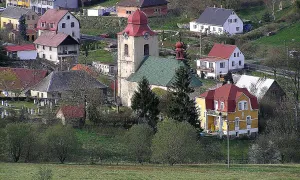
Landscape around Šumburk above Desna.
Accommodation nearby
Trips and activities nearby
Guided tours, tickets and activities nearby from GetYourGuide
Affiliate link: if you buy from the partner, we may receive a commission. The price for you does not change.
Search tours and activities →Themed route
1. Church courtyard (area) - The first point is a walk in the immediate vicinity of the building, where you can see its external form. 2. Church of St. Francis of Assisi (monument) - The main goal is to explore the inner space, which will enrich you with experiences from the spiritual place. 3. Church tower (view) - The height climb allows you to observe the surrounding landscape and details of the building. 4. Exposition on the premises (exhibition) - The final stop offers a view of historical objects connected with this place.
Seasonal recommendations
In the spring, the surrounding church awakens to life and nature in the surrounding Šumburk begins to bloom. The light is soft in this period and very pleasant to capture the details of the construction. We recommend wearing layered clothes because the morning cold can quickly rotate with afternoon heat. It is the ideal time for a quiet observation, because the traffic is still low and there is comfort.
Summer months bring bright sunlight and a lively atmosphere to the village. The church is surrounded by dense greenery, creating a beautiful contrast to its walls. Due to the main summer season and increased interest of visitors, we recommend that you come early in the morning to avoid the biggest crowds and midday heat. Don't forget light clothes and sun protection.
The autumn season offers a melancholy and spiritual atmosphere, underlined by morning fog and golden colours of leaves in the surroundings. Sundown lighting at this time is absolutely magical and ideal for capturing the mood of the place. It is advisable to prepare stronger shoes in case of wet terrain and warmer jacket. The best is to visit the memory in the afternoon, when the colors of the landscape most excel.
In winter, deep silence spreads around the church, especially if the landscape is covered with snow. The atmosphere is noble and seems very unshakable. Due to lower temperatures and possible shorter opening hours, it is necessary to check everything in advance and choose very warm clothes including hats. It is ideal to visit on bright days when snow is beautifully reflected from the walls of the building.
Visualizations and artistic views


The visualisations are generated by artificial intelligence and serve as inspiration.
Photos from the area
Real photos taken near the monument

Zdroj a licence jsou uvedeny u každého snímku.
Atmosphere of the place
This atmospheric visualisation of the place and period was generated by artificial intelligence. It is not real footage of the location.
Tips from visitors
No tips yet. Be the first!
Log in and add your tip.
Sources and literature
Fotografie: MartinVeselka / CC BY-SA 4.0, rozlišení zvýšeno umělou inteligencí — Wikimedia Commons. The author and licence also appear when you hover over the image.
Faktickým podkladem tohoto textu byl článek na Wikipedii, jehož autory jsou přispěvatelé Wikipedie. Článek je dostupný pod licencí CC BY-SA 4.0.
Location on the map

Příběhy a pověsti
Legendy, pověsti a příběhy spjaté s touto památkou
Fotografie návštěvníků
Zatím žádné fotografie. Buďte první, kdo přidá fotografii z návštěvy!
Přihlaste se a přidejte svou fotografii nebo hodnoťte.
Za ověřenou návštěvu v aplikaci získáte víc bodů — poznáme podle GPS, že jste na místě.
Reviews and comments