



husitský kostel v Ostravě-Zábřehu Church
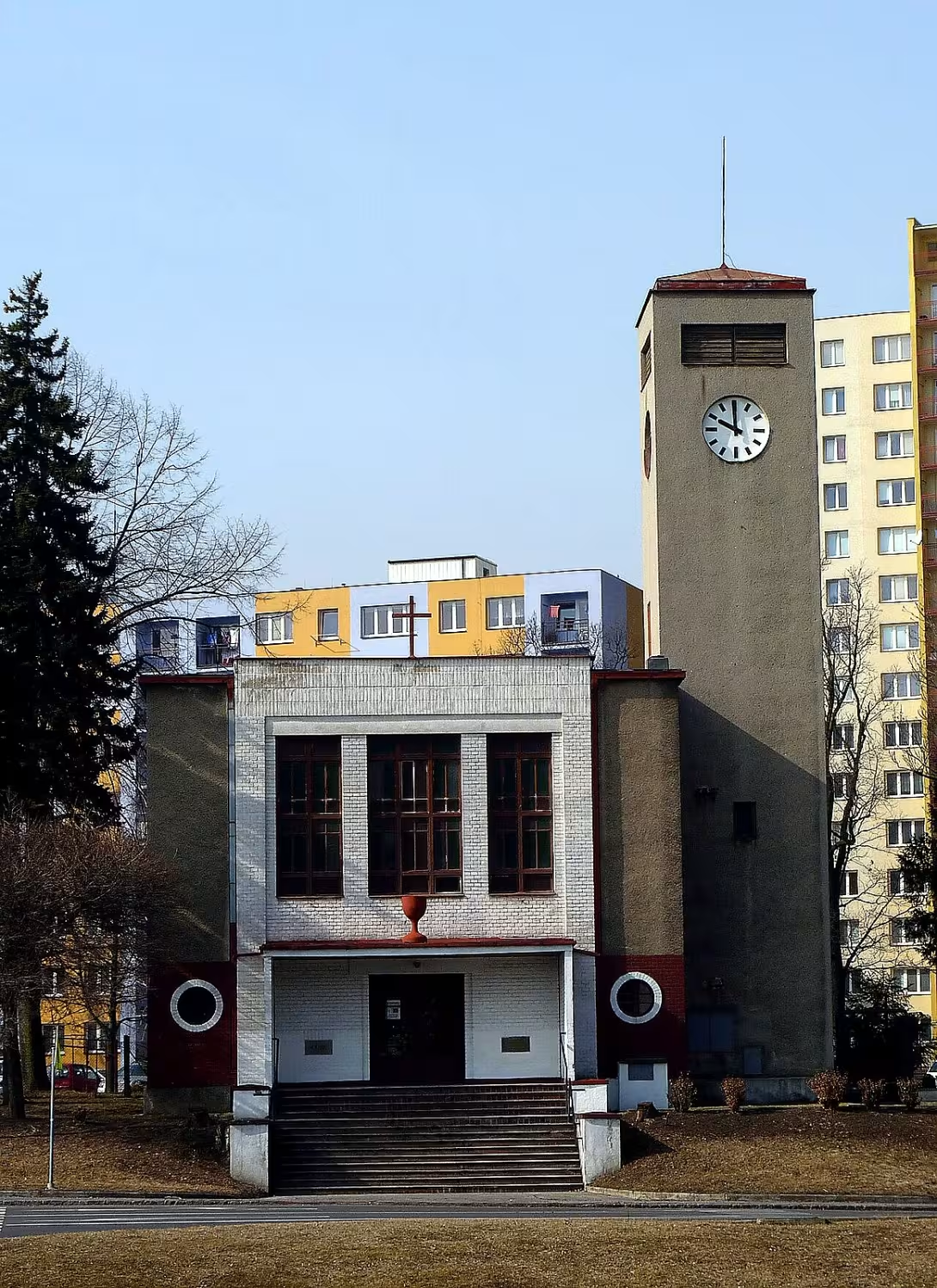
The Church of the Czechoslovak Hussite Church in Ostrava-Zábřeh is a notable historical monument located in Zábřeh, within the Moravskoslezský kraj region. Constructed between 1932 and 1933, this functionalist-style church stands as a testament to early 20th-century Czechoslovakia's cultural and religious revival, emphasizing Hussite traditions. Designed by architect Josef Kittrich from Prague, it serves not only as a place of worship but also as a repository of significant historical and artistic elements.
The origins of the Church in Ostrava-Zábřeh are rooted in the early 20th century when Czechoslovakia was establishing its national identity following World War I. In 1929, a community of believers purchased land for the church's construction, reflecting their commitment to preserving Hussite traditions. The building process spanned from 1932 to 1933, during which time the functionalist style became prominent in architecture, characterized by simplicity and functionality.
Architecturally, the Church is distinguished by its functionalist design, a movement that emphasized practicality and minimalism. Josef Kittrich's vision materialized into a structure featuring a distinctive 23-meter high tower with three bells, topped with a flat roof. The interior houses significant artworks, including an altar designed by Ing. arch. Rabenstein, which features a life-sized crucifixion sculpture by František Koupan inspired by Myslbek's work. Additionally, frescoes depicting Jan Hus and Jan Amos Komenský by prof. Jan Obšíl adorn the side walls, adding to the church’s artistic richness.
Throughout its history, the Church has experienced dramatic events that have shaped its narrative. Notably, during World War II on April 29, 1945, it was damaged by bombing. Despite this setback, the community undertook restoration efforts to preserve its historical and cultural significance. The church also houses a memorial plaque containing soil from battlefields of Czechoslovak legions, donated by the former Jednota Československé obce legionářské in Zábřeh nad Odrou, further embedding it within the broader context of Czechoslovak history.
Today, the Church remains an active site for worship and historical reflection. It is maintained with the help of units from the Československé obce legionářské Opava and Ostrava I, which collaborate with the local religious community to organize annual services and commemorative events. These include ceremonies on July 2nd, marking the Battle of Zborov, and November 11th, honoring war veterans. Visitors can explore its rich interior, including the memorial plaque and frescoes, while also appreciating its architectural significance.
The Church of the Czechoslovak Hussite Church in Ostrava-Zábřeh is not only a place of spiritual importance but also a monument that encapsulates significant historical narratives and artistic achievements. Its preservation allows visitors to connect with the cultural heritage of Czechoslovakia, making it a worthwhile destination for those interested in history, architecture, and art. The church invites exploration and reflection, offering insights into the past while continuing to serve its community today.
Then and now
Drag the slider to compare how the landmark may have looked when it was built with the view today.
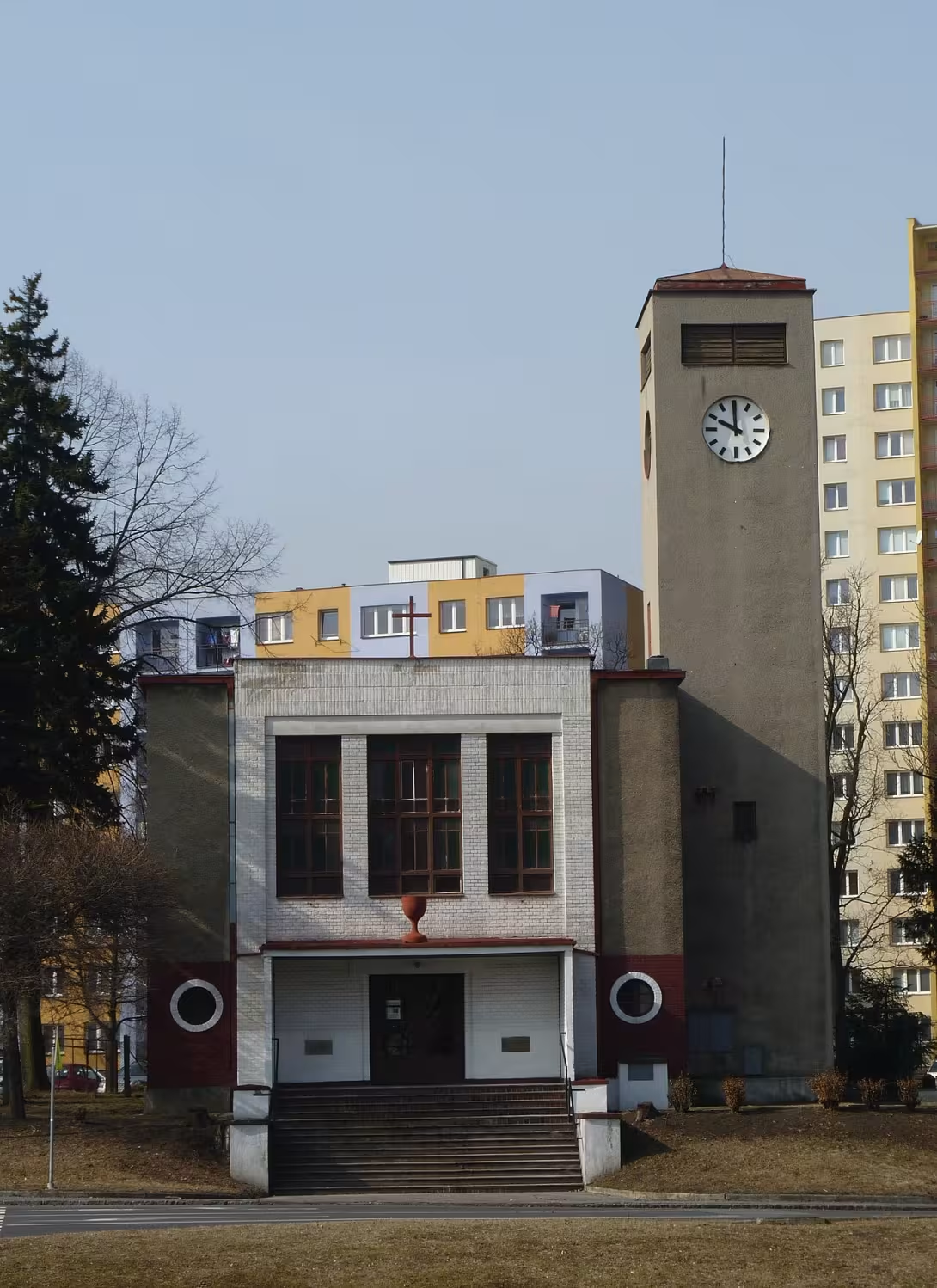
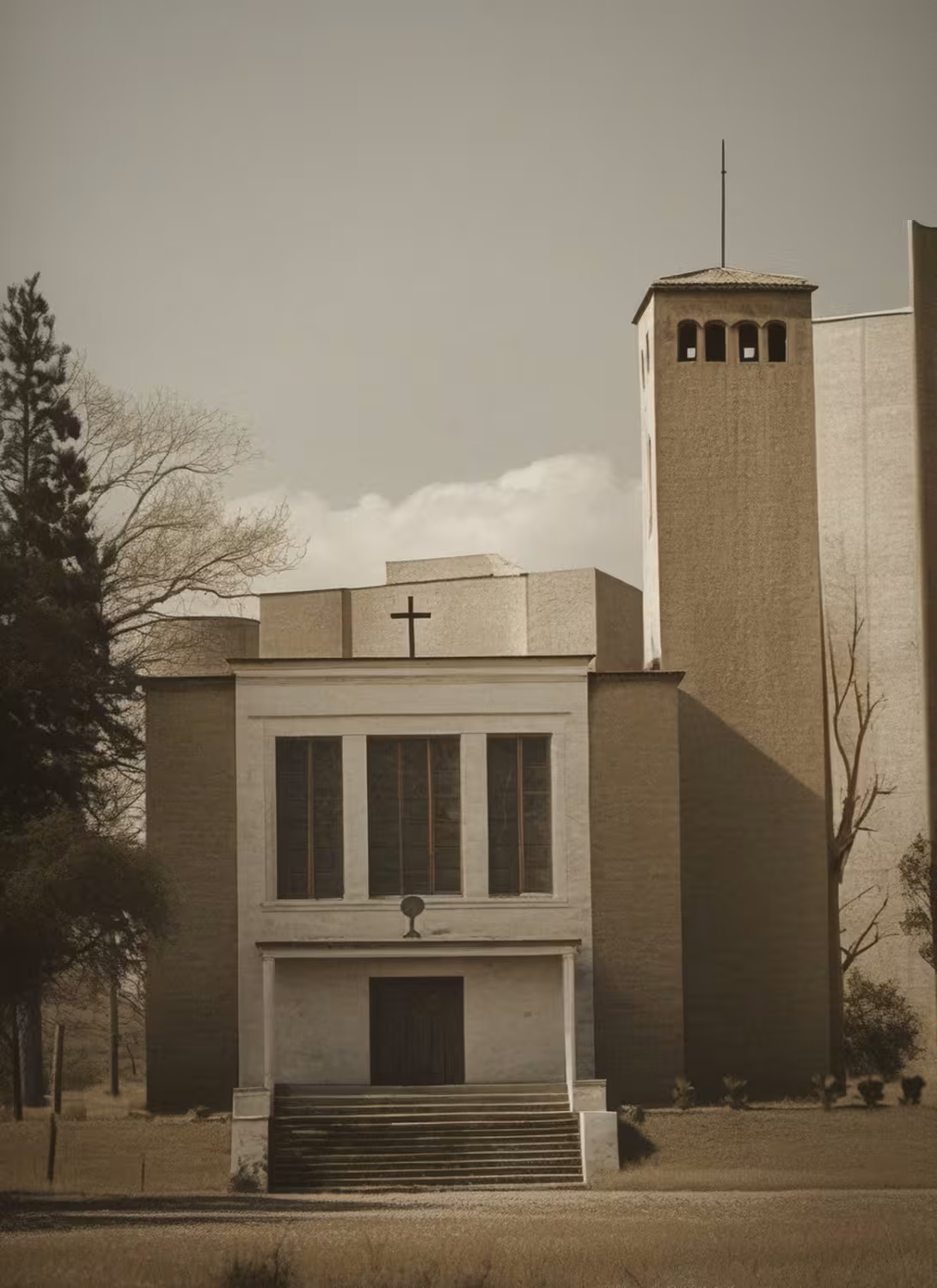
The historical appearance on the left is an AI-generated visualisation and serves as inspiration only.
Historical milestones
- 1929
- Community purchased land for church construction.
- 1932
- Construction of the Church began.
- 1933
- Construction of the Church completed.
- 1945
- Church damaged by bombing during World War II.
Architectural development
Constructed in the functionalist style between 1932 and 1933, the church features a distinctive 23-meter high tower with three bells. The interior includes significant artworks such as frescoes by prof. Jan Obšíl and an altar designed by Ing. arch. Rabenstein.
Historical events
In 1929, a community of believers purchased land for the church's construction.
The church was damaged by bombing during World War II on April 29, 1945.
Points of interest
- The Church of the Czechoslovak Hussite Church in Ostrava-Zábřeh features a distinctive 23-meter high tower with three bells, which is unusual for functionalist architecture known for its minimalism and practicality.
- The altar within the church includes a life-sized crucifixion sculpture by František Koupan, inspired by the renowned work of Myslbek, adding an artistic connection to one of Czechoslovakia's most celebrated sculptors.
- A unique aspect of the church is its memorial plaque that contains soil from battlefields where Czechoslovak legions fought, symbolically linking the building to significant military history and honoring those who served in these conflicts.
- The frescoes inside the church depict Jan Hus and Jan Amos Komenský, both pivotal figures in Czech religious reform and education, highlighting their enduring influence on Hussite traditions and national identity.
- Despite being damaged by bombing during World War II, the community's dedication to restoration ensured that the church not only survived but also continued to serve as a site for historical reflection and commemoration of Czechoslovak legions.
Guide
This guide is narrated by a synthetic voice generated by artificial intelligence.
Show guide text
This text was created by artificial intelligence and has not been editorially reviewed. It may contain inaccuracies.
The Husův sbor in Ostravě-Zábřehu is a church of the Czechoslovak Hussite Church and at the same time a designation for the community of believers who gather there. The local congregation purchased the land in 1929. The church itself was built between 1932 and 1933 in the functionalist style. It was designed by Prague architect Josef Kittrich.
The building is dominated by a prism-shaped tower with a flat roof, twenty-three meters high. It bears a clock and three bells. Even the foundation stone has symbolic significance. It comes from Kozího hrádku, where Master Jan Hus preached and taught.
The interior decoration combines faith with Czech history. The congregation entrusted the altar and its liturgical furnishings to artist and architect Rabenstein. The altar is crowned by Christ on the cross in life size. It was carved by sculptor František Koupal following the model by Myslbek. On the side walls are frescoes of two great figures from Czech history, Master Jan Hus and Jan Amos Komenský. They were painted by Professor Jan Obšil.
A special place in the interior is held by a memorial plaque. It contains ashes from the battlefields of the Czechoslovak legions. The religious congregation received it from the then Czechoslovak Legion Community in Zábřehu nad Odrou.
At the end of the Second World War, on the twenty-ninth of April 1945, the church was damaged by bombing. Later it was repaired.
The legacy of the Zábřehu legionnaires remains alive to this day. The Czechoslovak Legion Communities in Opava and Ostrava I hold services and commemoration ceremonies together with the local religious congregation every year. They are held on the anniversary of the Battle of Zborov, the second of July, and on Veterans Day, the eleventh of November. Participants lay flowers at the memorial plaque in the church and at the graves of legionnaires in the nearby cemetery.
In the vicinity of the church there are other Zábřehu monuments: the castle, an erratic boulder, the old town hall, and the Church of the Visitation of the Virgin Mary.
Tips for visitors
The best time to visit the Church of the Czechoslovak Hussite Church in Ostrava-Zábřeh is during late spring or early autumn when the weather is pleasant, allowing for comfortable exploration both inside and outside the church. These seasons offer mild temperatures and beautiful natural lighting that enhance the experience of visiting historical sites. Additionally, these periods are less crowded compared to summer months, providing a more serene environment to appreciate the architectural details and interior design of the church.
This ensures a smooth journey and helps in planning your itinerary around other attractions you wish to explore.
When visiting the church, it's recommended to bring comfortable walking shoes as there may be some walking involved, especially if you plan to explore nearby sites like Zábřežský Castle or the Church of Visitation of the Virgin Mary. A camera is also advisable for capturing the unique architectural features and serene surroundings. Since weather can change unexpectedly in this region, packing a light raincoat or umbrella could be beneficial.
For photography enthusiasts, the best spots to capture the church's functionalist architecture are from the exterior where natural lighting accentuates its design during sunrise or late afternoon. Inside, the play of light through windows creates interesting patterns that can make for compelling photographs. Exploring nearby attractions such as Zábřežský Castle and the mysterious boulder known as Zábřežský bludný balvan offers additional photographic opportunities with scenic landscapes and historical intrigue.
Families visiting with children will find the area around Ostrava-Zábřeh engaging, particularly the nearby old town hall which often hosts events or exhibitions that can be both educational and entertaining for younger visitors. The Church of Visitation of the Virgin Mary is another family-friendly site to explore, offering a peaceful atmosphere and beautiful architecture. For those interested in history and nature, Zábřežský Castle provides an excellent opportunity for a short excursion, with its grounds suitable for family walks.
Frequently asked questions
Can the monument be visited?
Religious buildings are usually open mainly during services; at other times a visit is normally arranged with the parish or the operator. We have not verified specific times.
Where is the monument?
Location: Zábřeh, Moravskoslezský kraj. The map on this page shows the exact spot.
Businesses nearby
Do you run a restaurant, accommodation, shop, museum, rental, wellness or other visitor service near this monument? Show yourself directly to the people heading to it — this is how they will see you in the app and on the web:
Events nearby
Zdroj akcí: otevřená data měst a obcí ČR (Národní katalog otevřených dat) a kalendář akcí Národního památkového ústavu.
Nearby
Nearby attractions include Zábřežský Castle, a mysterious boulder known as Zábřežský bludný balvan, an old town hall, and the Church of Visitation of the Virgin Mary.
Accommodation nearby
Themed route
Tematická výletní trasa: Husitský kostel a okolí Zábřehu
1. Husitský kostel v Ostravě-Zábřehu (Kostel) - Typ: Kostel - Proč stojí za návštěvu: Tento historický husitský kostel je jedinečným příkladem gotické architektury s bohatou historií, která sahá až do 14. století. Je to nejen duchovní centrum místní komunity, ale také svědectví o historických událostech oblasti.
2. Zábřežský hrad - Typ: Hrad - Proč stojí za návštěvu: Nacházející se pouhé pár minut chůze od kostela, Zábřežský hrad nabízí vynikající přehled o historii a kultuře oblasti. Jeho pevnostní stavba je svědectvím minulých válečných dob a poskytuje nádherné panoramatické výhledy na okolní krajinu.
3. Zábřežský bludný balvan - Typ: Přírodní památka - Proč stojí za návštěvu: Tento mysteriózní báňový blok je jedinečnou přírodní a historickou atrakcí, která se nachází blízko hradu. Jeho neobvyklé umístění a původ zaujímají návštěvníky svými legendami a příběhy o minulosti.
4. Stará radnice - Typ: Historický objekt - Proč stojí za návštěvu: Stará radnice v Zábřehu je fascinujícím příkladem místní architektury a historie, která se nachází ve značné blízkosti k kostelu. Je to místo s bohatou minulostí, které svědčí o dřívější správě obce a jejím vývoji.
5. Kostel Nanebevzetí Panny Marie (Kostel Visitationu) - Typ: Kostel - Proč stojí za návštěvu: Tento kostel je dalším důležitým náboženským a historickým místem v Zábřehu, které nabízí bohatou architekturu a umělecké prvky. Je to klíčové místo pro pochopení duchovního života oblasti.
Tato trasa poskytuje komplexní pohled na historii, kulturu a přírodní atrakce Zábřehu, všechny umístěné v blízkosti navzájem pro snadný a poutavý průchod.
Seasonal recommendations
Spring: Visiting the Hussite Church in Ostrava-Zábřeh during spring offers a unique experience as nature begins to awaken around this historical site. The surrounding landscape is adorned with blooming flowers and lush greenery, creating a vibrant backdrop that enhances the church's architectural beauty. The gentle sunlight and longer days provide excellent natural lighting for photography and exploration. Visitors should dress in layers to accommodate the variable temperatures typical of spring weather. While attendance might be moderate, arriving early can ensure a more peaceful visit before larger crowds gather later in the day.
Summer: Summer is an ideal time to explore the Hussite Church with its extended daylight hours offering ample opportunity for sightseeing and enjoying outdoor activities nearby. The lush greenery surrounding the church provides a picturesque setting, perfect for leisurely walks after your visit. However, this season also attracts more tourists, so it's advisable to arrive early in the morning or later in the afternoon to avoid peak times. Comfortable walking shoes and light clothing are recommended due to warmer temperatures, ensuring you can comfortably enjoy the historical site.
Autumn: Autumn brings a distinct charm to Ostrava-Zábřeh with its warm hues of reds, oranges, and yellows painting the landscape around the Hussite Church. The cooler weather makes for pleasant walking conditions as you explore the area. This season is less crowded than summer, offering a more tranquil atmosphere ideal for appreciating the church's architecture and history without the hustle and bustle. Layered clothing is recommended to adjust to the fluctuating temperatures typical of autumn days.
Winter: Winter transforms Ostrava-Zábřeh into a serene landscape where snow often blankets the area around the Hussite Church, providing a magical setting that enhances its historical ambiance. The shorter daylight hours mean planning your visit during midday for optimal lighting conditions. This season is less crowded, allowing for a more intimate experience with fewer visitors. It's essential to dress warmly in layers and wear appropriate footwear for potentially icy paths.
Visualizations and artistic views


The visualisations are generated by artificial intelligence and serve as inspiration.
Photos from the area
Real photos taken near the monument

Zdroj a licence jsou uvedeny u každého snímku.
Tips from visitors
No tips yet. Be the first!
Log in and add your tip.
Sources and literature
Photos: Michal Klajban / CC BY-SA 3.0 — Wikimedia Commons. The author and licence also appear when you hover over the image.
Faktickým podkladem tohoto textu byl článek na Wikipedii, jehož autory jsou přispěvatelé Wikipedie. Článek je dostupný pod licencí CC BY-SA 4.0.
Location on the map



Příběhy a pověsti
Legendy, pověsti a příběhy spjaté s touto památkou

Příběh: husitský kostel v Ostravě-Zábřehu
Bylo to v pondělí ráno, kdy Martin zjistil, že jeho cesta byla mimořádným způsobem změněna, když se na něj začaly rozhazovat papíry přes stůl v jeho malé stu…
Číst příběh
Pověst: husitský kostel v Ostravě-Zábřehu
Traduje se, že když stavitelé v roce 1932 přivezli základní kámen z Kozího hrádku, starý zábřežský kovář Metoděj Horáček ho osobně přivítal na prahu staveniš…
Číst příběhFotografie návštěvníků
Zatím žádné fotografie. Buďte první, kdo přidá fotografii z návštěvy!
Log in a přidejte svou fotografii nebo hodnoťte.
Za ověřenou návštěvu v aplikaci získáte víc bodů — poznáme podle GPS, že jste na místě.
Reviews and comments