






Kaltenštejn Ruin
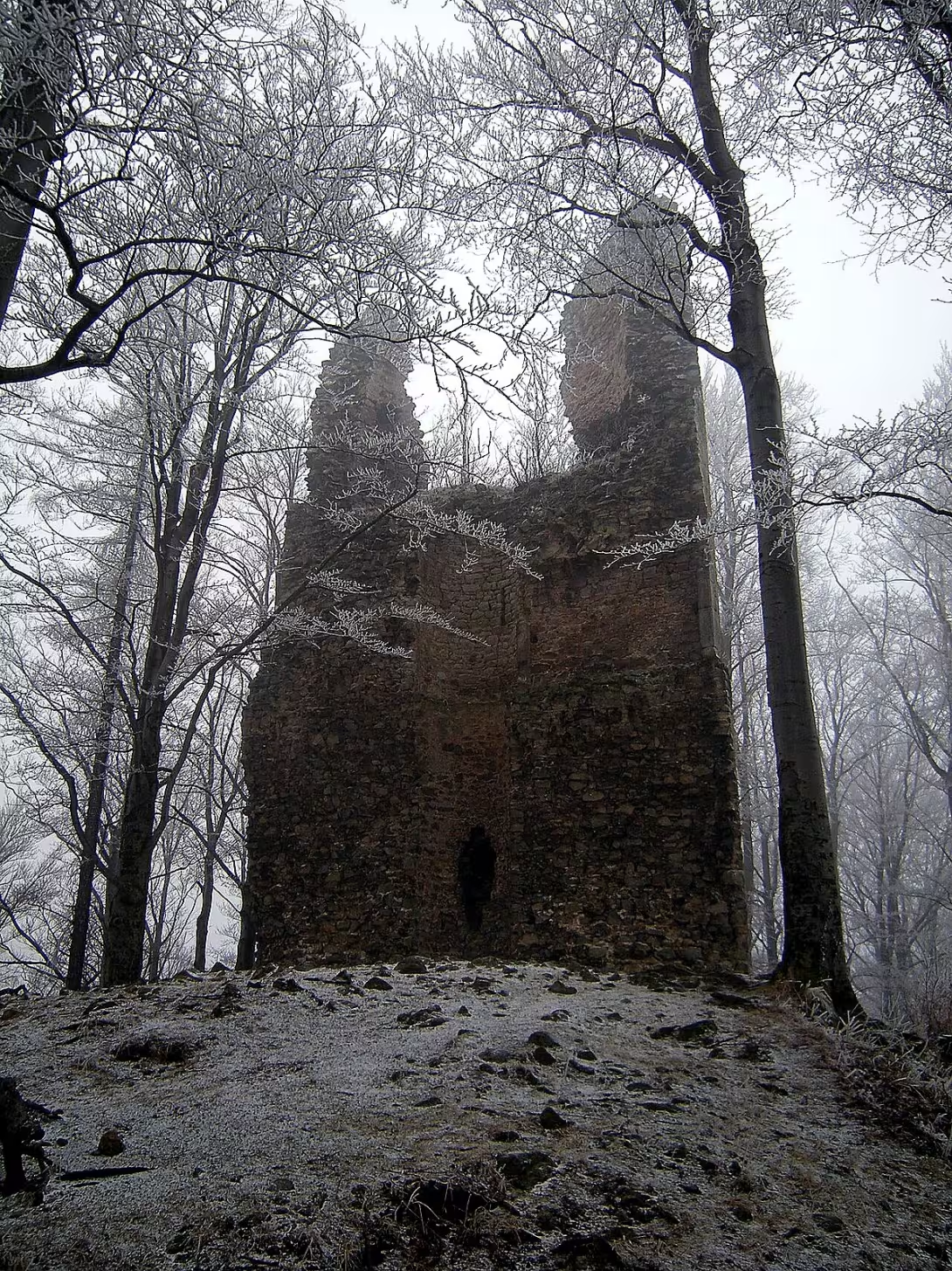
Kaltenštejn is a medieval castle ruin situated on an isolated hill near Černá Voda in the Jeseník District of Olomoucký kraj. Built around 1300, it stands as one of the few Silesian castles with preserved masonry architecture remnants. The site holds historical significance due to its involvement in territorial disputes and ownership changes over centuries.
The origins of Kaltenštejn trace back to the late 13th century when it was first mentioned in charters from 1295 and 1296, amidst a dispute between Bolko I of Świdnica and Bishop Jan Romka of Wrocław. Initially described as "newly built," the castle was on land belonging to the bishopric, leading to its transfer into ecclesiastical hands by 1299 under Bishop Jan Romka's control.
Architecturally, Kaltenštejn is notable for its well-preserved core structure, featuring a tower-like palace with minimal remains. The most prominent element of the castle is the circular bergfrit, standing approximately 20 meters high and originally accessible via a portal on the first floor. Despite its strategic location, the castle was not maintained during the mid-15th century, leading to its gradual disrepair.
Ownership of Kaltenštejn changed hands multiple times throughout history. After Bishop Jan Romka's tenure, it was partially inherited and redeemed by Přeclav of Pogorzela in 1345. The castle experienced several periods of being pawned due to financial strains on the bishopric, with notable owners including Pelkan of Kalkau (1435), Hanušek of Myslina (1441), and the Vratislav Cathedral Chapter (1443). By 1505, Bishop Jan IV. Roth consolidated his holdings by purchasing Kaltenštejn from its last owner, Jindřich of Tetov, but chose not to restore it, leading to its eventual dismantling in 1512.
A significant event occurred in 1441 when Ritter Zikmund Rachna seized the castle, resulting in a violent confrontation. This episode highlighted the turbulent nature of the region during this period. Despite these conflicts, Kaltenštejn was not occupied during the Hussite Wars, reflecting its strategic yet vulnerable position.
Today, Kaltenštejn stands as an archaeological site and cultural monument, offering visitors a glimpse into medieval Silesian history. Its ruins provide insight into architectural styles and defensive strategies of the time. The castle's location on an isolated hilltop near Černá Voda offers commanding views of the surrounding landscape, making it a worthwhile destination for those interested in exploring historical sites.
Kaltenštejn's value lies not only in its architectural remnants but also in its rich history of ownership and conflict. It serves as a testament to the complex feudal dynamics of medieval Silesia. Visitors are invited to explore this site to appreciate its historical significance and enjoy the serene beauty of its natural surroundings.
Then and now
Drag the slider to compare how the landmark may have looked when it was built with the view today.
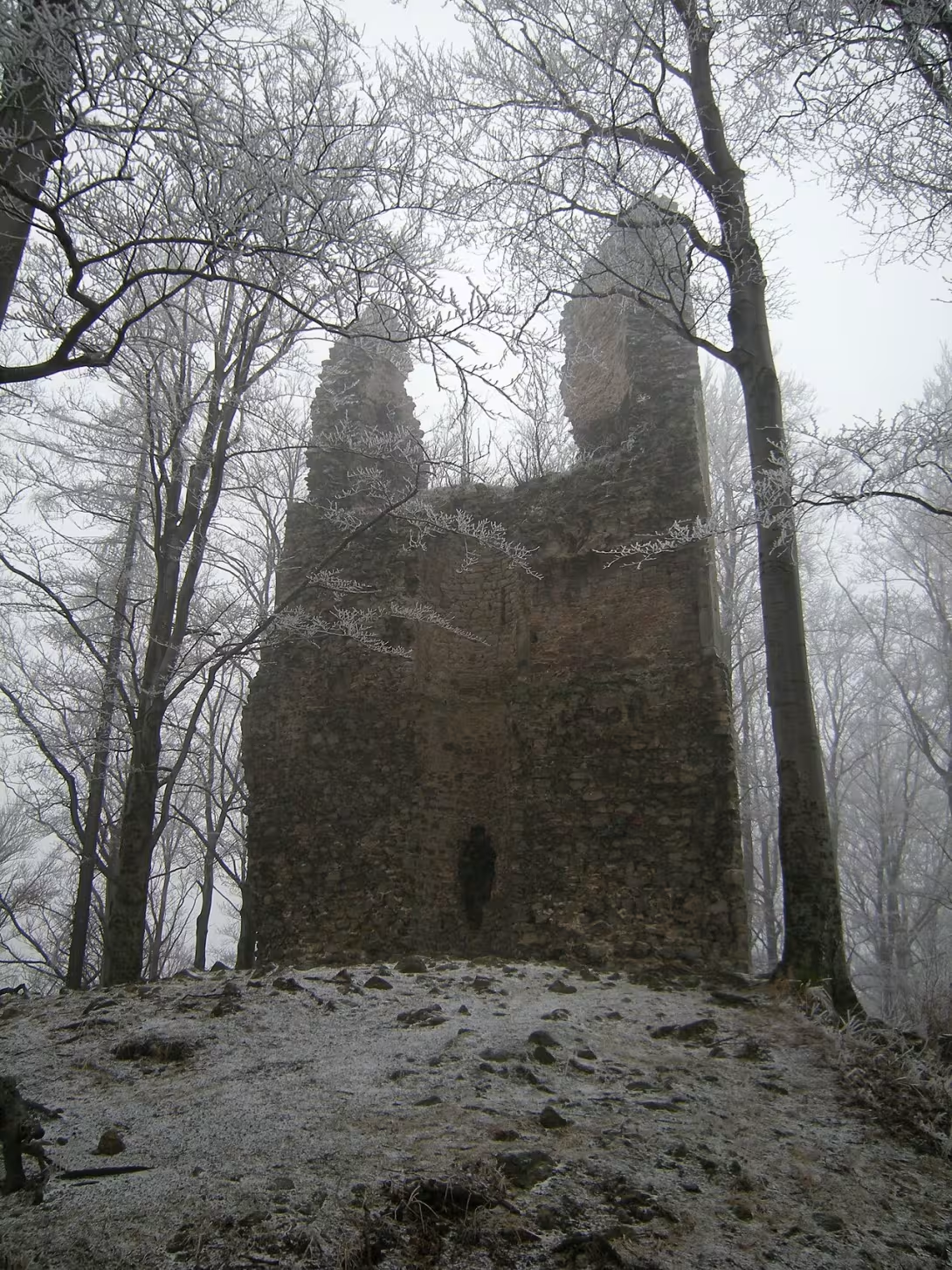

The historical appearance on the left is an AI-generated visualisation and serves as inspiration only.
Historical milestones
- 1295
- Kaltenštejn is first mentioned in contracts.
- 1296
- Another mention of Kaltenštejn in historical documents.
- 1299
- Kaltenštejn transferred to the hands of Bishop Jan Romka.
- 1345
- Přeclav z Pogorzela partially inherited and redeemed Kaltenštejn.
- 1441
- Ritter Zikmund Rachna captured Kaltenštejn after a violent confrontation.
- 1505
- Bishop Jan IV. Roth bought Kaltenštejn from Jindřich z Tetova.
- 1512
- Kaltenštejn was dismantled.
Architectural development
Kaltenštejn's core structure is its most ancient part, featuring a tower-like palace with minimal remains. The main circular bergfrit stands at about 20 meters high, originally accessible via a portal on the first floor. Over time, the castle was not maintained and fell into disrepair by the mid-15th century.
Historical events
1299: The castle was documented in the possession of Bishop Jan Romka.
1441: Ritter Zikmund Rachna seized the castle, leading to a violent confrontation.
Owners
Bolko I of Świdnica (1299)
Jan Romka, Bishop of Wrocław
Přeclav of Pogorzela (1345)
Pelkan of Kalkau (1435)
Hanušek of Myslina (1441)
Vratislav Cathedral Chapter (1443)
Kryštof of Czechowice (1455)
Mikuláš Meinholt/Meynholt (1460–1470)
Hynek Meinholt (1470–71, 1472–1497)
Přemek II, Duke of Opava (1471)
Jindřich of Tetov (1497–1505)
Points of interest
- Kaltenštejn is a medieval castle ruin built around 1300 with preserved masonry architecture remnants. - The origins of the castle trace back to charters from 1295 and 1296 during a dispute between Bolko I of Świdnica and Bishop Jan Romka of Wrocław, initially described as "newly built." - Architecturally notable for its well-preserved core structure, including a circular bergfrit approximately 20 meters high. - Ownership changed hands multiple times, with significant owners like Přeclav of Pogorzela in 1345 and Hanušek of Myslina in 1441. - In 1441, Ritter Zikmund Rachna seized the castle, leading to a violent confrontation.
Guide
This guide is narrated by a synthetic voice generated by artificial intelligence.
Show guide text
This text was created by artificial intelligence and has not been editorially reviewed. It may contain inaccuracies.
Kaltenštejn was a Silesian castle on a solitary hilltop near Černá Voda in the Jesenicko region. Since 1964, it has been protected as a cultural monument.
It is first mentioned in two documents from 1295 and 1296. The castle was then described as newly built, and it was disputed between the Svídnický duke Bolek the First and the Wrocław bishop Jan Romka. It stood on episcopal land, and the duke purchased it from the original builders, whom the documents call enemies of the Church. The Kraków bishop decided that the duke must either demolish the castle or hand it over to the Wrocław bishop. The duke chose to hand it over. By 1299, the castle already belonged to the bishop and was commanded by the castellan Dětřich, the bishop's brother.
In the first half of the 14th century, the castle was repeatedly pawned, sometimes to several holders at once. In 1345, Bishop Přeclav of Pohořelá partly inherited it and partly purchased it. The bishops then held it directly and from it administered the villages of Stará Červená Voda and Jindřichovice u Vidnavy. During the Hussite Wars, the castle was apparently not occupied, but the depleted episcopal treasury led to further pawning. Among the pledged holders in the 15th century were the Wrocław chapter, the Meinholt family, and the Opava duke Přemek the Second.
In 1441, the knight Zikmund Rachna seized the castle. He had abducted the daughter of the Kłodzko captain Půta of Vaak, and when he was fleeing from her stepfather Hynek Krušina of Lichtenburg, he unexpectedly occupied the castle. However, the episcopal army conquered it, and the main perpetrators were tortured and executed.
In the 15th century, the castle was not repaired and by the middle of the century it was already dilapidated and obsolete. In 1505, Bishop Jan Čtvrtý Roth redeemed it from the pawn. Instead of repairing it, however, he had it demolished against the will of the chapter. By 1512, it is recorded as completely destroyed. According to tradition, it served as a source of building material for the nearby castle Jánský Vrch, which was extensively rebuilt at that time.
Nevertheless, Kaltenštejn is among the best preserved medieval castles of Silesia, on whose sites no later château was built. The oval-shaped core measures at most 45 by 30 meters. Due to its position on the hilltop, it did not need a moat. Inside stands freely a circular tower, or bergfrit, with a diameter of over 10 meters. Its walls were more than four meters thick on the ground floor and only a meter and a half on the upper floors. It was entered through a small portal on the first floor. It had arrow slits and a gallery with crenellations. An explosion destroyed the tower, but it has survived to a height of roughly 20 meters.
To the core wall was attached a two-story palace, of which only cellars remain, one of them with traces of vaulting. Two outer wards were created on the northwest. Later a palisade wall was added around the entire hilltop with a main gate. The path to the castle led from the south.
Tips for visitors
The best time to visit Kaltenštejn is during late spring or early autumn, when the weather is mild and the surrounding nature is particularly vibrant. These seasons offer comfortable temperatures for exploring the ruins without the summer crowds or winter chill. Additionally, the lighting conditions are ideal for photography, with soft morning light enhancing the textures of the ancient stones.
Visitors should plan to park in nearby Černá Voda and walk to the site. Public transportation options may also be available; however, it's advisable to check current routes and schedules online before your visit.
When visiting Kaltenštejn, bring comfortable walking shoes as you'll need them for navigating uneven terrain around the ruins. A hat and sunscreen are recommended due to limited shade in the open landscape. Don’t forget water and snacks, especially if traveling with children, as there are no facilities on-site. Binoculars can enhance your experience by allowing a closer look at details of the structure.
For photography enthusiasts, the best spots for capturing Kaltenštejn's ruins are from the eastern side where the morning light illuminates the stones beautifully. The isolated hilltop offers panoramic views that make excellent backgrounds for landscape shots. Be mindful of the lighting conditions; early mornings or late afternoons provide softer shadows and richer colors.
Within a 30-minute drive, Jánský Vrch Castle is an intriguing nearby site to explore. This castle benefited from materials sourced from Kaltenštejn, offering a fascinating historical connection between the two sites. For families with children, both locations provide educational opportunities about medieval history and architecture while enjoying outdoor activities.
Frequently asked questions
Can the monument be visited?
This is a ruin. Such sites are often freely accessible, but some can only be visited with a guide or are closed for safety reasons. We have not verified the current situation – take care and respect any restrictions.
Where is the monument?
Location: Černá Voda, Olomoucký kraj. The map on this page shows the exact spot.
Why is the monument protected?
It is listed in the Central List of Cultural Monuments of the Czech Republic as a cultural monument (register no. 15061/8-860).
Businesses nearby
Do you run a restaurant, accommodation, shop, museum, rental, wellness or other visitor service near this monument? Show yourself directly to the people heading to it — this is how they will see you in the app and on the web:
Nearby
Kaltenštejn is situated on an isolated hilltop near Černá Voda, offering a commanding view of the surrounding landscape. The area includes other historical sites and natural features within a 5 km radius.
Accommodation nearby
Themed route
Kaltenštejn Castle Ruins (Hlavní cíl)
This medieval castle ruin offers a unique glimpse into the region's history and features a commanding view of the surrounding landscape.
1. Černá Voda Village The picturesque village of Černá Voda lies at the foot of the hill where Kaltenštejn Castle Ruins are situated. Visitors can explore the village's charming streets and get a feel for local life.
2. Church of St. John the Baptist A charming church in the village center, featuring a beautiful interior and a peaceful atmosphere. The church is a great place to take a break and reflect on the history of the region.
3. Old Mill A historic mill located in the village, offering a glimpse into the region's industrial past. Visitors can see the old machinery and learn about the mill's history.
4. Kaltenštejn Castle Ruins (Nádvoří a věž) Explore the castle's ruins and climb to the top of the tower for a panoramic view of the surrounding landscape. The castle's history and significance are also on display in the on-site exhibits.
5. Kaltenštejn Castle Ruins (Expozice) The castle's on-site exhibit showcases the history and significance of the castle, as well as the region's cultural and historical heritage. Visitors can learn about the castle's past and its importance in the region.
Seasonal recommendations
Jaro
In the spring, Kaltenštejn is surrounded by flowers and greenery, creating a pleasant atmosphere for walking. The specific charm of this season includes the spring lighting when the sun shines on the ruin and its surroundings. Practical tips: the best time to visit is from April to May, when the weather is enjoyable and mild. We recommend bringing comfortable shoes and plenty of time for exploring the historic site.
Summer
The main summer season is when Kaltenštejn is most visited. The specific characteristics here include hot weather and a large number of tourists. Practical tips: the best time to visit is early in the morning or late in the evening to avoid crowds. We recommend bringing an umbrella and plenty of water to prevent sunburn.
Autumn
In autumn, Kaltenštejn is surrounded by beautiful colorful leaves and cool weather. The specific charm includes the autumn lighting when the sun shines on the ruin and its surroundings. Practical tips: the best time to visit is from September to October, when the weather is enjoyable and mild. We recommend bringing warm clothing and comfortable shoes.
Winter
In winter, Kaltenštejn is surrounded by snow and cold weather. The specific charm includes the snowy lighting when the sun shines on the ruin and its surroundings.
Visualizations and artistic views


The visualisations are generated by artificial intelligence and serve as inspiration.
Photos from the area
Real photos taken near the monument

Zdroj a licence jsou uvedeny u každého snímku.
Tips from visitors
No tips yet. Be the first!
Log in and add your tip.
Sources and literature
Photos: Stok / CC BY-SA 4.0 — Wikimedia Commons. The author and licence also appear when you hover over the image.
Faktickým podkladem tohoto textu byl článek na Wikipedii, jehož autory jsou přispěvatelé Wikipedie. Článek je dostupný pod licencí CC BY-SA 4.0.
Location on the map

Příběhy a pověsti
Legendy, pověsti a příběhy spjaté s touto památkou

Fotografie návštěvníků
Zatím žádné fotografie. Buďte první, kdo přidá fotografii z návštěvy!
Log in a přidejte svou fotografii nebo hodnoťte.
Za ověřenou návštěvu v aplikaci získáte víc bodů — poznáme podle GPS, že jste na místě.
Reviews and comments