






Kamenná kašna v Kutné Hoře Fountain
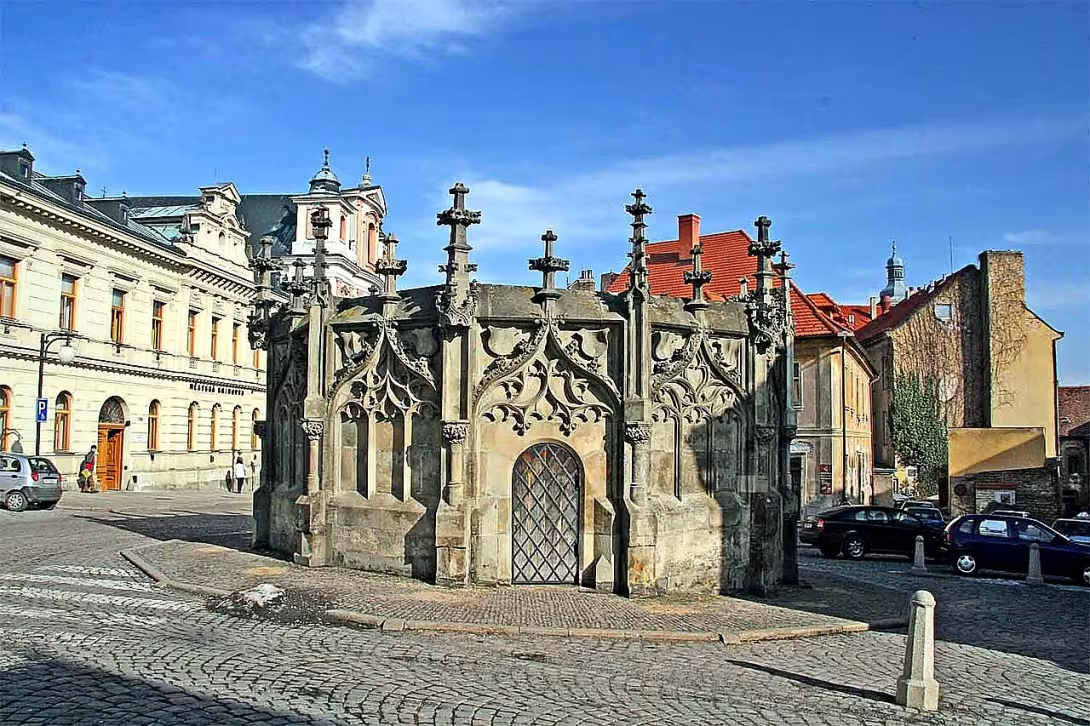
The Kamenná Kašna in Kutná Hora is a notable historical monument located at Rejskova Square in the town's Vnitřní Město district. Constructed between 1493 and 1495, this Gothic-style fountain exemplifies medieval craftsmanship and water management practices. Recognized as a cultural heritage site of the Czech Republic, it provides insights into Kutná Hora's architectural and social history during the late 15th century.
The Kamenná Kašna was likely built by Briccius Gauske, although earlier attributions suggested Matěj Rejsek. Jan Smíšek z Vrchovišť financed its construction; he owned Hrádek at the time. This period in Bohemia's history saw significant Gothic architectural developments across Europe, with Kutná Hora emerging as an important mining town under King Vladislaus II of the Holy Roman Empire. The fountain served not only as a decorative piece but also supplied drinking water to the town until 1890.
Architecturally, the Kamenná Kašna is distinguished by its late Gothic style and twelve-sided polygonal design. Originally adorned with attic railings and a high hexagonal roof, it featured several sculptures on consoles that enhanced its decorative appeal. These elements underscored the importance of water in medieval society, where access to clean drinking water was both scarce and vital.
Throughout its history, the Kamenná Kašna has undergone significant changes. After serving as a reservoir for drinking water until 1890, it required restoration due to wear over time. Between 1887 and 1890, Ludvík Lábler undertook this task, ensuring that the fountain's historical integrity was preserved while adapting it to contemporary needs.
Today, the Kamenná Kašna stands as a well-preserved monument, accessible to visitors who wish to explore Kutná Hora's rich history. Its intricate design and historical significance make it a must-see for those interested in Gothic architecture and medieval urban life. The fountain not only reflects the artistic achievements of its time but also highlights the ingenuity involved in managing essential resources like water.
Visiting the Kamenná Kašna offers a unique opportunity to connect with the past, appreciating both its aesthetic beauty and historical importance. It remains an enduring symbol of Kutná Hora's cultural heritage, inviting visitors to delve into the stories it holds within its stone structure.
Then and now
Drag the slider to compare how the landmark may have looked when it was built with the view today.
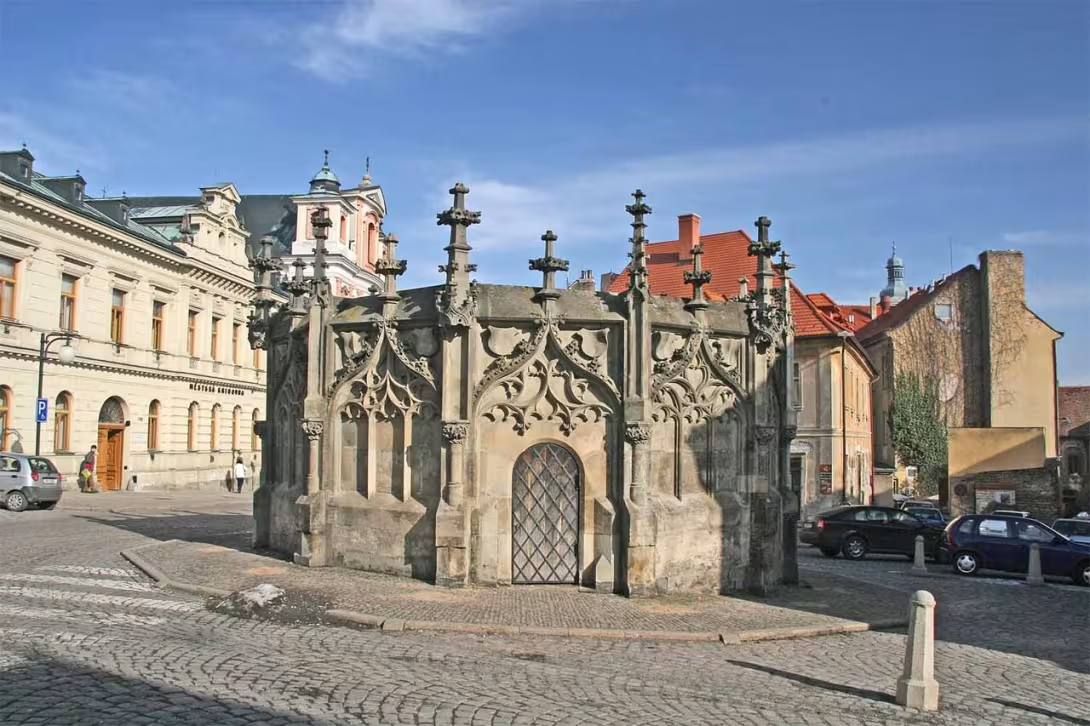

The historical appearance on the left is an AI-generated visualisation and serves as inspiration only.
Historical milestones
- 1493
- Construction of the Kamenná kašna began.
- 1495
- Completion of the Kamenná kašna construction.
- 1887
- Restoration of the Kamenná kašna initiated by Ludvík Lábler.
- 1890
- Restoration of the Kamenná kašna completed.
Architectural development
The Kamenná kašna was built in the late Gothic style, featuring a twelve-sided polygonal design. Initially adorned with attic railings and a high hexagonal roof, it also had several sculptures on consoles. The fountain underwent restoration between 1887 and 1890.
Historical events
1493-1495: Construction of the Kamenná kašna, likely by Briccius Gauske.
1887-1890: Restoration of the fountain by Ludvík Lábler.
Guide
This guide is narrated by a synthetic voice generated by artificial intelligence.
Show guide text
This text was created by artificial intelligence and has not been editorially reviewed. It may contain inaccuracies.
Welcome! You are standing before one of the most impressive monuments in Central Europe - the Stone Fountain in Kutná Hora. Look up and admire its beautiful, richly decorated twenty-spout structure. It is a gem of late Gothic architecture that will transport you into the world of medieval towns and their ingenious water management systems.
Let's delve into history. It was built here between 1493 and 1495 as a reservoir for drinking water. This was proof of the importance of water management in medieval cities. Now, I invite you to share in its rich history.
Notice how the elaborately decorated façade is full of details and ornaments. This is the work of Briccius Gauske, an outstanding architect who contributed to its creation. It is also evidence of how influences and creative personalities interchanged during that time. Although it was originally attributed to Matěj Rejsek, a well-known sculptor from Prague, we now know it is the work of Gauske.
Now pay attention to an interesting figure associated with this fountain. Jan Smíšek z Vrchovišť was an important figure in the history of Kutná Hora and was responsible for its management. His name is linked to this fountain and its rich histories.
And here's a curiosity that might interest you. As you know, the fountain was originally intended for drinking water, but it ceased serving its original purpose in 1890. Restoration began in 1887 and was completed in 1890. This is an excellent example of how we care for our cultural heritage and strive to preserve its original form.
Whether you are here for the first time or have attended many visits, I hope you will feel as I do - like you've returned to the past. Explore other historical monuments in Kutná Hora and enjoy the beautiful surroundings of this lovely Czech city. Remember this fountain and its rich history.
Tips for visitors
The best time to visit the Kamenná kašna is during late spring or early autumn when the weather is pleasant, allowing you to fully appreciate its architectural details without the crowds typical of summer months. The soft natural light enhances the intricate Gothic carvings and provides a serene atmosphere for enjoying this historic site.
Check local transport websites for current schedules and options.
When visiting, bring comfortable walking shoes as you'll likely explore more of the Vnitřní Město area after seeing the fountain. A camera or smartphone with a good zoom lens is recommended to capture the details of the Gothic architecture. Also, consider bringing water and snacks if you plan on spending several hours exploring.
For photography enthusiasts, early morning light offers soft shadows that highlight the intricate carvings of the Kamenná kašna. The fountain's location in Rejskovo náměstí provides a picturesque backdrop for photos. Try different angles to capture its beauty and consider visiting during less busy times for clearer shots without crowds.
In addition to the Kamenná kašna, be sure to visit the nearby Sedlec Ossuary, located about 30 minutes away by car or public transport. This unique site is famous for its bone decorations and offers a fascinating glimpse into medieval history. It's an excellent complement to your exploration of Kutná Hora's historical treasures.
For families with children, the Kamenná kašna can be a delightful stop on a cultural tour of Kutná Hora. The fountain is easily accessible and provides a great opportunity for kids to learn about Gothic architecture in an engaging way. Consider combining your visit with other child-friendly attractions nearby to make it a memorable family outing.
Frequently asked questions
Can the monument be visited?
This is a structure in a public space that can usually be seen from outside free of charge. We have not verified that this particular one is freely accessible.
Where is the monument?
Location: Kutná Hora-Vnitřní Město, Středočeský kraj. The map on this page shows the exact spot.
Why is the monument protected?
It is listed in the Central List of Cultural Monuments of the Czech Republic as a cultural monument (register no. 1000153709).
Businesses nearby
Do you run a restaurant, accommodation, shop, museum, rental, wellness or other visitor service near this monument? Show yourself directly to the people heading to it — this is how they will see you in the app and on the web:
Accommodation nearby
Trips and activities nearby
Guided tours, tickets and activities nearby from GetYourGuide
Affiliate link: if you buy from the partner, we may receive a commission. The price for you does not change.
Search tours and activities →Themed route
Kutná Hora: Historic Core and Surroundings
1. Stone Well in Kutná Hora (main attraction) This unique artistic work from the 14th century is one of the most significant stone wells in Europe. Its distinctive architecture and history make it a fascinating landmark. The well stands at the heart of Kutná Hora's historic core, in the central part of the square.
2. Kutná Hora – Inner Town (historic core) The historic core of Kutná Hora is filled with medieval houses and buildings, including some of the most significant landmarks in the Czech Republic, such as St. Barbara's Cathedral. A stroll through this part of the city offers insights into its history and medieval architecture.
3. St. Barbara's Cathedral (historic core) This cathedral, built in Gothic style, is considered one of the most important landmarks in the Czech Republic. Its architecture and artistic decoration are remarkable and worth visiting.
Seasonal recommendations
Jaro Spring is the time when the fountain in Kutná Hora comes to life. The green leaves of trees and surrounding flowers create a pleasant atmosphere. Unique lighting also creates charming artistic effects. If you want to avoid crowds, visit the fountain during late spring when it's still relatively quiet.
Léto Summer is the main season for visitors to Kutná Hora. The fountain is full of tourists who want to see this historical monument. We recommend coming before the peak of summer begins to avoid crowds. Clothing should be light and comfortable for walking around the city.
Podzim The autumn period is a great time to visit the fountain in Kutná Hora. The atmosphere is calm, and nature is beautiful. The green leaves of trees create a pleasant environment. Be sure to take warm clothing, as it can be chilly during autumn days.
Zima Winter is when the fountain in Kutná Hora is closed. If you enjoy snowy scenery, visit the fountain in winter, but don't forget your outerwear.
Visualizations and artistic views


The visualisations are generated by artificial intelligence and serve as inspiration.
Photos from the area
Real photos taken near the monument


Zdroj a licence jsou uvedeny u každého snímku.
Tips from visitors
No tips yet. Be the first!
Log in and add your tip.
Sources and literature
Photos: Prazak / CC BY-SA 3.0 — Wikimedia Commons. The author and licence also appear when you hover over the image.
Faktickým podkladem tohoto textu byl článek na Wikipedii, jehož autory jsou přispěvatelé Wikipedie. Článek je dostupný pod licencí CC BY-SA 4.0.
Location on the map
More monuments – Kutná Hora-Vnitřní Město
Show all in the municipality

Příběhy a pověsti
Legendy, pověsti a příběhy spjaté s touto památkou

Fotografie návštěvníků
Zatím žádné fotografie. Buďte první, kdo přidá fotografii z návštěvy!
Log in a přidejte svou fotografii nebo hodnoťte.
Za ověřenou návštěvu v aplikaci získáte víc bodů — poznáme podle GPS, že jste na místě.
Reviews and comments