



Kamenný dům v Chebu House
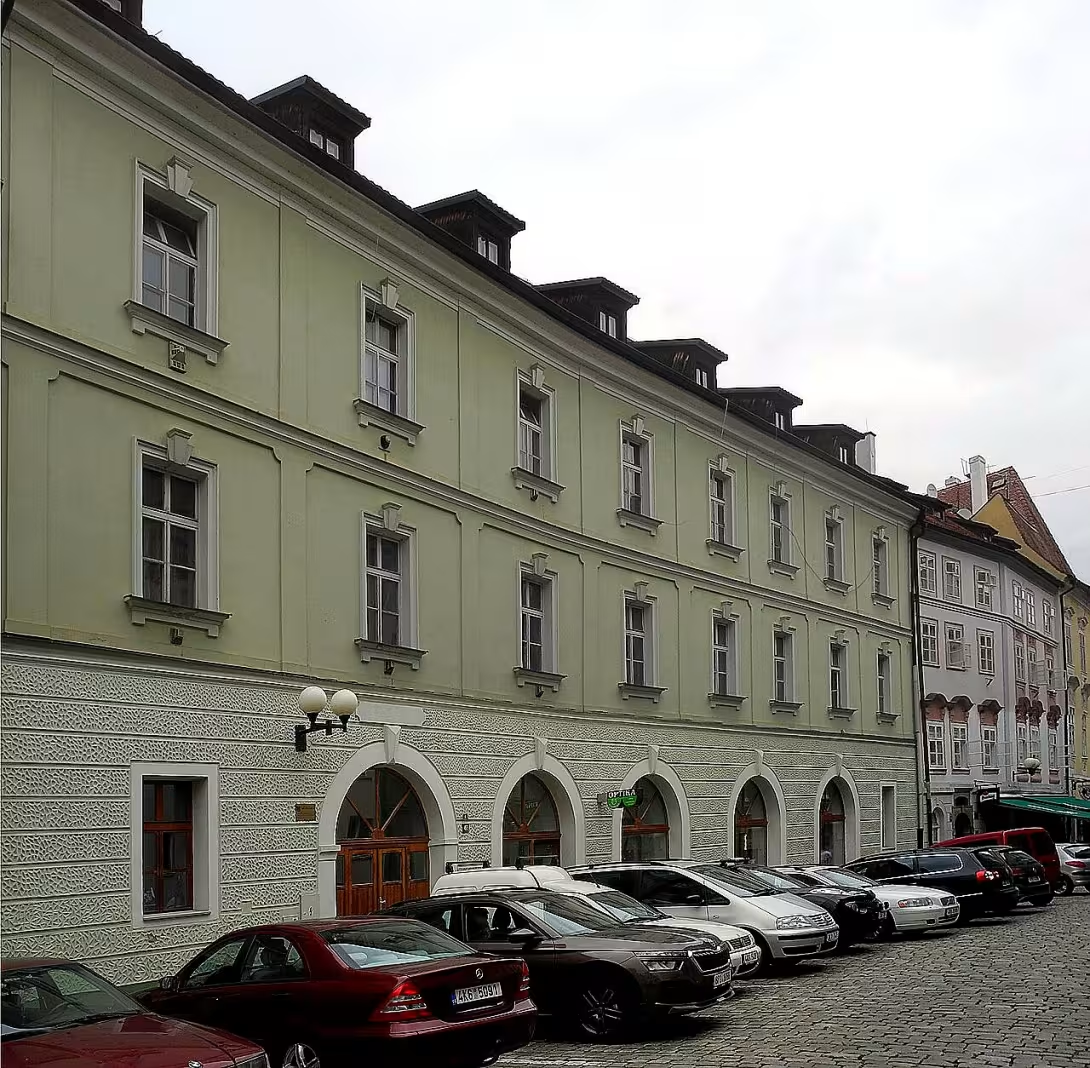
Kamenný dům v Chebu is a historic building from the 12th century and one of the oldest preserved buildings in the city. The building served as the exclusive commercial and administrative base of the Cistercian monastery in Valdsas. It is important because it is the first stone building in Cheb built outside the premises of the Štauf Falce.
The history of the house is closely linked to the Cistercian Order, which built its commercial background here. The first written mention of the building dates back to 1203, when King Filip Švábský confirmed it in the charter as property of the Waldsaxon monastery and at the same time freed tankers from all taxes paid to the city of Cheb. While the oldest records refer to a house near the city, the 1215 charter already confirms its location in Cheb. As a stone house, the building in the springs has been explicitly mentioned since 1242.
The original building has been gradually expanded over the centuries. The Valdsatian Abbot Jan IV. had the warehouse rebuilt into a church house. Later, the tower with bells and chapel was added for the abbot Franz Kübel. In subsequent periods, the building underwent adaptation to residential purposes, with the west wing disappearing. Archaeological research carried out in 2001 and 2002 in the yard and surrounding area revealed two wells, a waste pit, 13th century pottery residue and a pipe used to remove smoke from the parting.
For centuries, the house was owned by the Waldsaxon monastery, which used it for business activities and property management. After the resignation of Abbot Franz Kübel, the object served temporarily as an old-fashioned business. At the time of the German peasant war, the house gave refuge to the abbot Nicholas V. At that time, documents and jewels were safely stored here, which thus escaped the influence of Friedrich Falsky. Despite the royal privileges and tax exemptions, the city of Cheb has repeatedly tried to collect taxes from tankers. After the decline of the monastery at the time of the Reformation, Richard had the house rebuilt into a residential building with a locksmith's workshop. Attempts to restore privileges after the 30-year war were no longer able to return the object of its former importance.
The importance of the house also underlines its role in the regional economy. The monastery managed production surpluses and sought market rights, which led to the grant of the weekly market right in Tirschenreuth by King Albrecht of Habsburg in 1306. The influence of the Cheb environment was also reflected in 1319, when the Municipality of Luby was promoted to a city with weekly market rights and city rights according to the model of Cheb.
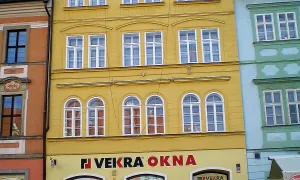
Today the Stone House is located in Březinov street on the edge of the old town, near the Upper Gate. As one of the oldest buildings, it remains an important witness to medieval urbanism and trade ties between church institutions and cities. Visiting this place offers an opportunity to see the history of asset management and everyday life in the early medieval Cheb.
Historical milestones
- 1203
- First written mention of the house as property of the Valdsatian monastery.
- 1242
- The building is explicitly listed as a stone house for the first time.
- 1306
- King Albrecht Habsburský granted the monastery the right of the weekly market in Tirschenreuth.
Architectural development
The original building was gradually extended by the tower with bells and chapel. In later periods, the building was adapted for residential purposes, with the west wing gone. Archaeological surveys revealed the presence of wells and smoke pipes.
Historical events
1203: The first written mention in the letter of King Philip the cockroach. 1306: Grant of weekly market law in Tirschenreuth. 1319: Promotion of Luby to the city according to the model Cheb.
Owners
Valdsatian monastery (since the 12th century), later privately owned.
Points of interest
- It's one of the oldest preserved buildings in the town that dates back to the 12th century. - It is the first stone building in Cheb, which was built outside the premises of the Štauf faction. - Archaeological research in the years two thousand one and two thousand two uncovered two wells, a sink, 13th-century pottery residue and a smoke pipe for the smoke removal from the parting. - At the time of the German peasant war, the house gave refuge to the abbot and his followers, where documents and jewels were safely stored. - After the resignation of Abbot Franz Kübel, the object has temporarily served as a place for old people.
Guide
Show guide text
This text was created by artificial intelligence and has not been editorially reviewed. It may contain inaccuracies.
Welcome to one of the oldest and most famous monuments of Cheb - Stone House, which stands as a witness to the rich history of this city. You're standing in front of a building whose rough stone shapes tell stories of ancient times. When you look at her facade, notice the strength and integrity that distinguish her from other older buildings in the city.
Let's dive into the history of this place. The stone house has been here since the 12th century and it was the first stone object built outside the Štaufské falci, which gave it great importance at the time. The first written mention of it is from 1203, when it was listed as property of the Cisteriac monastery in Valdsas. This monastery played an important role in business activities and property management. In 1242 the record of him as a stone house and in 1306 King Albrecht Habsburský granted him the right to a weekly market in Tirschenreuth.
Look up, observe the details of the facade. Although the particular architecture is not known, you might notice the way stone work is done - firmly and with regard to durability. The inner space is unknown, but the outer structure carries traces of time and history.
This place has witnessed many important events and is associated with many important personalities. Among them are Filip Švábský, Jan IV., Franz Kübel, Erhard I. Jakobi, Mikuláš V. Seber, Fridrich Falcký, Albrecht Habsburský and Ludvík IV. each contributed to the history of this local key point.
The interesting thing is that archaeological research carried out in 2001 and 2002 revealed two wells, a sink and pottery residue. These discoveries allow us to better understand life in the city during the Middle Ages.
Now that he has enjoyed an overview of the history and importance of the Stone House, we invite you to explore Cheb further. Every alley of this city has its own story waiting to be discovered. We hope you enjoyed it here and that the following walks will be as fruitful as today. God!
Tips for visitors
The best time to visit is in the morning on business days, avoiding crowds of tourists and enjoying the peaceful atmosphere of medieval space. The details of the stone masonry on the facade stand out in the morning light.
The historical centre of Cheb can be easily reached by foot from the main station or by public transport.
For the tour of the interior we recommend comfortable shoes because the floors can be uneven and colder. Don't forget to take the camera, the best pictures will be taken from the opposite side of the street, where the whole architecture of the house stands out in the context of the surrounding building.
In the immediate vicinity of the monument you can visit Cheb Falc, the historical center of the city Cheb and the Upper Gate. All these places are only a few minutes' walk from the Stone House.
For families with children the visit is suitable as part of the educational walk of the city.
Frequently asked questions
Can the monument be visited?
This is a residential or farm building, not a museum with opening hours. Please view it from public space and respect the owners' privacy. We have no information about access to the interior.
Where is the monument?
Location: Cheb. The map on this page shows the exact spot.
Why is the monument protected?
It is listed in the Central List of Cultural Monuments of the Czech Republic as a cultural monument (register no. 1000129735).
Businesses nearby
Do you run a restaurant, accommodation, shop, museum, rental, wellness or other visitor service near this monument? Show yourself directly to the people heading to it — this is how they will see you in the app and on the web:
Nearby
Chebská falc, historické centrum města Cheb, Horní brána.
Accommodation nearby
Themed route
Thematic cruise route from Cheb
1. Stone House - Type: Historical building - Why is it worth a visit: This architecturally interesting object is one of the signs of Cheb history, which attracts travellers' attention by building from the 16th century.
2. Historical Center of Cheb - Type: City monument - Why is it worth a visit: The Centre offers a view of the rich history and culture of the village with streets full of old houses and architectural pearls.
3. - Type: Historical site - Why is it worth a visit: This place is connected with the history of the local brewery, which affected the development of the region. It is an interesting location for those who want to understand the history of Czech beer.
4. Upper gate - Type: Historical landmark - Why is it worth a visit: This gate construction is part of the old city walls that attract the attention of travelers with their construction and history.
Line order: We start the trip at the Stone House, then move towards the city centre, where we can see other historical monuments. Next is a visit to Cheb False and we close the trip at the Upper Gate.
This route offers a view of the most significant historical elements of the village Cheb, which together tell about its rich past.
Seasonal recommendations
Spring: In the spring season, the atmosphere around the Stone House in Cheb is full of newly grown leaves and flowering shrubs, which gives the place live color shine. The sun illuminates the building from different angles, creating attractive shadows and light effects on the facades. This time of year is ideal for visiting thanks to mild temperatures and slow increase in traffic, which means a smaller crowd. It is recommended to wear clothes suitable for a mild period of time with the possibility of adding upper clothing at colder times morning or evening.
Summer: In summer Kamenný dům v Chebu is a popular destination for visitors who enjoy warm days and long candlesticks. Full of sun lighting decorated with facades create attractive photographic moments. Summer is also the time when the largest crowds may appear, especially on the middle of the day. It is recommended to visit the memory early in the morning or later in the afternoon in order to be able to enjoy a place without obstacles to flooding people. Don't forget the protective clothing and enough drinking water.
Autumn: In autumn, the surrounding forests and parks of the Stone House in Cheb acquire beautiful colours, adding melancholy beauty to the place. The sunny days light the building in warm light, while cooler evenings bring beautiful images under the dawn or the moon. This is also the time with a smaller number of visitors compared to the summer period, which allows a more comfortable walk. We recommend wearing warmer clothes and suitable shoes for colder weather.
Winter: Winter visit to Stone House in Cheb offers a unique atmosphere. The surrounding area covered with snow and ice provides a beautiful background for photographing historic buildings. The sunlight is less intense, creating a gentle flash on the surface of the walls and window frames. Do not forget warm clothes and protective shoes to enjoy a visit without discomfort caused by cold times.
Visualizations and artistic views

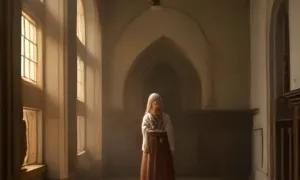
The visualisations are generated by artificial intelligence and serve as inspiration.
Photos from the area
Real photos taken near the monument

Zdroj a licence jsou uvedeny u každého snímku.
Tips from visitors
No tips yet. Be the first!
Log in and add your tip.
Sources and literature
Photos: SchiDD / CC BY-SA 4.0 — Wikimedia Commons. The author and licence also appear when you hover over the image.
Faktickým podkladem tohoto textu byl článek na Wikipedii, jehož autory jsou přispěvatelé Wikipedie. Článek je dostupný pod licencí CC BY-SA 4.0.
Location on the map


Příběhy a pověsti
Legendy, pověsti a příběhy spjaté s touto památkou
Fotografie návštěvníků
Zatím žádné fotografie. Buďte první, kdo přidá fotografii z návštěvy!
Log in a přidejte svou fotografii nebo hodnoťte.
Za ověřenou návštěvu v aplikaci získáte víc bodů — poznáme podle GPS, že jste na místě.
Reviews and comments