



kaple Panny Marie Bolestné (Mořkov) Chapel
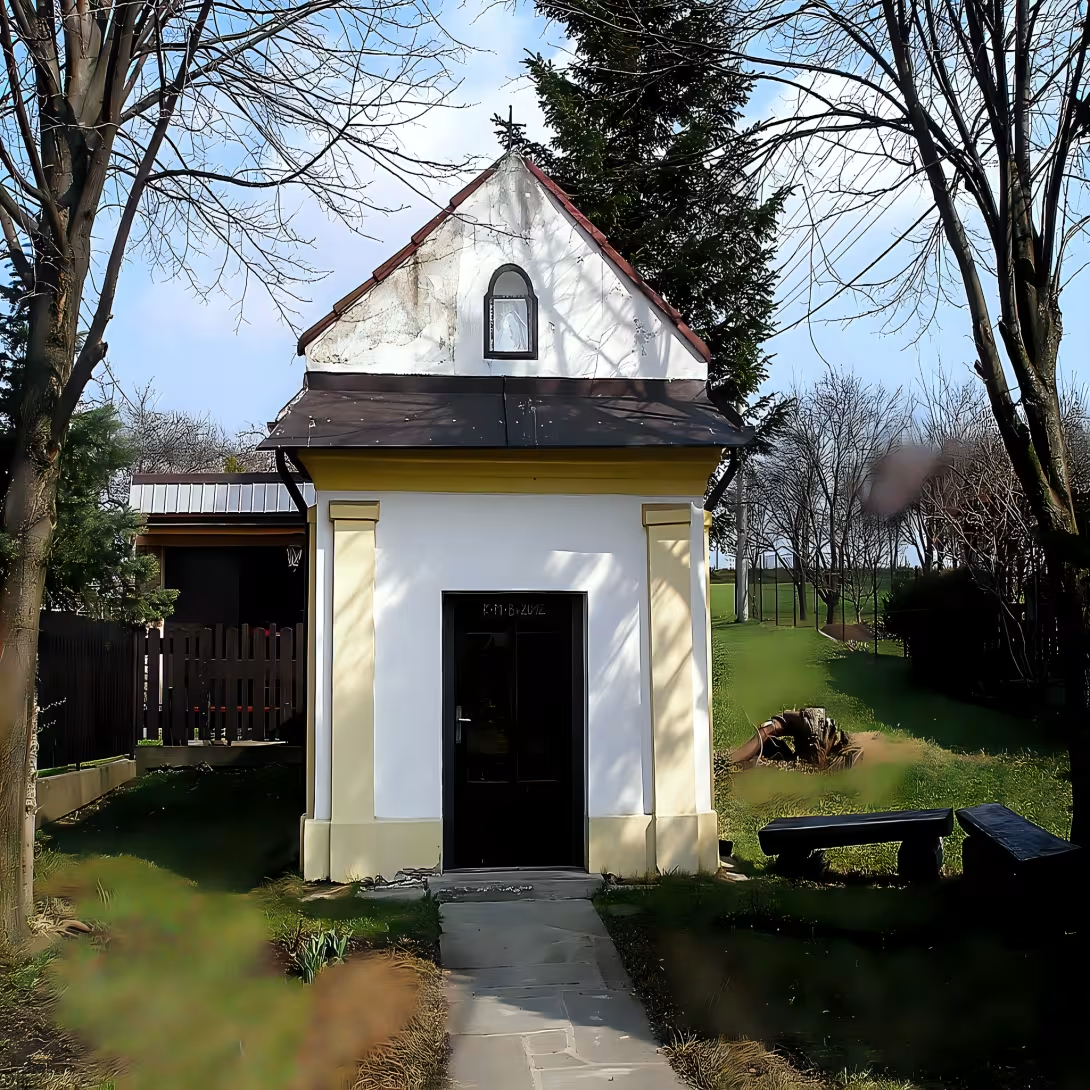
The chapel of Our Lady of Pain in Mořkov, located in U Chapel Street, was established in 1853 as a private building by the initiative of peasant Jan Crane. He was born September 27, 1826 in Mořkov and died February 8, 1916 in Žilina near Nová Jicin. Crane came from a significant local family - it is assumed that he was the descendant of the brother of Knight John Crane of Mořkov, which shows a certain social status of his family in the landscape.
The reasons that led Jan Crane to build the chapel do not detail the sources, but from its determination it can be judged on his distinctive godliness oriented towards Marian respect, namely the Christian motive of the Painful Mother of God. Such private chapel buildings were not rare in the Czech countryside and often signalled the family initiative or personal promise of its founder.
The interior of the chapel bears traces of the family history of the Cranes. The walls decorate the image with the motif of scanning Jesus' body from the cross, which is one of the oldest Christian images of the pain of the Mother of God. A particularly remarkable element is the coat of arms of the Crane family, which was carved into stone and placed under the altar. This sign was originally created by the facade of St. George's Church, from where it was later transferred to the chapel of the building. Moving the heraldic symbol indicates how closely the chapel was linked to the family of its founder and how it served as a place where the family articulated itself through its heraldic identity.
Time and circumstances culminated by the fact that local society gradually began to see the construction as part of the local cultural and spiritual heritage. Based on its historical and architectural value, the chapel was declared a cultural monument of the Czech Republic in 2010. This decision was designed to protect against demolition and unjustified building changes, so its external appearance and interior equipment remain preserved.
Today, the chapel of Our Lady of Pain presents a document of personal godliness of the 19th century and a silent commemorative sign of the action of peasant Jan Crane. As a cultural monument, it is part of a wider picture of the Czech sacral heritage and partly documents how ordinary people - especially farmers and local elite - showed their faith and family awareness through buildings. The visitor will find here a sophisticated and balanced connection of the individual Horligan family with a deeper layer of Czech Catholicism.
Then and now
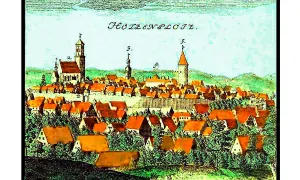
Drag the slider to compare how the landmark may have looked when it was built with the view today.
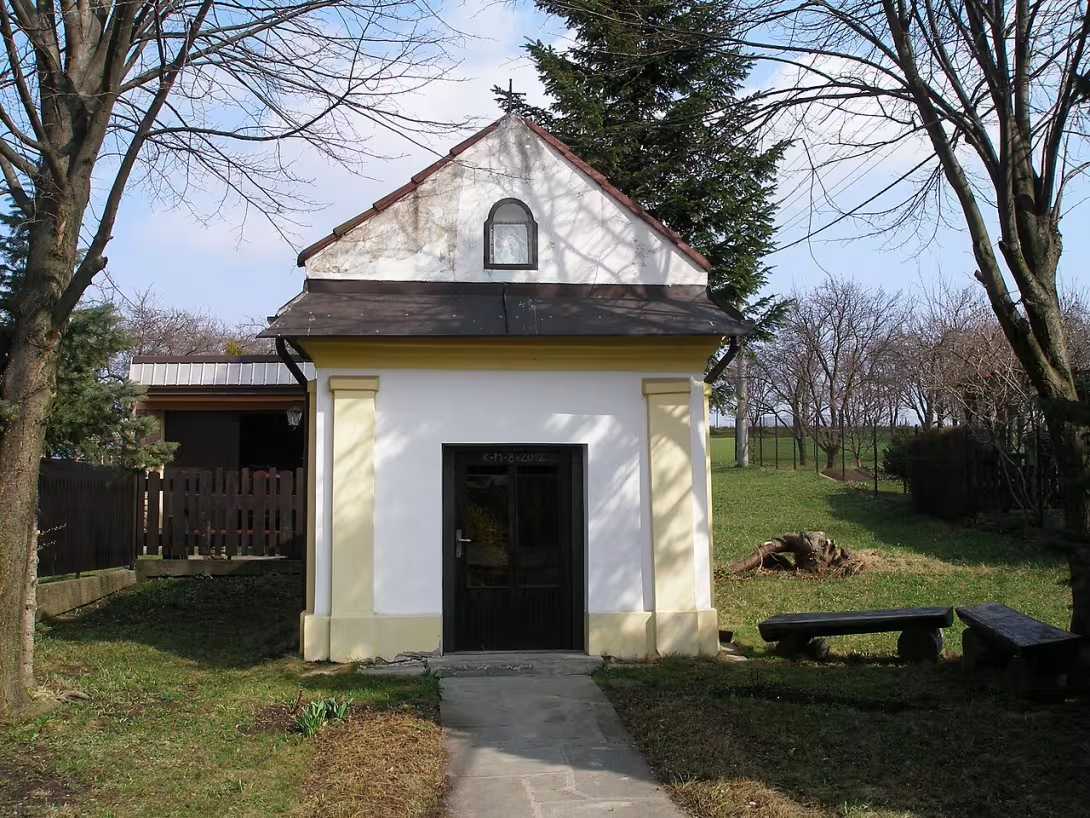

The historical appearance on the left is an AI-generated visualisation and serves as inspiration only.
Historical milestones
- 1853
- The chapel was built by farmer Jan Jeřábek.
- After 1853
- A crane coat of arms from St. George's church was transferred to the chapel.
- 2010
- The chapel was declared a cultural monument of the Czech Republic.
Architectural development
The chapel is a walled and plastered building with a neo-classical ground plan. It has a slightly longitudinal shape, a semicircular end and a saddle roof. The interior contains a historical picture of the Virgin Mary of Pain and the coat of arms of the Crane family carved into stone.
Historical events
- 1853
- The status of the chapel by Jan Crane.
- 2010
- Declaration of the chapel for a cultural monument.
Points of interest
- The chapel was created in 1853 as a private building on the initiative of farmer Jan Crane. - The walls decorate the image with the motive to scan Jesus' body from the cross, which is one of the oldest Christian images of the pain of the Mother of God. - Under the altar is carved stone coat of arms of the Crane family, which was originally on the front of St. George's Church. - In 2010 the chapel was declared a cultural monument of the Czech Republic.
Guide
This guide is narrated by a synthetic voice generated by artificial intelligence.
Show guide text
This text was created by artificial intelligence and has not been editorially reviewed. It may contain inaccuracies.
The Chapel of Our Lady of Sorrows in Mořkov dates from the year eighteen fifty-three. It was built upon the request of a local farmer Jan Jeřábek in the present-day U Kaple street. He was born in Mořkov on September twenty-seventh, eighteen twenty-six and died on February eighth, nineteen sixteen in Žilina u Nového Jičína. He was a descendant of the brother of the knight Jan Jeřábek from Mořkov.
Inside the chapel is a painting which depicts the removal of Jesus's body from the cross. Beneath the altar is the coat of arms of the Jeřábek family carved into stone. This coat of arms was originally placed on the facade of the Church of Saint George in Mořkov.
In the year two thousand and ten, the chapel was declared a cultural monument.
Tips for visitors
The best time to visit the chapel is early in the morning or in the late afternoon when there is a quiet and soft light inside that highlights its architecture. You can avoid larger groups of visitors and enjoy the atmosphere of the place better.
The location is well accessible by foot from the centre of the village.
Take with you comfortable shoes, water bottle and a light sweater or jacket, because the interior of the chapel can be a bit cold in colder months. If you are interested in photography, a small portable mirror or smartphone will serve you well.
For the best photos of the chapel, stand at the main entrance early morning or late afternoon; The sunlight in these times creates warm shades on the facade and highlights the interior details. You can capture the interior using a wide-angle lens to capture the entire space.
For families with children, the chapel is a small, quiet place where children can become acquainted with history and architecture. Bring a little snack and let the children draw a picture of the chapel - this activity will keep the small visitors interested and leave memories of the trip.
Frequently asked questions
Can the monument be visited?
Religious buildings are usually open mainly during services; at other times a visit is normally arranged with the parish or the operator. We have not verified specific times.
Where is the monument?
Location: Mořkov, Moravskoslezský kraj. The map on this page shows the exact spot.
Why is the monument protected?
It is listed in the Central List of Cultural Monuments of the Czech Republic as a cultural monument (register no. 103914).
For kids
Imagine going back 165 years to the past. Where would you be right now? In Mořkov, where today stands the beautiful chapel of Our Lady of Pain. This place was once home to many people who lived in a small village environment. They were farmers, shepherds and craftsmen who tried to survive in difficult times.
One day, a local vicar came by with a big idea. He wanted to build a chapel that served as a place of prayer and refuge for his parishioners. And so began a long work on building this beautiful chapel.
Businesses nearby
Do you run a restaurant, accommodation, shop, museum, rental, wellness or other visitor service near this monument? Show yourself directly to the people heading to it — this is how they will see you in the app and on the web:
Nearby
Mořkov
Accommodation nearby
Themed route
I propose a short, peaceful route focused exclusively on the main objective and its immediate surroundings in the village Mořkov. Since no other specific surroundings are mentioned in the entry, we focus on the tour of the monument itself and its premises, which allows a deeper insight into local history and atmosphere.
1. Chapel Virgin Mary Paint (Chapel) This is the main point of your journey and the heart of this thematic route. The chapel represents an important spiritual and cultural element of the village Mořkov, which is worth visiting for its architectural value and historical context. Here you can enjoy the silence and contemptions typical of this type of sacral structure.
2. Tanks kaple (area) The immediate surroundings of the building form a quiet courtyard, which serves as a natural framework for the tour. Walk around this space allows you to better perceive the ratio of the building to its surroundings and takes perspective, which is often lost when looking from the outside quickly. It's the perfect place to take a short break and think.
3. Ambient green and park modification (natural elements of the complex) If the chapel has an surrounding greenery or a park treatment within its area, it is worth a walk. These elements complement the sacral character of the site and provide a pleasant environment for relaxation. Observation of local flora and fauna in the quiet environment of the village Mořkov can be a relaxing experience.
4. Ambient streets of the municipality Mořkov (local environment) Finally, we recommend a short walk along the nearest streets of the village, which are part of the immediate surroundings of the chapel. This environment allows you to understand how the sacral monument integrates into the normal life of the local population. It is an opportunity to see the typical Moravian rural architecture and atmosphere surrounding the main objective.
This route is designed to be fully authentic and focused on the location without the need to commute to more remote points. It allows the visitor to fully experience the specific character of the chapel of Our Lady of Pain and its direct surroundings.
Seasonal recommendations
Spring brings fresh green colour and awakening nature around the chapel, which gives the place a feeling of new energy. Lighting is soft and pleasant during this period, which is ideal for observing the details of the construction. The best morning for a visit is when the air is fresh. We recommend taking layered clothing because morning temperatures may still be low despite sunny weather.
In the summer months the area is full of dense vegetation and the sun shines for the longest time, creating a warm and lively atmosphere. Due to higher temperatures and possible groups of visitors, it is best to arrive early in the morning or late in the afternoon. It is advisable to choose light clothes and not forget the protection from direct sunlight to make the walk around the monument comfortable.
The autumn season is characterized by golden shades of the landscape and the morning fog surrounding the chapel with a Tajemeni touch. This melancholy atmosphere is very much in tune with the spirit of the chapel of the Virgin Mary the Painful. It is advisable to prepare windcheaters and shoes with good grip due to wet surface. The best time to visit is in the afternoon when the sun shines below and creates beautiful shadows.
Winter in this area brings silence and firmness, especially if the landscape is covered with snow. The light is weaker in this period and the days are shorter, which deepens the sense of peace and isolation. It is absolutely essential to wear very warm clothes and high-quality shoes to protect against frost. In advent time, the atmosphere around the monument can be particularly noble, but it is necessary to plan a visit during bright daily hours.
Visualizations and artistic views


The visualisations are generated by artificial intelligence and serve as inspiration.
Photos from the area
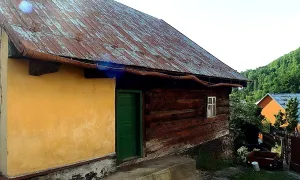
Real photos taken near the monument


Zdroj a licence jsou uvedeny u každého snímku.
View from the area
This animation was generated by artificial intelligence from a real photograph of the surroundings. The motion and details are not real footage of the location.
Tips from visitors
No tips yet. Be the first!
Log in and add your tip.
Sources and literature
Photos: Jan Polák / CC BY-SA 3.0, rozlišení zvýšeno umělou inteligencí — Wikimedia Commons. The author and licence also appear when you hover over the image.
Faktickým podkladem tohoto textu byl článek na Wikipedii, jehož autory jsou přispěvatelé Wikipedie. Článek je dostupný pod licencí CC BY-SA 4.0.
Location on the map


Příběhy a pověsti
Legendy, pověsti a příběhy spjaté s touto památkou
Fotografie návštěvníků
Zatím žádné fotografie. Buďte první, kdo přidá fotografii z návštěvy!
Log in a přidejte svou fotografii nebo hodnoťte.
Za ověřenou návštěvu v aplikaci získáte víc bodů — poznáme podle GPS, že jste na místě.
Reviews and comments