






kaple svaté Anny (Pražské Předměstí) Chapel
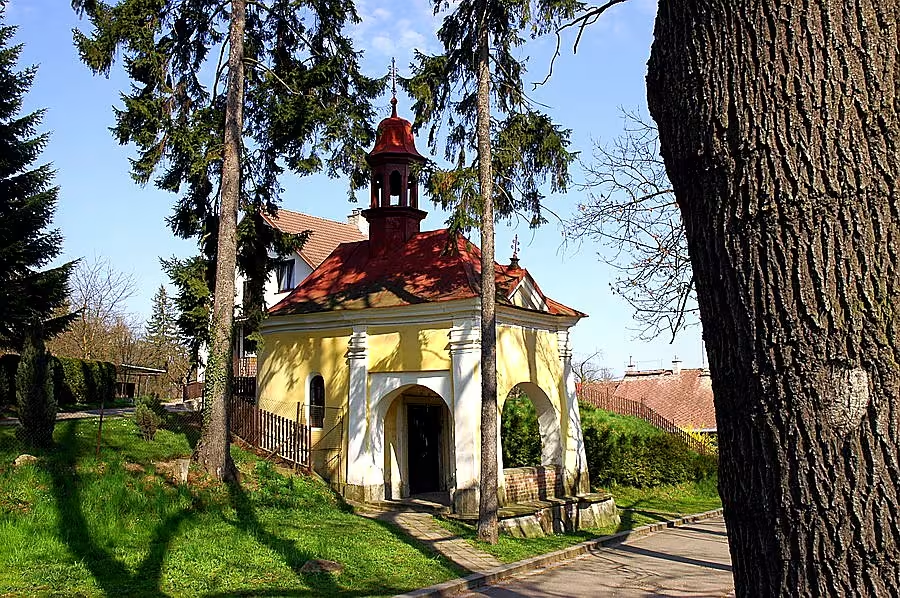
St Anne's Chapel in Prague A remarkable Baroque building built in 1752 is located near Jaroměřík. The chapel is sanctified in 1753 by P. František Hladík as evidence of religious and cultural changes during the Baroque period in Bohemia. His historical importance underlines his survival through the reforms of emperor Joseph II, which led to the closure of many religious places.
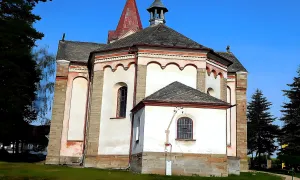
The chapel was built with the permission of Bishop Jan Adam Vratislav of Mitrovic, which reflects historical architectural and spiritual desires. The building has a semi-circular cap and an open ceiling supported by two pillars, depicting the then popularized baroque style. Its design includes a arched ceiling intersecting four segments, with the tympanum above the facade adding to its architectural charm.
The ownership of the chapel changed dramatically in 1786 when it was sold for 56 gold and 30 tailor Ignatius Vacek during the reforms of emperor Joseph II. Despite the agreement not to use it for religious purposes, the chapel later restored its sacred functions, as noted by local historian A. Knapp.
The chapel underwent several renovations, especially in 1925 and again in the 1970s under Dean Antonín Sékora, and ensured its preservation as a cultural monument. Today there is a modern wooden altar with the image of Saint Anne covered with statues of Zacharias and Anna, together with iron doors decorated with motifs of acanthus leaves.
Religious services are held occasionally, especially in July in honor of the feast of Saint Anne. The chapel remains a characteristic structure of Prague Suburb, which offers visitors a view of rich history and architectural beauty.
Visiting the chapel of St. Anne provides an opportunity to explore a piece of Baroque heritage of Bohemia. Its historical importance and architectural features make it a valuable destination for those interested in religious and cultural history.
Then and now
Drag the slider to compare how the landmark may have looked when it was built with the view today.
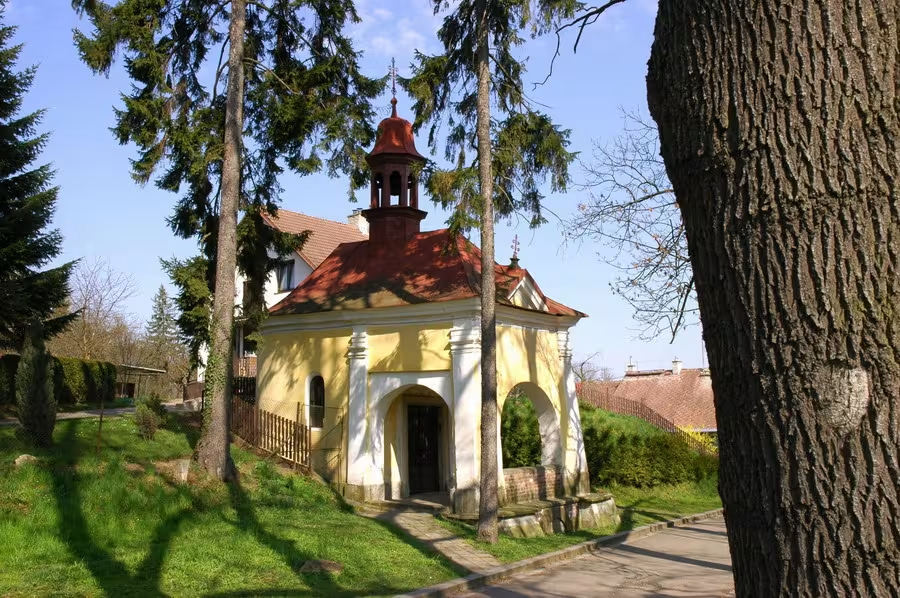
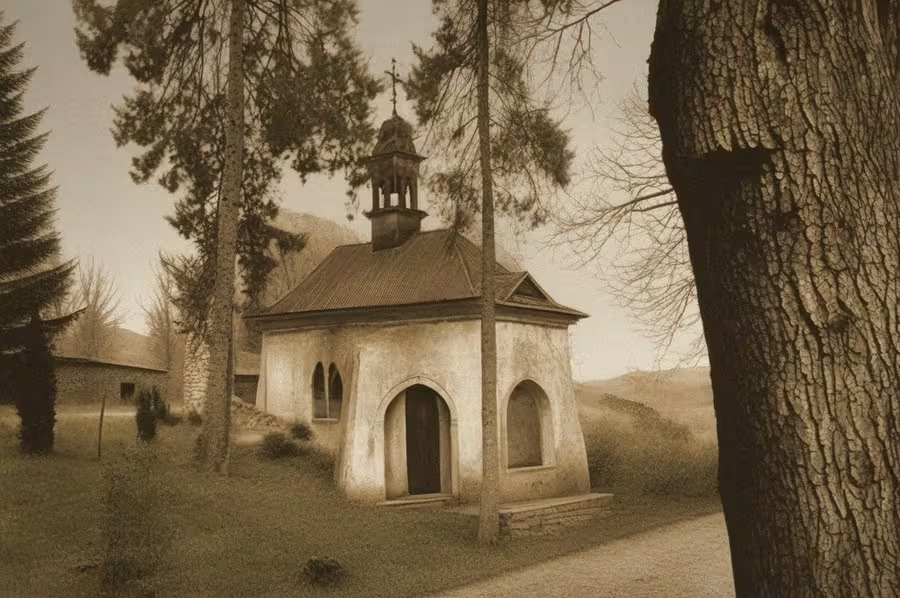
The historical appearance on the left is an AI-generated visualisation and serves as inspiration only.
Historical milestones
- 1753
- The chapel was sanctified by P. František Hladík.
- 1786
- The chapel was sold to Ignatius Vacek during the reforms of emperor Joseph II.
Architectural development
The Chapel of St. Anne is built in a simple, popularized Baroque style and has a semicircular end and an open ceiling. In 1925 she underwent reconstruction and in the 1970s she retained the status of cultural monument.
Historical events
- 1752
- The building of the chapel began with the permission of Bishop Jan Adam Vratislav of Mitrovic.
- 1753
- The chapel was sanctified by P. František Hladík, Dean of Jaroměř.
- 1786
- The chapel was sold to Ignatius Vacek during the reforms of Emperor Joseph II, which led to the closure of many religious monuments.
Owners
Originally owned by the local church village, the chapel was sold in 1786 for 56 golden 30 tailor Ignatius Vacek, the town councilman. Despite the agreement not to use it for religious purposes, she restored her sacred functions later.
Points of interest
- The chapel of the consecration of Saint Anne P. František Hladik in 1753 was an important moment because it was resistant to extensive reforms of emperor Joseph II, which closed many religious places.
- Despite the sale of only 56 gold and 30 tailor Ignatius Vacek in 1786, the chapel later restored its sacred functions, violating the agreement that it would not be used for religious purposes.
- In the chapel are iron doors decorated with motifs of acanthus leaves, reflecting complex decorative styles popular in the Baroque period.
- Local historian A. Knapp has shown that ownership of the chapel and its use has changed dramatically over time, illustrating the dynamic nature of its history within the Prague Conversion.
- Renovation in 1925 and again in the 1970s under the supervision of Antonín Sékora contributed to the preservation of the chapel as a cultural monument which ensures its architectural beauty for future generations.
Guide
This guide is narrated by a synthetic voice generated by artificial intelligence.
Show guide text
This text was created by artificial intelligence and has not been editorially reviewed. It may contain inaccuracies.
Welcome to St. Anne's Chapel, a hidden jewel nestled in Prague's Pradí near Jaroměřík. As you stand here, take a moment to immerse yourself in his quiet presence - a baroque rotunda that has gracefully resisted the time test since 1765. Its semi-circular closure and open supports supported by two pillars create an attractive atmosphere, while the arched ceiling intersecting four segments adds a touch of grandeur. First of all, notice that the chapel is a tympanum decorating the facade, increasing its architectural charm.
Let's immerse ourselves in its origins and historical context. The chapel was consecrated in 1753 P. František Hladík, which means an important moment in history because it was resistant to extensive reforms of emperor Joseph II, which led to the closure of many religious places. In 1786, during these stormy times, the chapel was sold for only 56 gold and 30 tailor Ignatius Vacek - the will of its humble beginnings in the midst of a changing landscape.
As you explore further, pay attention to the architectural details that define this space. The semi-circular closure invites you to a world of peace, while an open support supported by two pillars offers a view of the structural ingenuity of the chapel. The arched ceiling intersecting four segments is not only an architectural feature, but a story of resistance and adaptation over time.
The history of this place is linked to key figures such as Jan Adam Vratislav of Mitrovic and P. František Hladik, whose dedication ensured the survival and importance of the chapel in these reforming years. Their stories echo within these walls, reminding us of the continuing spirit of faith and community.
We will now discover a fascinating burden: despite the fact that it was sold during the reforms of emperor Joseph II for what looks like a modest sum today, the chapel of Saint Anne remained a symbol of historical persistence. Its ability to adapt and survive for centuries speaks of its importance not only as a structure but also as a beacon of cultural heritage.
At the end of this short journey, I urge you to stay a little longer in the presence of this remarkable chapel. Explore his surroundings, think about his history, and let your imagination wander the stories he holds. Thank you for joining me today in the chapel of Saint Anne - a place where history, architecture and spirituality converge. Safe travels as you continue to explore the wonders that the Prague Premé offers.
Tips for visitors
The best time to visit the chapel of St. Anne is late in the spring or early autumn when the weather is mild, making it pleasant to walk around. During these months, the natural environment are particularly beautiful with vibrating leaves and flowering flowers, improving your experience in this historic place.
The possibility of parking and transport is convenient because to Prague The suburbs can be reached both by car and public transport. Parking is available in nearby areas, but it is advisable to check all restrictions or availability in advance. Public transport options include buses serving the region, allowing easy access without the need for a passenger car.
When visiting St. Anne's Chapel, consider bringing comfortable walking shoes because you might want to explore the surrounding natural landscape around Jaroměř. The camera is also recommended to capture unique architectural features and picturesque views. In addition, wearing a light jacket or sweater can be useful due to variable weather conditions in the region.
For photographic enthusiasts, the best places to capture the chapel of Saint Anne are from its open underground where you can get an excellent look at its semi-circular closure against the background of the landscape. Lighting is most favourable during the golden hour - early morning or late afternoon - when sunlight increases the Baroque details of the chapel.
Near, 30 minutes drive or on foot, natural features are typical of the Králové Hradec region, which offers additional possibilities of exploration. Families with children can enjoy these picturesque landscapes and perhaps engage in light outdoor activities such as picnic or short nature walks, making it an ideal family trip.
For families visiting with children, consider bringing refreshments and water for a comfortable experience during your visit. Open spaces around the chapel provide a safe environment for children to play while enjoying the historic place. Moreover, involving children in learning about the history of the chapel can make the visit more educational and fun.
Businesses nearby
Do you run a restaurant, accommodation, shop, museum, rental, wellness or other visitor service near this monument? Show yourself directly to the people heading to it — this is how they will see you in the app and on the web:
Events nearby
Zdroj akcí: otevřená data měst a obcí ČR (Národní katalog otevřených dat) a kalendář akcí Národního památkového ústavu.
Nearby
The chapel is located in Prague Suburb near Jaroměř and represents the characteristic structure of the area. The surrounding landscape includes natural elements typical of the Kralovéhradec region.
Accommodation nearby
Themed route
Thematic walking tour: Magic of Prague Transmission and its surroundings
1. St. Anne's Chapel (St. Anne's Chapel) * Type: * Historical Chapel * Why Visit: * Start your journey in the heart of Prague Suburb with this charming chapel, which is the basic property of the architectural heritage area. Its calm atmosphere and historical importance make it an ideal starting point for exploring local culture.
2. Local nature trails * Type: * Natural landscape * Why Visit: * After visiting the chapel, feel free to walk along nearby natural paths, where the typical landscape of the county hradec region is presented. These paths offer a picturesque view and the possibility to connect with the natural beauty around Prague Pemí.
3. Community Centre * Type: * Cultural hut * Why Visit: * Continue your survey by visiting the local community centre, cultural events and meetings in Pražské Pradí. It provides a view of living community life and traditions that define this charming area near Jaroměr.
This tour offers a view of the unique blend of history, nature and culture found in Prague's Suburb, which provides an enrichment experience for visitors who are interested in exploring outside typical tourist attractions.
Seasonal recommendations
Spring: St. Anne's Chapel in Prague The suburb offers a national renewed and lively source of how to look at the historical monument. Sunshine days recalculate the same enlightenment, which is an architectural detailed maple and is the surrounding green spaces with the counting of assets. The atmosphere is full of new and quiet, the spring of ideal time based on. The wall materials should be provided as part of the siege, as temperatures may differ from cold wounds and heat deposition. Despite the nature of the tourist interest, it is usually still enough for a calm temper, especially if you pass in an early morning or late afternoon.
Summer: The summer months of recalculating the Chapels of Saint Anne in full power of tourist interest when they order the gatherings to enjoy a warm atmosphere and a lively landscape. The Commission therefore concludes that the aid is compatible with the internal market. However, the summer also increases the number of visitors, which may be the occasion to increase tourist costs. The walls should be transferred early in the morning or they should dine to avoid the top of the crowd and set up a resting field. The warm rounded is recommended, along with a sun border such as are hats and who on the edge before UV September.
Autumn: In autumn, the chapel of St. Anne offers demanding unambiguous sexes with richer colours of leaves, which they wrap up according to circumstances. The atmosphere is calm and has a cool, cochlamed minor difficulty combined with the summer peak. Sunshine days are ideal for a photograph that is appreciated only and warm, which have the historical character of the monument. Wall cells should be recalculated with a minimum number that is intended for certain temperatures and may be intended for own use. This time of year offers a quiet experience with less risk of pushing.
Winter: Winter months recalculating the Chapels of St. Anne to the shelter where the historical appearance is still dramatic even under the advancing snow or cold in the car. The atmosphere is calm and quiet, often accentuating soft rays of the sun or left light, which knows the feeling of mystery and peace. The opening times should be adjusted to ensure that all requirements are met. Warm round, large leather pockets and protective soil prot cold, is persistent for use in other areas. Despite the minimal sweat of the visitors, it can be delivered outside the winter conditions, so it is important to have your own information about opening times.
Visualizations and artistic views


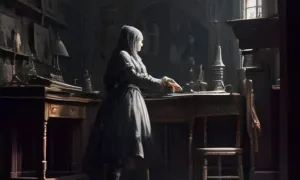
The visualisations are generated by artificial intelligence and serve as inspiration.
Photos from the area
Real photos taken near the monument


Zdroj a licence jsou uvedeny u každého snímku.
Tips from visitors
No tips yet. Be the first!
Log in and add your tip.
Sources and literature
Photos: Karpac / CC BY-SA 3.0 — Wikimedia Commons. The author and licence also appear when you hover over the image.
Faktickým podkladem tohoto textu byl článek na Wikipedii, jehož autory jsou přispěvatelé Wikipedie. Článek je dostupný pod licencí CC BY-SA 4.0.
Location on the map


Příběhy a pověsti
Legendy, pověsti a příběhy spjaté s touto památkou
Fotografie návštěvníků
Zatím žádné fotografie. Buďte první, kdo přidá fotografii z návštěvy!
Log in a přidejte svou fotografii nebo hodnoťte.
Za ověřenou návštěvu v aplikaci získáte víc bodů — poznáme podle GPS, že jste na místě.
Reviews and comments