



kaple svatého Ducha (Liběchov) Chapel
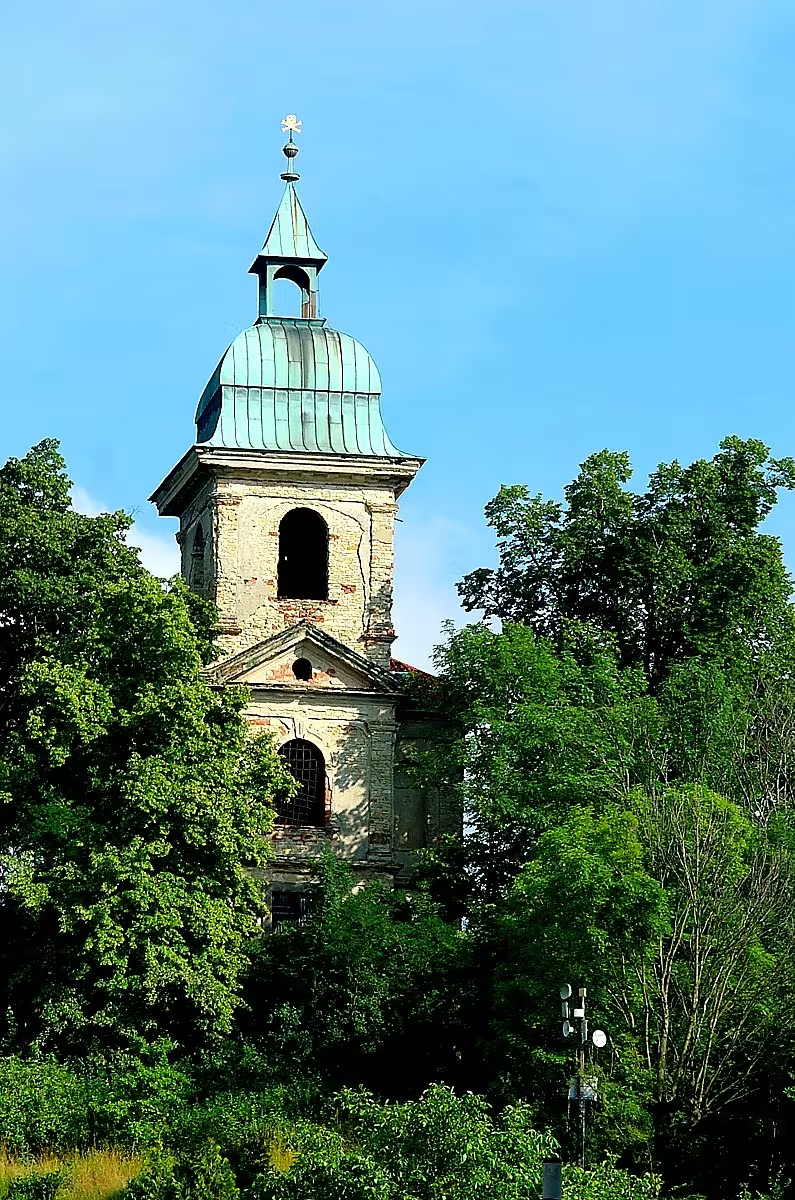
The Chapel of the Holy Spirit, the Grave of God and the Holy Cross is an early Baroque sacral building from 1654. It stands in a dominant position on top of the village Liběchov in the district of Mělík. The monument serves as an old pilgrimage site and since 1966 it has been protected as a cultural monument.
The construction on the winery hill was initiated by the owner of the livechov estate, Count Karel Hyacint Villani de Castolo Pilonico. The building was built in the middle of the 17th century, during the expansion of sacral architecture and the restoration of pilgrimage sites in Czech countries after the 30th war.
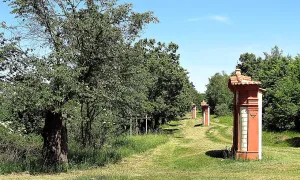
From the point of view of architecture it is an early baroque object, which apart from the main space contains a crypt. In 1823, a tower was added to the chapel. The bells were moved from the original wooden bell tower, which stood on the slope in front of the building. The building is led by a path lined with fourteen wedge chapels of the cross road, which link the monument to the parish church of St. Havel.
The history of ownership is linked to the owners of Liběchov estate. After the founder of Count Villanim, who was buried in the crypt in 1656, the building underwent renovation in 1730 thanks to Count Jan Jáchym Pacht. Later, it was owned by Jakub Veith. In 1928 he financed repairs of exterior and interior František Homolka, after which the chapel was reconsecrated in June 1929. In a later period, the building was owned by the National Museum.
The key event in more recent history was a lightning strike on the night of April 13 to 14, 1966, which caused the tower fire. The roof and tower repairs followed from 1968 to 1969. In 1973, the remains of the Veith family were undignified from the crypt to unmarked graves in a local cemetery. However, in 2016, these graves were identified and repaired by the Church Association Liběchov.
In 2018 there was a controversial attempt by the National Museum to sell the Chapel to the Orthodox Church. The purchase contract was signed for CZK 400,000, but the church withdrew from it as a result of strong pressure and indifference of the local population. The city Liběchov eventually acquired the building as a community centre for the price of CZK 420 000.
Since 2019, the Chapel and adjacent land have been owned by the City of Liběchov. The construction was long neglected and due to the imminent fall of the roof and plaster was surrounded by a fence. Since 2024, extensive reconstruction work has been carried out. They include an exchange of roof, repair of plaster, internal wiring and re-opening of walled entrances into presbytery and crypt.
The monument represents an important historical and architectural element of the landscape over Liběchov. Her visit offers the opportunity to explore a unique pilgrimage complex with a cross road.
Then and now
Drag the slider to compare how the landmark may have looked when it was built with the view today.
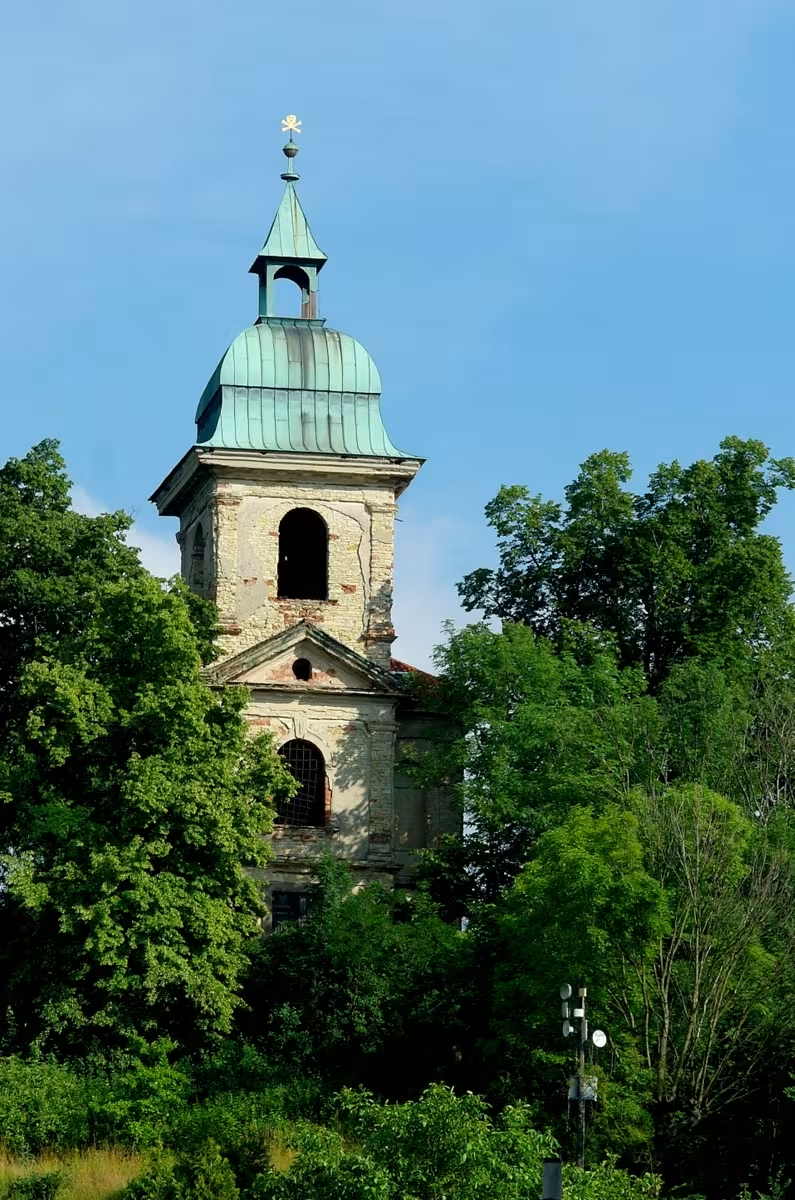
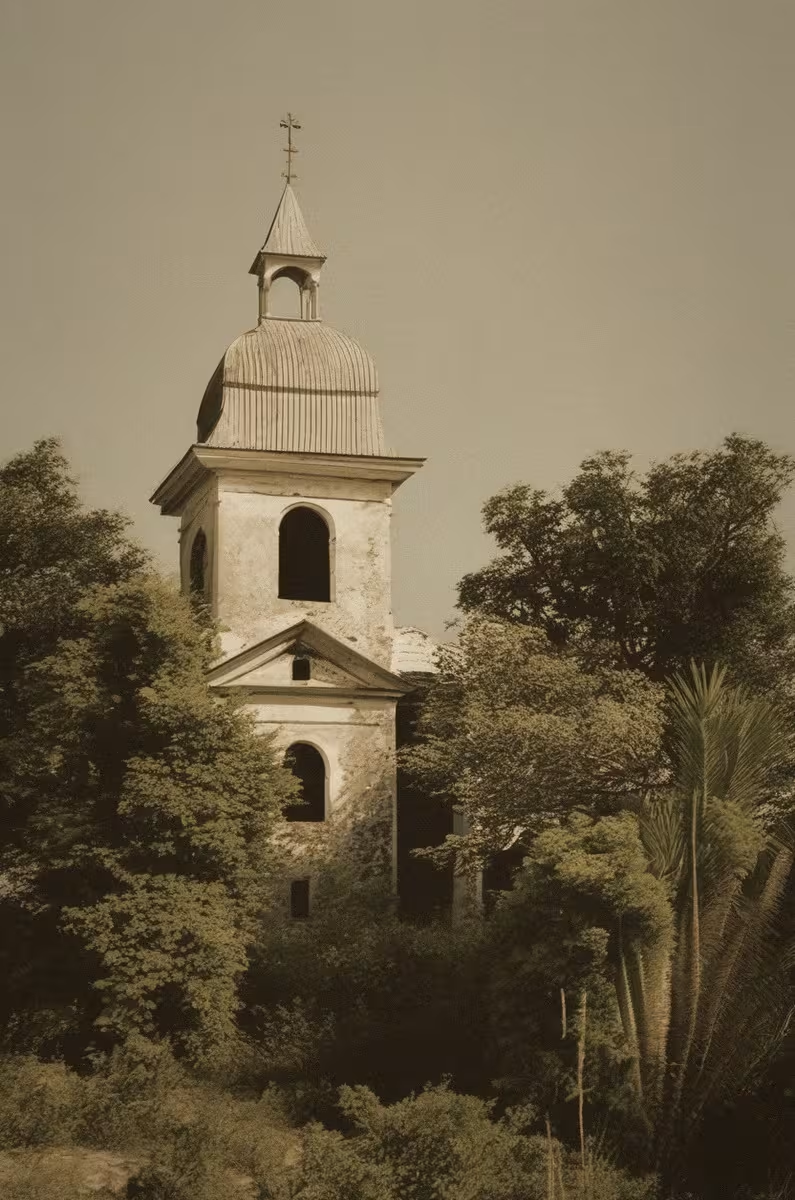
The historical appearance on the left is an AI-generated visualisation and serves as inspiration only.
Historical milestones
- 1654
- completion of the chapel construction
- 1730
- renovation of the chapel by Count Jan Jáchym Pachtou
- 1823
- addition of the tower Jakub Veith
- 1966
- publication of a chapel protected by a cultural monument
- 1966
- tower fire due to lightning strike
Architectural development
The original early Baroque building from 1654 with a crypt. In 1823, a tower was built into which bells were placed from the original wooden bell tower. The roof and tower were repaired after the fire in 1968-1969.
Historical events
1656: the burial of Count Villani in the crypt; 1966: tower fire due to lightning strike; 2019: acquisition of the chapel into the ownership of the city Liběchov
Owners
Karel Hyacint, hrabě Villani de Castolo Pilonico, Jan Jáchym Pachta, Jakub Veith, František Homolka, National Museum, city Liběchov (from 2019)
Points of interest
- The 1654 construction serves as an old pilgrimage site and contains a crypt. - In 1823 the tower was built into which the bells of the original wooden bell tower moved. - There is a road to the building with fourteen wedge chapels of the cross road. On the night of April 13 to 14, 1966, a lightning strike caused a tower fire. - The city of Liběchov has acquired the building into its use as a community centre for the price of CZK 420 000.
Guide
Show guide text
This text was created by artificial intelligence and has not been editorially reviewed. It may contain inaccuracies.
Welcome to one of the most important local monuments. You are standing right in front of the chapel of the Holy Spirit, which stands in a dominant position on top of the village Liběchov. Feel this atmosphere of peace and reflection that this place carries. It's a space where beautiful nature joins deep spiritual history. Look around you and see how powerful this structure controls the surrounding landscape. It's not just an ordinary building, but an old pilgrimage place that's attracted to people looking for escape and the inner room for hundreds of years.
Let us now stop at how this journey began. The chapel was built in the year six hundred and fifty-four. At that time the early days of Baroque art ruled, which is reflected in the very nature of the construction. The whole project started with the initiative of one man, Count Karl Hyacint Villani de Castolo Pilonica. He was the one who wanted to create a place of prayer and silence. For the Count, however, this chapel was not only a gift for the community, but it was also his last refuge. In the crypt under the chapel, Count Karel Hyacint was buried. So now that you're looking at this building, remember that under your feet lies the person who brought this place into existence.
Now pay attention to the architecture itself. Even if we don't know the names of the particular builders, the result of their work is before you. Note the overall appearance of the object, which is known under several names. Some refer to him as the Holy Spirit Chapel, others as the Temple of God's Grave or Holy Cross. All these names refer to the deep religious significance of this place. If you look at the tower, you'll find interesting details. Originally there was a wooden bell tower, but in the year one thousand eight hundred twenty-three added Jakub Veith stone tower, to which the bells were then moved. Take a look at the roof line and the overall composition of the building, which combines elements from different centuries.
Speaking of history, there are no other personalities who cared about this space. In the year seven hundred and thirty, a renovation was carried out by Count Jan Jáchym Pachta. Thanks to his care, the chapel remained in good condition and could continue to serve the pilgrims. It's fascinating to see how care for this place was handed down from hand to hand, from generation to generation. There are also other names in history, such as František Homolka, which shows that the chapel was an important point in their lives for locals and noble families.
Now let's move on to the path that probably led you here. If you look back towards the village, you will realize that the path to the chapel is not just an ordinary climb. The road is lined with fourteen niche chapels of the cross road. This journey is to prepare the pilgrim to meet the sacred space of the chapel. Each of these 14 stops symbolizes a certain moment and encourages thought. It's a ritual path that connects the world down in the village with the spiritual peak where you're standing right now.
Now I want to take you to one of the dramatic moments that hit this place. History is not only about silent prayer, but also about fighting the elements. On the night of the thirteenth to the fourteenth of April in the year a thousand nine hundred sixty-six a thing happened that shook the locals. Lightning struck the tower. This blow was caused by a fire that severely damaged the tower. Imagine the thin thunder and flames that lit this peak at night. Yet the chapel got out of the test. In almost the same year, in the year one thousand nine hundred sixty-six, the chapel was officially declared a protected cultural monument. It's a beautiful paradox that in the same year that lightning struck her, the state recognized her as an extremely valuable piece of our heritage.
When you stand before the chapel today, see it as a symbol of perseverance. From the year one thousand six hundred and fifty-four until today she survived wars, regime changes and natural disasters. It's a place where human ambition, faith and the power of nature collide. Look at the tower again and think about how many people have heard the bells ringing for prayer.
Now I won't stop you from experiencing this space personally. I suggest you go through the area, take another look at the facade details, and maybe take another look at the chapels you came here with. Feel the silence that prevails here and take a moment of peace. Whether you came here for religious reasons, or if you're fascinated by history and architecture, I hope you're interested in this place with its secrets and stories.
Thank you for your attention and I wish you a pleasant rest of your stay in Liběchov. Explore everything this beautiful place offers you and enjoy the beauty of the surrounding countryside. Goodbye.
Tips for visitors
The best time to visit is late spring or autumn, when the colors of surrounding nature are the most striking and the view from the dominant hill above the village is the most beautiful. The path to the chapel leads through the cross road, making the visit a peaceful pilgrimage experience.
It is possible to reach Liběchova by car or public transport; Check the specific connection and stop options in the current search engines. We recommend shoes suitable for the field because the path to the top construction can be steep.
The ideal time for photo lovers is shortly before sunset, when the low light highlights the early Baroque architecture from 1654. The best shots come from an angle that captures the chapel and the panorama of the surrounding landscape.
During the walk, do not miss the parish church of St. Havel, which is closely related to the chapel of the Holy Spirit through the joining of the cross path. It's an ideal circuit for a short trip.
For families with children, the way to the chapel is a good opportunity for active movement in nature. Children can follow the elements of the cross road and discover the history of an old pilgrimage place.
Frequently asked questions
Can the monument be visited?
Religious buildings are usually open mainly during services; at other times a visit is normally arranged with the parish or the operator. We have not verified specific times. According to the heritage register the structure is in poor condition – do not enter it and take care nearby.
Where is the monument?
Location: Liběchov. The map on this page shows the exact spot.
Why is the monument protected?
It is listed in the Central List of Cultural Monuments of the Czech Republic as a cultural monument (register no. 1000136011).
Businesses nearby
Do you run a restaurant, accommodation, shop, museum, rental, wellness or other visitor service near this monument? Show yourself directly to the people heading to it — this is how they will see you in the app and on the web:
Nearby
Farní kostel svatého Havla v Liběchově, k němuž kaple vede křížová cesta.
Accommodation nearby
Themed route
Here is the design of the thematic route:
1. St. Havel's Parish Church in Liběchov (Church) - The starting point of the journey, which serves as the main spiritual center of the village. 2. Cross Path - The connection between the church and the chapel offers space for reflection while walking. 3. Chapel of the Holy Spirit (Chapel) - Main destination of the trip, elevated building with beautiful views of the surroundings.
Seasonal recommendations
In spring, the surroundings of the building awaken to life and the young green creates a fresh frame around the old walls. The air is clean and light soft, which helps to perceive the details of the facade. We recommend shoes suitable for wet terrain and visit in the morning when dew is still visible on the grass.
In the summer months the landscape is dominated by rich green color and intense sun, which creates sharp shadows. The atmosphere is warm and peaceful, ideal for summer walks. It is advisable to choose light clothes and a sun hat, the best time to visit is the time shortly after sunset when temperatures are falling.
Autumn brings colorful leaves and fog around the chapel, which gives the place a mysterious touch. The light is golden and milder, which underlines the historical character of the object. It is practical to take with you a waterproof jacket and visit the place in the afternoon when the colors of nature are the most distinctive.
Zimą the landscape is quiet and the building can be surrounded by snow, creating a contrast between the white surface and the stone. The atmosphere is strict and melancholic, typical of the cold season. Hot clothes and solid footwear with anti-slip soles are essential, and a visit on a clear winter day is most appropriate.
Visualizations and artistic views


The visualisations are generated by artificial intelligence and serve as inspiration.
Photos from the area
Real photos taken near the monument


Zdroj a licence jsou uvedeny u každého snímku.
Tips from visitors
No tips yet. Be the first!
Log in and add your tip.
Sources and literature
Photos: Horakvlado / CC BY-SA 4.0 — Wikimedia Commons. The author and licence also appear when you hover over the image.
Faktickým podkladem tohoto textu byl článek na Wikipedii, jehož autory jsou přispěvatelé Wikipedie. Článek je dostupný pod licencí CC BY-SA 4.0.
Location on the map
More monuments – Liběchov
Show all in the municipality

Příběhy a pověsti
Legendy, pověsti a příběhy spjaté s touto památkou
Fotografie návštěvníků
Zatím žádné fotografie. Buďte první, kdo přidá fotografii z návštěvy!
Log in a přidejte svou fotografii nebo hodnoťte.
Za ověřenou návštěvu v aplikaci získáte víc bodů — poznáme podle GPS, že jste na místě.
Reviews and comments