



Kaple svatého Kříže, hrobka rodiny Lichnovských Chapel
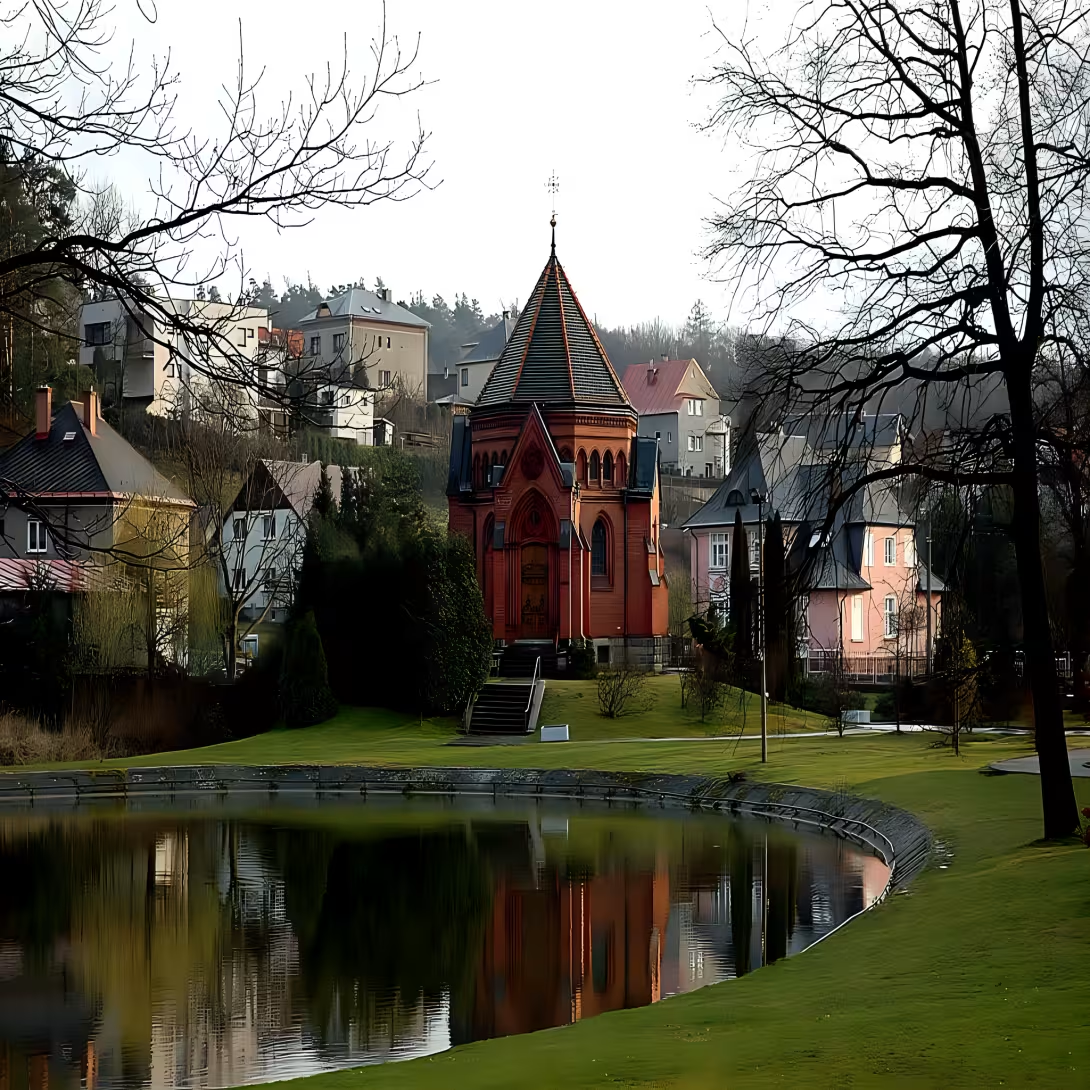
The Chapel of Saint Cross and the Lichnovský Family Mausoleum in Chuchelna is a cultural monument of the Czech Republic. It stands out for its new Gothic architectural style and historical significance as both a mausoleum and place of worship. Architect Julius Lundwall designed it, with construction occurring between 1902 and 1903.
The Lichnowský family, originally from Poland, settled in Silesia and Moravia. They acquired the Chuchelná estate in 1608 through Bernard Lichnowsky and maintained ownership until World War II ended, except for a brief period between 1650 and 1670. Karel Maxmilián kníže Lichnowsky conceived the chapel as a dignified mausoleum to serve as a landscape feature, following his father's vision.
Architecturally, the chapel exemplifies early 20th-century new Gothic design. It features an octagonal plan with four rectangular extensions forming a Greek cross. Constructed from unbaked red brick on a stone substructure, it includes a conical roof made of fired tiles topped by a metal cross. The interior is divided into two levels: the crypt for burials and an upper chapel area. Notable elements include a gallery of blind and real windows around the central octagonal section, with each side featuring four windows separated by columns with terracotta capitals. Above the main entrance, the Lichnowský family crest carved from red sandstone adds to its grandeur.
Ownership remained within the Lichnowský family until World War II. The mausoleum suffered damage during the war, and post-war, it served as a temporary place for worship due to the destruction of the local church in 1948. In 1953, the sarcophagi were sealed in a southern alcove, and an altar was installed there.
Today, the chapel is publicly accessible and remains a significant cultural site. It underwent restoration between 2008 and 2014, ensuring its preservation for future generations. The serene setting near a pond and surrounded by parkland enhances its appeal as a place of historical reflection and tranquility. Visitors are invited to explore this monument, appreciating its architectural beauty and the rich history it embodies.
Then and now
Drag the slider to compare how the landmark may have looked when it was built with the view today.
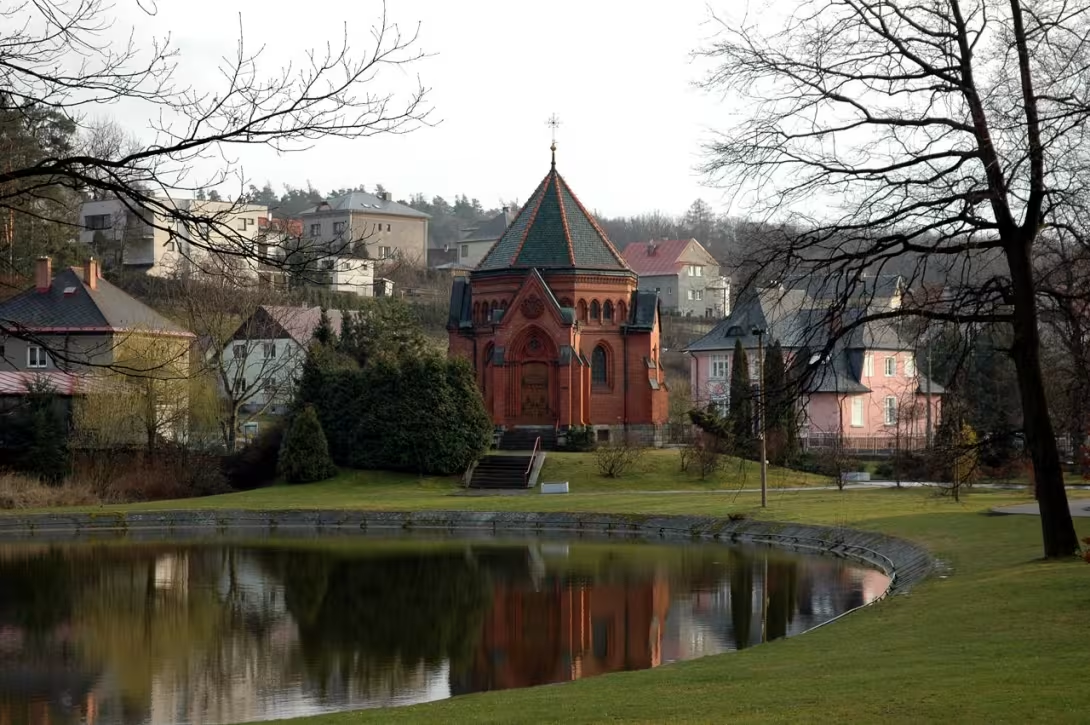

The historical appearance on the left is an AI-generated visualisation and serves as inspiration only.
Historical milestones
- 1608
- Bernard Lichnowsky acquired the Chuchelná estate.
- 1650-1670
- Brief period when the Lichnovský family did not own the estate.
- 1902
- Construction of the Chapel began.
- 1903
- Construction of the Chapel completed.
- 1948
- Local church destroyed, chapel used as temporary worship place.
- 1953
- Sarcophagi sealed in a southern alcove; altar installed.
Architectural development
The chapel was built in the early 20th century with an octagonal plan and features new Gothic architectural elements. Constructed from unbaked red brick on a stone substructure, it includes a conical roof made of fired tiles topped by a metal cross. The interior is divided into two levels: the crypt for burials and an upper chapel area.
Historical events
The chapel was consecrated on March 11, 1903, with the remains of Karl Marii Prince Lichnowsky being solemnly interred.
During WWII, the mausoleum suffered damage; post-war, it served as a temporary place for worship due to the destruction of the local church.
Owners
Bernard Lichnowsky (1608–1650s)
Lichnovský family until World War II
Points of interest
- The Chapel of Saint Cross was designed by Julius Lundwall, an architect known for his work in the new Gothic style, which is relatively rare and unique to this period. This architectural choice reflects a blend of historical reverence with modern design sensibilities.
- Despite being primarily a mausoleum, the chapel served as a place of worship after World War II due to the destruction of the local church in 1948. This dual purpose highlights its significance within the community and adds an unexpected layer to its history.
- The Lichnowský family crest, prominently displayed above the main entrance, is carved from red sandstone, showcasing exquisite craftsmanship and emphasizing the chapel's role as a symbol of familial legacy and prestige.
- During World War II, the mausoleum suffered damage, yet it was restored in the early 21st century (2008–2014), illustrating its resilience and the enduring value placed on preserving cultural heritage despite historical upheavals.
- The chapel’s design includes an octagonal plan with four rectangular extensions forming a Greek cross, a distinctive architectural feature that combines geometric complexity with aesthetic elegance, making it stand out among other Gothic structures.
Guide
This guide is narrated by a synthetic voice generated by artificial intelligence.
Show guide text
This text was created by artificial intelligence and has not been editorially reviewed. It may contain inaccuracies.
Welcome to the Chapel of Saint Wenceslas and the Lichnovský family tomb in Chuchle, a unique monument on Moravia that combines history with architectural beauty. Standing before this neo-Gothic chapel is like opening a page from a book filled with adventurous tales and artistic passion. The Chapel of Saint Wenceslas, designed by architect Julius Lundwall, is not only the resting place for the renowned Lichnovský family but also a site of reverence and tranquility.
Let's delve into the history of this significant monument. In 1608, Bernard Lichnowsky acquired Chuchle as his property, beginning a long-term connection between the family and this location. Although there was a brief period from 1650 to 1670 when the Lichnovskýs did not hold Chuchle, their presence soon returned. Construction of the chapel began in 1902 and was completed the following year, marking a new era for the Lichnovský family.
Look up at the octagonal base of the Chapel of Saint Wenceslas and notice its architectural elegance. This detail is one of many that Lundwall brought into the 20th century with his neo-Gothic beauty. Although specific decorative elements are not described, the overall structure and design of the chapel evoke a sense of reverence and history.
The Chapel of Saint Wenceslas is also home to stories of key personalities associated with the Lichnovský family. Among them are Karel Maxmilián Prince Lichnowsky, whose life spanned from 1860 to 1928, and Karel Marii Prince Lichnowský, who lived between 1819 and 1901. These figures contributed to the rich history of the family and their influence on the region.
An interesting aspect of this chapel is that despite its original purpose as a mausoleum, it also served as a temporary place of worship after the local church was destroyed in 1948. In 1953, sarcophagi were enclosed in the southern altar and a new altar was installed, adding another layer of history to this already rich monument.
Now that you have explored the key elements of the Chapel of Saint Wenceslas and the Lichnovský family tomb, I invite you to continue exploring this site. Reflect on the history that unfolded here, the artwork before you, and the family whose memory is preserved for future generations. Whether you are a curious historian or a casual tourist, the Chapel of Saint Wenceslas has something interesting to discover for everyone. Thank you for your visit, and I hope you enjoyed it.
Tips for visitors
The best time to visit the Chapel of Saint Cross and the Lichnovský Family Mausoleum is during late spring or early autumn when the weather is mild, and the surrounding parkland is lush with greenery. This period offers a serene atmosphere ideal for appreciating the chapel's Gothic architecture and enjoying nature walks in the nearby lakes and parks.
Public transportation options may also be accessible; however, specific routes should be verified using an online search tool prior to your visit. The serene setting of Chuchelna makes it a pleasant destination reachable by both car and public transport.
When visiting the chapel, consider bringing comfortable walking shoes for exploring the surrounding parkland and natural features. A camera is recommended to capture the architectural details of the Gothic-style chapel and the picturesque landscapes around the pond and green spaces. Sunscreen and a hat are also advisable if you plan on spending time outdoors.
For photography enthusiasts, the best spots include the entrance of the chapel where its Gothic architecture can be fully appreciated, and any vantage points near the pond that offer reflections or panoramic views of the chapel against the natural backdrop. Early morning or late afternoon light provides a soft glow ideal for capturing the chapel’s details and surrounding landscapes.
The area's lakes and green spaces are perfect for family outings, providing activities like picnicking or leisurely walks.
Frequently asked questions
Can the monument be visited?
Religious buildings are usually open mainly during services; at other times a visit is normally arranged with the parish or the operator. We have not verified specific times.
Where is the monument?
Location: Mírová 20, Chuchelná, Chuchelna, Moravskoslezský kraj. The map on this page shows the exact spot.
Why is the monument protected?
It is listed in the Central List of Cultural Monuments of the Czech Republic as a cultural monument (register no. 44945/8-1385).
Businesses nearby
Do you run a restaurant, accommodation, shop, museum, rental, wellness or other visitor service near this monument? Show yourself directly to the people heading to it — this is how they will see you in the app and on the web:
Nearby
Located in Chuchelna near a pond and surrounded by parkland, the chapel offers a serene setting. The area includes natural features such as lakes and green spaces within a five-kilometer radius.
Accommodation nearby
Themed route
Thematic Walking Tour: The Chapel of the Holy Cross and Surrounding Parkland
Welcome to a serene journey through Chuchelna, where history meets nature in perfect harmony. This walking tour will guide you through the tranquil surroundings of the Chapel of the Holy Cross, exploring its historical significance and natural beauty.
1. Start at the Chapel of the Holy Cross - Type: Historical Chapel - Begin your journey at this serene chapel, a significant site as it serves as the burial place for the Lichnovský family. The architecture and peaceful ambiance offer a glimpse into the region's historical heritage. Spend some time appreciating the chapel's intricate details and reflecting on its historical context.
2. Explore the Surrounding Parkland - Type: Natural Park - Venture out from the chapel into the lush parkland that envelops it. This area offers a perfect setting for a leisurely walk, with paths winding through greenery and leading to various natural features. The park is an ideal spot for relaxation and enjoying nature's tranquility.
3. Visit the Nearby Pond - Type: Natural Water Feature - A short stroll from the chapel will bring you to a picturesque pond nestled within the parkland. This charming water feature provides a serene environment, perfect for a quiet moment of reflection or simply admiring the natural beauty of Chuchelna.
4. Return to the Chapel - Conclude your tour by returning to the Chapel of the Holy Cross. Take this opportunity to revisit any areas you may have missed and fully absorb the peaceful atmosphere once more. The chapel's serene setting, combined with its historical significance, makes it a fitting end to your thematic journey through Chuchelna.
This walking tour offers a harmonious blend of history and nature, allowing visitors to appreciate both the cultural heritage and natural beauty of this charming area in Moravskoslezský kraj.
Seasonal recommendations
Spring: Visiting the Chapel of Saint Cross during spring offers a refreshing experience as nature awakens around Chuchelna. The blooming flora and vibrant greenery create a picturesque backdrop, enhancing the chapel's serene atmosphere. As daylight extends into the evening, the natural light beautifully illuminates the historic architecture, inviting visitors to explore its intricate details. Spring can attract moderate crowds, particularly on weekends when people enjoy outdoor activities. To fully appreciate this season, it’s advisable to wear comfortable layers as temperatures may vary throughout the day. Morning visits are recommended to avoid larger groups and to experience the tranquil ambiance of the chapel.
Summer: The summer months bring long daylight hours and warm weather, making it an ideal time for a visit to the Chapel of Saint Cross. The lush surroundings come alive with activity, and the bright sunlight enhances the chapel's historical features. However, this is also the peak tourist season, so expect larger crowds, especially during weekends and holidays. Arriving early in the morning can help avoid the midday heat and the busiest times. Light, breathable clothing is recommended to stay comfortable while exploring the site, and don’t forget sunscreen for protection against prolonged sun exposure.
Autumn: Autumn presents a magical time to visit the Chapel of Saint Cross, with its surroundings draped in warm hues of red, orange, and gold. The cooler temperatures make it pleasant to walk around Chuchelna, and the changing leaves create an enchanting atmosphere that complements the chapel's historic charm. As days become shorter, the soft autumn light adds a cozy feel to the site. While visitor numbers tend to decrease compared to summer, weekends can still be busy with locals enjoying the seasonal beauty. Layered clothing is advisable to accommodate fluctuating temperatures throughout the day.
Winter: Winter transforms the Chapel of Saint Cross into a serene and quiet retreat amidst the snow-covered landscape of Chuchelna. The stark beauty of the season offers a unique perspective on the chapel’s architecture, with the contrast between white snow and historic stone creating a striking visual effect. However, shorter daylight hours mean that visits need to be planned during the limited opening times, and some areas might be inaccessible due to weather conditions. It's essential to dress warmly in layers, including hats, gloves, and insulated footwear, to stay comfortable while exploring this winter wonderland. Early morning visits are ideal to take advantage of the quiet atmosphere before any potential snowfall.
Visualizations and artistic views


The visualisations are generated by artificial intelligence and serve as inspiration.
Photos from the area
Real photos taken near the monument


Zdroj a licence jsou uvedeny u každého snímku.
Tips from visitors
No tips yet. Be the first!
Log in and add your tip.
Sources and literature
Photos: Petr Štefek / CC BY-SA 3.0 cz, rozlišení zvýšeno umělou inteligencí — Wikimedia Commons. The author and licence also appear when you hover over the image.
Faktickým podkladem tohoto textu byl článek na Wikipedii, jehož autory jsou přispěvatelé Wikipedie. Článek je dostupný pod licencí CC BY-SA 4.0.
Location on the map

Příběhy a pověsti
Legendy, pověsti a příběhy spjaté s touto památkou
Fotografie návštěvníků
Zatím žádné fotografie. Buďte první, kdo přidá fotografii z návštěvy!
Log in a přidejte svou fotografii nebo hodnoťte.
Za ověřenou návštěvu v aplikaci získáte víc bodů — poznáme podle GPS, že jste na místě.
Reviews and comments