



Kosárna Hammer mill
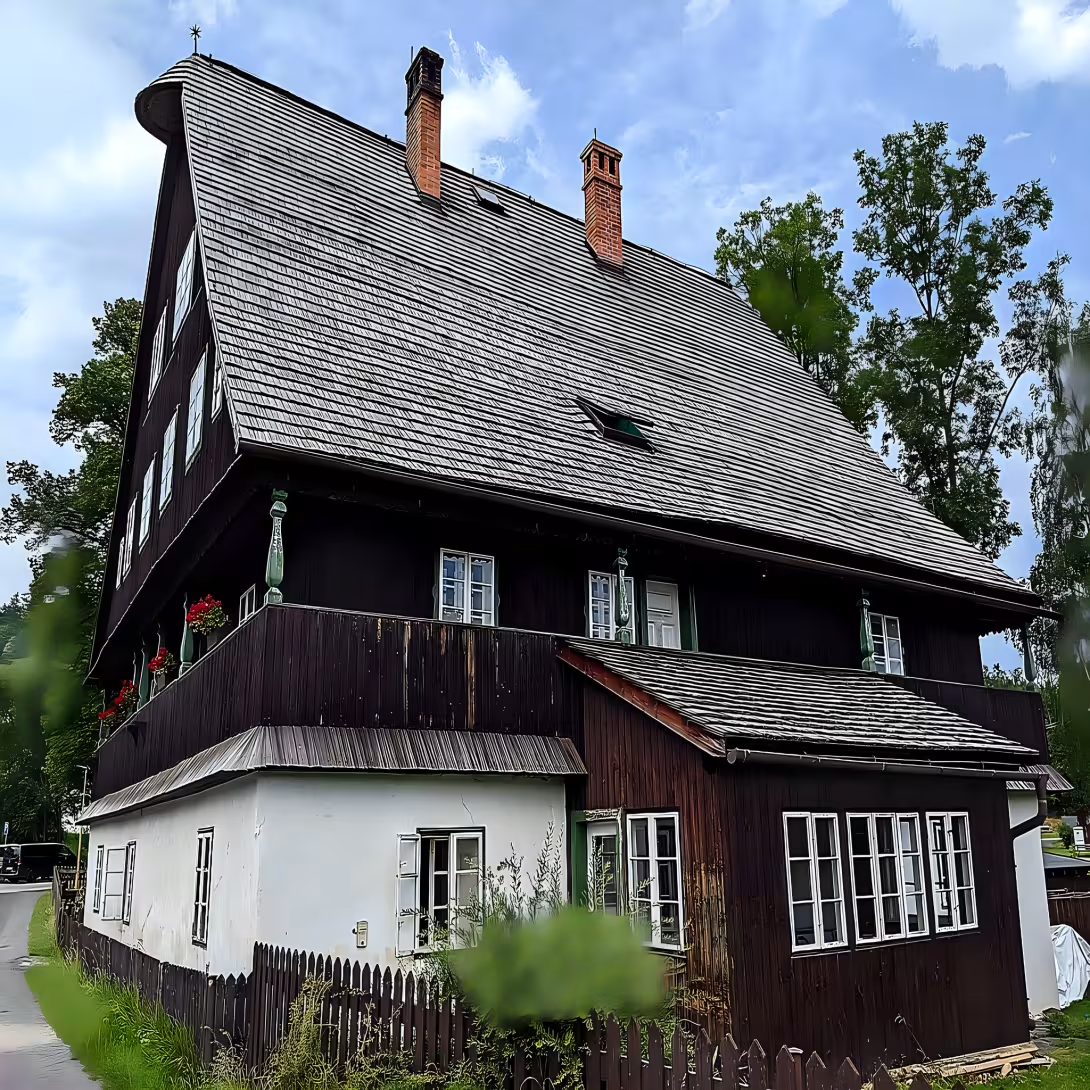
Kosárna in Karlovy Vary in the Bruntál district in the Moravian-Silesian Region is a Renaissance Hamr from 1600, which is now used as a museum. The building is registered as a national cultural monument of the Czech Republic and represents a typical example of Silesian rural architecture.
The construction was built in 1600, which is confirmed by the inscription on the roof cabin. At that time, iron production was a key industry. Hamry was the basis for the economic development of then Silesia. From 1645 to 1725 Kosárna belonged to the property of the prince's Upper Chamber of Hamer.
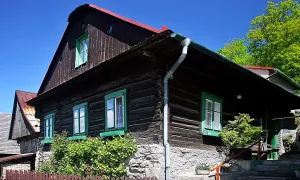
The building has a brick ground floor and a wooden floor with a gallery that decorate carved columns. The whole building will be covered by a high wooden roof. It was rebuilt in 1759, followed by further modifications in the 19th and 20th centuries. In addition to the main building, the complex consists of walled stables, a hoarder with an added barn, a garden, a taras wall and a torso drive.
Because the iron production in the hams began to fall behind, the object was later sold to Jan Michael Hartel. It produced wires, scythe, sickle and agricultural tools. In 1812 Kosárna became the owner of Jan Heinrich and in 1845 it was bought by miller Josef Langr. Since 1898, the miller Anton Frank was the owner of the building. In 1945 she was assigned to Josef and Jarmile Pelán.
In the course of its operation, the building was used not only as a hamr and manufacturing tool but also as a mill. In 1974, the building was purchased by the District Regional Museum for recreation. Since 1992, the space has been fully used as a museum of Silesian rural architecture.
The monument offers an authentic view of the historical industry and traditional building two region. It is an important place for anyone interested in the technical history and architecture of Silesia. Visiting the museum allows direct contact with material traces of ancient craft.
Then and now
Drag the slider to compare how the landmark may have looked when it was built with the view today.
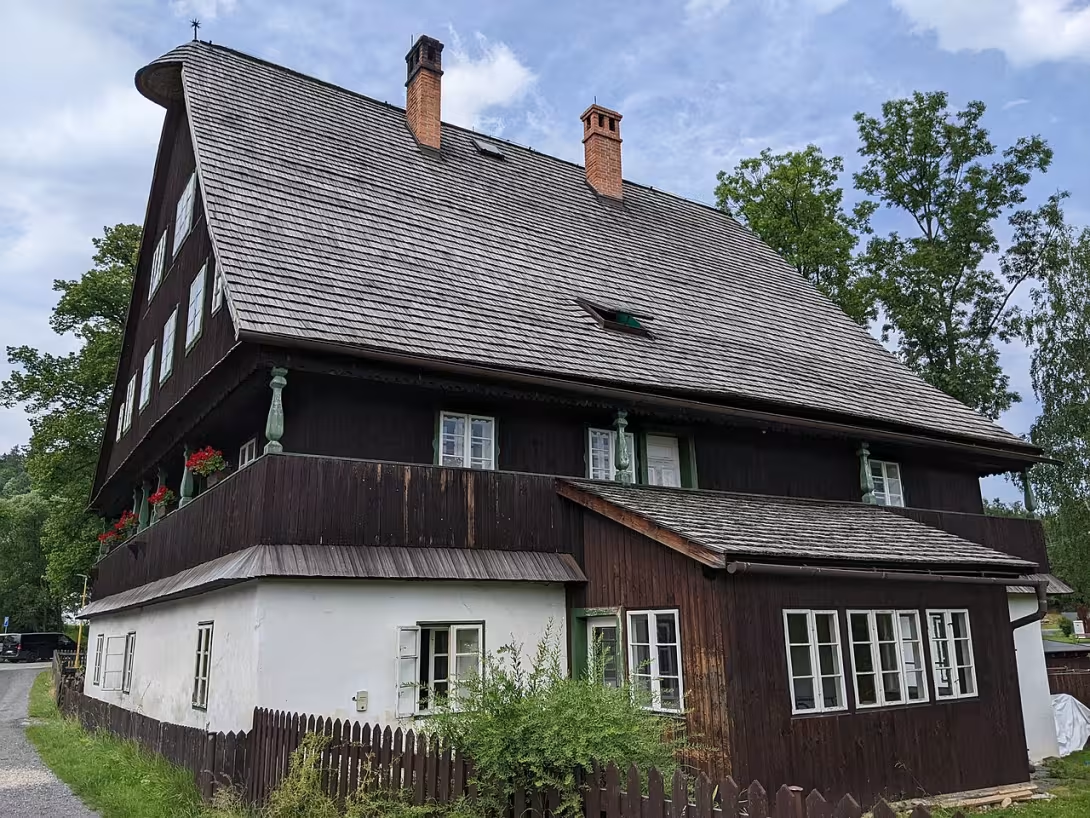
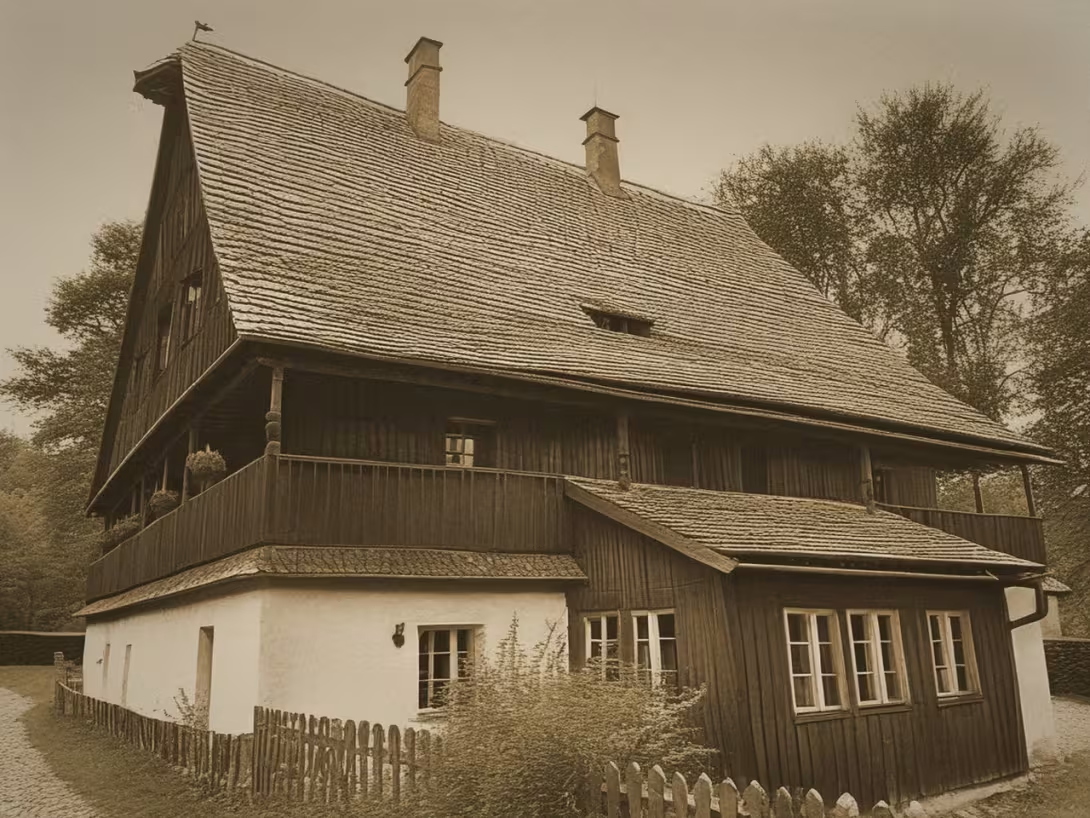
The historical appearance on the left is an AI-generated visualisation and serves as inspiration only.
Historical milestones
- 1600
- Status of original hamr
- 1759
- Rebuilding to today's form
- 1992
- Start of museum operation
Architectural development
The building has a wall ground floor and a wooden floor with a gallery decorated with carved columns. It acquired today's appearance after reconstruction in 1759. During the 19th and 20th centuries, further modifications were made to the building.
Historical events
The original construction of the hamru was built in 1600. In 1759 a major reconstruction of the building took place. Since 1992, there has been a museum.
Owners
The upper chamber of the Hamer Mound (1645-1725), Jan Michal Hartel, Jan Heinrich (1812), Josefina Langrová (1845), Anton Frank (1898), Josef and Jarmila Pelán (1945), the District Capital Museum in Bruntále (1974).
Points of interest
- It's a 1600 Renaissance hamburger, which is now a museum. - The building has a brick ground floor and a wooden floor with a gallery decorated with carved columns. - The building produced wire, scythe, sickle and agricultural tools, but also served as a mill. - The construction is a national cultural monument and is an example of Silesian rural architecture. In addition to the main building, the area consists of a walled barn, a hubbub with a barn, a garden, a tarran wall and a torso drive.
Guide
This guide is narrated by a synthetic voice generated by artificial intelligence.
Show guide text
This text was created by artificial intelligence and has not been editorially reviewed. It may contain inaccuracies.
Welcome to Karlovy Vary. You are standing in front of a building that carries hundreds of years of history and craftsmanship of our ancestors. In front of you is Kosárna, a place that appears in local records as a hamr. The first impression of this place is very strong because the building acts as a bridge between different times. Look at its overall form. You see a structure in front of you that combines the strength of stone with the lightness of wood. It is a view that immediately transmits you to a time when the rhythm of life determined the sound of hammers and a stream of water.
Let us now stop at how this building was created and why it is standing here at all. The history of this place dates back to a thousand and six hundred. It was this year that the original hamr was built. At that time, it was a center of technological progress where the power of water was used to drive machines. Imagine how busy work was in these areas centuries ago. It was originally the hamr that worked here, which was the iron processing plant. However, the function of the building developed over time. Later there was a manufacturing plant, i.e. hand-made tools, and the building also served as a mill. So this space was not just one area, but a multifaceted centre of the local economy that served the community in various areas.
Now pay attention to the architecture itself, because the building is a typical example of Silesian rural construction. Look carefully at the division of the building. Note that the ground floor is walled, which ensured stability and protection against moisture and fire, which was necessary in the hamr. But now look above. Your eyes will attract a wooden floor. It is a very characteristic element that gives the construction its unique appearance. Pay particular attention to the gallery, the wooden corridor at the top. If you look any closer, you'll see the carved columns that carry this gallery. These details demonstrate the aesthetic sense of builders who wanted the building to be not only functional but also beautiful. The whole complex is also composed of other economic buildings which complement this painting of the old craft yard.
When we look at history, we can't forget the people who were connected to this place. Although the names of particular architects remained in oblivion, the records show personalities who left their mark. Among them are names like Jan Michal Hartel or Jan Heinrich. There are also mentioned women, such as Josefina Langrová, which shows us that life in and around the hamr was not just a matter of men, but of whole families. Later, names like Anton Frank, Josef Pelán and Jarmila Pelán joined the site. Each of them added their chapter to the story of this house. Imagine them as people who lived here, worked, and perhaps even dreamed, while the water passed by them and there was iron in the workshops.
Now invite you to one interesting thing that may not be visible right away, but it is very important. This building is not just an ordinary house, it is a national cultural monument. This means that the state has recognised its extraordinary value for the whole country. It is fascinating to think that in a building that is so peaceful today, there were things that agriculture could not have worked without. This was where the wire, scythe, sickle and various types of agricultural tools were forged. Imagine the contrast between today's silence and the noise that existed here when thousands of peasants were being created. Another milestone in history came in a thousand seven hundred fifty-nine, when the building was rebuilt into the form you see today. This means that its present appearance has been almost unchanged for over two centuries.
The mystery remains, as was precisely the daily interaction between the function of the mill and the function of the hamr within one space. How did you divide the place for grain and the place for iron? It is these questions that give space to your imagination. In the year one thousand nine hundred ninety-two the museum of Silesian rural architecture, which is still here today, opened. This allows us to view this space today as a living textbook of history.
Now, when you look around, feel the atmosphere of this place. Can you feel the calm that came after centuries of hard work? This building survived wars, changes in regimes and technological revolutions, which gradually wiped out the old hams. The fact that you stand before her today is proof of the care of generations who wanted to preserve this heritage for us.
I ask you now for further examination. Go through the whole area slowly, see the details of the wooden carving on the columns, and try to imagine the sound of the iron-forging that was once heard in this yard. Let yourself be guided by curiosity and perceive every detail, from the walled foundation to the tips of the wooden floor. I hope this short trip to the past helped you better understand the importance of Kosarna in Karlovy Vary. Thank you for your attention and I wish you a pleasant rest of the journey to meet.
Tips for visitors
The best time to visit is spring and autumn months, when nature is beautiful around the ruins and temperatures are pleasant for walking in the field. Karlovice can be reached by car or public transport, check the specific connections in the current timetables.
For the trip we recommend to take your fixed shoes suitable for the field, because it is a ruin and the surface may be uneven. We also recommend having enough water and insect repellent.
For the best photos we recommend to come in the morning or late afternoon light, when the sun highlights the structure of the old masonry and details of the former factory. The most interesting pictures offer views of the remnants of buildings from different angles, which remind you of the ancient production of tools.
Families with children can use the place to explore the history of craftsmen and mills. The children will be pleased to explore the remains of the historic building, which is a great opportunity to talk about how metal tools were produced before.
Frequently asked questions
Can the monument be visited?
This is a ruin. Such sites are often freely accessible, but some can only be visited with a guide or are closed for safety reasons. We have not verified the current situation – take care and respect any restrictions.
Where is the monument?
Location: č.p. 146, Karlovice, Moravskoslezský kraj. The map on this page shows the exact spot.
Why is the monument protected?
It is listed in the Central List of Cultural Monuments of the Czech Republic as a national cultural monument (register no. 400).
For kids
Imagine going back to when this place was a hidden castle. It was the fortress where the strongest and most skilled knights from all over the country lived.
What did it look like back then? Castle buildings were as tall as five houses next to each other and had strong fortifications to protect themselves from enemy forces. The inner court was full of farm buildings, where the meat was smoked, wine was brewed and horses were raised. There were knights in the castle with their families, helpers and, of course, the dog who was guarding the gate.
Businesses nearby
Do you run a restaurant, accommodation, shop, museum, rental, wellness or other visitor service near this monument? Show yourself directly to the people heading to it — this is how they will see you in the app and on the web:
Nearby
➜ Zobrazit interaktivní přehled okolí – restaurace, ubytování, půjčovny a další místa v okruhu 15 km.
Data: OpenStreetMap contributors, okruh 15 km.
🏰 Historické památky
- Kosárna (0.0 km)
- Fürstenwalde (7.5 km)
- Quinburk (10.8 km)
- sv. Anna Samotřetí (11.1 km)
- Jan Paweł II (12.4 km)
- Muzeum Bruntálska (12.8 km)
- Panna Maria (12.9 km)
- morový sloup (13.0 km)
🍽️ Restaurace a stravování
- Hospůdka u rybníčku (0.3 km)
- Hotel Singer (7.4 km)
- Pension u Jiřího (7.6 km)
- Pod Věží (10.6 km)
- Kelt (12.3 km)
- Pizza Donna Emona (12.6 km – Dukelská 1884/7)
- Radegastovna Bruntál (13.0 km – nám. Míru 52/16)
- Tipáč o kousek vedle (13.0 km – nám. Míru 47/17)
🏨 Ubytování
- Penzion Zámeček Grohmann (3.9 km – Husova 154)
- Centrum Stone (4.9 km)
- Anděl (6.4 km)
- Autokempink Dolina (6.6 km)
- Pension u Jiřího (7.6 km)
- Paramon (7.7 km)
- Hotel Holzberg (8.0 km)
- Hotel Bezruč (10.5 km)
🚲 Půjčovny a sport
- Dostihové centrum Olehla (7.5 km)
- Koupaliště (12.4 km)
🥾 Turistika a příroda
- Vrbno p. Prad. (nám.) (4.9 km)
- Malá Hvězda (7.5 km)
- Karlova Studánka (Džbán) (10.6 km)
- pramen S7 Vladimír (10.7 km)
- Hvězda (10.9 km)
- Proč se v tomto lese "neuklízí"? (13.0 km)
- Život v polštářích z mechu (13.4 km)
- Malá Morávka, Karlov pod Pradědem (13.7 km)
Accommodation nearby
Themed route
1. Kosárna (hamr), historical iron processing machine. This construction represents a unique technical heritage of the region. 2. Internal exposition, museum section. Here you can see the historical tools and learn about the old craft. 3. Tanks, outdoor area by the building. It offers a quiet environment for observing the architecture of the entire building. 4. The immediate area, area around the sights. Ideal place for a short rest right near the historic place.
Seasonal recommendations
In spring, the surroundings of the former blacksmith's work awaken to life and the young green gently covers the remains of the wonders. The air is fresh and the light has a soft touch that helps to recognize the details of old structures. We recommend shoes with firmer soles, because the way to the monument can be wet and muddy when the snow melts. It is ideal to visit in the morning when nature is most filled with colors.
Summer brings a sharp sun that throws deep shadows into the interior of the ruins and creates a dramatic atmosphere. The building is surrounded by dense vegetation and high grass, which gives the place a feeling of a forgotten hiding place in nature. It is advisable to choose light, breathable clothes and not forget the sun protection. It is best to come in late afternoon, when the heat retreats and the light becomes golden.
In autumn, the landscape around Karlovice is colored in orange and brown tones, which matches the colour of old stones. The atmosphere is melancholy and calm, accompanied by the shrub of falling leaves. It's practical to bring a waterproof jacket and layered clothes to protect you from the cold wind. The most striking experience offers time around October, when the colors of surrounding nature are the most intense.
In winter, this historic building is very raw and minimalist, especially if it is covered by a layer of snow. The silence in the landscape highlights the sense of isolation and long past times when machines were humming. Due to the frost and possible slippiness of the terrain, warm footwear with an anti-slip sample and sufficiently warm clothing are necessary. We recommend a visit on a bright winter day, when the white snow contrasts beautifully with the dark remains of the walls.
Visualizations and artistic views


The visualisations are generated by artificial intelligence and serve as inspiration.
Photos from the area
Real photos taken near the monument


Zdroj a licence jsou uvedeny u každého snímku.
Atmosphere of the place
This atmospheric visualisation of the place and period was generated by artificial intelligence. It is not real footage of the location.
Tips from visitors
No tips yet. Be the first!
Log in and add your tip.
Sources and literature
Photos: MartinVeselka / CC BY-SA 4.0, rozlišení zvýšeno umělou inteligencí — Wikimedia Commons. The author and licence also appear when you hover over the image.
Faktickým podkladem tohoto textu byl článek na Wikipedii, jehož autory jsou přispěvatelé Wikipedie. Článek je dostupný pod licencí CC BY-SA 4.0.
Location on the map
Příběhy a pověsti
Legendy, pověsti a příběhy spjaté s touto památkou
Fotografie návštěvníků
Zatím žádné fotografie. Buďte první, kdo přidá fotografii z návštěvy!
Log in a přidejte svou fotografii nebo hodnoťte.
Za ověřenou návštěvu v aplikaci získáte víc bodů — poznáme podle GPS, že jste na místě.
Reviews and comments